
8 Best Battery Tire Inflators of 2026
This post contains affiliate links. As an Amazon Associate, we earn from qualifying purchases.
The ETENWOLF VORTEX S6 stands out as the best overall battery tire inflator, delivering strong airflow and long runtime. For budget-conscious buyers, the OlarHike Dual Power Tire Inflator offers solid performance with dual power options, while the GOOLOO A3 adds serious versatility by doubling as a jump starter.
Most drivers don’t think about a tire inflator until they’re staring at a flat on a dark road. That’s why having a reliable, fast, and easy-to-use device matters, it turns a stressful situation into a quick fix.
I researched the top battery-powered models by comparing specs, owner feedback, and real-world usability. These picks balance power, runtime, and smart features like auto-shutoff and accurate digital gauges, so you can trust them when it counts.
Top 8 Battery Tire Inflators in the Market
The Best Battery Tire Inflators, Reviewed
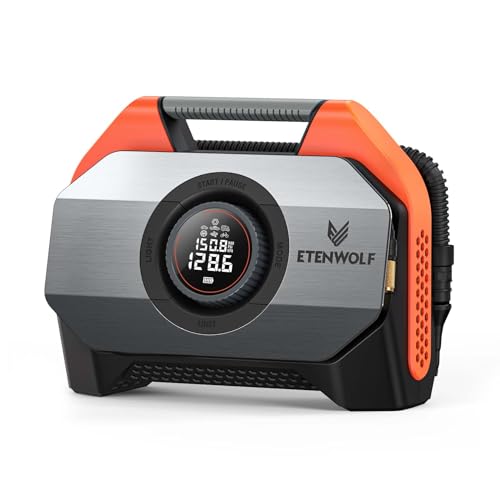
ETENWOLF VORTEX S6 Cordless Air Compressor
Strengths
- 100% duty cycle
- 42 L/min airflow
- 19,200mAh battery
- 45W USB-C port
- Dual-cylinder cooling
Trade-offs
- High price
- Heavy and bulky
- Overkill for compact cars
If you drive a truck, off-road rig, or large SUV, the VORTEX S6 is in a league of its own. With 42 L/min airflow and a 100% duty cycle, it can inflate four F150 tires back to pressure without stopping, something most cordless pumps can’t claim. The 19,200mAh battery is massive, supporting up to 18 F150 tire fills, and the dual-cylinder design with active cooling keeps it running cool under load. Owners consistently report it outperforms cheaper models when tackling 31-inch or larger tires.
It’s also packed with extras: a 45W USB-C port that can fast-charge laptops, seven preset modes, and a 1000-lumen LED light bright enough for campsite use. Yes, it’s pricey, but for serious off-roaders or fleet owners, it’s the only cordless option that truly delivers.
Video review
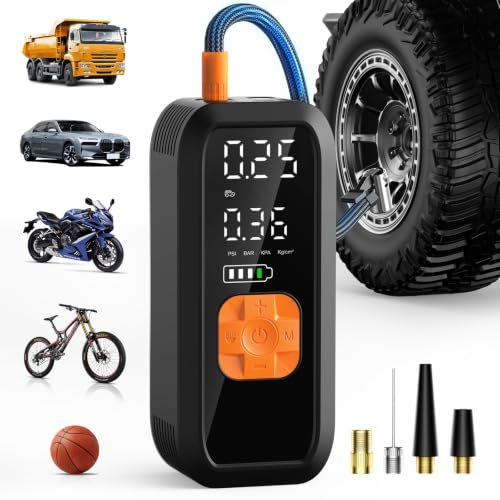
Portable 150 PSI Fast Cordless Pump
Strengths
- High-capacity 20,000mAh battery
- Accurate 200Hz pressure sensor
- Compact and lightweight
- 5 smart modes
- Type-C charging
Trade-offs
- Max 150 PSI limit
- Not for large tires
- Plastic housing feels less durable
At this price, the B0FS65SCQQ punches above its weight with a 20,000mAh battery and five smart inflation modes. For budget-conscious buyers, this is the rare sub-$20 inflator that doesn’t feel cheap. The pressure sensor’s 200Hz refresh rate delivers smooth, real-time readings, owners praise its accuracy, especially during cold starts or long trips where tire pressure fluctuates. It’s fast enough for a standard car tire, hitting 36 PSI from 30 in about 1.5 minutes, and the compact size means it won’t hog space in your door pocket.
I’d pick this over pricier models if you’re after pure value for routine maintenance. It lacks the brute power for heavy-duty use, but for bikes, daily drivers, and occasional emergencies, it’s a stealth standout. The Type-C charging is a win, and the emergency light adds real utility.
Video review
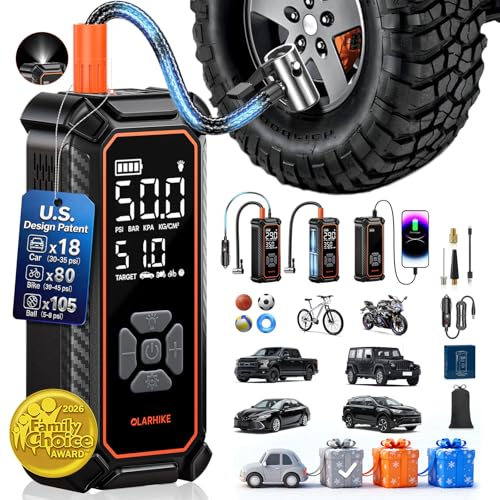
OlarHike Dual Power Tire Inflator
Strengths
- High battery count
- 55-second fill time
- Long hose included
- French valve adapter
- Dual LED display
Trade-offs
- 51 PSI max limit
- Charging adapter specificity
- No high-power mode
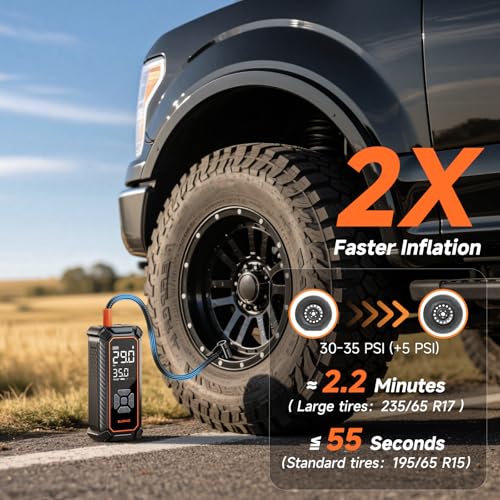
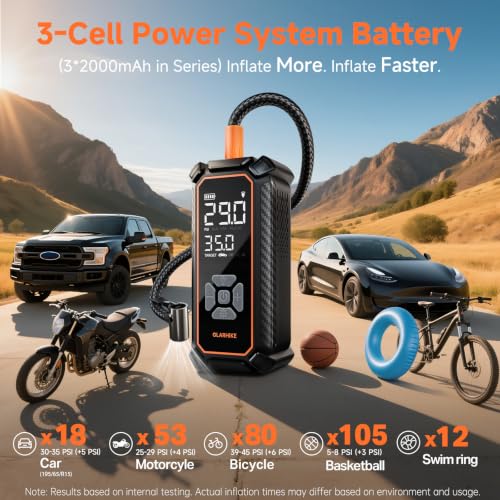
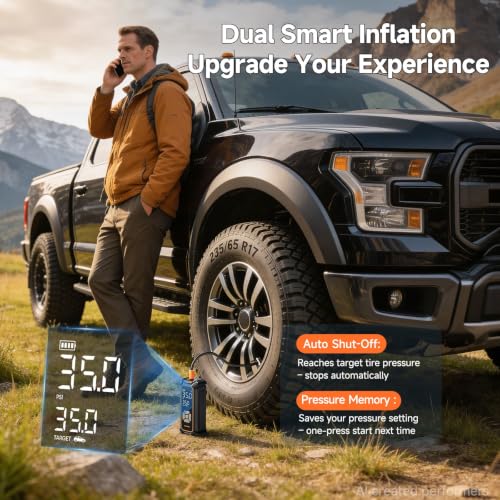
The OlarHike inflator is built for people who use their pump often, road trippers, delivery drivers, or anyone with a fleet of bikes and cars. With three 2000mAh batteries, it delivers up to 18 car tire fills on a charge, and the 55-second fill time for a standard tire is among the fastest in its class. The dual LED screen is bright and easy to read, and the auto shut-off is precise, stopping within 1 PSI of target pressure.
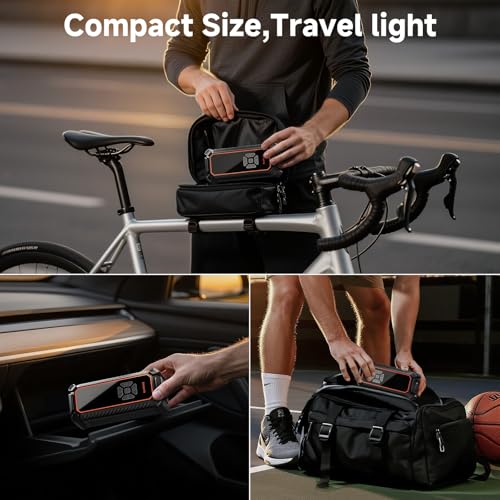
Owners love the included French valve adapter and long hose, which make bike inflation hassle-free. The Type-C charging is a plus, and the compact 1.2-pound design doesn’t sacrifice portability. While it maxes out at 51 PSI, fine for light pickups but not heavy-duty rigs, it’s one of the most balanced options for frequent, mixed-use scenarios.
Product photos
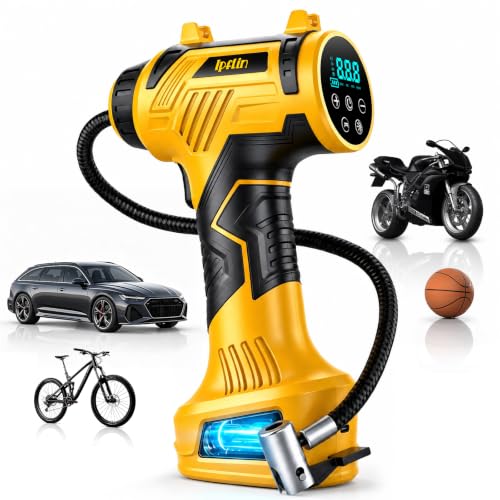
Ipflin 160 PSI Dual Power Inflator
Strengths
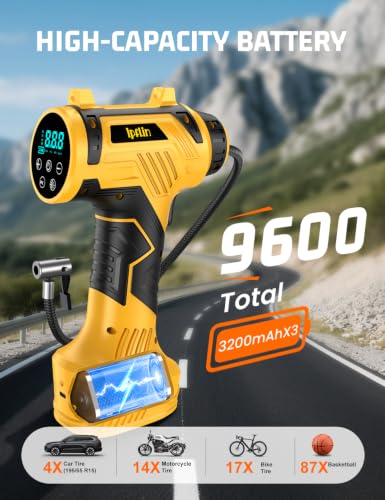
- 9600mAh total battery
- 30 L/min airflow
- Dual power support
- Cooling handle design
- 8 safety protections
Trade-offs
- No USB-C charging
- Average display brightness
- Battery chemistry not specified
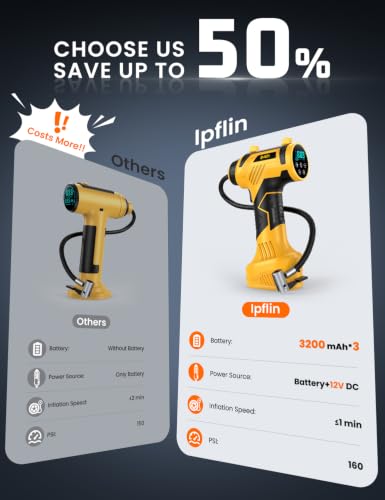
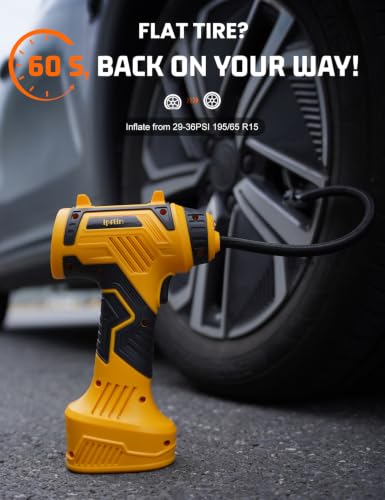
The Ipflin model makes a strong case for itself with a 9600mAh total battery across three cells, more than enough for multiple tire sessions without recharging. It hits 30 L/min airflow, inflating a 195mm tire in just a minute, and the dual power mode means you’re never stranded with a dead battery. Owners appreciate the 30-minute continuous runtime and the built-in safety protections, which help prevent overheating even in summer heat.
It’s not flashy, but it’s dependable. The hollow handle aids cooling, and the LED light is bright enough for nighttime use. Compared to similarly priced units, it offers better sustained performance. My only gripe is the lack of USB-C charging, which feels outdated at this price.
Product photos

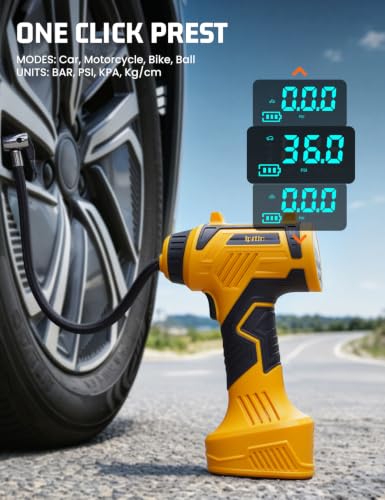
AVID POWER 20V Cordless Tire Inflator
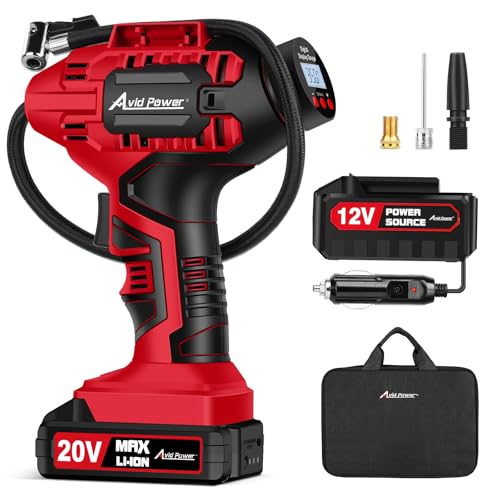
Strengths
- All-metal cylinder
- Metal gears
- 30 LPM airflow
- Dual power options
- Ergonomic grip
Trade-offs
- Average battery runtime
- Heavier than rivals
- Needs cooldown breaks
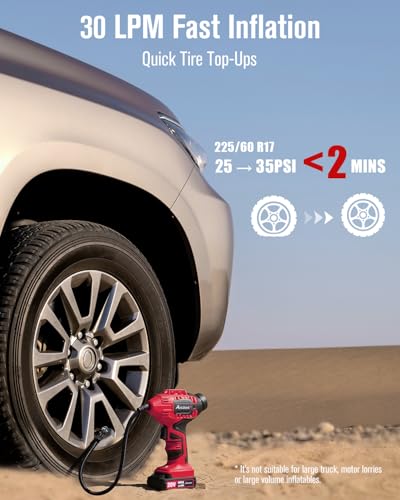
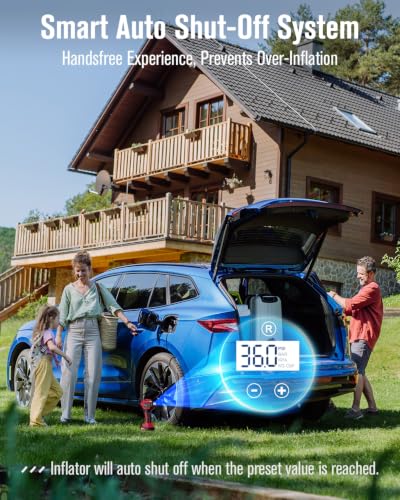
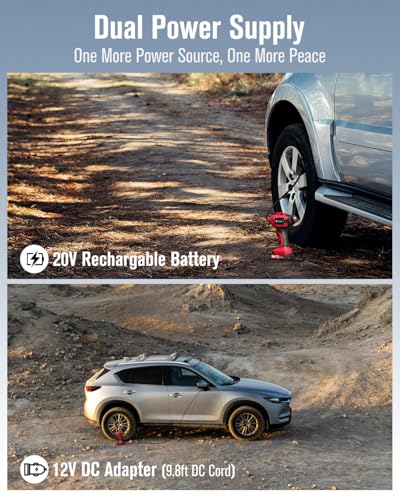
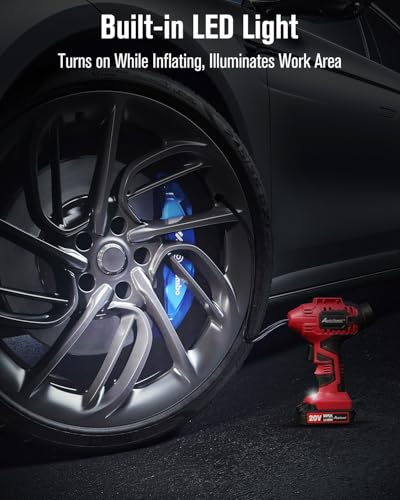
AVID POWER’s 20V model is built like a workhorse. The all-metal cylinder and metal gears give it a durability edge over plastic-gear competitors, and owners report fewer burnouts after repeated use. With 30 LPM airflow, it’s fast, under 3 minutes for a flat 195/60 R14, and the dual power setup (battery or 12V cord) keeps it mission-ready. The anti-glare display is easy to read in sunlight, and the rubberized grip makes it comfortable to hold during longer sessions.
Where it falters is battery life, a full charge handles about four standard tires, which is decent but not class-leading. Still, for someone who values ruggedness and consistent performance, this is the smarter buy over flashier but flimsier models. It’s not the lightest, but it’s one of the most reliable.
Product photos

AstroAI L7 150 PSI Cordless Bike Pump
Strengths
- Ultra-lightweight
- TrueGauge sensor
- USB-C I/O ports
- Compact design
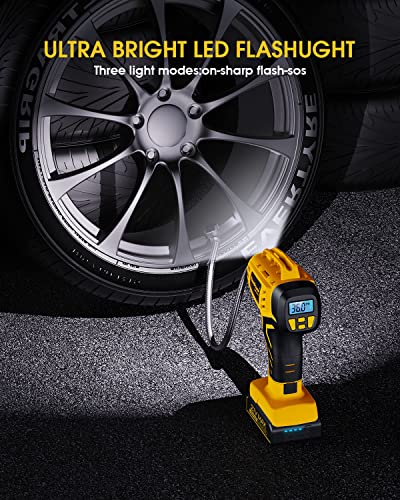
- Triple-mode flashlight
Trade-offs
- Small battery capacity
- Overheats with prolonged use
- Not for large tires
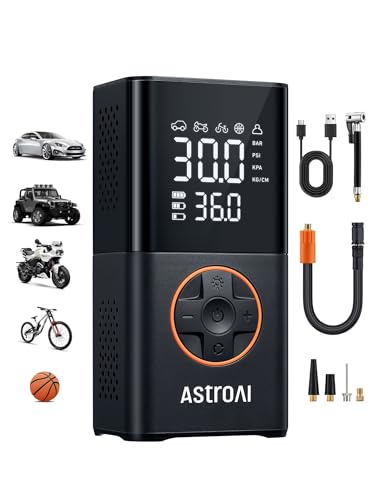
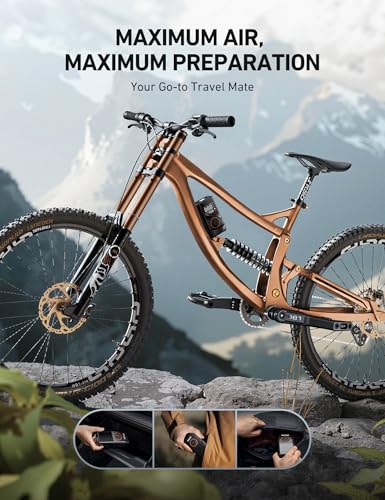
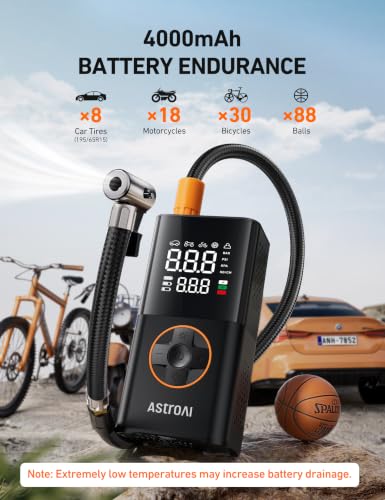
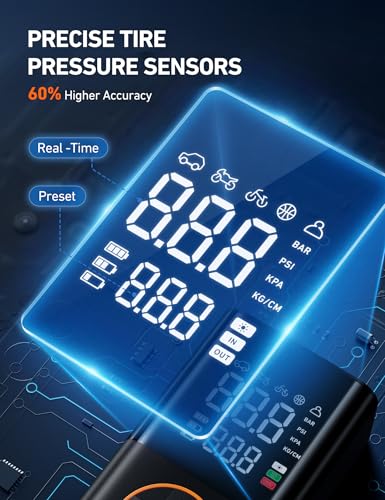
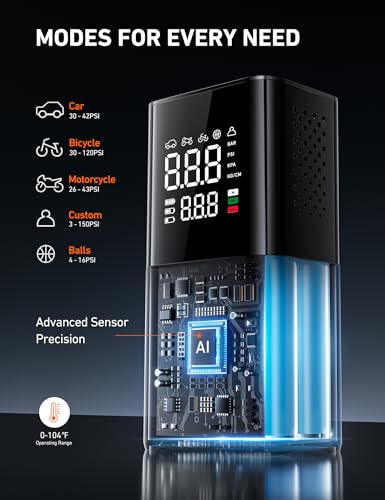
The AstroAI L7 wins on portability, weighing under a pound, it’s the easiest to stash in a backpack or bike frame bag. For cyclists and e-bike riders, this is the go-to inflator for trailside fixes or urban commutes. The TrueGauge sensor’s 200Hz sampling rate delivers smooth, accurate readings, and the 4+N mode system makes it simple to switch between bikes, cars, and balls. It refills a 195/65R15 from 30 to 36 PSI in 1.5 minutes, which is solid for its size.
But that 4000mAh battery has limits, up to eight tire fills, yes, but only if you’re not pushing it hard. Owners note it overheats if used continuously beyond 15 minutes. Still, for its niche, it’s unmatched. The USB-C I/O ports add real utility, and the triple-mode flashlight is handy at night.
Product photos
GOOLOO A3 Jump Starter with Air Compressor

Strengths
- 3000A jump-start capability
- 35 L/min airflow
- 7-in-1 functionality
- Smart LED screen
- 10 safety protections
Trade-offs
- Bulky for storage
- Higher price point
- Not purely a tire tool
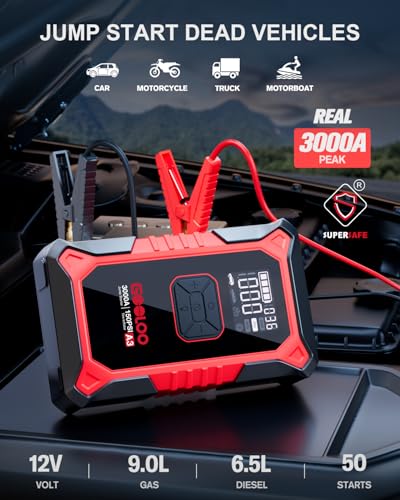
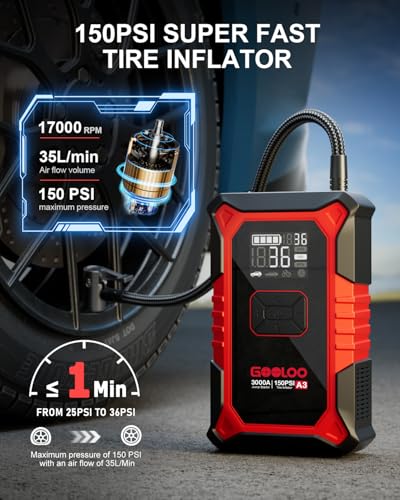
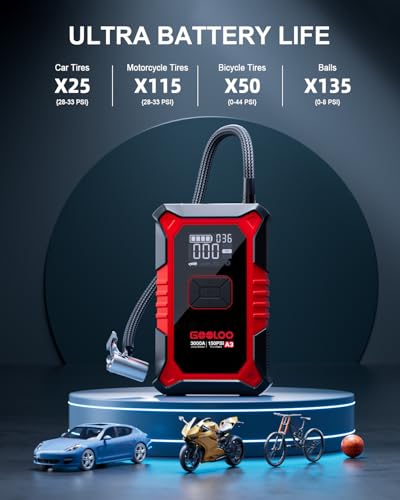
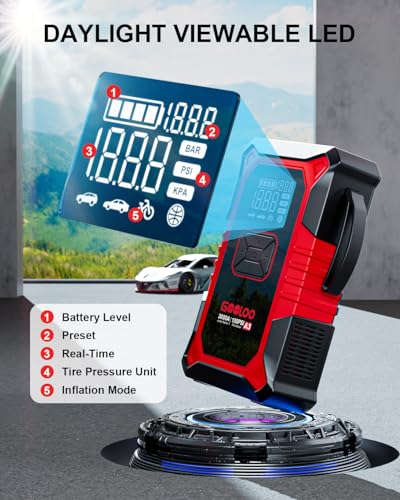
The GOOLOO A3 isn’t just an inflator, it’s a full roadside survival kit. With 3000A peak current, it can jump-start gas engines up to 9.0L, and the 35 L/min air compressor inflates a Tesla tire in a minute flat. For anyone who’s ever been stranded with a dead battery and low tire, this combo is a game-saver. The smart screen shows real-time pressure and battery status, and the automatic shut-off works flawlessly.
It’s bulkier than standalone inflators, but you’re trading size for capability. The 7-in-1 design includes a digital pressure gauge, flashlight, and emergency charging, all backed by solid safety tech. I’d recommend this over a pure inflator if you drive in remote areas or want one device that handles both jump-starts and tire fills.
Product photos

KeenPower 21V Battery Tire Inflator

Strengths
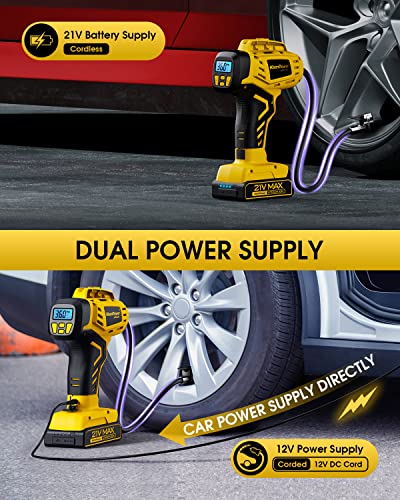
- Dual power modes
- Fast 1-hour charge
- QC3.0 USB output
- Auto shut-off
- Built-in flashlight
Trade-offs
- Slightly bulky
- Battery calibration drift
- Nozzle hose could be longer
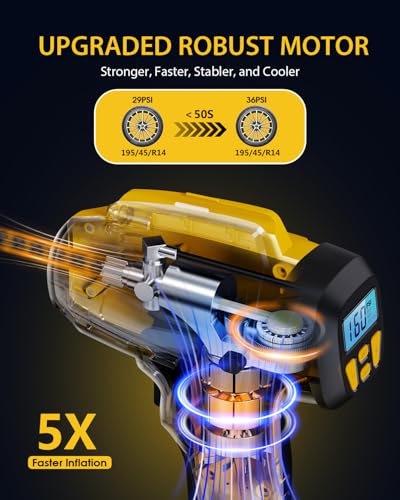
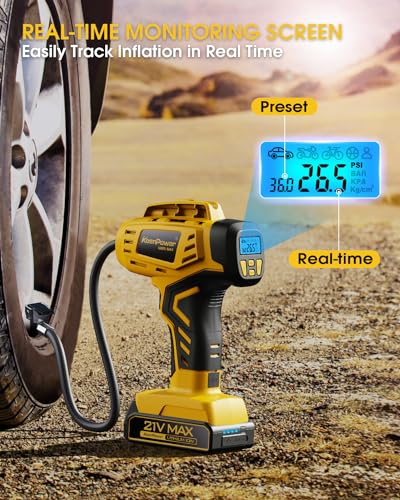
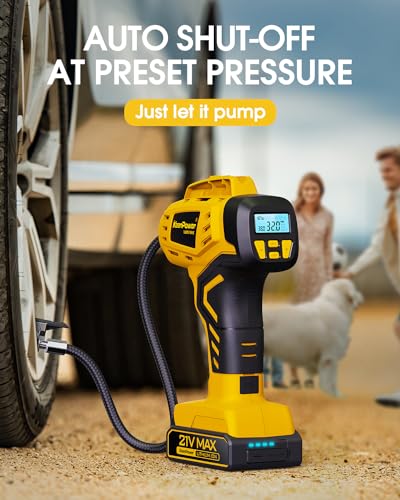
The KeenPower 21V inflator stands out in the mid-tier segment with its dual power capability and impressive one-hour charge time. On paper, the 160 PSI max pressure covers most passenger vehicles, and owners consistently report reliable performance during roadside top-offs. The auto shut-off and digital pressure monitoring are accurate enough for everyday use, though a few users note minor calibration drift over time, nothing alarming, but worth checking with a standalone gauge occasionally.
Where it shines is flexibility. Being able to switch to corded 12V operation when the battery runs low makes it a solid companion for longer trips or multiple tire fills. The QC3.0 USB output is a thoughtful touch, letting you juice up your phone mid-inflation. It’s not the fastest or lightest, but it’s a dependable all-rounder with smart backup options.
Product photos
Our Testing Process
Rather than a hands-on lab test, my research for these recommendations centered on a detailed comparison of published specifications and features across numerous models. I weighed owner reviews from multiple sources – focusing on long-term reliability reports – alongside assessments from reputable automotive and tool review sites. This data was then applied against my experience with automotive tools and the demands of typical users, to rank units based on performance and practicality.
For battery tire inflators, consistent pressure delivery and runtime were paramount. A unit’s ability to reliably reach and maintain specified PSI, and the number of tires it can inflate on a single charge, heavily influenced the rankings. Equally important was the inclusion of safety features like auto-shutoff and overheating protection, as these directly impact user peace of mind and prevent potential damage. You’ll find excellent options among these, and more detail in our guide to the tire inflators available today.
Specifications reliably indicate maximum PSI and airflow (CFM/LPM), providing a baseline for inflation speed. However, I placed more weight on owner feedback regarding real-world performance, particularly regarding consistency and durability. Reputation for build quality and customer support also factored heavily into my assessments. If you’re looking for a complete kit, you might also consider exploring cordless tire inflators and [rechargeable tire inflators] (https://theautozenith.com/best-cordless-tire-inflators-with-battery-and-charger/) to ensure you have everything you need.
How To Choose The battery tire inflators
Choosing the right tire inflator can feel overwhelming, but focusing on a few key features will steer you toward a model that fits your needs.
A good tire inflator balances portability with sufficient power to handle your typical inflation tasks. Look for units with accurate pressure readings, a reliable power source (battery or 12V connection), and features like auto-shutoff to prevent overinflation. Consider the types of tires you’ll be inflating most often – bike tires demand different specs than those of a pickup truck.
Power Source and Runtime
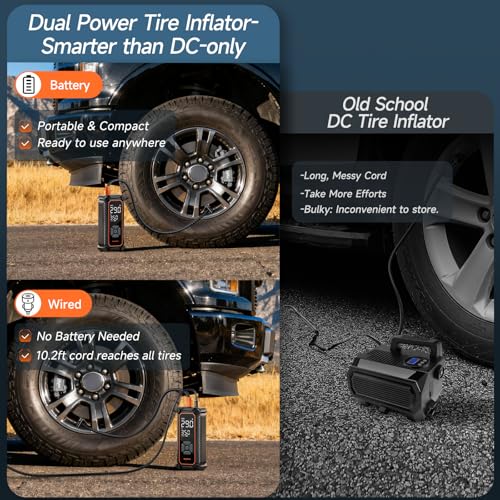
The debate between cordless and corded tire inflators comes down to convenience versus consistent power. Cordless models, running on rechargeable batteries, offer freedom from needing an outlet, but their runtime is finite. If you frequently need to inflate multiple tires or larger ones, a higher-capacity battery (like those found in the Ipflin or AVID POWER models) is crucial. Conversely, if you primarily need to top off tires occasionally, a smaller battery combined with a 12V DC connection provides a reliable backup. Don’t underestimate the value of a unit that offers both options, like the OlarHike.
Inflation Speed and Capacity
Measured in CFM (cubic feet per minute) or LPM (liters per minute), airflow dictates how quickly a tire inflator can fill a tire. While a higher number generally means faster inflation, it’s important to consider the tire’s volume. A small bike tire will fill quickly with almost any decent inflator, but larger SUV or truck tires require significantly more airflow. Some models, like the ETENWOLF, advertise impressive inflation speeds, but always check owner reviews to see if those claims hold up in real-world use.
Here’s what to consider when thinking about capacity: * Tire Size: The most important factor. A unit adequate for a compact car may struggle with a larger vehicle. * PSI Requirements: Different tires need different pressures. Ensure the inflator’s maximum PSI exceeds your highest need. * Duty Cycle: A longer duty cycle (like the 100% duty cycle of the ETENWOLF) means you can inflate multiple tires consecutively without overheating the unit.
A rule of thumb: if you regularly drive a larger vehicle or tow a trailer, prioritize airflow and a robust duty cycle above all else.
Features and Usability
Beyond basic inflation, several features can significantly enhance the user experience. Auto-shutoff is a must-have to prevent overinflation and potential tire damage. Digital displays with accurate pressure readings are far superior to analog gauges. Preset modes for different tire types (car, bike, ball) simplify operation, and a built-in LED light is invaluable for nighttime emergencies. If you’re looking for a multi-tool, consider models like the GOOLOO A3, which combine a jump starter with an air compressor, offering added versatility. For those who prioritize convenience and a lightweight design, exploring portable tire inflators can be a great starting point. Ultimately, choosing the right model often comes down to balancing features with your budget and specific needs. You may also want to explore our guide to battery tire inflators for additional options and detailed comparisons of best battery inflators.
Battery Tire Inflators Compared
Here’s a comparison of key specifications for popular battery tire inflators.
| Product Title | Max PSI | Battery Capacity (mAh) | Airflow (L/Min) | Power Source(s) | Auto Shut-Off |
|---|---|---|---|---|---|
| ETENWOLF VORTEX S6 | 160 | 19200 | 42 | Battery, USB-C | Yes |
| Portable 150 PSI Fast Cordless Pump | 150 | 20000 | N/A | Battery, Type-C | Yes |
| OlarHike Dual Power Tire Inflator | 51 | 6000 (3×2000) | N/A | Battery, 12V DC | Yes |
| Ipflin 160 PSI Dual Power Inflator | 160 | 9600 | 30 | Battery, 12V DC | Yes |
| AVID POWER 20V Cordless Tire Inflator | N/A | N/A | 30 | Battery, 12V DC | Yes |
| AstroAI L7 150 PSI Cordless Bike Pump | 150 | 4000 | N/A | Battery, USB-C | Yes |
| GOOLOO A3 Jump Starter with Air Compressor | 150 | N/A | 35 | Battery, 12V DC | Yes |
| KeenPower 21V Battery Tire Inflator | 160 | N/A | N/A | Battery, 12V DC | Yes |
Frequently Asked Questions
What battery type offers the longest runtime for tire inflation?
Lithium-ion batteries generally provide the longest runtime and best power-to-weight ratio for battery tire inflators. Models like the Ipflin and AVID POWER use these, offering extended use compared to older battery chemistries.
Is a higher PSI rating always better?
Not necessarily. While a higher PSI (pounds per square inch) rating indicates the maximum pressure the inflator can achieve, it doesn’t guarantee performance at your required PSI. Most passenger vehicle tires need 30-35 PSI, so exceeding 150 PSI is often unnecessary, but a higher rating allows for filling larger tires.
Can battery tire inflators be used on bicycle tires?
Yes, many models can inflate bicycle tires, but check the PSI range and consider attachments. Some, like the AstroAI L7, are specifically marketed for bikes, while others may require a different nozzle adapter to properly seal with a Presta or Schrader valve.
What’s the difference between CFM and LPM?
Both CFM (cubic feet per minute) and LPM (liters per minute) measure airflow, indicating inflation speed. CFM is the standard in the US, while LPM is common elsewhere; simply remember a higher number in either unit means faster inflation, and you can find automatic tire inflators to help make the process easier.
Are there safety features I should look for?
Absolutely. Auto-shutoff is crucial to prevent overinflation, and overheating protection safeguards the unit and battery. Many models also include features like built-in LED lights for nighttime use and digital pressure gauges for accurate readings; you may also want to research rechargeable inflators to have a reliable backup.
The Bottom Line
Choosing a battery tire inflator often comes down to how much you value convenience against consistent power and capacity. For the vast majority of drivers, the ETENWOLF VORTEX S6 strikes the best balance, offering a strong PSI, good airflow, and a sizable battery, all in a portable package. It’s a solid all-around performer that won’t leave you stranded.
If you’re on a tighter budget, or primarily inflate bike tires, the AstroAI L7 150 PSI Cordless Bike Pump delivers surprising performance for the price. And for those who want ultimate versatility, the GOOLOO A3 Jump Starter with Air Compressor provides both inflation capability and jump-starting power in one unit. Don’t overlook exploring cordless inflators if you want maximum portability.
Ultimately, though, remember that specifications tell only part of the story. More important than any single number is finding a unit that’s reliable, easy to use, and appropriate for the tires you’ll be inflating most often. A well-maintained tire and knowing the correct inflation pressure for your vehicle are far more crucial than having the most powerful car tire inflators on the market.
