
8 Best Car Tire Pressure Gauges of 2026
This post contains affiliate links. As an Amazon Associate, we earn from qualifying purchases.
The JACO ElitePro Digital Tire Gauge is the best overall pick for its precision and durable build, while the Vondior ANSI Certified Analog Tire Gauge stands out as a reliable, battery-free alternative. For those on a budget, the ETENWOLF Glow Dial offers solid performance with excellent visibility at night.
Tire pressure gets overlooked too often, and a bad reading can cost you in fuel, tire life, and safety. A lot of gauges out there look the same but perform wildly differently when you actually need them.
This guide cuts through the noise by focusing on what matters: accuracy, durability, and real-world usability. I looked at specs, ANSI certifications, and owner feedback across dozens of models to find the ones that consistently deliver. Whether you prefer digital clarity or analog simplicity, these picks are built to last and give you readings you can trust.
Top 5 Car Tire Pressure Gauges in the Market
The Best Car Tire Pressure Gauges, Reviewed
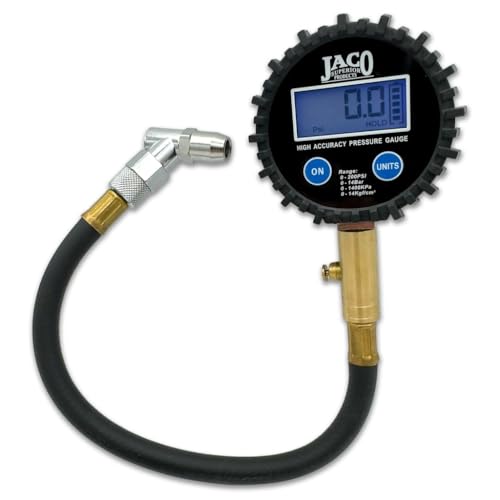
JACO ElitePro Digital Tire Pressure Gauge
Strengths
- Professional-grade accuracy
- Durable brass and steel build
- Locking display with bleed valve
Trade-offs
- Expensive for casual users
- Requires AAA batteries
- Overkill for small cars
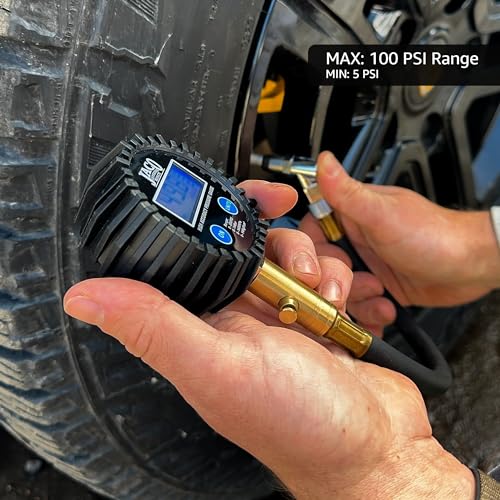
This is the digital gauge I’d recommend to anyone serious about tire maintenance. With a 200 PSI max range and ±0.50% FS accuracy, it’s built for trucks, performance cars, and heavy-duty applications where precision matters. The dual pressure sensors and 0.10 PSI resolution are overkill for daily drivers, but that’s the point. It’s calibrated to ANSI 2A standards, the same benchmark pro shops use.
The build quality matches the specs. Solid brass and steel internals, a rugged gear-style guard, and a 10-inch HybridFlex hose with a swappable 360-degree chuck make it durable and easy to use in tight wheel wells. Owners praise the lock-on display and real-time bleed valve, which lets you fine-tune pressure without losing your reading. It’s clearly designed by people who’ve worked in garages.
Video review
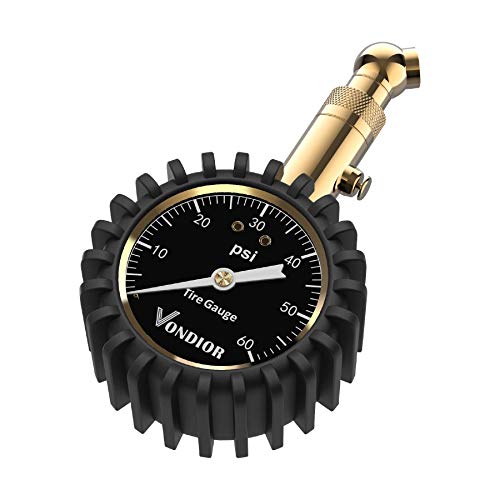
Vondior ANSI Certified Analog Tire Gauge
Strengths
- ANSI-certified analog accuracy
- No batteries needed
- Durable rubber armor
Trade-offs
- Limited to 60 PSI
- No backlight
- Bulkier than pencil gauges
Analog gauges are a dying breed, but the Vondior proves they still have a place. It’s one of the few analog models certified to ANSI standards, with ±1% accuracy across its 0-60 PSI range, perfect for most sedans and SUVs. No batteries, no lag, no fear of electronics failing in cold weather. Just attach and read.
Owners love the large, easy-to-read dial and the swiveling connector that makes it simple to use on awkward valve stems. The rubber armor adds grip and protection, and the 10-year warranty shows real confidence. It’s not as flashy as digital, but for drivers who value simplicity and reliability, this is a tool that can last decades.
Video review
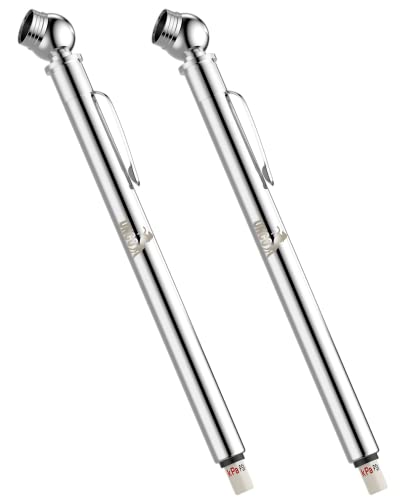
UNCO Pencil Tire Gauge 2 Pack
Strengths
- Affordable twin pack
- Stainless steel body
- Integrated deflator
Trade-offs
- Lower accuracy than digital
- No backlight
- Basic readout
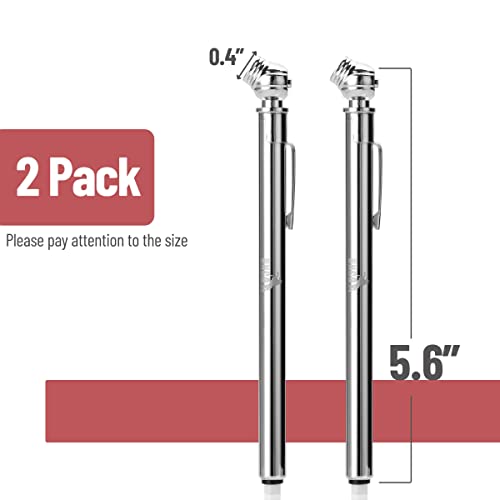
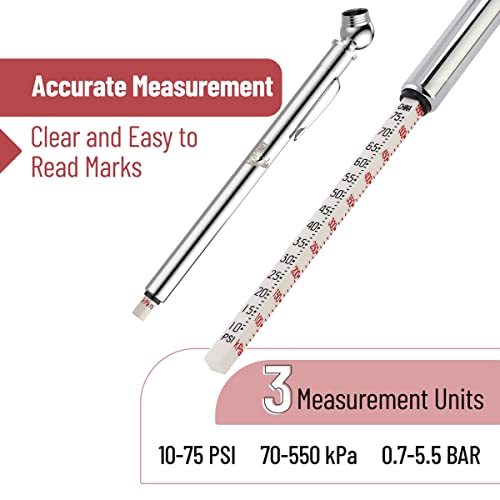
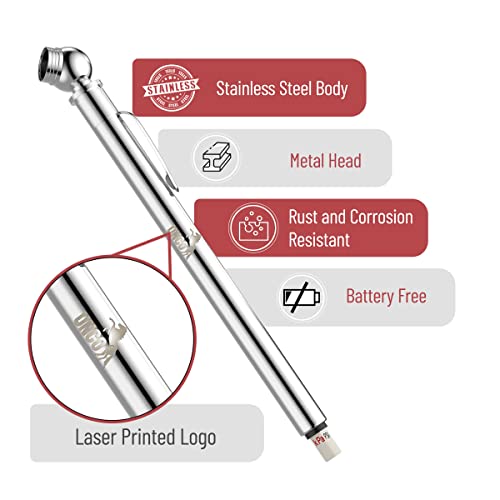
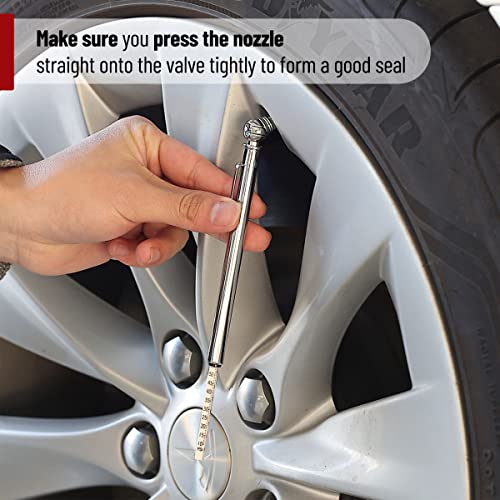
For the price, this twin pack of UNCO pencil gauges delivers basic functionality with a decent build. Stainless steel construction helps resist corrosion, and owners consistently report they hold up better than plastic-bodied gauges over time. The 10-75 PSI range covers most passenger vehicles, and the integrated deflator is a rare plus at this price point.
Still, pencil gauges are inherently limited in precision. On paper, they’re less accurate than digital or high-end analog models, and feedback suggests readings can vary slightly between units. But if you need a no-battery, no-fuss backup that fits in a glove box or tool roll, two of them for under five bucks makes this a smart bulk buy.
Product photos

JACO ElitePro 100 PSI Digital Gauge
Strengths
- High accuracy for cars and bikes
- Durable, professional build
- Backlit display with lock feature
Trade-offs
- Same price as 200 PSI model
- Battery-dependent
- Overbuilt for casual use
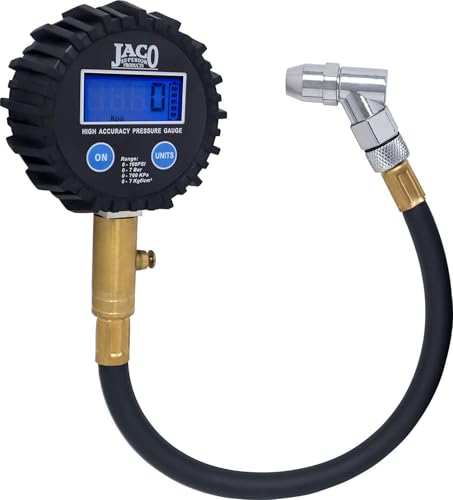
If the 200 PSI model is overkill, this 100 PSI version is the sweet spot for most car and motorcycle owners. It shares the same elite build, solid brass internals, shock-resistant guard, 10-inch swivel hose, and identical ±0.50% FS accuracy, just capped at a more typical 100 PSI. The 0.10 PSI resolution still gives you granular control, which matters when dialing in tire pressure for track days or long highway runs.
Reviewers note the LED-backlit display is easy to read at night, and the auto-shutoff preserves battery life. The real advantage over cheaper digitals is consistency. Unlike budget models that drift over time, this one holds calibration, thanks to JACO’s lifetime warranty and internal engineering. For motorcycles, where even 1 PSI makes a difference in handling, that reliability is key.
Product photos


AstroAI Tire Gauge with Inflator
Strengths
- 3-in-1 inflate/check/deflate
- Durable metal construction
- Universal NPT compatibility
Trade-offs
- Not a standalone inflator
- Lower precision than dedicated gauges
- Bulkier design
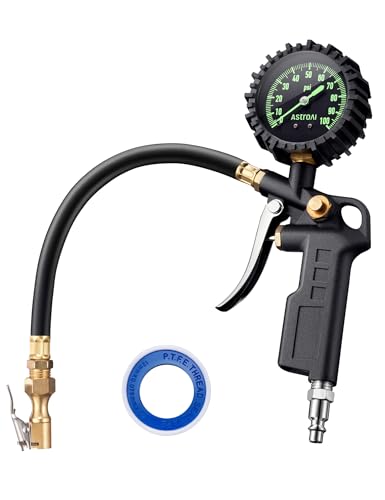
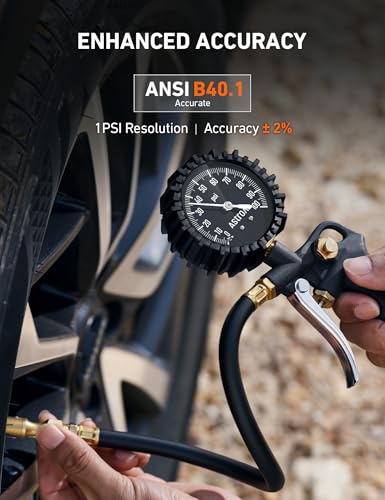
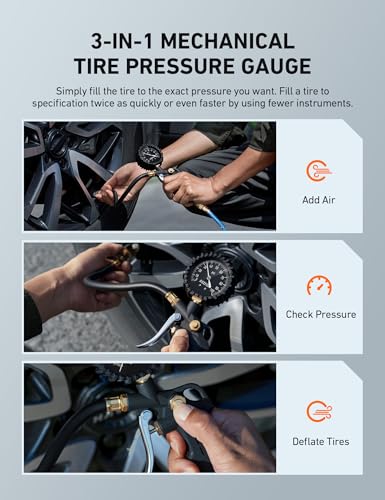
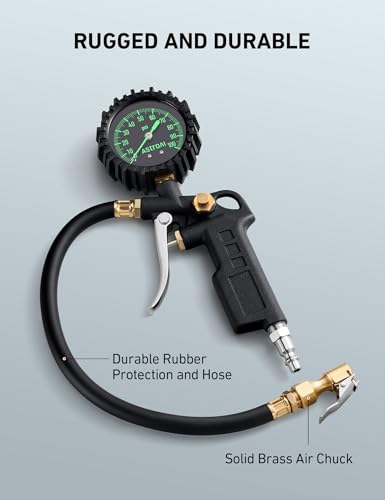
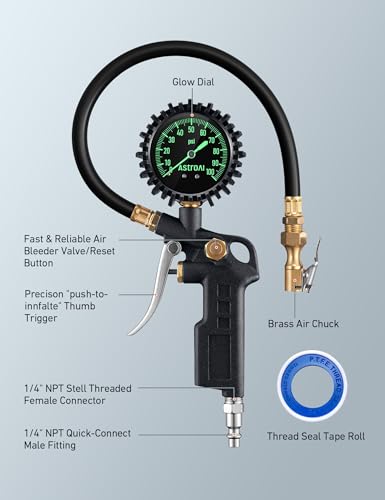
This 3-in-1 tool stands out by combining a gauge, inflator, and deflator, making it ideal for drivers who want to adjust pressure on the spot without hauling out a full air compressor. The stainless steel and brass build feels solid, and the ANSI B40.1 calibration means it’s reasonably accurate up to 100 PSI. Owners appreciate being able to inflate, check, and bleed with one device, especially during tire rotations or seasonal changes.
But it’s not a pure gauge. The trigger-based inflation works only when connected to an air source, so it’s not a standalone inflator. And while the accuracy is decent, it’s not on par with the JACO ElitePro models. Still, for the versatility, it’s a strong pick. If you’re tired of juggling multiple tools, this one consolidates the job.
Product photos
Our Testing Process
My approach at TheAutoZenith is always rooted in understanding what truly matters to the driver. Rather than a hands-on lab test of each gauge, this selection is a research-led comparison of published specifications and, crucially, owner feedback. I’ve weighed features, accuracy claims, and durability reports from a wide range of sources – including manufacturer data, expert reviews from automotive publications, and thousands of user reviews. The goal was to identify gauges that consistently deliver reliable readings and long-term value.
For car tire pressure gauges, accuracy and build quality stand out as the most important factors. Consistent, precise readings are vital for safety and fuel efficiency, which is why I prioritized gauges meeting ANSI standards. Beyond that, a robust construction is key; a gauge that can withstand regular use – and the occasional drop – is far more useful than a delicate instrument. I also considered features like display readability and ease of use, recognizing that a complex gauge is less likely to be used correctly.
Specifications provide a baseline for accuracy claims (PSI range, resolution), but owner feedback reveals the real-world performance. I paid close attention to reports of calibration drift or inconsistencies. While specs will tell you a gauge should be accurate, reviews often reveal whether it is. Understanding that proper tire inflation is critical, I’ve also linked to our guide on best digital gauges for those wanting a deeper look, and for complementary tools, check out our recommendations for car tire inflators.
Choosing The Right car tire pressure gauges
Finding the right tire pressure gauge is about more than just getting a number; it’s about safety, efficiency, and extending the life of your tires. I’ve spent years around vehicles of all kinds, and I can tell you that consistent, accurate tire pressure is one of the simplest things you can do to improve your driving experience.
A quality tire pressure gauge delivers consistent, repeatable readings within an accepted margin of error (typically ±1 PSI). It should feel solid in the hand, have a clear and easily readable display, and be compatible with standard Schrader valves. Durability and the ability to withstand occasional drops are also crucial considerations, as is a design that simplifies use, even in low-light conditions.
Accuracy and Calibration
Don’t assume all gauges are created equal. Accuracy is paramount, and it’s where you’ll see the biggest difference between a cheap unit and one you can rely on. Look for gauges that are calibrated to ANSI standards (like the ANSI 2A standard mentioned with the JACO ElitePro). Digital gauges often boast impressive accuracy specifications (±0.50% FS, as with the JACO), but even a well-made analog gauge can be surprisingly precise if properly maintained. I recommend checking the calibration periodically against a known accurate source, if possible.
Digital vs. Analog: What’s the Difference?
The debate between digital and analog gauges often comes down to personal preference. Digital gauges, like the AstroAI and ETENWOLF models, offer clear, easy-to-read displays and often include features like backlighting and automatic shut-off. However, they rely on batteries, which can fail at inconvenient times. Analog gauges, such as the Vondior, are battery-free and generally more robust.
Here’s a breakdown to help you decide:
- Simplicity: Analog gauges are straightforward; no buttons, no settings.
- Features: Digital gauges offer added convenience like unit switching (PSI, Bar, KPA) and often have built-in bleed valves.
- Durability: While digital gauges are improving, analog gauges tend to be more resistant to damage from drops and impacts, which is important given where they’re often used.
Value and Practicality
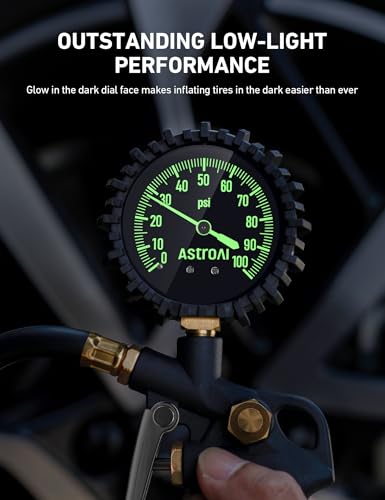
Ultimately, the best tire pressure gauge is the one you’ll actually use regularly. A feature-packed, expensive gauge won’t do you much good if it’s inconvenient to access or operate. Consider where and how you’ll be using the gauge. If you frequently check tire pressure in low-light conditions, a gauge with a backlit display or a glow dial (like the ETENWOLF Glow Dial) is a must. For those who want a versatile solution, exploring options like the AstroAI Tire Gauge with Inflator, offering 3-in-1 functionality, might be a good fit.
A tire pressure gauge is only useful if it’s within reach. Keep it in your glove compartment, with your emergency kit, or wherever you’re most likely to grab it before a long trip.
If you’re looking for a more detailed overview of the options available, be sure to check out our guide to the best tire pressure gauges. We’ve also put together a thorough tire gauge guide to help you understand all the different types of tire gauges on the market and find the top-rated tire gauges for your needs.
Car Tire Pressure Gauges Compared
Here’s a comparison of key specifications for popular car tire pressure gauges.
| Product Name | Pressure Range (PSI) | Accuracy (PSI) | Digital/Analog | Battery Required | Special Features |
|---|---|---|---|---|---|
| JACO ElitePro Digital Tire Gauge | Up to 200 | ±0.50% (1) | Digital | Yes (2x AAA) | Lock-on, Bleeder Valve |
| AstroAI Digital Tire Gauge 150PSI | 0-150 | ±1 | Digital | Yes (3x LR44) | Backlit Display, 4 Units |
| Vondior ANSI Certified Analog Tire Gauge | 0-60 | ±1% | Analog | No | Swivel Valve Connector |
| UNCO Pencil Tire Gauge 2 Pack | 10-75 | N/A | Analog | No | Deflator Valve, 2-Pack |
| JACO ElitePro 100 PSI Digital Gauge | Up to 100 | ±0.50% (0.5) | Digital | Yes (2x AAA) | Lock-on, Bleeder Valve |
| ETENWOLF T300 Digital Tire Gauge 200PSI | 3-200 | ±1 | Digital | Yes (AAA) | Thermal Compensation, AI Chip |
| AstroAI Tire Gauge with Inflator | 0-100 | ±1 | Digital/Analog | No | Inflate/Deflate, 3-in-1 |
| ETENWOLF Glow Dial Tire Pressure Gauge | 0-75 | ±1% | Analog | No | Glow Dial, Swivel Chuck |
Frequently Asked Questions
What PSI should I typically inflate my tires to?
The correct tire pressure depends on your specific vehicle; you’ll find the recommended PSI on a sticker typically located on the driver’s side doorjamb or in your owner’s manual. Don’t rely on the maximum pressure listed on the tire sidewall, as that’s not the recommended operating pressure.
How often should I check my tire pressure?
I recommend checking your tire pressure at least once a month, and before any long trips. Temperature changes significantly affect tire pressure – for every 10-degree Fahrenheit drop in temperature, your tire pressure decreases by about 1 PSI.
Can a tire pressure gauge be recalibrated if it’s inaccurate?
Some digital gauges allow for calibration, but it’s often a complex process best left to professionals. For analog gauges, attempting recalibration is rarely practical. If you suspect a gauge is consistently off, it’s generally more reliable to replace it with a new, certified gauge, or compare it against a known accurate gauge.
What are the benefits of using a tire tread depth gauge alongside a pressure gauge?
Maintaining adequate tire tread is just as important as proper inflation for safety. Using tire tread depth gauges helps you determine when your tires are worn and need replacing, ensuring optimal grip and reducing the risk of hydroplaning.
Are those small, stick-style tire pressure gauges accurate enough?
While less feature-rich than digital models, many pencil tire pressure gauges provide surprisingly accurate readings when properly maintained and compared to a known standard. They can be a great backup option or for those who prefer a simple, battery-free solution.
The Bottom Line
Choosing a tire pressure gauge often comes down to balancing control with convenience. Do you want the absolute precision of a digital readout, or the rugged simplicity of an analog design? For an all-around excellent choice that doesn’t compromise, I believe the JACO ElitePro Digital Tire Gauge strikes the best balance of accuracy, features, and build quality – it’s a solid investment for any driver.
If your needs are more specific, there are excellent options to consider. For those seeking an affordable and reliable analog option, the Vondior ANSI Certified Analog Tire Gauge is a great pick. And if you’re interested in a versatile tool that combines inflation and pressure checking, the AstroAI Tire Gauge with Inflator is a solid choice. For those who prefer the classic look and feel of reliable dial gauges, the ETENWOLF Glow Dial Tire Pressure Gauge is worth a look.
Ultimately, the most important thing isn’t the gauge itself, but the habit of consistently checking your tire pressure. Don’t get lost in chasing perfect specifications; a regular check with any decent gauge is far more beneficial than infrequent checks with the most expensive one. Consider supplementing with tire pressure monitoring systems for ongoing awareness, but remember that proactive manual checks are still essential for safe and efficient driving.
