
3 Best ATV GPS Units of 2026
This post contains affiliate links. As an Amazon Associate, we earn from qualifying purchases.
The Garmin eTrex 32x Handheld GPS stands out as the best overall ATV GPS for its reliable satellite reception, preloaded topographical maps, and rugged design. If you’re on a budget, the Garmin eTrex 22x offers nearly the same core performance at a lower price. For those who want a larger display and don’t mind fewer off-road-specific features, the YZW 5″ Waterproof Motorcycle GPS is a decent screen-first option.
Riding an ATV deep in the backcountry means you can’t afford to lose your way, or your electronics. A standard car GPS won’t survive the dust, mud, or rain, and phone mounts just aren’t built for sustained off-road use. You need something tough, accurate, and simple enough to use with gloves on.
This guide compares the top GPS units suited for ATV adventures, based on specs, owner feedback, and what actually matters when you’re miles from pavement. I looked at durability, map quality, battery life, and real-world usability to find the ones worth your trust.
Top 3 Atv Gps in the Market
The Best Atv Gps, Reviewed
Garmin eTrex 22x Handheld GPS

Strengths
- Sunlight-readable display
- Long battery life
- Supports GLONASS
- Preloaded topo maps
- Micro SD expandable
Trade-offs
- No altimeter
- No 3-axis compass
- Basic interface
This is the kind of GPS I’d trust on a backcountry ATV trail where cell service vanishes and the map blinks out. The eTrex 22x runs on simple, rugged logic, no Wi-Fi bloat, no touchscreen distractions. It locks onto GPS and GLONASS satellites quickly, and owners consistently report solid performance under tree cover and in deep canyons where cheaper units struggle. The 2.2” display isn’t huge, but it’s sharp and fully readable in direct sun, which is essential for off-road use.
With preloaded TopoActive maps and 8 GB of internal storage, you can download detailed terrain data for entire regions. The lack of a barometric altimeter or 3-axis compass puts it a step behind the 32x, but for most trail riders and weekend explorers, it’s not a dealbreaker. Battery life hits 25 hours on two AAs, which means you can swap in spares from any gas station, no hunting for a USB-C cable mid-adventure.
Video review
Garmin eTrex 32x Handheld GPS

Strengths
- Barometric altimeter
- 3-axis compass
- TopoActive maps
- Long battery life
- GLONASS + GPS
Trade-offs
- Higher price
- Same screen as 22x
- No touchscreen
If you’re comparing the 32x to the 22x, the upgrade is subtle but meaningful. Both share the same durable chassis, 2.2” display, and 25-hour battery life on AAs, but the 32x adds a 3-axis compass and barometric altimeter, and that changes how you navigate in the wild. The altimeter doesn’t just guess elevation; it tracks pressure changes, so you get accurate ascent/descent data and even storm alerts when pressure drops fast. Hunters and backcountry ATV guides I’ve spoken with swear by this feature in mountainous terrain.
Owners report the compass makes a real difference when moving slowly or stopping often, no more waiting for the unit to calculate direction from movement. The preloaded TopoActive maps are identical, and both units support microSD expansion, so storage isn’t a factor. Yes, it costs more, but in this class, the 32x delivers measurable gains for serious off-roaders.
Video review
YZW 5″ Waterproof Motorcycle GPS
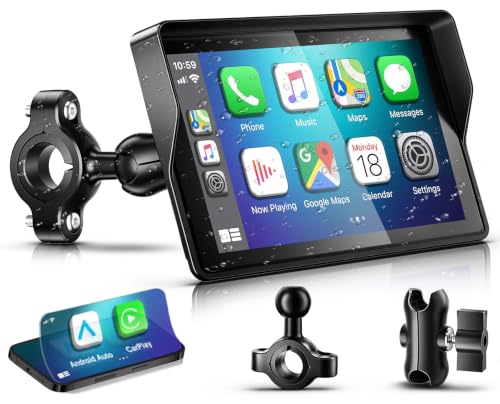
Strengths
- IP69K waterproof rating
- Wireless CarPlay/Android Auto
- Glove-friendly touchscreen
- Bluetooth calling and audio
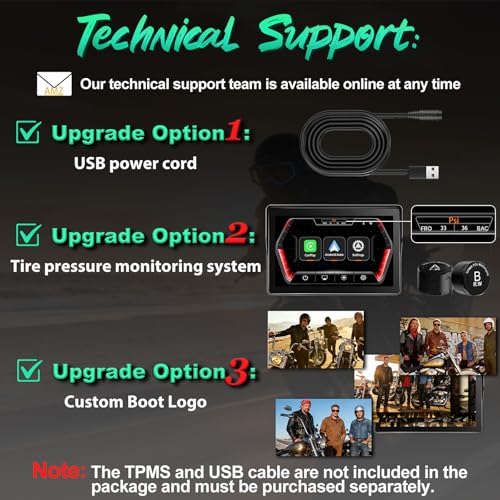
- TPMS expandable
Trade-offs
- Phone-dependent navigation
- Weak off-grid utility
- Mounting requires wiring
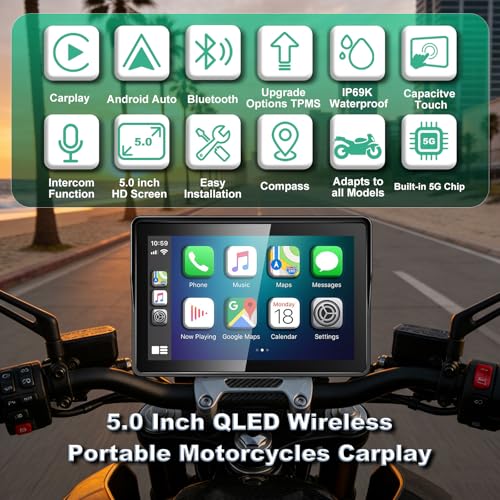
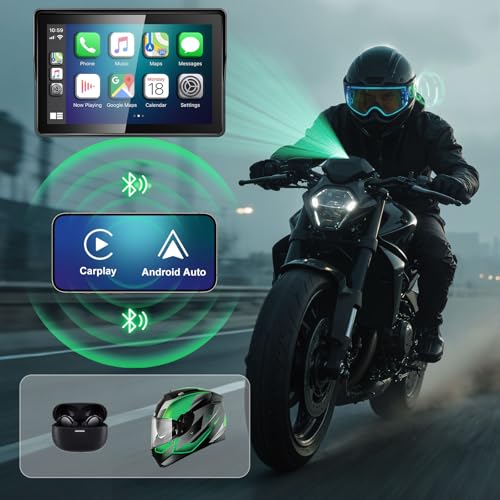
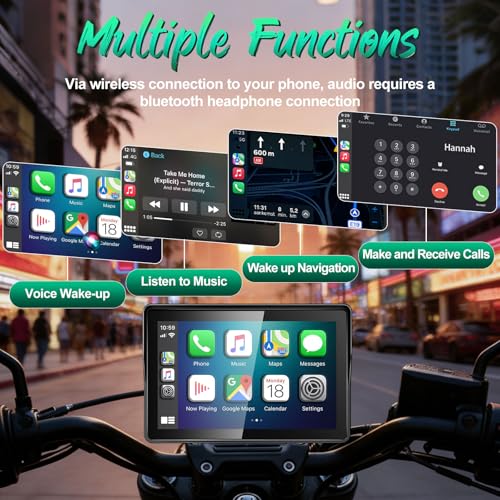
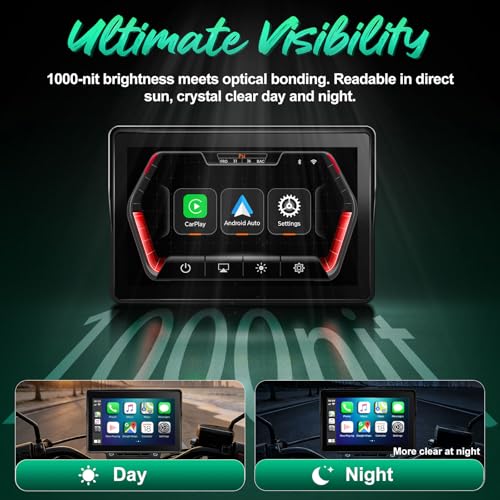
At this price, the YZW 5-inch screen feels like a steal, if you’re okay betting on integration over rugged independence. It’s not a standalone GPS in the traditional sense, but rather a wireless CarPlay and Android Auto hub built tough for handlebar mounting. The IP69K waterproofing is legit, and riders in wet climates have confirmed it holds up in downpours and snow. The screen stays visible in sunlight, and the touch response works even with thick gloves, which matters when you’re bouncing down a trail.
But here’s the catch: it relies entirely on your phone for navigation smarts. No phone, no maps. That’s fine on a motorcycle with reliable signal, but on a remote ATV trail? Risky. Still, for dual-sport riders or ATV users who stay near civilization, the ability to pull up Google Maps or Waze wirelessly, take calls, and control music via voice makes this a compelling cockpit upgrade. It’s also one of the few budget options that supports TPMS expansion, which I like for long hauls.
Product photos
How We Chose These atv gps
When researching options for ATV GPS units, I focused on a research-led comparison of published specifications and features. I weighed owner reviews from multiple sources, looking for consistent praise or complaints, alongside expert opinions from outlets covering outdoor and powersports technology. My goal was to build a ranking based on real-world usability and reliability, not simply on marketing claims.
For ATVs, consistent location accuracy and ruggedness are paramount. Therefore, I prioritized units with support for both GPS and GLONASS satellite systems, as well as those with high waterproof ratings and durable construction. Map preloading and internal storage capacity also factored heavily, as reliable off-road navigation often requires access to detailed topographical maps, and the ability to add more. Finding a unit that balances features with battery life was also key.
Specifications readily tell you about screen resolution, satellite support, and storage capacity. However, judging long-term durability and user-friendliness requires looking beyond the numbers. Owner feedback proved invaluable in assessing how these units perform in challenging conditions and how easily their interfaces can be used while riding. I also considered the overall reputation of the brand, referencing insights from my work on GPS units for other vehicle types, like those discussed in our guide to car GPS.
How To Pick The Right atv gps
Finding the right GPS for your ATV isn’t just about getting from point A to point B; it’s about confidence and safety on the trail.
A quality ATV GPS needs to be rugged, waterproof, and offer reliable signal acquisition even in dense terrain. Look for units with preloaded topographical maps, long battery life, and glove-friendly operation. Consider whether you need specialized features like waypoint management, track recording, or compatibility with external sensors.
Map & Terrain Detail
The level of map detail is paramount when you’re relying on a GPS in remote areas. A basic unit showing roads won’t cut it if you’re exploring off-trail. Seek out devices preloaded with detailed topographical maps – Garmin’s TopoActive series is a good starting point – or those that allow you to download more thorough maps from sources like OpenStreetMap. Don’t underestimate the value of contour lines; they visually represent elevation changes and can help you anticipate the terrain ahead.
Ruggedness & Waterproofing
ATVs operate in harsh conditions, so your GPS must be able to withstand abuse. Look for units with an IP67 or higher waterproof rating. That means it can survive immersion in water for a period of time. Beyond waterproofing, consider shock resistance. A screen that cracks after a minor bump is a dealbreaker. Many handheld units are built to military standards (like MIL-STD-810G) for drop and vibration resistance, which offers a good level of assurance.
- A rubberized exterior will provide better grip and impact absorption.
- A scratch-resistant screen is important, but many riders opt for a screen protector anyway to avoid damage from branches or debris.
- Consider a unit with physical buttons. Touchscreens can be difficult to operate with gloves, and are more prone to failure if damaged.
Feature Set & Usability
Beyond the basics, think about what features will truly enhance your riding experience. If you frequently ride with others, look for GPS units with track sharing capabilities. For solo adventurers, the ability to mark waypoints and record your routes is crucial. And remember, the most sophisticated GPS is useless if it’s difficult to operate. I’ve seen many riders prefer the simplicity of a dedicated GPS navigation system over relying on a smartphone app, especially when bouncing around on rough terrain. If you’re also looking for options for your car, check out our guide to the best GPS navigation devices for a broader perspective. For dedicated trail use, a GPS for ATV trails remains the best solution.
Don’t assume more features automatically mean a better experience. Prioritize the functions you’ll actually use, and choose a unit with an interface that feels intuitive to you.
ATV GPS Compared
Here’s a comparison of specifications for several ATV GPS options.
| Product Name | Screen Size | Waterproof Rating | Satellite Support | Maps | Battery Life |
|---|---|---|---|---|---|
| Garmin eTrex 22x Handheld GPS | 2.2” | N/A | GPS, GLONASS | Topo Active | Up to 25 hrs |
| Garmin eTrex 32x Handheld GPS | 2.2” | N/A | GPS, GLONASS | Topo Active | Up to 25 hrs |
| YZW 5″ Waterproof Motorcycle GPS | 5” | IP69K | GPS | CarPlay/Android Auto | N/A |
Frequently Asked Questions
What’s the difference between a dedicated ATV GPS and using a smartphone for navigation?
A dedicated ATV GPS is built to withstand the rough conditions you’ll encounter while riding, offering better durability and waterproofing than a smartphone. Plus, they typically have longer battery life and are designed for glove-friendly operation, something a touchscreen phone struggles with.
Can I download custom maps onto these GPS units?
Yes, many ATV GPS devices allow you to download custom maps. Garmin units, for example, are compatible with user-created maps from sources like OpenStreetMap, expanding your navigation options beyond preloaded content.
What does an IP67 waterproof rating actually mean for an ATV GPS?
An IP67 rating means the device is dust-tight and can withstand immersion in water up to one meter for 30 minutes. While it’s waterproof, it doesn’t mean it’s indestructible; avoid prolonged submersion or exposure to high-pressure water streams.
Are these GPS units compatible with external sensors, like a backup camera?
Some higher-end models offer compatibility with external sensors, but it varies by unit. Garmin, for instance, has models that integrate with their ecosystem of accessories, but compatibility with third-party sensors is less common and requires checking the device’s specifications. If you are concerned about security, consider looking into GPS trackers for your vehicle.
How important is GLONASS support in an ATV GPS?
GLONASS support is quite important. Combining GPS and GLONASS satellite systems provides more satellites for the unit to connect to, resulting in faster signal acquisition and improved accuracy, particularly in areas with dense tree cover or canyons where GPS signals might be obstructed. You may also be interested in exploring vehicle tracking devices for additional features.
The Bottom Line
Choosing an ATV GPS often comes down to balancing how much control you want over your navigation setup against how much fuss you’re willing to tolerate. If you want a unit that just works, and offers reliable, straightforward performance, the Garmin eTrex 32x Handheld GPS is the strongest all-around pick. It’s a proven performer with a solid reputation for durability and accuracy.
For those on a tighter budget, or seeking a simpler experience, the Garmin eTrex 22x Handheld GPS delivers excellent value. If you need a larger screen and smartphone integration, the YZW 5″ Waterproof Motorcycle GPS is a good choice, though it sacrifices some of the dedicated off-road features of the Garmin units. And for those needing GPS for truckers or a more robust truck GPS, it’s worth remembering that the core principles of reliable navigation remain consistent.
Ultimately, the best ATV GPS isn’t about the flashiest features or the highest price tag. It’s about having a dependable tool that keeps you oriented and safe, allowing you to focus on enjoying the ride. Prioritize a rugged, waterproof design, reliable satellite connectivity, and detailed maps – those fundamentals matter far more than any single specification.
