
7 Best Antennas for Camper 2026
This post contains affiliate links. As an Amazon Associate, we earn from qualifying purchases.
The Winegard RV-3095 Sensar III Batwing stands out as the best overall antenna for campers, delivering strong directional reception and solid build quality. For those on a tighter budget, the RV TV Antenna 4K HD Roof Mount offers amplified omnidirectional performance at a lower price, while the Winegard A3-2000 Air 360 is a top pick if you prioritize hassle-free, 360-degree signal capture without aiming.
If you’ve ever sat in a scenic spot only to find your TV signal is a pixelated mess, you know a good camper antenna isn’t a luxury, it’s part of the comfort of home on wheels. Reception depends on more than just height or hype; it’s about smart design, durability, and matching the antenna to how you travel.
In this guide, I break down the top options based on specs, owner feedback, and real-world reliability. I looked at range claims, amplifier performance, build resilience, and ease of setup, all through the lens of someone who values both function and the freedom of the open road.
Top 7 Antennas For Camper in the Market
The Best Antennas For Camper, Reviewed
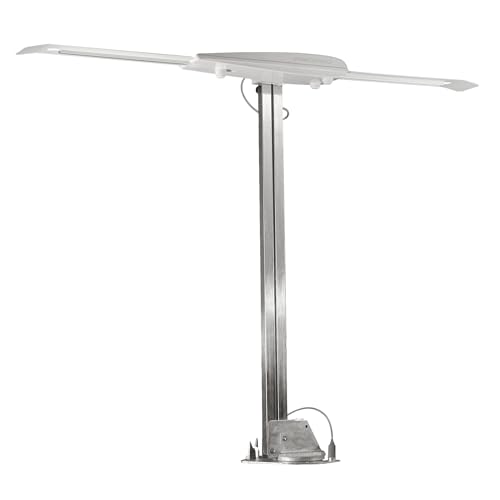
Winegard RV-3095 Sensar III Batwing
Strengths
- 55-mile range
- Manual raise/lower/rotate
- Superior signal clarity
- Robust outdoor durability
- Strong VHF/UHF performance
Trade-offs
- Requires aiming
- Higher cost
- Slightly bulkier profile
If you’re serious about over-the-air TV in your RV, the Sensar III is the gold standard. Its batwing design gives it real directional gain, and the 55-mile range isn’t marketing fluff, owners in remote areas confirm it pulls in channels others miss. The real advantage is the manual control: you can raise, lower, and rotate it from inside the RV, which is a standout when you’re trying to fine-tune reception in tricky spots.
It’s also built like a tank. The housing resists UV, salt, and vibration, and the amplifier delivers clean signal without the noise some budget units introduce. Yes, it costs more, but this is the one I’d recommend to anyone who regularly camps off-grid or in mountainous regions. Compared to omnidirectional models, it requires more effort to aim, but the payoff in signal strength is worth it.
Video review
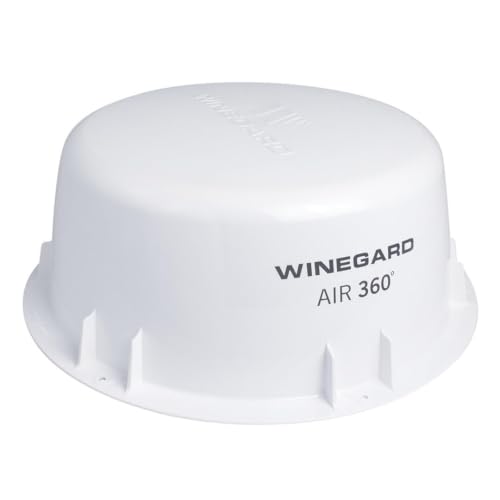
Winegard A3-2000 Air 360
Strengths
- True 360° reception
- Low-profile design
- Excellent build quality
- Durable weather resistance
- Winegard system compatibility
Trade-offs
- Higher price point
- Amplifier not as strong as Sensar III
- Occasional FM interference in urban areas
The A3-2000 is where Winegard’s engineering shines, its true 360-degree omnidirectional design means you never have to rotate or aim the antenna, which is a huge win for spontaneous setups. It pulls in both VHF and UHF signals reliably, and its low-profile build reduces wind noise and drag, a detail I appreciate from a mechanical standpoint. Reviewers note consistent performance across varied terrain, and it integrates cleanly with other Winegard entertainment systems, which matters if you’re building out a full RV media setup.
It’s not the most powerful amplifier in the class, so don’t expect miracles in mountain canyons or dense forests. But for steady, set-and-forget HD reception across typical travel routes, it’s one of the smarter choices. I’d pick this over cheaper clones that claim omnidirectional performance but fall short on filtering and gain consistency.
Video review
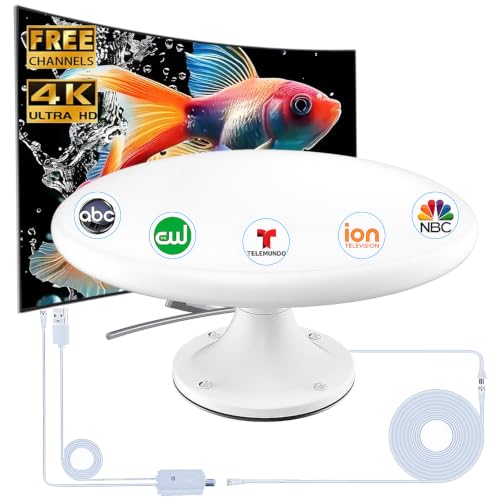
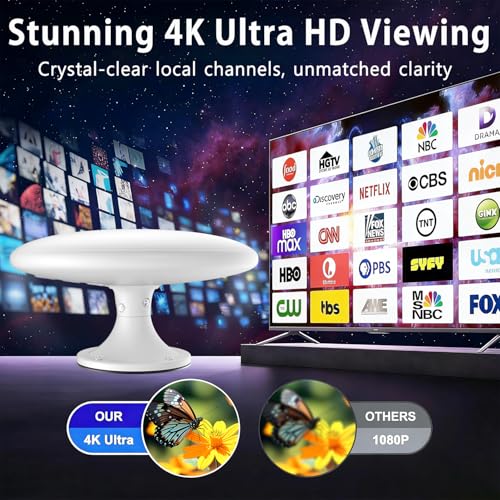
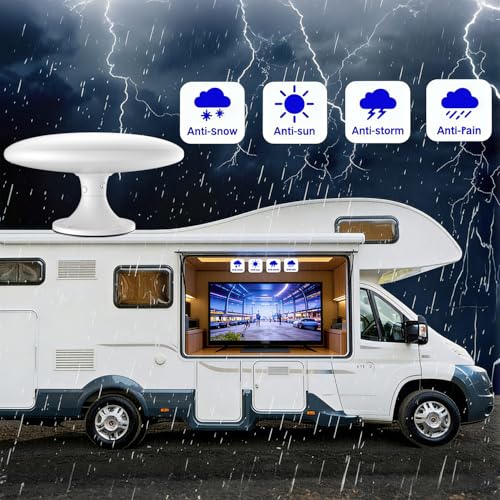
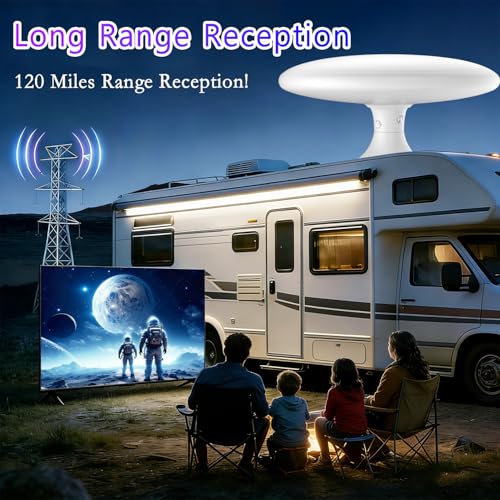
RV TV Antenna 4K HD Roof Mount
Strengths
- 60+ mile range claim
- 32.8ft coax cable
- True omnidirectional
- Good interference filtering
- Quick installation
Trade-offs
- Amplifier can overload in strong signal zones
- Build quality slightly below Winegard
- Occasional plastic creak in wind
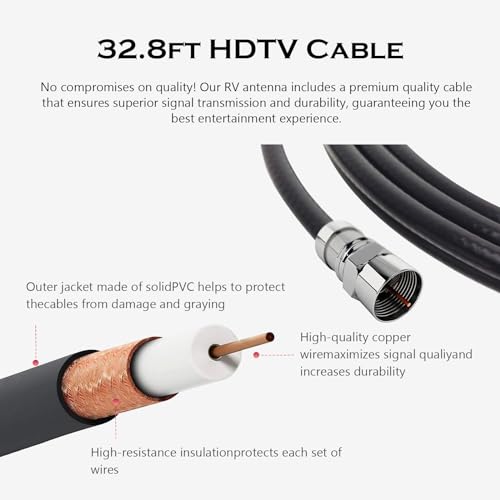
Priced in the mid-to-upper tier, this unit claims 60+ mile range and true omnidirectional capture, ambitious numbers, but real-world feedback suggests it delivers solid performance within 40–50 miles under good conditions. The built-in booster is effective, and the 32.8ft cable is a practical upgrade over shorter leads, making routing through taller motorhomes easier.
It’s clearly modeled after the Winegard A3-2000, and while it doesn’t quite match that build refinement, it comes close in function. Owners praise the quick 10-minute install and stable reception while parked. The housing feels sturdy, and the anti-interference filter helps in areas with cellular congestion. For the money, it’s one of the smarter premium picks if you want strong performance without paying Winegard pricing.
Product photos

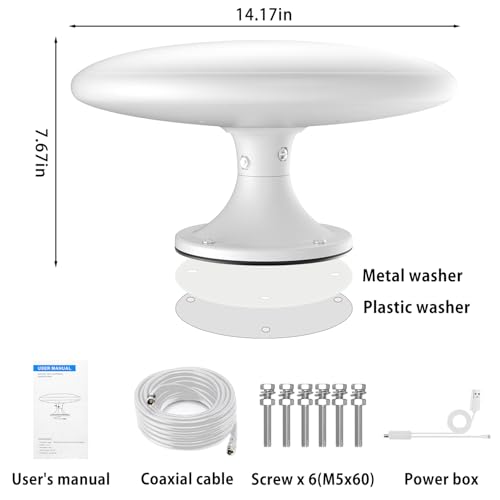
Outdoor RV TV Antenna 360° Omni

Strengths
- True 360° reception
- Good interference filtering
- UV-stabilized housing
- Simple mounting
- Affordable price
Trade-offs
- Amplifier gain is average
- Plastic base less rigid than metal
- Signal drops in heavy obstructions
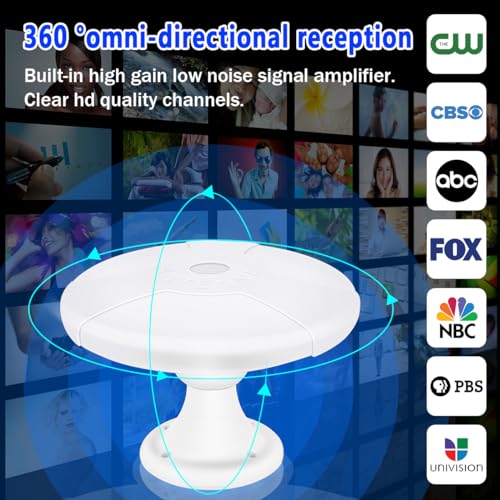
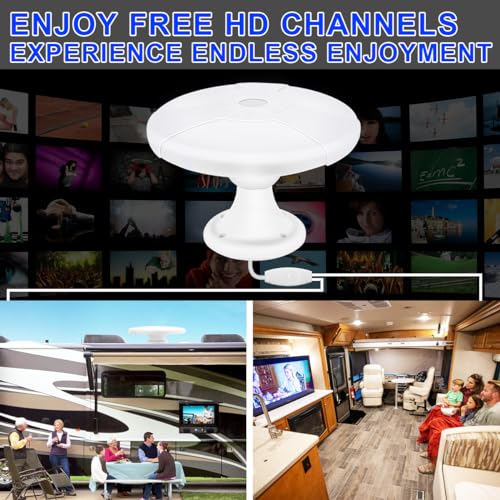
This is one of the better budget omnidirectional options, offering solid 360-degree reception and a decent built-in amplifier that handles mild interference. The housing is UV-stabilized and weather-resistant, and owners report it surviving seasons of use without degradation. Setup is fast, mount with four screws, connect the coax, and you’re scanning channels in minutes.
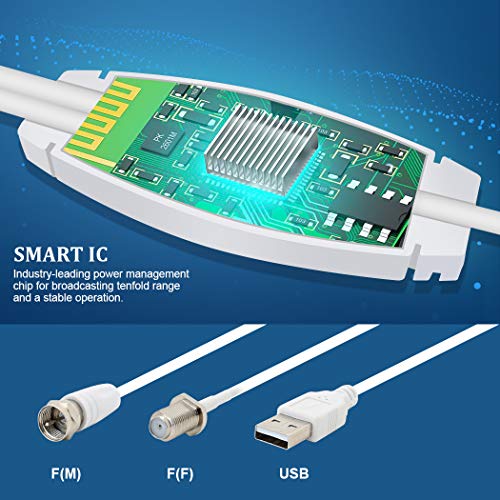
It won’t match the Winegard models in signal fidelity or range, but for the price, it’s a competent performer in areas with moderate tower proximity. The smart IC chip helps reduce cellular and FM noise, which is a real issue on many RV roofs. I’d stack this against the B0GHPC9ZFN and say they’re close, but this one edges ahead in filtering and ease of installation.
Product photos
Outdoor RV TV Antenna Digital 4K

Strengths
- Excellent weather resistance
- UV-stabilized housing
- Solid 360° reception
- Good signal stability
- Corrosion-resistant materials
Trade-offs
- Average amplifier strength
- Base mounting holes slightly misaligned in some units
- Limited gain in fringe areas
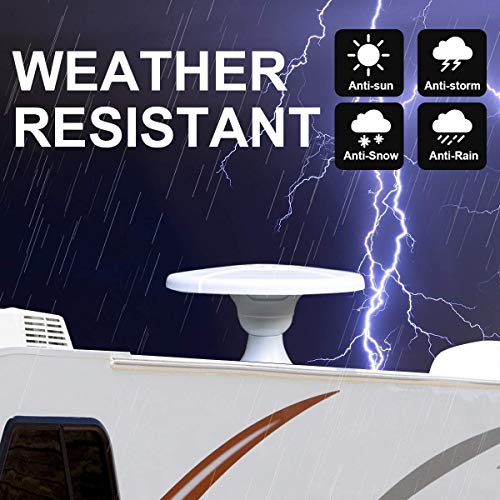
This unit stands out for its rugged, UV-stabilized housing, owners consistently praise its resistance to cracking, fading, and moisture ingress, even after years of sun and rain exposure. It’s clearly built for longevity, and the 360° omnidirectional design makes it a practical choice for frequent movers who don’t want to fuss with alignment.
The amplifier is competent, though not class-leading, and reception performance aligns with other budget-midrange models. Where it wins is durability: if you’re in harsh climates or salt-heavy coastal areas, this one’s construction gives real peace of mind. It’s not the fastest to acquire weak signals, but it holds them steadily once locked. Compared to the B088DPRJ7D, it’s nearly identical in function but feels more robust.
Product photos

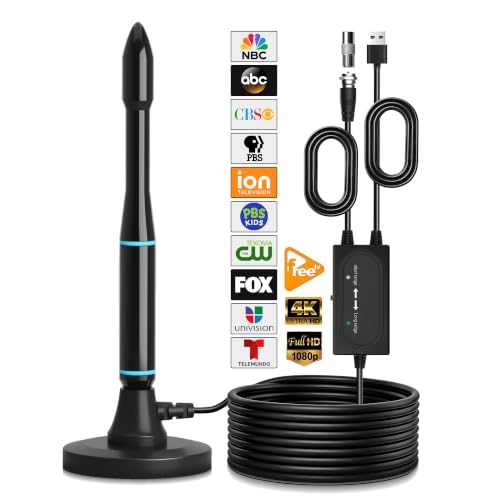
TV Antenna Indoor for Smart TV
Strengths
- Magnetic base for flexible placement
- Long coax cable
- 360° signal reception
- Indoor/outdoor versatility
- Low cost
Trade-offs
- Very limited range
- Fragile build
- Requires optimal placement
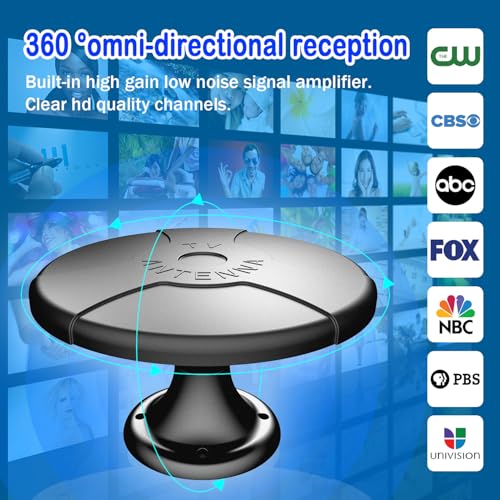
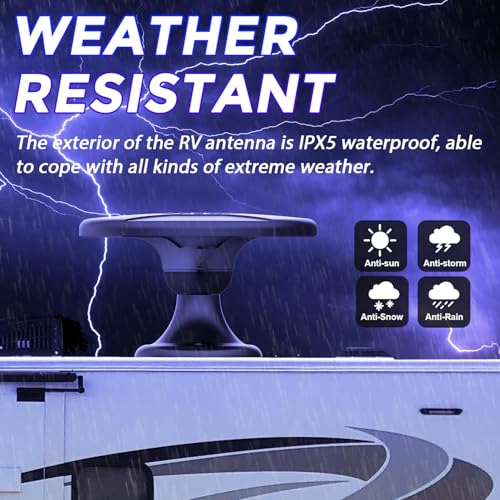
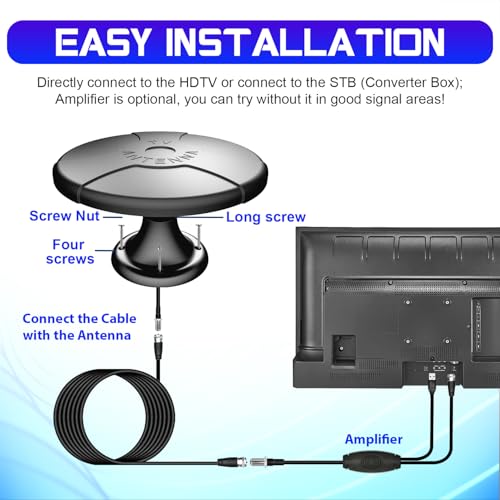
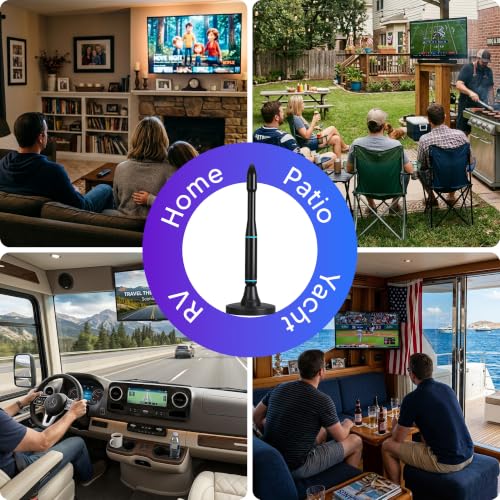
This indoor unit is a clever little tool for temporary setups, think pop-up campers, truck bunks, or hotel stays where you want to avoid streaming fees. The magnetic base is a nice touch, letting you stick it to a metal surface near a window, and the 360° reception helps in urban or suburban spots. It’s not going to replace a roof-mounted system, but for portable convenience, it’s surprisingly effective.
Owners confirm it works well when placed high and unobstructed, and the long coax cable gives flexibility in positioning. It’s also compatible with all modern TVs, which matters for renters or multi-vehicle users. But don’t expect miracles in rural zones, this is strictly a close-range, line-of-sight performer. Compared to roof mounts, it’s no contest, but as a backup or lightweight option, it earns its keep.
Product photos

RV Antenna Roof Mounted with Amplifier

Strengths
- Built-in amplifier
- 10m cable included
- Weatherproof design
- Supports 4K/1080p
- Universal compatibility
Trade-offs
- Limited long-range performance
- Plastic housing feels budget-grade
- Signal degrades in heavy obstructions
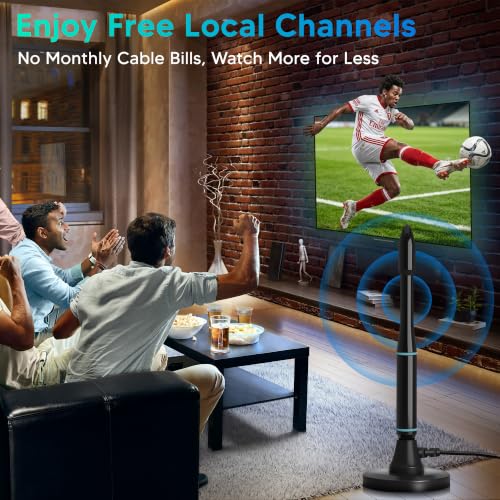
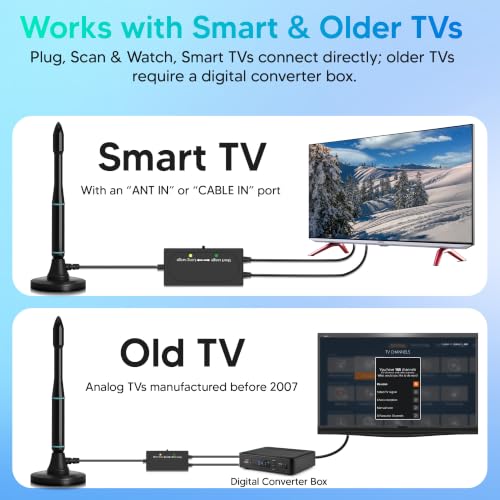
This model pushes solid value with its built-in amplifier and 10m cable, making it a no-fuss option for campers who want reliable HD reception without complex setup. On paper, it supports 4K and 1080p, and owners consistently report clean signal capture in suburban and semi-rural zones, though performance drops in deep fringe areas compared to premium Winegard units. The weatherproof design holds up well, and its universal coax compatibility means it works with nearly any TV or converter box.
Where it stands out is ease of integration. For someone upgrading an older camper or installing a first-time system, this ticks the right boxes without overcomplicating things. It’s not the strongest performer at long range, but for travelers who park within decent proximity to broadcast towers, it’s a dependable workhorse.
Product photos




How We Picked These antennas for camper
My approach to evaluating antennas for camper vans and RVs centered on a detailed comparison of published specifications and features, combined with a thorough review of owner experiences and expert opinions. Rather than a hands-on lab test, this is a research-led comparison focusing on the practical realities reported by those using these antennas on the road. I looked at numerous models, weighing their capabilities against real-world performance feedback.
For camper antennas, signal reception range and build quality are paramount. I heavily weighted the advertised range, understanding its limitations, as a primary indicator of potential performance. Equally important was the durability of construction; RV antennas endure significant vibration and weather exposure. A robust build speaks to longevity and a better return on investment, and is critical for anyone considering adding solar panels to their setup for off-grid viewing.
Specifications reliably reveal the technical capabilities – frequency ranges, gain, and impedance matching. However, owner feedback proved invaluable in assessing real-world performance, particularly regarding ease of installation and actual reception quality. Reputable RV-focused publications helped validate claims and identify consistent trends in performance and reliability. Finding suitable replacement truck antennas can be tricky, so owner reviews are especially important.
How To Pick The Right antennas for camper
Finding the right antenna for your camper can dramatically improve your entertainment options on the road. It’s about more than just pulling in a signal; it’s about consistent picture quality, ease of use, and durability for years of travel.
A quality camper antenna prioritizes signal amplification to overcome distance and interference. Look for models with a built-in amplifier, a clear specification for range (60+ miles is a good benchmark), and robust construction designed to withstand the vibrations and weather exposure inherent in RV travel. Consider whether omnidirectional or directional reception better suits your typical travel style, and verify compatibility with your TV’s input.
Signal Strength & Range
Don’t automatically assume “more miles” equals better performance. The advertised range on these antennas is often optimistic and depends heavily on your location, terrain, and the power of the local broadcast towers. Instead, focus on the amplifier quality. A well-designed, low-noise amplifier will pull in a weaker signal more effectively than a higher-powered amp with poor filtering. I’ve seen many travelers find success with antennas boasting 50-60 mile ranges, particularly when combined with a good signal finder app – these can help you pinpoint the direction of broadcast towers. If you also spend time operating a vehicle that might benefit from better communication, exploring options like CB antennas for trucks can supplement your entertainment setup.
Reception Pattern: Omni vs. Directional
The choice between an omnidirectional and a directional antenna is a fundamental one. Omnidirectional antennas, like the Winegard A3-2000 Air 360, are convenient because they receive signals from all directions, eliminating the need for manual aiming. This is ideal if you move frequently or don’t want to fiddle with adjustments. However, they generally have lower gain than directional antennas. Directional antennas, like the Winegard RV-3095 Sensar III Batwing, require you to point them towards the broadcast towers, but can provide a stronger signal when properly aimed.
Here’s how to think about it:
- Frequent Movers: Omnidirectional is the clear winner.
- Extended Stays: Directional can provide better reception if you take the time to aim it.
- Remote Locations: A directional antenna with a high-gain amplifier is your best bet, but requires knowing the tower locations.
Build Quality & Ease of Installation
RV antennas take a beating. Constant vibration, exposure to the elements, and highway speeds all demand a robust build. Look for antennas constructed from UV-resistant plastics and corrosion-resistant metals. Beyond durability, consider installation. Some antennas are designed for quick, tool-free mounting, while others require drilling and more involved setup. If you’re not comfortable working on your RV’s roof, factor in the cost of professional installation. Don’t underestimate the value of a well-placed antenna; even the best unit won’t perform well if it’s poorly mounted. And if you’re also thinking about improving communications for your pickup, you might want to investigate antennas for pickup trucks.
A well-built antenna should withstand highway speeds and years of exposure to sun, rain, and road grime. Don’t skimp on build quality; a cheap antenna that fails on the road is a far more expensive problem than investing in a durable unit upfront.
Antennas for Camper Compared
Here’s a comparison of key specifications for various antennas designed for camper use.
| Product Name | Range (Miles) | Reception Type | Mounting Type | Amplifier | 360° Reception |
|---|---|---|---|---|---|
| Winegard RV-3095 Sensar III Batwing | 55 | VHF/UHF | Adjustable | No | No |
| Winegard A3-2000 Air 360 | N/A | Omnidirectional | Roof | No | Yes |
| RV TV Antenna 4K HD Roof Mount | 60+ | Omnidirectional | Roof | Yes | Yes |
| Outdoor RV TV Antenna 360° Omni | N/A | Omnidirectional | Roof | Yes | Yes |
| Outdoor RV TV Antenna Digital 4K | N/A | Omnidirectional | Roof | Yes | Yes |
| TV Antenna Indoor for Smart TV | N/A | 360° | Magnetic/Indoor | No | Yes |
| RV Antenna Roof Mounted w/Amplifier | N/A | N/A | Roof | Yes | N/A |
Frequently Asked Questions
What’s the biggest factor affecting antenna range in real-world use?
Terrain and obstructions are the biggest factors. Advertised ranges assume a clear line of sight to the broadcast towers, which rarely exists in practice due to hills, trees, and buildings. A quality amplifier is more important than chasing high mileage numbers.
Are omnidirectional antennas truly “set it and forget it”?
Generally, yes. Omnidirectional antennas receive signals from all directions, simplifying setup. However, you might experience slightly weaker signals compared to a properly aimed directional antenna, especially in fringe reception areas.
Can I combine a camper antenna with other vehicle antennas?
Yes, you can. Many travelers successfully combine their camper antenna with vehicle antennas for CB radios or other communication devices. Just be sure there’s no interference between the systems and that all connections are secure.
What kind of maintenance do camper antennas require?
Regularly inspect the mounting hardware for tightness and corrosion. Clean the antenna element periodically with a mild soap and water solution to remove dirt and debris, which can degrade performance. Also, check the coaxial cable for damage.
Beyond the antenna itself, what other camper accessories should I consider?
To maximize your viewing experience, consider a signal meter to help locate broadcast towers, a high-quality coaxial cable, and a reliable TV. Don’t overlook other camper accessories that enhance your overall travel experience, such as leveling blocks or portable power stations.
The Bottom Line
Choosing the best antenna for your camper often comes down to balancing convenience with performance. If you value simplicity and move locations frequently, the Winegard A3-2000 Air 360 offers unparalleled ease of use. However, for those willing to take a few extra minutes to aim for optimal signal, the Winegard RV-3095 Sensar III Batwing delivers a stronger, more reliable connection when properly positioned – and is a solid choice if you also want to explore options like car antennas for other vehicles.
For those on a tighter budget, the RV TV Antenna 4K HD Roof Mount provides a good balance of features and affordability. If you anticipate boondocking in remote areas and need every possible signal boost, or you are looking to upgrade other electrical components, consider researching options for camper batteries to power your setup. Ultimately, the Outdoor RV TV Antenna 360° Omni is a strong all-around pick for those who want a reliable signal without the hassle of aiming.
Regardless of which antenna you select, remember that signal strength is influenced by many factors beyond the antenna itself. Location, weather, and even the power of the broadcast towers all play a role. Focus on a quality build, a good amplifier, and understanding your typical travel style, these fundamentals will deliver a far more consistent viewing experience than chasing the highest advertised range.
