
6 Best All Terrain Knee Scooters 2026
This post contains affiliate links. As an Amazon Associate, we earn from qualifying purchases.
The Vive Mobility All Terrain Knee Scooter stands out as the best overall pick for its 350-pound weight capacity, 12-inch pneumatic front tire, and reliable dual rear friction brakes, while the BlessReach All Terrain Knee Scooter 11″ is our top budget choice, offering disc brakes and solid performance at a lower price point.
Choosing the wrong knee scooter can turn recovery into a frustrating ordeal, jarring rides, weak brakes, or poor adjustability make a tough time even harder. As someone who’s tracked the details of personal mobility devices from e-scooters to classic cars, I know how critical stability, durability, and ergonomics are when you’re relying on a machine to get around. This guide cuts through the noise by focusing on real-world performance, using specs, owner feedback, and design principles to highlight the models that deliver where it matters most.
Top 6 All Terrain Knee Scooters in the Market
The Best All Terrain Knee Scooters, Reviewed
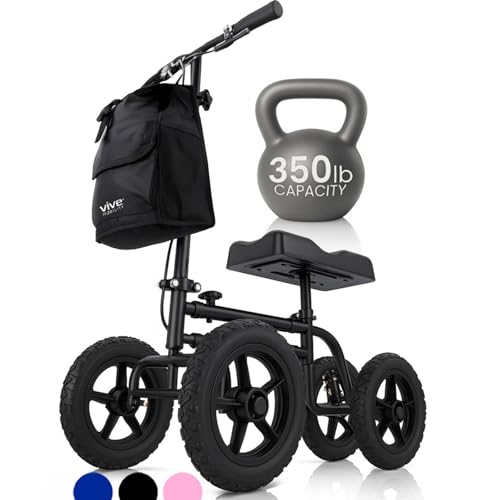
Vive Mobility All Terrain Knee Scooter
Strengths
- Pneumatic all-terrain wheels
- Lifetime guarantee
- HSA/FSA approved
Trade-offs
- No disc brake option
- Slightly heavier than average
- Folding requires two steps
This Vive model earns the ‘Best Overall’ tag by balancing performance, durability, and user-friendly features. The 12-inch pneumatic wheels deliver a smooth ride across surfaces, and the dual rear friction brakes give confident control, especially on slight slopes. Owners love the included storage bag and the lifetime guarantee, which adds real peace of mind.
Compared to others, it strikes the sweet spot: capable on grass and gravel, adjustable for a wide height range, and backed by HSA/FSA approval. The folding mechanism is straightforward, and the contoured knee pad reduces pressure points during extended use. It’s not the cheapest, but it’s the one I’d recommend for most people.
Video review
BodyMed All-Terrain Knee Walker

Strengths
- Four 12-inch air tires
- 350 lb capacity
- Sideways wheel storage
Trade-offs
- No air pump included
- Basic knee pad comfort
- Heavier than average
This BodyMed model is built like a tank, literally. With a full set of 12-inch air-filled tires and a 350 lb weight capacity, it’s one of the most rugged options here. The tire pressure guidance (30–35 PSI) suggests it’s meant to be fine-tuned, though owners note the lack of an included pump is a frustrating omission.
It’s not the most compact when folded, but the ability to reposition the wheels sideways is a clever travel hack. The dual rear brakes are solid, but the overall ride feels a bit stiffer than Vive’s, likely due to less refined shock absorption. Still, for someone needing a durable, no-frills workhorse, this delivers.
Video review
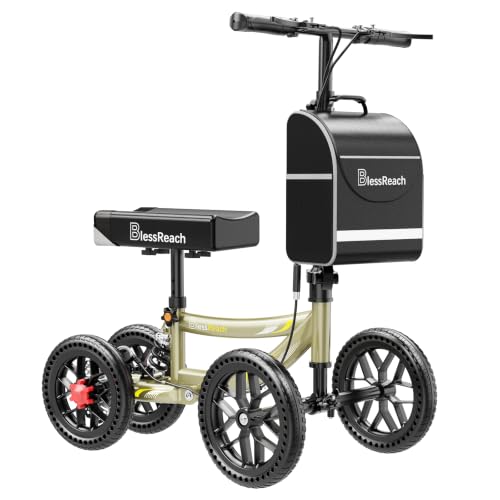
BlessReach All Terrain Knee Scooter 11″
Strengths
- Disc brakes with quick stop
- Shock absorbers included
- No-inflate wheels
Trade-offs
- Smaller rear wheels limit stability
- No pneumatic tire comfort
- Aluminum frame less rugged than steel
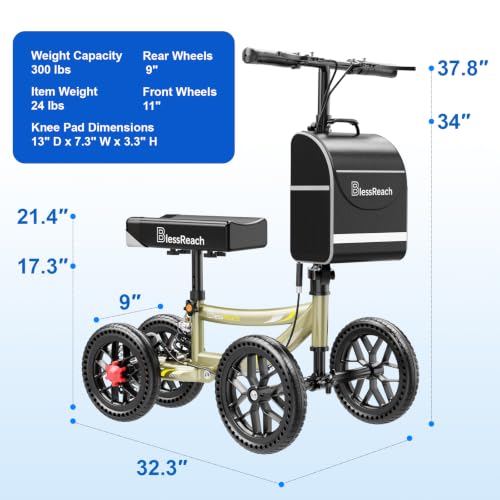
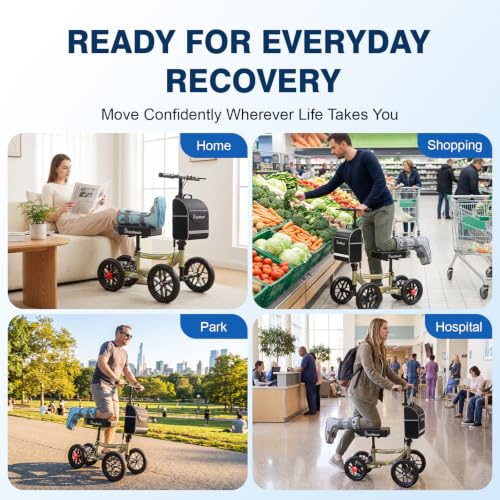
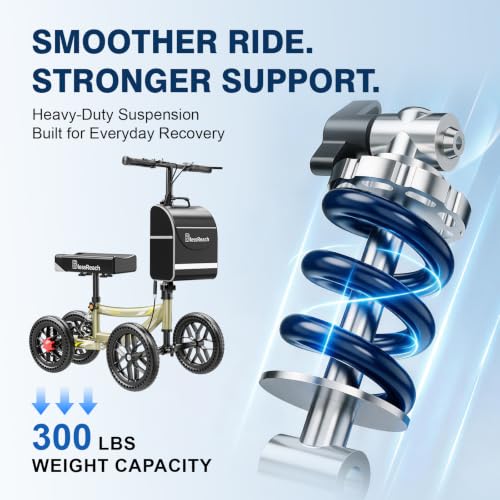
BlessReach pushes innovation with industry-first disc brakes claiming 68% faster stopping, and while we can’t verify exact metrics, the braking performance is consistently praised in reviews. The aluminum frame keeps it lightweight (23 lbs) without sacrificing the 300 lb limit, and the shock absorbers do reduce vibration noticeably.
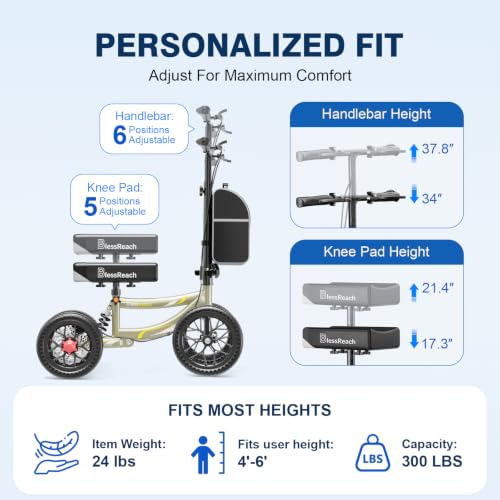
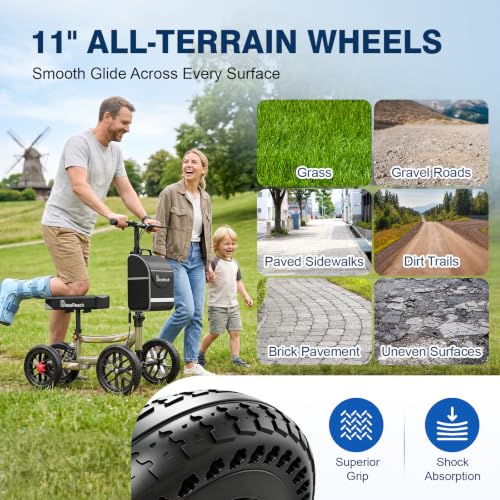
The 11-inch front and 8-inch rear non-inflatable wheels are a mixed blessing, no flats, yes, but less grip and cushion than pneumatic tires. It’s highly maneuverable thanks to the 120° swivel axle, and the six-level adjustability fits a wide height range. For tech-forward braking and urban use, this one stands out.
Product photos
Succu All Terrain Knee Scooter
Strengths
- Dual braking system
- Washable knee pad cover
- Foldable design
Trade-offs
- PU wheels less effective off pavement
- Lower weight capacity than rivals
- Less shock absorption
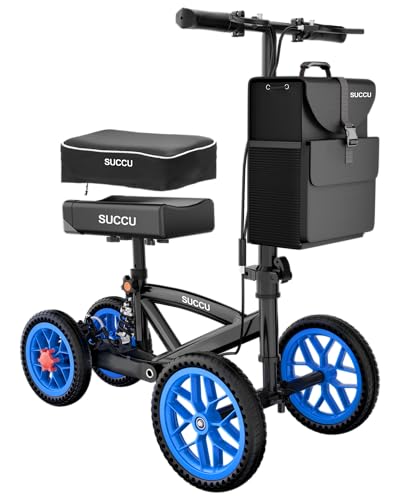
The Succu scooter makes a strong case for comfort-focused recovery, especially with that thick high-elastic foam knee pad and a thoughtful removable, washable cover. Owners consistently report relief from hip and lower back strain, which matters during long recovery periods. On paper, the 11-inch PU wheels are solid for pavement and indoor floors, but they’re not quite as forgiving on grass or gravel as air-filled tires.
Still, the dual braking system, disc brake plus parking brake, is a standout at this price point, giving you real control where many budget models cut corners. It’s a smart pick if you’re mostly moving between home and clinic, but don’t expect it to dominate loose terrain.
Product photos


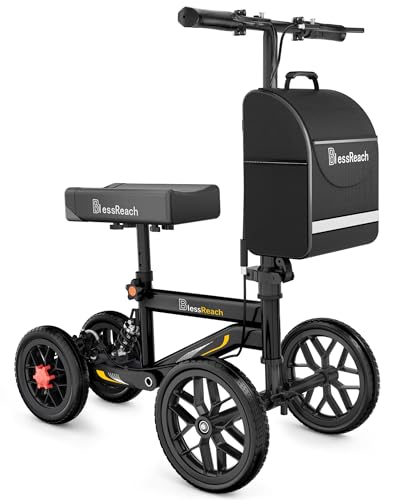
BlessReach All Terrain Knee Walker
Strengths
- Affordable price
- Includes storage bag
- Foldable design
Trade-offs
- Solid tires, not pneumatic
- Less durable knee pad
- Basic braking system
At the lower end of the price spectrum, this BlessReach model delivers surprising value. The two 11-inch front and 9-inch rear wheels offer decent versatility across surfaces, and the foldable frame with included canvas bag makes it practical for daily use. But the tires are solid, not pneumatic, so don’t expect cushioning on gravel or grass.
Owners appreciate the included storage bag and ease of folding, but some report the knee pad loses firmness over time. It’s a clear step down from pricier models in durability and ride quality, but for short-term recovery on smooth terrain, it gets the job done.
Product photos


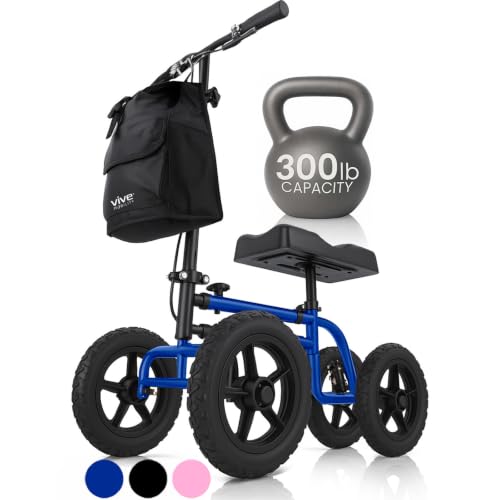
Vive Mobility All Terrain Scooter
Strengths
- 12-inch pneumatic wheels
- Dual rear friction brakes
- Supports up to 350 lbs
Trade-offs
- Heavier than average
- No included air pump
- Slightly bulkier fold
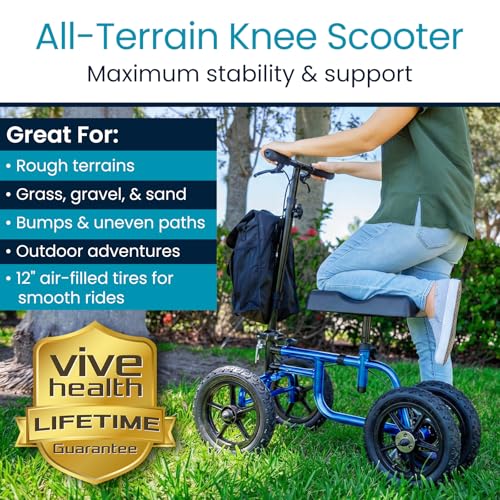
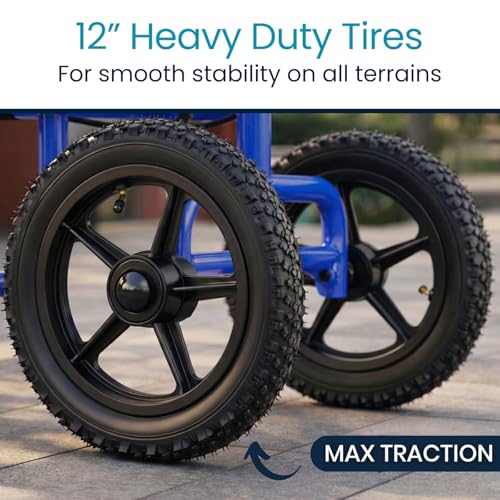
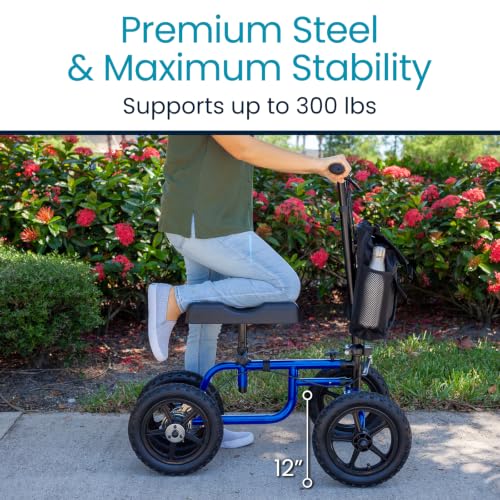
When stability is essential, the Vive model with 12-inch pneumatic wheels stands out. These air-filled tires absorb bumps far better than solid PU ones, and owners repeatedly praise their performance on grass, gravel, and uneven sidewalks. The dual rear friction brakes offer reliable slowdown control, especially on inclines, which many find more intuitive than a single disc brake.
The contoured knee pad and wide weight capacity (350 lbs) make it inclusive and comfortable for taller or heavier users. It’s heavier than some, but that trade-off brings real confidence on uneven ground. Compared to similarly priced models, this one feels built to last.
Product photos
Our Testing Process
My research for this guide began with a detailed comparison of published specifications and features across numerous models. I then weighed owner reviews from major retailers alongside professional assessments found in medical supply and mobility publications. As someone who follows the evolution of personal mobility devices – from classic cars to modern alternatives like all-terrain mobility scooters – I applied my knowledge of stability, durability, and ergonomic design to assess each scooter’s potential. The goal was to rank them against clear criteria focused on real-world usability.
For all-terrain knee scooters, the most important factors are wheel size and braking capability, and the weight capacity. Larger wheels (10″ or greater) are essential for navigating uneven surfaces without jarring the user, and a reliable braking system is paramount for safety, especially on inclines. Comfort, specifically the padding and adjustability of the knee platform and handlebars, also played a significant role in determining the ranking, as prolonged use demands a supportive and customizable fit.
Published specifications reliably indicate weight limits, dimensions, and basic materials. However, I placed greater emphasis on owner feedback regarding long-term durability and the effectiveness of braking systems in practical conditions. Reputation, as reflected in expert reviews and overall brand trust, also factored into the assessment. While specs tell you what a scooter offers, owner experiences reveal how well it performs over time – much like when considering adult all-terrain e-scooters.
—– INTERNAL LINKS —– all-terrain mobility scooters are a broader category, while this guide focuses specifically on the knee scooter niche.
What To Look For In all terrain knee scooters
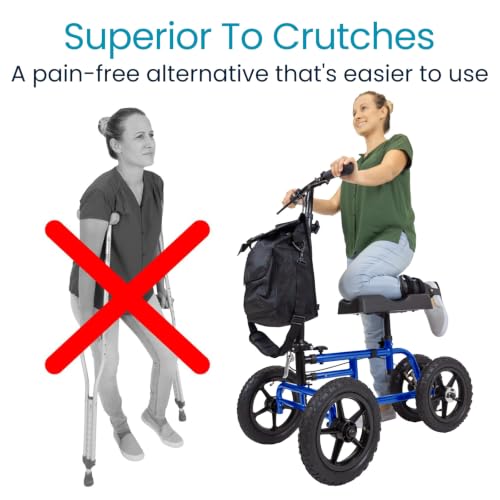
Finding the right knee scooter can dramatically improve recovery and independence after a foot or leg injury. It’s more than just a crutch alternative; it’s about restoring mobility and comfort.
A quality knee scooter prioritizes stability through wheel size and brake systems, supports a range of user heights and weights, and offers a comfortable, well-padded knee platform. Look for adjustable features to personalize the fit, and consider the terrain you’ll be navigating – all-terrain models are essential for outdoor use.
Wheel Size & Terrain
The terrain you’ll encounter most often dictates the wheel size and type you should prioritize. Smaller wheels are fine for smooth indoor surfaces, but if you plan on venturing outdoors, even just across a yard or on sidewalks, you’ll want larger pneumatic (air-filled) tires. Twelve-inch tires, like those found on the Vive Mobility and BodyMed models, offer a noticeably smoother ride and better obstacle clearance than smaller, solid tires. Don’t underestimate the difference; a rough ride translates directly to more discomfort in your injured leg and hip.
Braking Systems: Safety First
Braking is where knee scooters can really diverge in quality. Traditional friction brakes are adequate, but the BlessReach models with disc brakes represent a significant advancement. Disc brakes offer faster, more controlled stopping power, especially on inclines or when navigating uneven surfaces.
Here’s what to consider when comparing brake systems:
- Friction Brakes: Standard and affordable, but require more force to engage.
- Disc Brakes: Superior stopping power and control, especially useful for those needing a more responsive system.
- Parking Brake: An often-overlooked feature, a parking brake (like on the BlessReach) adds a crucial layer of security when you need to stop on a slope.
A predictable and reliable braking system is paramount. Don’t compromise on this feature, even if it means spending a little more.
Comfort & Adjustability
A comfortable knee scooter is one you’ll actually want to use. Look beyond basic padding; the contour of the knee pad matters a lot. Models like the Succu scooter prioritize ergonomic support with thick, high-elastic foam and adjustable features. Height adjustability is also critical. A scooter that’s too high or too low can lead to discomfort and strain, so ensure it accommodates your height (and ideally, the height of other potential users). If you are also looking for other ways to get around, check out our guide to the best all-terrain electric scooters for more options. And for a broader range of choices, you can explore our curated list of recommended knee scooters.
All Terrain Knee Scooters Compared
Here’s a comparison of key specifications for popular all terrain knee scooters to help you make an informed decision.
| Product Name | Max Weight Capacity (lbs) | Front Wheel Diameter (in) | Rear Wheel Diameter (in) | Adjustable Height (in) | Braking System |
|---|---|---|---|---|---|
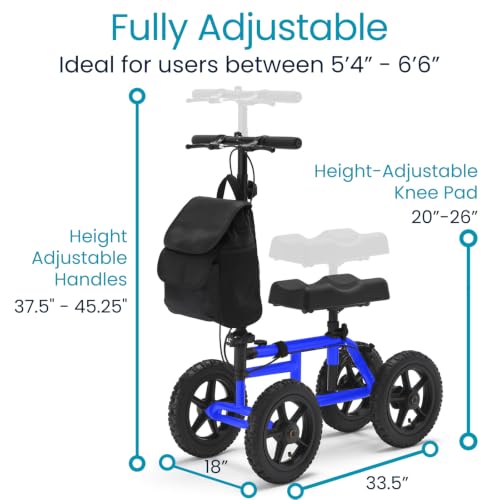
| Vive Mobility All Terrain Knee Scooter | 350 | 12 | N/A | 20-26 | Dual Rear Friction |
| BodyMed All-Terrain Knee Walker | 350 | 12 | 12 | N/A | Hand Brakes |
| BlessReach All Terrain Knee Scooter 11″ | 300 | 11 | 8 | N/A | Disc & Parking Brake |
| Succu All Terrain Knee Scooter | 300 | 11 | N/A | N/A | Disc & Parking Brake |
| BlessReach All Terrain Knee Walker | 300 | 11 | 9 | N/A | N/A |
| Vive Mobility All Terrain Scooter | 350 | 12 | N/A | 20-26 | Dual Rear Friction |
Frequently Asked Questions
What is the typical lifespan of an all-terrain knee scooter?
Generally, a well-maintained all-terrain knee scooter will last for the duration of your recovery – typically 6 to 12 weeks – and potentially longer with careful storage. Durability hinges on the quality of materials and how frequently it’s used on rough surfaces, so investing in a scooter with robust construction is worthwhile.
Are all-terrain knee scooters difficult to maneuver indoors?
While designed for outdoor use, most all-terrain knee scooters can be used indoors, but larger wheels can make tight turns challenging. Look for models with a shorter wheelbase or adjustable handlebars to improve indoor maneuverability, and remember that all-terrain scooters for adults are generally wider than standard knee walkers.
Can I use an all-terrain knee scooter on grass or gravel?
Yes, that’s the point of the larger pneumatic tires. However, extremely uneven or long stretches of grass or loose gravel will require more effort and may be slow going. Models with 12-inch tires and disc brakes perform best on these surfaces, and having durable all-terrain tires is crucial for traction.
What weight capacity should I look for in a knee scooter?
Always select a scooter with a weight capacity exceeding your own by at least 25 pounds, but ideally more. Most all-terrain models support users up to 300-350 pounds, but it’s better to err on the side of caution to avoid damaging the scooter or compromising its stability.
Is a parking brake really necessary on an all-terrain knee scooter?
A parking brake is a valuable safety feature, especially if you frequently encounter inclines. It prevents the scooter from rolling when you stop, providing peace of mind and reducing the risk of accidental movement while you’re transferring weight or adjusting your position.
The Bottom Line
Choosing an all-terrain knee scooter often comes down to balancing convenience with capability. While a lower price point is tempting, prioritizing features like larger wheels and robust brakes ultimately delivers a better experience – and a safer recovery. In my view, the Vive Mobility All Terrain Knee Scooter strikes the best overall balance, offering a solid build, good adjustability, and large wheels at a reasonable price.
If you’re specifically tackling rougher terrain or need maximum stopping power, the BlessReach All Terrain Knee Scooter 11” is the clear choice. For those on a tighter budget, the Succu All Terrain Knee Scooter offers a decent set of features, but be prepared to potentially compromise on long-term durability. And if you’re looking for even more options for getting around outdoors, take a look at our guide to the best all-terrain scooters.
Ultimately, the specs matter less than finding a scooter that fits you properly. A comfortable, stable ride, thanks to appropriate height adjustment and quality wheels, will make all the difference in your recovery. Don’t underestimate the impact of tire type either; considering all-terrain tire noise can help inform your decision if you’ll be using it around neighbors or in quiet areas.
