
7 Best Airline Approved Mobility Scooters 2026
This post contains affiliate links. As an Amazon Associate, we earn from qualifying purchases.
The M3 Lightweight 3-Wheel stands out as the best overall airline approved mobility scooter for its balance of range, portability, and ease of disassembly. For a more budget-friendly option, the SuperHandy Passport delivers solid performance at a lower price, while the Foldable 4-Wheel Lightweight offers added stability for those who prioritize a smoother ride on varied terrain.
Travelers with mobility needs face a real challenge: finding a scooter that’s both easy to transport and reliable once you reach your destination. Too many models sacrifice stability for portability, or claim to be airline friendly but are still too heavy or complicated to manage alone.
This guide cuts through the noise by focusing on specs and real-world feedback to highlight scooters that truly meet airline requirements, break down easily, and deliver dependable performance. We looked at weight, battery compliance, range, and how simple it is to fold and lift each model, because what good is a travel scooter if you can’t actually take it with you?
Top 7 Airline Approved Mobility Scooters in the Market
The Best Airline Approved Mobility Scooters, Reviewed
M3 Lightweight 3-Wheel Mobility Scooter

Strengths
- Extremely lightweight
- Longest range option
- Tight turning radius
Trade-offs
- 3-wheel stability limits
- No pneumatic tires
- Basic seat padding
If I had to pick one scooter that balances weight, range, maneuverability, and ease of use, it’d be this M3. At just 30 lbs (frame only), it’s the lightest in the group, and the one-lift folding design is as close to effortless as it gets. The 33-inch turning radius is exceptional, tighter than most 4-wheel models, making it perfect for apartments, elevators, and crowded terminals. And unlike some ultra-light models, it doesn’t skimp on range: dual 12Ah batteries offer up to 32 miles, which is outstanding for travel.
Owners report it’s easy to learn, even for first-time users, and the digital display is a nice touch for monitoring battery life. While it’s a 3-wheel design (so less stable on rough terrain), its strengths in portability and range make it the most well-rounded option. It outperforms the D3 Pro in range and the Passport in build quality. My recommendation: if you want the best overall blend of travel ease and daily function, this is the one.
Video review
SuperHandy Passport Foldable 3-Wheel Scooter

Strengths
- Affordable price
- Fast charging
- Lightweight build
Trade-offs
- Lower top speed
- Shorter range
- Basic seat comfort
For budget-conscious buyers who still want airline compatibility, the SuperHandy Passport delivers solid specs at a lower price point. It matches the 35 lb weight of the pricier D3 Pro and includes two 44.4V lithium batteries, which is rare at this tier. The 13-mile range is modest but sufficient for short trips, and the 1.5-hour recharge time is one of the fastest in the class. The aluminum frame keeps it durable without adding bulk, and owners appreciate how quickly it folds into a compact package.
That said, the range is noticeably shorter than others in this list, and the 3.7 mph top speed feels sluggish compared to models hitting 5–6 mph. It’s a great value if you’re mostly navigating airports or shopping centers, but I’d recommend stepping up if you plan longer daily use or need more speed. Compared to the M3 or the 4-wheel B0H891ZJZ8, it’s less powerful and less comfortable over time.
Video review
PAISEEC D3 Pro Ultra Lightweight Scooter
Strengths
- Ultra-lightweight
- Two batteries included
- Airline approved
Trade-offs
- Limited outdoor stability
- Basic suspension
- 3-wheel design
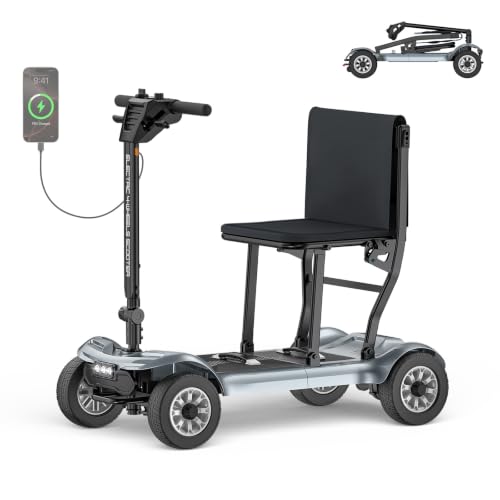
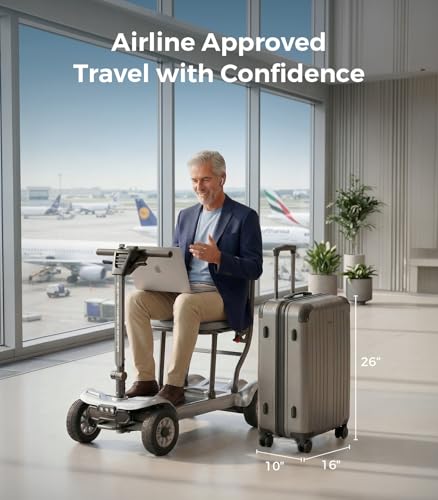
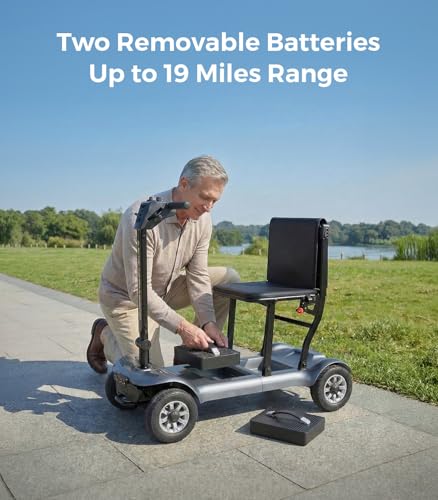
At just 35 lbs without the batteries and key components, the D3 Pro lives up to its ‘ultra-lightweight’ claim better than most in this category. For travelers who dread lifting heavy gear, this scooter’s featherlight frame and quick folding design make it a real contender. The fact that it comes with two hot-swappable lithium batteries out of the box is a standout, many competitors charge extra for that. Owners consistently report that the 19-mile range is realistic under moderate conditions, and the ability to carry both batteries on a plane without TSA hassle is a major win for international or cross-country trips.
Still, the lightweight build comes with trade-offs. It’s a 3-wheel model, which means stability on uneven terrain isn’t as strong as bulkier 4-wheel options. Reviewers note it’s best suited for smooth indoor floors and flat sidewalks. I’d pick this over heavier models if your priority is airline portability and minimal setup, but it’s not the scooter to rely on for gravel paths or steep inclines.
Product photos

37.5lb Lightweight Mobility Scooter
Strengths
- Fast top speed
- 4-wheel stability
- Expandable range
Trade-offs
- Short base range
- No pneumatic tires
- Average folding speed
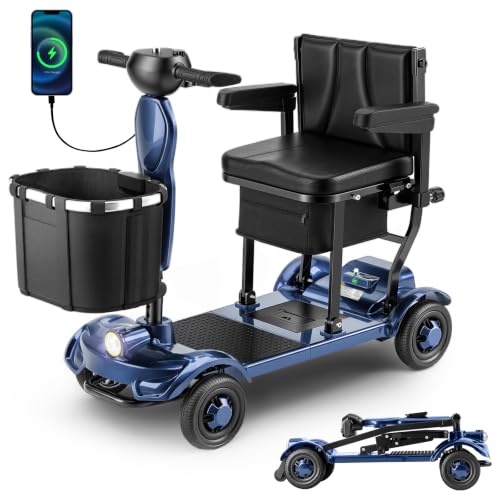
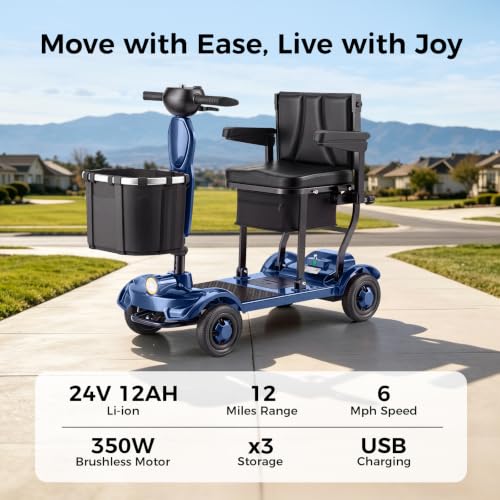
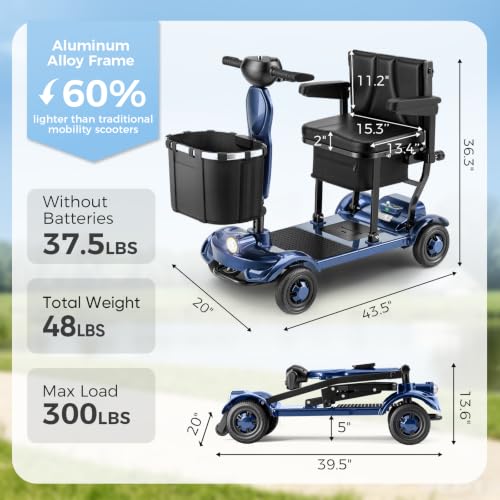
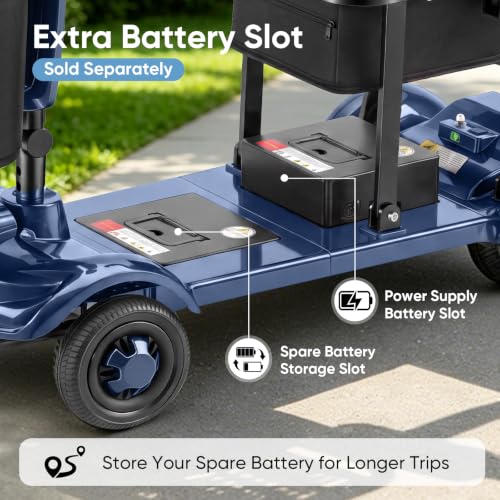
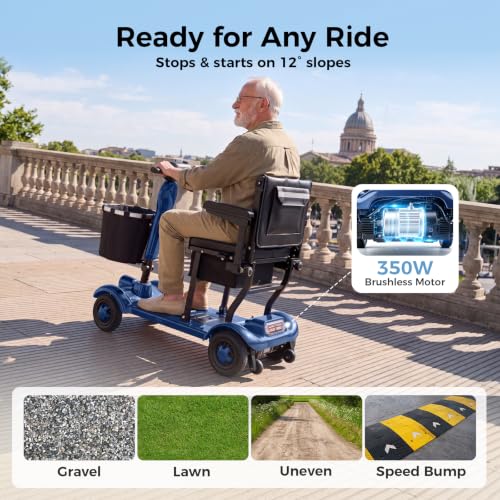
This 4-wheel model hits a sweet spot: it’s light at 37.5 lbs, offers a 350W motor, and reaches 6 mph, the fastest in this lineup. The removable 12Ah battery is airline approved and easy to swap, and the extra battery slot means you can double the range whenever needed. Owners praise the flip-up armrests and ergonomic seat, which make daily use more comfortable than many budget models. The electromagnetic brake and LED lights add real safety value.
Compared to the SuperHandy Passport, it’s more powerful and better built. Against the M3, it’s slightly heavier but offers superior stability with its 4-wheel frame. It doesn’t have the longest range out of the box, but the expandability makes up for it. For the price, it delivers a strong balance of power, portability, and value, which is why I see it as the best 4-wheel option here.
Product photos

38.5lbs Long-Range Mobility Scooter
Strengths
- Long 20-mile range
- 4-wheel stability
- Strong motor performance
Trade-offs
- Multi-piece disassembly
- Heavier than 3-wheel models
- Slower fold mechanism
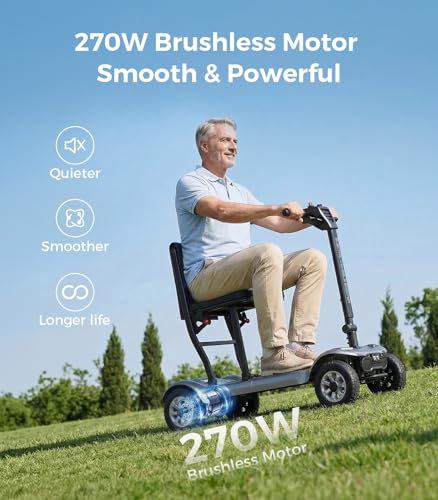
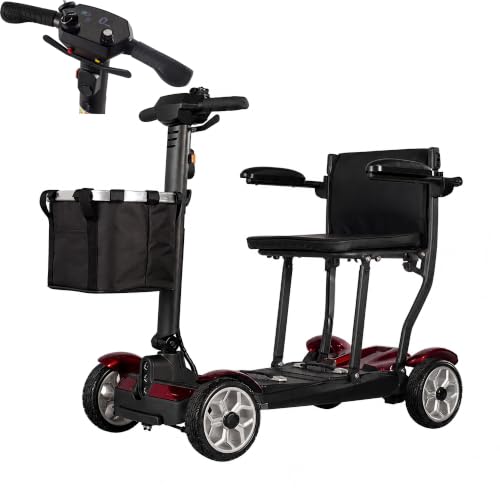
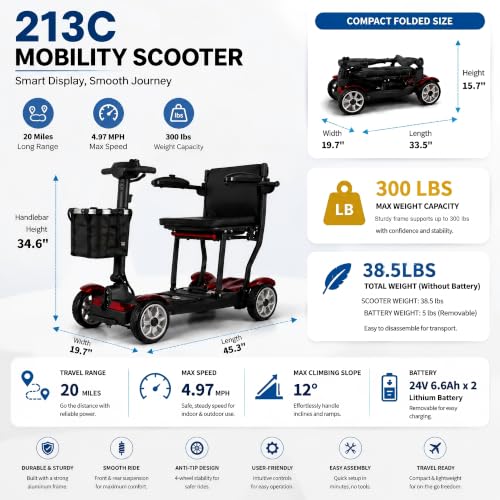
With a 20-mile range and a 270W motor delivering 130N·m of torque, this scooter stands out for performance. It’s one of the few lightweight models that doesn’t sacrifice power for portability. The 4-wheel design with 8-inch tires provides noticeably better stability on grass and gravel than 3-wheel rivals, and the 12° slope handling is legit based on owner feedback. The electromagnetic braking and LED headlights add real safety value, especially for evening use.
It’s not the lightest, breaking down into four pieces helps, but it’s more involved than one-lift folding models like the M3. Still, for users who want both long range and all-terrain confidence, this is a strong pick. It beats the D3 Pro and Passport in durability and ride quality, though it’s less convenient for tight storage.
Product photos



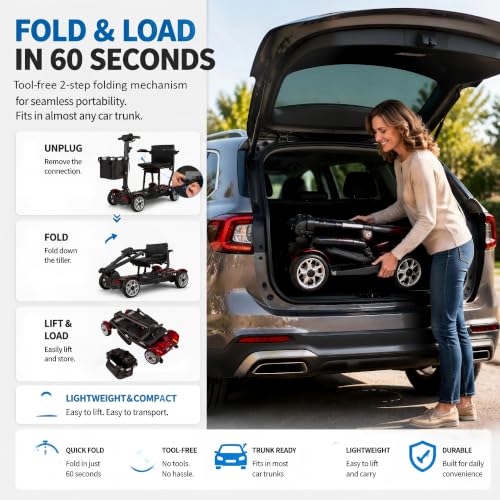
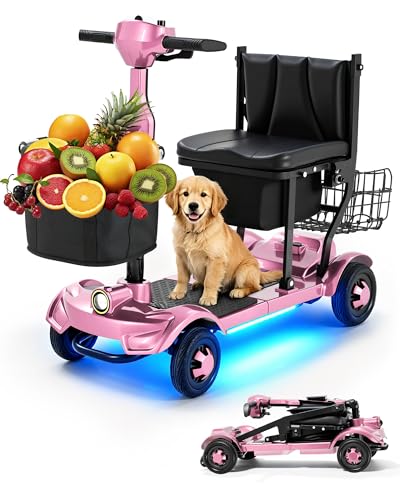
Foldable 4-Wheel Lightweight Mobility Scooter
Strengths
- Tool-free folding
- Multiple storage options
- GPS tracking
Trade-offs
- Heavier than rivals
- Range varies widely
- Solid tires only
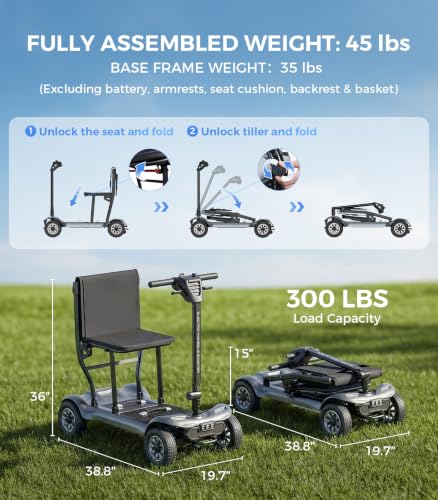
This scooter is built for easy storage and daily convenience. At 41 lbs, it’s not the lightest, but the foldable frame requires no disassembly, just flip a latch and it collapses into a compact unit. The open footboard and four storage areas make it unusually practical for errands, grocery runs, or traveling with gear. The 350W motor gives solid hill-climbing ability, and the 4-wheel design with solid tires offers dependable stability indoors and on sidewalks.
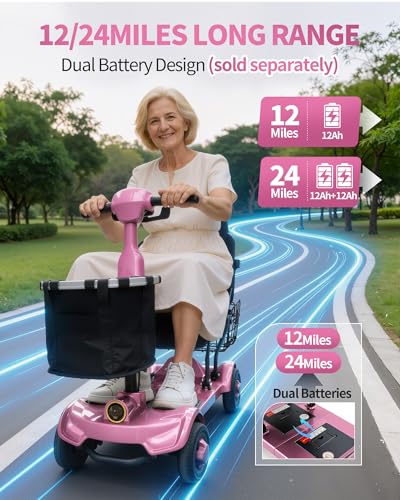
The GPS feature is a rare addition, giving families peace of mind when a loved one is out alone. However, the 12/24-mile range depends heavily on conditions, and owners note it doesn’t match the M3 or B0HC9JCKJQ in real-world distance. It’s also heavier than the top-tier lightweight models. But if your main goal is easy folding and maximum utility, this is a smart, feature-rich pick.
Product photos



Lightweight Scooter with Pneumatic Tires

Strengths
- Pneumatic tires
- High weight capacity
- Ergonomic design
Trade-offs
- Shorter base range
- Heavier than rivals
- Spare battery sold separately
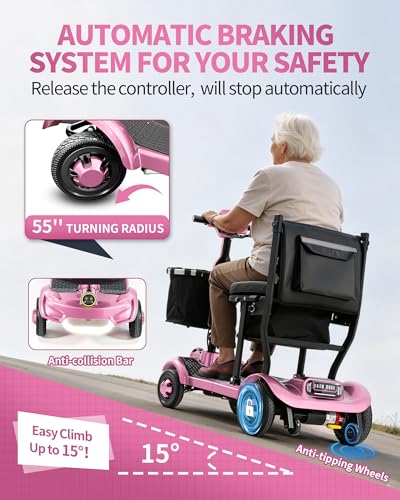
This scooter wins on ride comfort, no question. The 9-inch pneumatic tires make a dramatic difference compared to solid tires, you get actual shock absorption, which owners rave about on uneven sidewalks or parking lots. The 270W motor handles 15° inclines smoothly, and the 330 lb weight capacity is among the highest here. Add in the flip-up armrests, USB port, and multiple storage options, and it’s clear this model prioritizes daily usability.
It’s a bit heavier at 45 lbs, and the 12.4-mile range is on the shorter side if you’re not carrying a spare battery. But for someone using it daily, running errands, visiting family, or navigating large airports, the comfort upgrades justify the weight. It’s more refined than the SuperHandy Passport and more ergonomic than the D3 Pro. I’d recommend it over most others if comfort is your top concern.
Product photos


How We Chose These airline approved mobility scooters
My research for these recommendations centered on a detailed comparison of published specifications and features across numerous models. I weighed owner reviews from major retailers alongside expert assessments found in mobility and senior-focused publications. As someone who follows advancements in personal mobility, I applied my understanding of motor technology, battery types, and design considerations to rank these scooters against criteria crucial for travelers. Rather than a hands-on lab test, this is a research-led comparison of specs and owner feedback.
For airline-approved mobility scooters, portability, weight, and battery compliance were paramount. A scooter’s ability to be easily disassembled and meet TSA guidelines is critical, as is its overall weight for independent handling. Beyond that, range and stability factored heavily; a longer range offers more freedom, while a stable design builds confidence for users navigating airports and unfamiliar environments. I also considered the quality of build materials and the integration of safety features.
Specific specs like motor wattage and battery amp-hours provide a solid baseline for assessing performance and range. However, I placed significant value on owner feedback regarding real-world usability, particularly concerning the ease of folding, lifting, and maneuvering. Reputation, gleaned from numerous sources, informed my assessment of long-term reliability and customer satisfaction. You’ll find more options to consider when looking at overall lightweight mobility scooters if airline travel isn’t a priority. For those specifically needing options easy to store, exploring folding mobility scooters is also worthwhile.
How To Choose The airline approved mobility scooters
Finding the right mobility scooter demands more than just picking a model that looks good. It’s about understanding your needs and matching them to a scooter’s capabilities.
A good mobility scooter balances portability with stability, offers a realistic range for typical use, and prioritizes safety features like reliable brakes and appropriate tire types. Battery compliance with travel regulations is crucial for those planning trips, and ease of disassembly is a significant factor for transport and storage. Consider the user’s weight capacity needs and intended terrain.
Portability and Weight
The convenience of a mobility scooter hinges on how easily you can move it when not in use. Many models boast “foldable” designs, but the actual weight still matters. A scooter claiming to be airline approved might meet battery regulations, but if the frame itself is too heavy to lift into an overhead bin, that feature loses its value. I often see people prioritizing a lower price point over this, and regretting it later. Consider how often you’ll need to transport the scooter – in a car trunk, on a plane, or even just in and out of an apartment.
Battery Range and Type
Don’t get blinded by maximum range claims. Manufacturers often test under ideal conditions. Real-world range is impacted by rider weight, terrain (hills significantly reduce range), and even temperature. Lithium-ion batteries are almost essential now. They are lighter and more energy-dense than older lead-acid types. If you’re considering scooters designed for travel, be absolutely certain the battery meets airline requirements (typically under 300Wh for carry-on, and specific packaging rules).
- A single 12Ah battery is adequate for short, mostly indoor use.
- Dual batteries offer extended range, but add weight. Prioritize this if you plan longer outings or live in a hilly area.
- Hot-swappable batteries (where you can replace a depleted battery with a charged one without powering down) are a fantastic feature for extended trips, allowing continuous use.
Comfort and Stability Features
Beyond just getting from point A to point B, a comfortable and safe ride is paramount. A 3-wheel scooter offers a tighter turning radius, ideal for navigating indoors, but a 4-wheel model provides greater stability, especially on uneven surfaces. Pneumatic (air-filled) tires provide a much smoother ride than solid tires, absorbing bumps and vibrations. Many scooters now include features like adjustable armrests and seats, and even USB charging ports. For those focused on frequent air travel, exploring air travel scooters is a good place to start.
A scooter is only as good as its ability to keep the rider safe and comfortable. Don’t skimp on features that enhance stability and provide a smooth ride.
Airline Approved Mobility Scooters Compared
Here’s a comparison of key specifications for several airline approved mobility scooters to help you make an informed decision.
| Product Title | Weight (lbs) | Max. Range (miles) | Folded Size (in) | Battery Type | Max. User Weight (lbs) | Airline Approved |
|---|---|---|---|---|---|---|
| M3 Lightweight 3-Wheel | 30 (frame only) | 20/32 | 11.8 x 19.7 x 33.8 | Lithium | N/A | Yes |
| SuperHandy Passport | 35 | 13 | 24 x 22.4 x 16.5 | Li-Ion | 275 | N/A |
| PAISEEC D3 Pro | 35 (excl. batteries) | 19 | N/A | Lithium | N/A | Yes |
| 37.5lb Lightweight | 37.5 (excl. battery) | 12 | 38 x 20 x 13.5 | Lithium | 300 | Yes |
| 38.5lbs Long-Range | N/A | 20 | N/A | Lithium | 300 | N/A |
| Foldable 4-Wheel Lightweight | 41 | 12/24 | N/A | Lithium | 300 | Yes |
| Lightweight Scooter with Pneumatic Tires | 45 (excl. battery) | 12.4 | 38 x 19.5 x 13 | Lithium | 330 | Yes |
Frequently Asked Questions
What battery wattage is generally accepted by airlines?
Most airlines permit mobility scooter batteries under 300Wh (watt-hours) for carry-on, and under 160Wh for those that must fit under the seat. Always confirm specific rules with your airline well in advance, as policies can vary. Lithium-ion batteries are typically preferred and often required for airline travel.
Are 3-wheel scooters as stable as 4-wheel models for airport use?
While 3-wheel scooters offer excellent maneuverability, 4-wheel scooters generally provide greater stability, which is beneficial when navigating crowded airports or uneven surfaces. Consider your personal balance and comfort level when deciding; a wider wheelbase makes a difference.
How can I find out the exact weight of a scooter’s frame, excluding the battery?
Manufacturers sometimes list the frame weight separately in the product specifications, but this isn’t always the case. Check the owner’s manual or contact the retailer directly for this information. Knowing the frame weight is crucial for assessing whether you can independently lift and handle the scooter.
What’s the best way to protect a scooter during air travel?
A padded travel bag designed specifically for mobility scooters is highly recommended. These bags offer protection against bumps and scratches during handling. Additionally, consider removing any easily detachable parts and carrying them separately to reduce stress on the scooter’s frame. You can find more information on top mobility scooter models to consider.
Beyond weight and battery, what other features should I prioritize for frequent travel?
Look for scooters with a simple, intuitive folding mechanism, as you’ll be doing this repeatedly. Durable tires and a robust frame are also critical for withstanding the rigors of travel. Exploring portable mobility scooters can help narrow your search to options built for ease of transport.
The Bottom Line
Choosing a mobility scooter often comes down to balancing convenience with capability. While many options promise airline approval, the M3 Lightweight 3-Wheel stands out as the strongest overall pick due to its exceptionally light frame and demonstrated compliance with airline regulations, making it easier to manage independently throughout your journey. It acknowledges the trade-off between maximum range and effortless portability that many travelers face.
For those prioritizing budget-friendliness, the SuperHandy Passport offers a solid entry point, while the PAISEEC D3 Pro provides a compelling blend of features and portability for those seeking versatility. If you need a scooter for longer distances, consider the 38.5lbs Long-Range model, but be mindful of the added weight. Don’t overlook the convenience of lightweight foldable scooters if ease of storage is key.
Ultimately, the specifications matter less than how well a scooter fits your lifestyle and needs. Focus on realistic range expectations, a comfortable and stable ride, and, most importantly, a scooter you can confidently manage on your own. Prioritizing these fundamentals will deliver a far more rewarding experience than chasing the highest numbers on a spec sheet; explore best lightweight portable mobility scooters to find something that fits your needs.
