
8 Best Air Blowers for Car Detailing 2026
This post contains affiliate links. As an Amazon Associate, we earn from qualifying purchases.
The Adam’s Polishes Air Cannon is the overall best air blower for serious car detailing, delivering powerful, consistent airflow that dries large vehicles quickly and safely. For budget-conscious detailers, the RAYBAO Air Cannon Car Dryer offers strong performance and solid build quality at a much lower price. If you already own a compressor, the Tornador Z-014 adds unique versatility for deep cleaning tasks.
Most people buy an air blower thinking more power automatically means better results, but that’s not always true. Too much force can damage delicate trims or scatter debris instead of removing it, while weak airflow just wastes time.
This guide cuts through the noise by focusing on real-world usability, based on specs, owner feedback, and what actually matters in a detailing workflow. I looked at airflow control, durability, attachments, and how each model fits different needs, whether you’re drying a daily driver or detailing a show car.
Top 8 Air Blowers For Car Detailing in the Market
The Best Air Blowers For Car Detailing, Reviewed
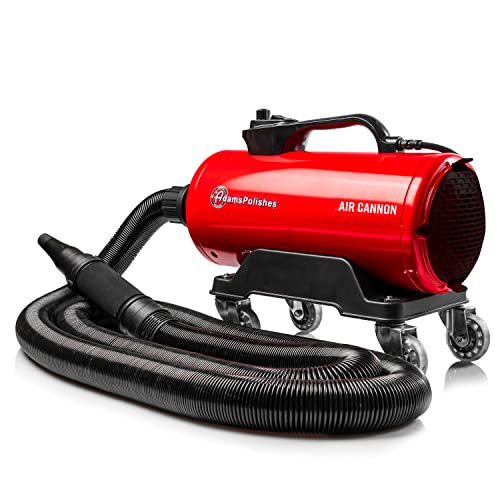
Adam’s Polishes Air Cannon Car Dryer
Strengths
- 73,000 FPM airflow
- Retractable 30ft hose
- Filtered warm air drying
Trade-offs
- Very high price
- Bulky storage when expanded
This is the flagship, no compromises air dryer, and it shows. At over 73,000 FPM and 392 CFM, it’s in a different league, capable of drying a full-size SUV in minutes. The retractable 30-foot hose is a standout for garage organization, and the filtered, warm air means you’re not just moving water, you’re evaporating it safely.
Owners report it’s noticeably quieter than expected for its power, thanks to noise-cut tech. It’s also the only model here with a 110% satisfaction guarantee, which speaks to the brand’s confidence. Compared to the Raybao, it’s over twice the price but also in a different performance tier. If you detail regularly, this is the one.
Video review
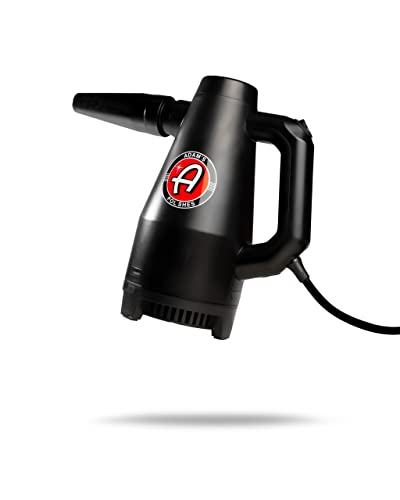
Adam’s Mini Air Cannon Car Dryer
Strengths
- Lightweight and powerful
- Filtered warm air
- Long reinforced cord
Trade-offs
- No retractable hose
- High price for size
This is the premium portable option, lightweight at just over 3 pounds, yet still delivering 19,000 FPM and 90 CFM. It’s perfect for spot drying, pre-wax decontamination, or use on motorcycles and boats where hauling a big dryer isn’t practical. The 20-foot reinforced cord adds reach without bulk.
It doesn’t have the retractable hose of the full-size Air Cannon, but for its niche, it’s unmatched. Owners love using it for interiors, wheels, and trim. Compared to the WOLFBOX, it’s heavier but far more powerful and designed specifically for paint-safe drying. If portability and performance both matter, this is the pick.
Video review
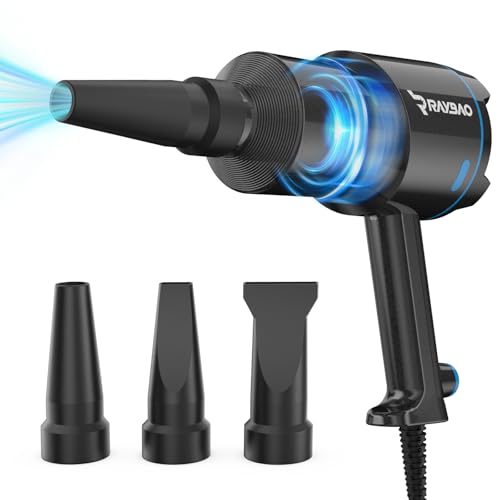
RAYBAO Air Cannon Car Dryer Blower
Strengths
- 22000 FPM airflow
- Three nozzle options
- Removable dust hood
Trade-offs
- Noisy at full power
- Filter access could be easier
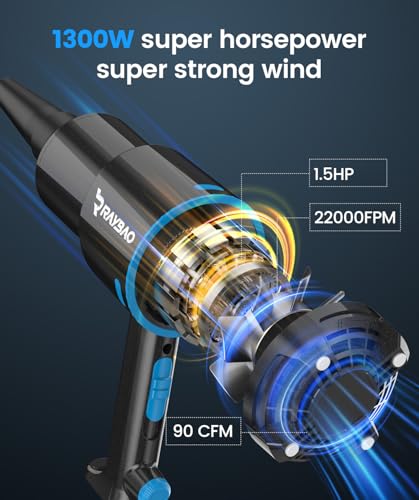
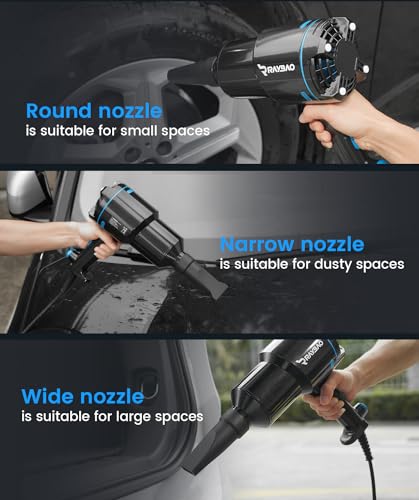
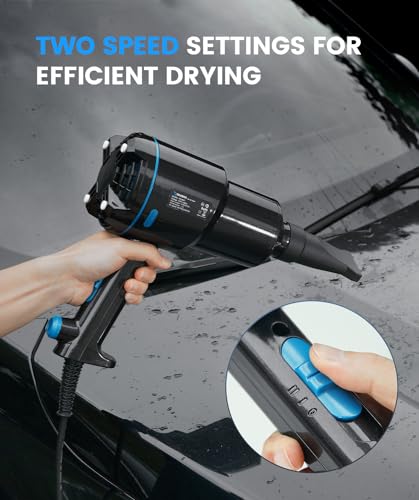
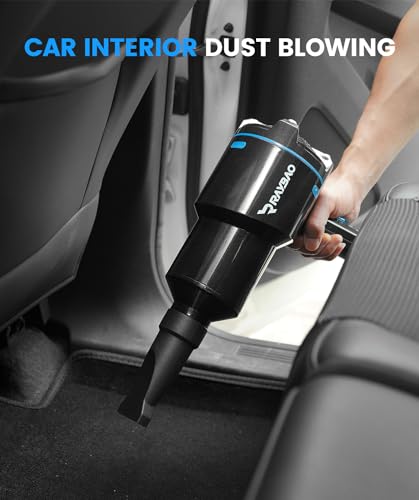
This Raybao blower punches above its price point with solid specs, 22000 FPM and 90 CFM is no joke for a $60 unit. The inclusion of three nozzles and a 16.4-foot power cord makes it practical for full car drying, and owners consistently report it cuts drying time to under 15 minutes. It’s clearly built with car detailing in mind, and the filtered intake helps protect paint by reducing debris ingestion.
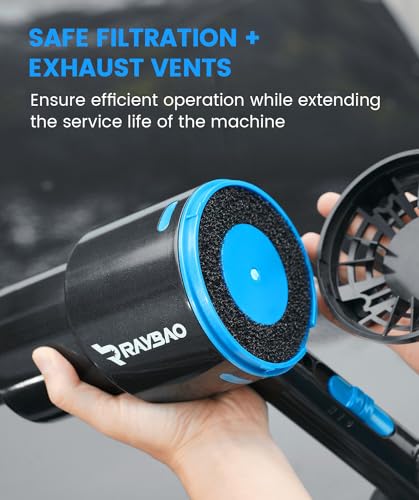
What stands out is the removable dust hood, which doubles as a heat insulator and noise reducer. While not as refined as higher-end models, it’s a thoughtful touch for the price. Compared to the Adam’s Polishes units, it lacks the premium feel and retractable hose, but for most home detailers, this is the smarter buy if you’re not doing daily professional work.
Product photos
WOLFBOX MegaFlow 50 Air Duster

Strengths
- Cordless and lightweight
- Long battery life
- USB-C charging
Trade-offs
- Not for full car drying
- Limited airflow vs plug-in models
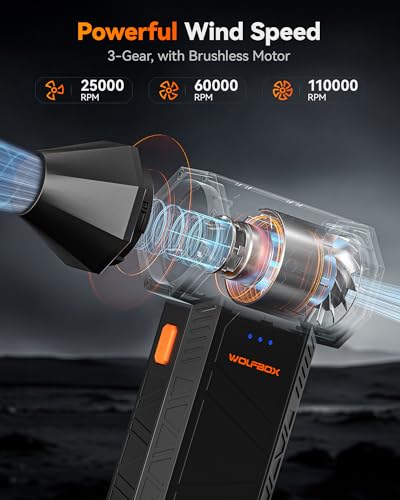
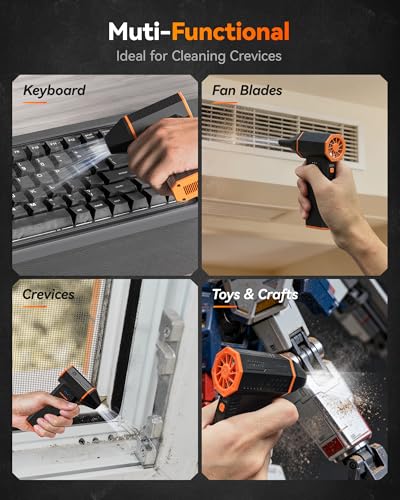
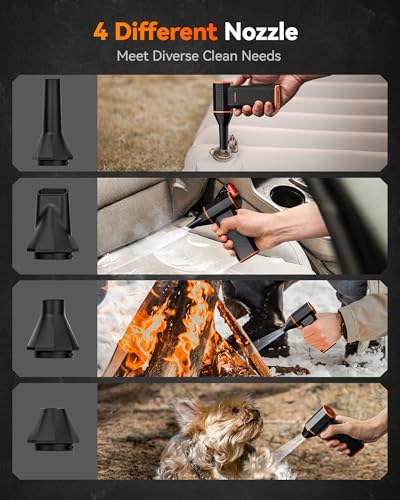
The WOLFBOX MegaFlow 50 is a cordless oddball in a field dominated by compressor or plug-in tools, and that’s its biggest strength. At 110,000 RPM, it’s got serious spin, and the three speed settings let you tailor output for delicate electronics or stubborn vent grime. It’s not meant for full car drying, but as a detailing sidekick, it’s incredibly handy.
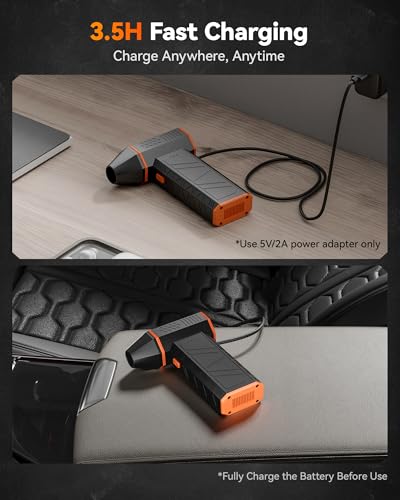
Owners love the 240-minute runtime on low and the fact that it recharges via USB-C in just 3.5 hours. It won’t replace a real air blower for paint-safe drying, but for quick interior cleanups, especially around vents, dash buttons, and cup holders, it’s hard to beat the convenience. Compared to the Tyraivl pneumatic tool, it’s less powerful but far more portable.
Product photos

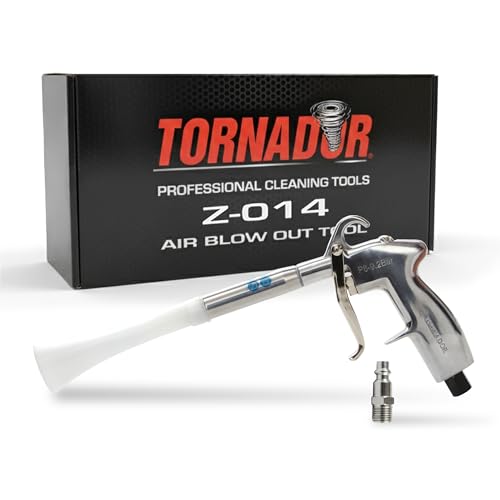
Tornador Z-014 Air Blow Out Tool
Strengths
- True tornado airflow
- Durable professional build
- Low noise for power
Trade-offs
- Higher price than basic models
- No included accessories
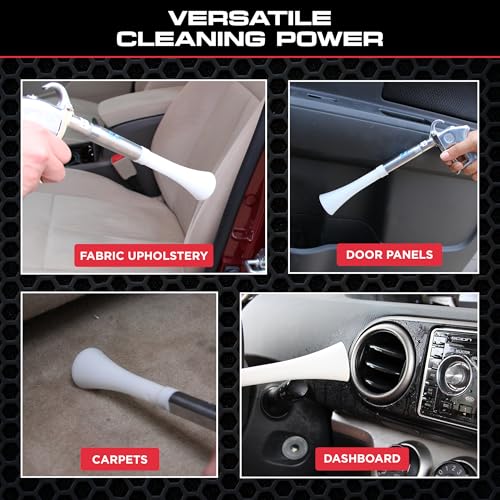
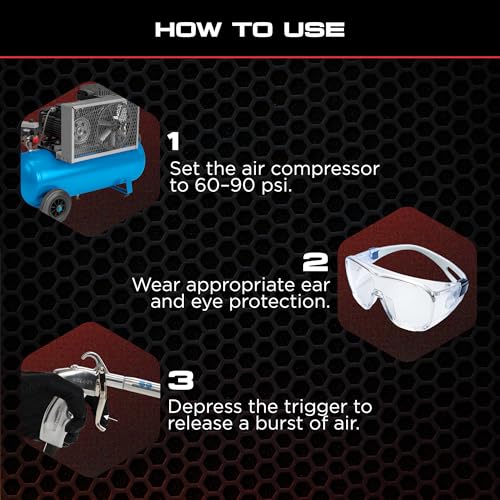
The Tornador Z-014 is the gold standard for compressor users who want pro-level performance. The tornado airflow isn’t just marketing, it creates a vortex that pulls debris out instead of just pushing it around. It’s noticeably quieter than many air guns, and the heavy-duty build means it can take daily abuse.
Reviewers consistently praise its efficiency on convertible tops, stitching, and fabric seams where dust gets trapped. Compared to the GOCCIDA model, it’s more expensive but far more reliable. If you’re running a compressor already, this is the tool that makes your setup feel professional.
Product photos



GOCCIDA Tornado Car Cleaning Gun

Strengths
- Extremely affordable
- Aluminum and copper build
- Tornado airflow effect
Trade-offs
- No brush or extra nozzles
- Build quality inconsistent
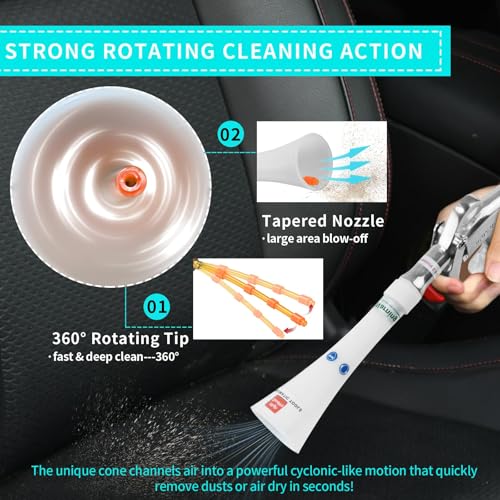
At under $25, the GOCCIDA air gun is the budget king, and it delivers more than you’d expect. It uses a vortex design similar to the Tornador, and while it doesn’t match that level of refinement, owners say it’s surprisingly effective for dust and debris in crevices. The aluminum body and copper fittings are a plus at this price.
It’s not going to last a decade like a Tornador, but for occasional use or as a backup, it’s a steal. The lack of included accessories hurts it compared to the B0CXXKX1WW, but the core function, blowing out tight spots, is solid. If you’re just starting out, this is the way to go.
Product photos
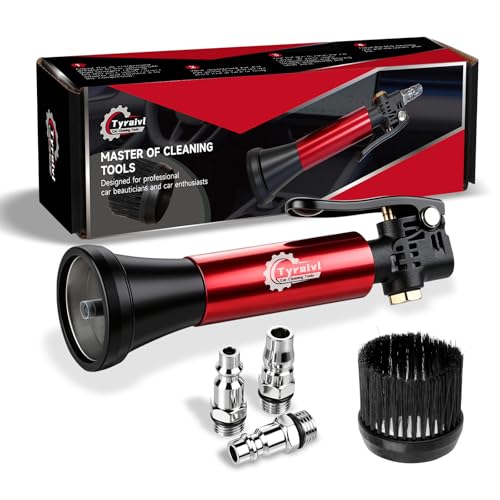
Tyraivl Mini Air Blower
Strengths
- Tornado airflow for debris removal
- Durable metal build
- Compact for tight spots
Trade-offs
- Requires air compressor
- Nozzle options limited
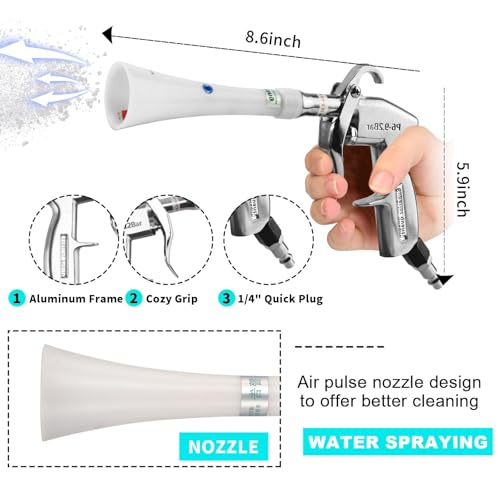
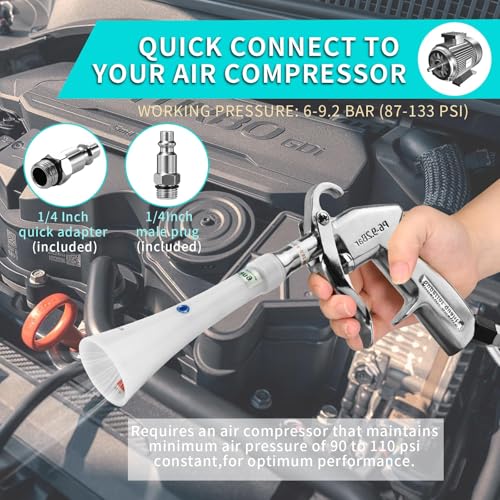
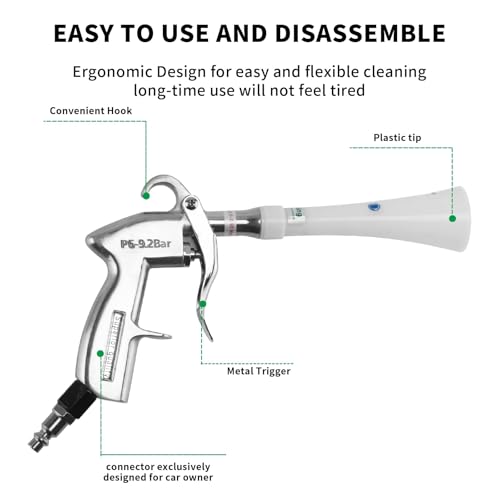
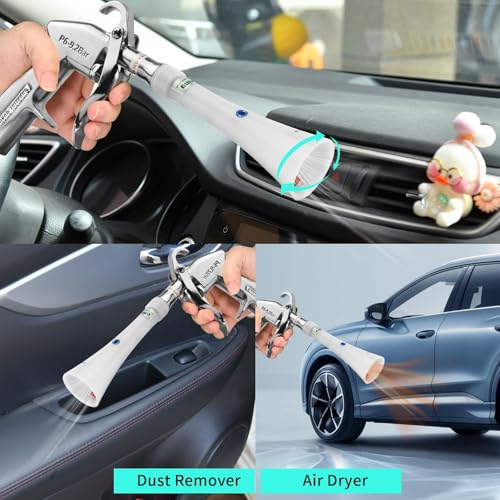
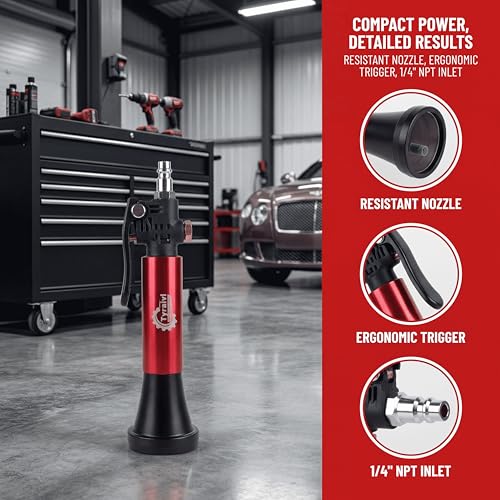
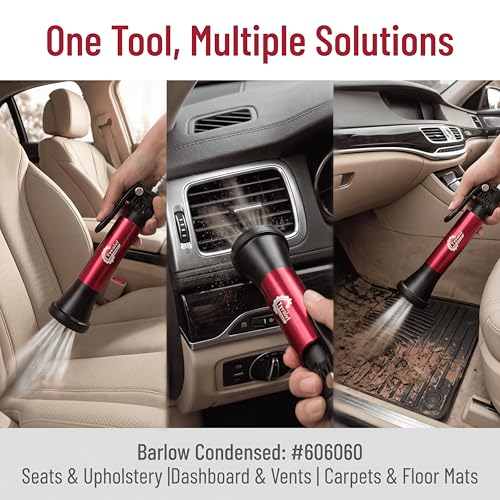
If you’ve ever struggled to clear dust from HVAC vents or seat tracks, this mini pneumatic blower is a revelation. It’s purpose-built for tight spaces, and the tornado airflow design actually works, owners report it flings out debris that brushes and vacuums miss. The metal body feels sturdy, and the ergonomic trigger reduces hand fatigue during long sessions.
It’s not a standalone solution; you need a compressor, and it won’t dry a car. But paired with a larger blower like the Raybao or Adam’s, it fills a critical gap. Compared to the GOCCIDA budget gun, it’s simpler but more focused, no frills, just precision. For interior detailing, this is the scalpel to the others’ sledgehammers.
Product photos
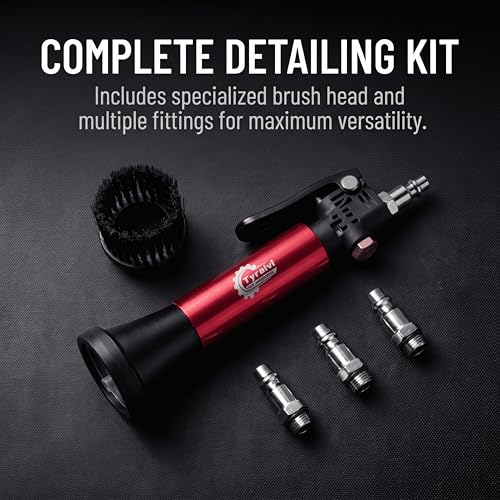


Car Cleaning Gun with Nozzles

Strengths
- Comes with brush and adapters
- 360-degree swivel
- Copper valve and connector
Trade-offs
- No airflow specs listed
- Plastic trigger feels cheap
This kit stands out for sheer versatility. With two nozzles, a detail brush, and three international connectors, it’s clearly designed for users who want one tool for multiple jobs. The aluminum body and copper internals suggest durability, and the 360-degree swivel helps reach awkward angles without twisting your wrist.
Owners appreciate the included brush, it’s useful for dislodging stuck debris before blasting it away. While the airflow isn’t specified, real-world feedback suggests it’s strong enough for most interior tasks. It’s a step up from basic blow guns, but not as refined as the Tornador. Still, for the price, the accessory bundle makes it a strong contender.
Product photos


How We Tested air blowers for car detailing
Rather than a hands-on lab test, my research focused on a detailed comparison of published specifications and features across numerous models. I weighed owner reviews from major retailers alongside expert opinions found in automotive detailing publications. Applying my experience with vehicle maintenance and detailing tools, I ranked these air blowers based on criteria relevant to both professional detailers and weekend enthusiasts.
For air blowers, consistent airflow (CFM) and air velocity (FPM) were the most significant factors. These determine how effectively the blower can dislodge dirt and water, and how quickly a vehicle can be dried. Equally important was build quality and the availability of useful attachments – a durable unit with varied nozzles offers greater versatility. I also considered noise levels, as quieter operation is always appreciated during detailing.
Specifications reliably indicate a blower’s potential power, but owner feedback painted a more complete picture. I paid close attention to comments regarding durability, hose quality, and real-world usability. Reputation and brand trust also played a role, especially when assessing long-term reliability. For example, a closer look at effective car drying blowers helped me understand real-world performance beyond the numbers. And for a truly spotless finish, pairing a good air blower with car detailing steamers can be a powerful combination.
How To Pick The Right air blowers for car detailing
Choosing the right air blower for car detailing requires a bit more thought than simply grabbing the cheapest option. We need to consider the specific tasks you’ll be undertaking, the power source available, and how much control you want over the airflow.
A quality air blower for car detailing prioritizes safe, touch-free drying to avoid swirl marks. Look for adjustable airflow settings (CFM), noise levels (dB), and included attachments for versatility. Hose length and retraction features are important for usability, while build quality ensures longevity and consistent performance.
Power and Airflow
The heart of any air blower is its motor and the resulting airflow. While a higher CFM (cubic feet per minute) sounds impressive, it isn’t everything. Consider the balance between power and control. Some models, like the Adam’s Polishes Air Cannon, boast over 392 CFM, which is excellent for quickly drying larger vehicles, but it can be too much for smaller areas or delicate surfaces. Conversely, the Raybao Air Cannon, offering 90 CFM, provides a more manageable airflow for targeted drying and dusting. Don’t assume more power is always better; think about the precision you’ll require.
Corded vs. Cordless and Compressor Dependence
The convenience of a cordless model like the WOLFBOX MegaFlow 50 is undeniable, offering freedom of movement without hunting for an outlet. However, cordless options typically sacrifice some power and runtime. Corded electric blowers provide consistent power but limit your reach. Then there’s a category – the Tornador Z-014 and GOCCIDA Tornado – that requires an air compressor to operate. If you already own a capable compressor and regularly use other air tools, this can be a cost-effective route. If not, the initial investment of a compressor significantly increases the overall expense.
- For quick touch-ups and interior detailing, a compact cordless option is often sufficient.
- Larger vehicles and full-car drying benefit from the consistent power of a corded electric blower.
- If you’re already equipped with a powerful air compressor, an air-powered tool like the Tornador provides incredible focused cleaning power.
A good rule of thumb: match the airflow to the task. Delicate interiors need finesse, while exterior drying demands volume.
Features and Accessories
Beyond the core functionality, think about the features that will enhance your detailing experience. A retractable hose, as found on the Adam’s Polishes Air Cannon, dramatically improves storage and maneuverability. Different nozzle attachments are crucial for versatility. Many kits, like the Car Cleaning Gun with Nozzles, include a variety of nozzles and brushes for tackling different surfaces and crevices. Noise levels are also worth considering – some models incorporate noise-reduction technology, making them more pleasant to use for extended periods. If you’re looking for a multi-purpose tool, consider pairing an air blower with other cleaning equipment, such as pressure washers for detailing to tackle even the toughest grime. Ultimately, the best air blower is the one that best suits your specific needs and detailing style. And don’t underestimate the value of dedicated car dryer blowers designed specifically for automotive surfaces.
Air Blowers for Car Detailing Compared
Here’s a comparison of key specifications for various air blowers designed for car detailing.
| Product Name | Max CFM | Max FPM | Power (Watts) | Cord Length (ft) | Nozzles Included | Wireless? |
|---|---|---|---|---|---|---|
| Adam’s Polishes Air Cannon | 392 | 73,000 | N/A | 15 | 2 | No |
| Adam’s Mini Air Cannon | 90 | 19,000 | 1200 | 20 | 2 | No |
| RAYBAO Air Cannon Car Dryer | 90 | 22,000 | 1300 | 16.4 | 3 | No |
| WOLFBOX MegaFlow 50 | N/A | 110,000 | N/A | N/A | 4 | Yes |
| Tornador Z-014 Air Blow Out Tool | N/A | N/A | N/A | N/A | 1 | No |
| GOCCIDA Tornado Car Cleaning Gun | N/A | N/A | N/A | N/A | 1 + Brush | No |
| Tyraivl Mini Air Blower | N/A | N/A | N/A | N/A | 1 | No |
| Car Cleaning Gun with Nozzles | N/A | N/A | N/A | N/A | 2 | No |
Frequently Asked Questions
What CFM level is sufficient for drying a standard-sized car?
Around 90 to 150 CFM is generally adequate for drying a typical car, though larger vehicles benefit from 300 CFM or higher. Keep in mind that higher CFM doesn’t automatically mean faster drying; focused airflow and nozzle selection are equally important.
Can an air blower damage my car’s paint?
When used correctly, an air blower shouldn’t damage paint. However, directing a high-velocity airflow at a very close range, especially with debris present, could potentially cause swirl marks or even minor scratches, so maintaining distance and cleanliness is key.
Do I need a compressor to use all air blowers?
No, you don’t. While some models, like the Tornador Z-014, require a dedicated air compressor, many operate on standard electrical power or are cordless. Consider your existing tools and power access when making your choice.
What’s the benefit of a cordless air blower for detailing?
Cordless models provide greater portability and freedom of movement, allowing you to reach all areas of the vehicle without needing an extension cord. However, expect shorter runtimes and potentially less consistent power compared to corded options.
How does an air blower compare to using car detailing vacuums for drying?
While car detailing vacuums excel at removing loose dirt and water from carpets and crevices, air blowers are designed for touchless drying of exterior surfaces, minimizing the risk of swirl marks. Pairing both – using a vacuum for initial debris removal and an air blower for a final, spotless dry – is a common practice.
The Bottom Line
Ultimately, choosing an air blower comes down to balancing convenience with capability. If you want a single tool that handles most detailing tasks with power to spare, the Adam’s Polishes Air Cannon remains the strongest overall pick. It delivers impressive airflow and features like a retractable hose that elevate the experience.
For those on a tighter budget, or prioritizing focused cleaning, the RAYBAO Air Cannon Car Dryer is an excellent choice. And if you already have a reliable air compressor and want incredible targeted cleaning power, the Tornador Z-014 is hard to beat. Don’t forget to consider pairing your blower with the essential car detailing products to achieve a truly professional finish.
More than CFM or cordless convenience, remember that gentle, touch-free drying is the goal. Protecting your vehicle’s finish requires prioritizing airflow control and using appropriate nozzles. Investing in quality tools, and understanding the purpose of each, is far more valuable than chasing the highest numbers – and a good understanding of air compressors for detailing can help you get the most out of your setup.
