
7 Best Air Bikes of 2026
This post contains affiliate links. As an Amazon Associate, we earn from qualifying purchases.
The overall best air bike is the Titan Fitness Steel Fan Bike, it’s built like a tank and delivers relentless, consistent performance. For those on a budget, the Marcy NS-1000 offers solid durability without breaking the bank. If you want extra versatility, the Eryntix Dual Resistance Air Bike adds magnetic control for finer intensity tuning.
Most people don’t realize how punishing air bikes can be on both the body and the machine. They’re designed for high-output training, which means they need to handle constant abuse while staying smooth and reliable. A weak frame or flimsy drivetrain turns every sprint into a shaky, distracting mess.
This guide cuts through the noise. I looked at build quality, resistance type, user capacity, and real-world feedback to find models that deliver performance and longevity. These picks aren’t just popular, they’re proven.
Top 7 Air Bikes in the Market
The Best Air Bikes, Reviewed
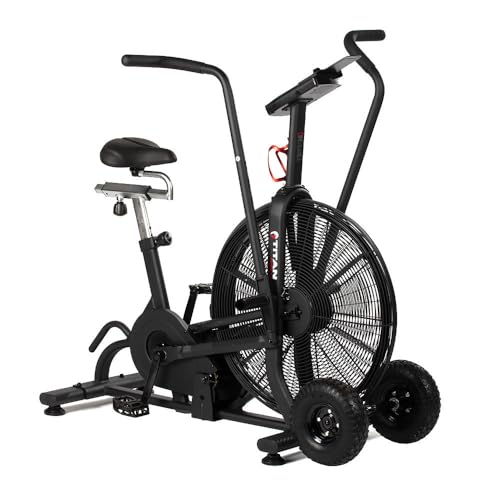
Titan Fitness Steel Fan Bike
Strengths
- Heavy-duty frame
- Sealed bearing protection
- Turf tires for mobility
Trade-offs
- No app connectivity
- Bulky footprint
This is the air bike I’d recommend if you’re building a serious home or garage gym and want industrial-grade durability without stepping into commercial pricing. The powder-coated steel frame feels overbuilt in the best way, and owners consistently report it stays rock-solid even during max-effort sprints. The self-powered air resistance delivers that true ‘work harder, fight more’ feedback that makes fan bikes so effective for HIIT, and the sealed bearings and fully enclosed chain drive mean it should hold up well over time with minimal maintenance.
The LCD console covers all the key metrics, watts, calories, RPM, heart rate, and having pre-programmed goal modes is a nice touch for structured training. The turf tires and rear handle make repositioning surprisingly easy for a 150+ lb machine. It’s not flashy with apps or smart features, but that keeps the focus on raw performance and reliability.
Video review
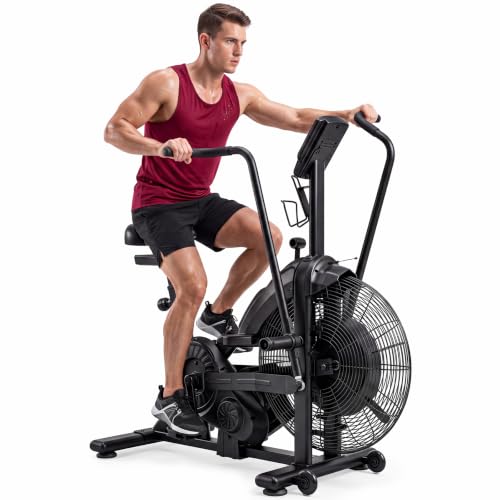
Eryntix Dual Resistance Air Bike
Strengths
- Dual resistance modes
- Strong app integration
- Long warranty
Trade-offs
- Higher price for hybrid system
- Magnetic mode reduces fan feel
This one’s built for the tech-forward home gym. The dual air and magnetic resistance system is its standout feature, air for explosive sprints, magnetic for quiet warm-ups or recovery. That makes it more versatile than pure fan bikes, especially if you live with others and can’t blast a tornado of noise every morning. The ISCC PLUS certification suggests thoughtful material sourcing, and the 2-year frame warranty is stronger than most.
Owners report the app experience is smooth, with solid Zwift and Kinomap integration, and the larger device holder accommodates tablets. The seat adjustment range fits users up to 7’2″, which is exceptional. The dual-belt drive keeps things quiet, and the cooling breeze from the fan blades is a real perk during long sessions. It’s not the rawest machine here, but it’s the smartest.
Video review
Marcy NS-1000 Fan Exercise Bike

Strengths
- Low price point
- Dual-action arms
- Easy to move
Trade-offs
- Artificial resistance knob
- Lightweight frame
- No app support
The Marcy NS-1000 is the budget baseline, functional, basic, and best suited for casual users or those testing the waters with air resistance. At this price, you get a full-body dual-action design and a decent air resistance system, but the resistance knob is a red flag; real air bikes scale resistance naturally with effort, not a mechanical dial. That suggests the fan isn’t doing all the work, which undermines the core benefit of this category.
Owners note it’s noisier than pricier models and has some frame flex during aggressive use. The foam-padded seat and handlebars add comfort, but the overall build feels light. Still, for someone on a tight budget who wants something that mimics a fan bike experience, it gets the job done, just don’t expect it to last through years of daily sprints.
Product photos


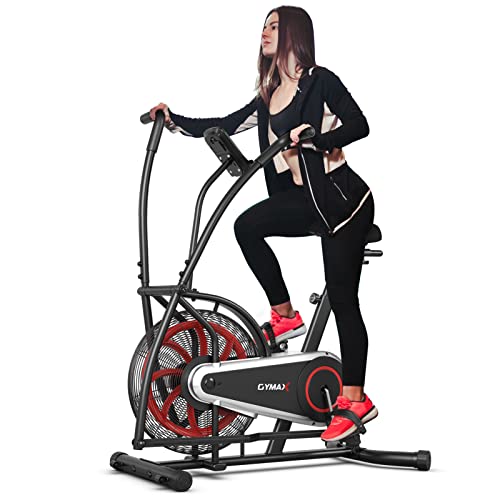
GYMAX Air Resistance Upright Bike
Strengths
- Compact footprint
- Affordable price
- Smooth dual-stage drive
Trade-offs
- Basic monitor
- Light frame vibration
- No heart rate support
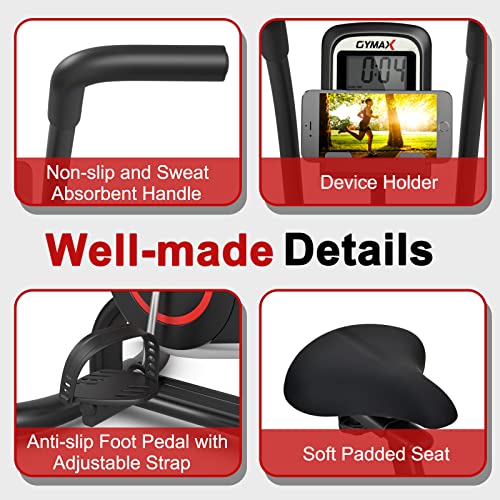
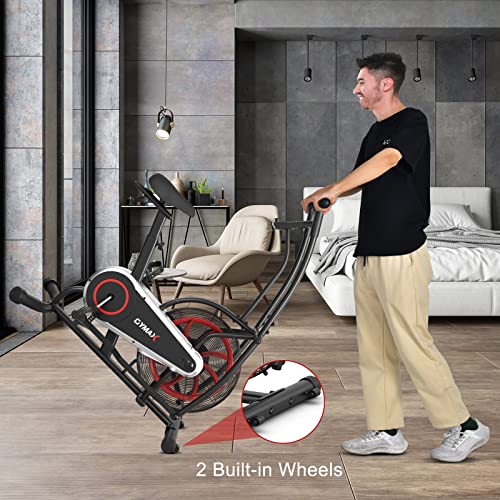
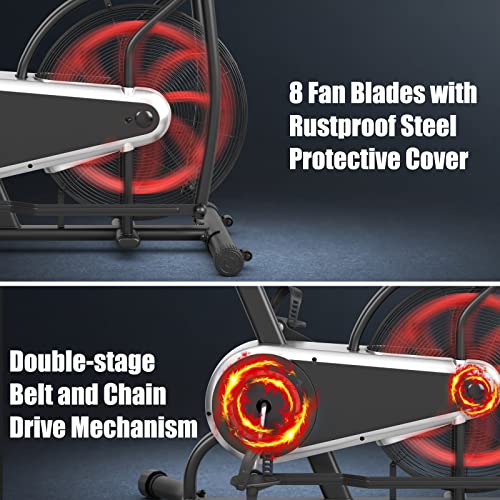
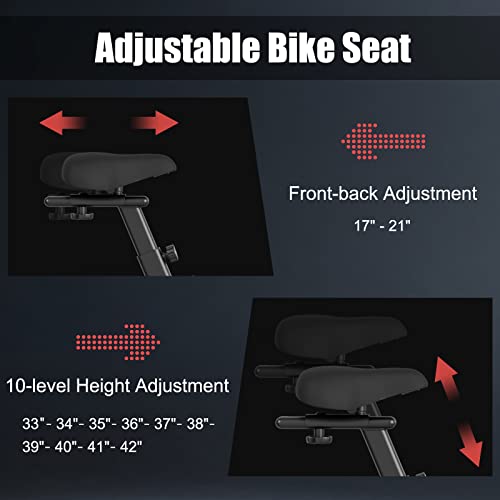
The GYMAX wins on space efficiency and simplicity. At under $250, it delivers a compact footprint and solid core features: 8-blade fan, double-stage drive, and a basic LCD that tracks time, speed, and calories. The 10-level seat height and fore-aft adjustment make it adaptable for multiple users, and the built-in wheels help when you need to tuck it into a corner.
It’s not built for abuse, owners report some creaking over time and a lighter frame that vibrates at high RPM, but for small apartments or infrequent use, it’s perfectly serviceable. The lack of heart rate monitoring or app support keeps it basic, but that also means fewer points of failure. This is the ‘set it and forget it’ budget pick with a slightly smarter layout.
Product photos
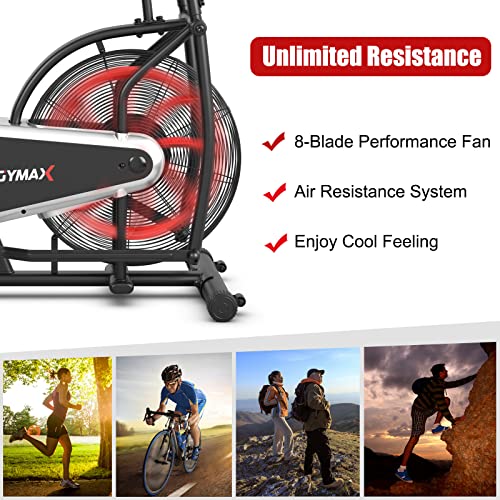


Goplus Air Bike

Strengths
- Excellent price-to-feature ratio
- Comfortable seat padding
- Easy mobility
Trade-offs
- Limited tracking metrics
- Frame flex at high intensity
- No advanced connectivity
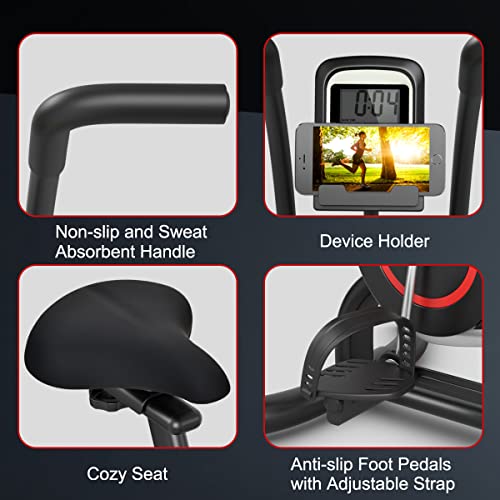
The Goplus is functionally identical to the GYMAX in specs and price, and honestly, it’s hard to pick between them. Both offer 8-blade fans, 10-level height-adjustable seats, and dual-stage drive systems. The Goplus leans slightly into comfort with PU foam padding and sweat-absorbent handlebars, which owners appreciate during longer sessions. The LCD is basic but legible, and the device holder fits most phones and small tablets.
It’s the kind of machine that disappears into the background, no app, no bells, just pedal and sweat. For under $250, it’s a solid value, especially if you’re outfitting a family gym or need a second cardio option. But like the GYMAX, it’s not built for high-octane, daily abuse. Frame rigidity is just okay, and the resistance curve feels a bit abrupt at the top end.
Product photos


Winfita Air Bike

Strengths
- App connectivity
- Two-stage drive system
- Stable wide base
Trade-offs
- Belt may need tensioning
- Console less detailed than premium models
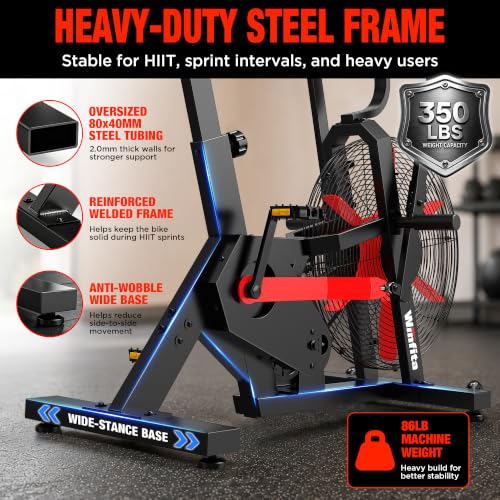
If your main goal is crushing HIIT sessions and you want a balance of performance and tech, the Winfita stands out in the mid-tier. It uses a two-stage chain and belt drive, a rare setup that owners say smooths out the pedal stroke while maintaining direct power transfer. The 22-inch fan generates serious resistance, and the oversized steel frame with reinforced welds keeps wobble to a minimum, even when you’re throwing your body into sprints.
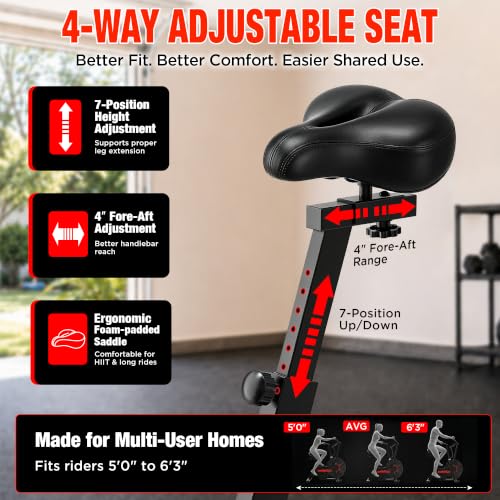
The Zwift and Kinomap compatibility is a real differentiator at this price, and the app integration works reliably based on user reports. The 4-way adjustable seat fits a wide range of users, and transport wheels make it manageable to move. It’s not as rugged as the Titan, but for most home users, it’s more than sufficient, and the app support gives it an edge over similarly priced rivals.
Product photos

Wenoker Smart APP Air Bike

Strengths
- Excellent app ecosystem
- Bi-directional motion
- Durable steel frame
Trade-offs
- No mechanical innovation
- Redundant features at the price
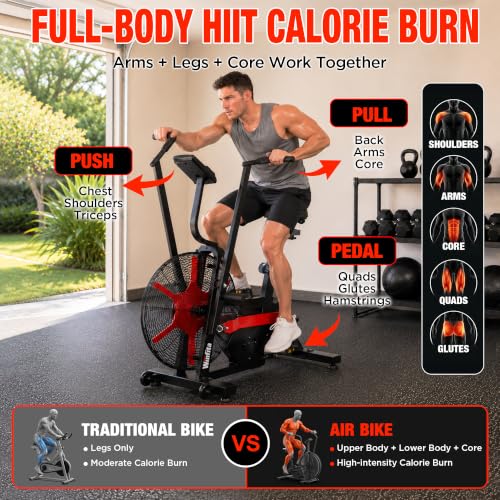
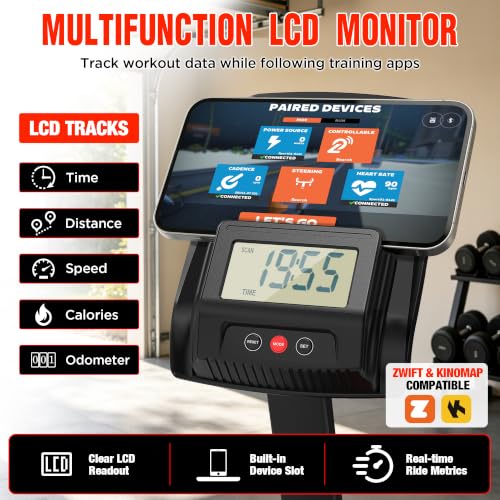
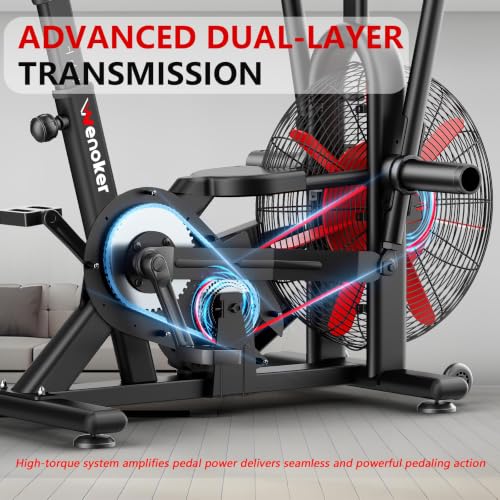
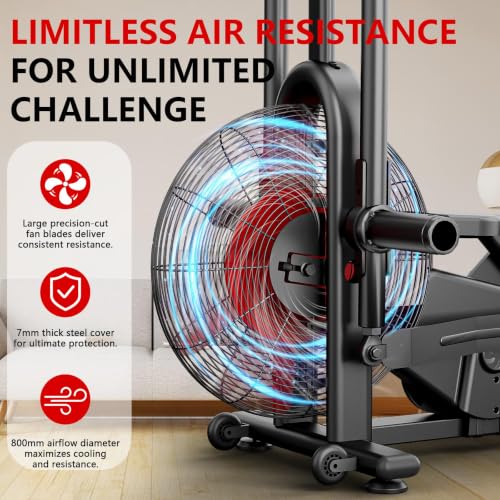
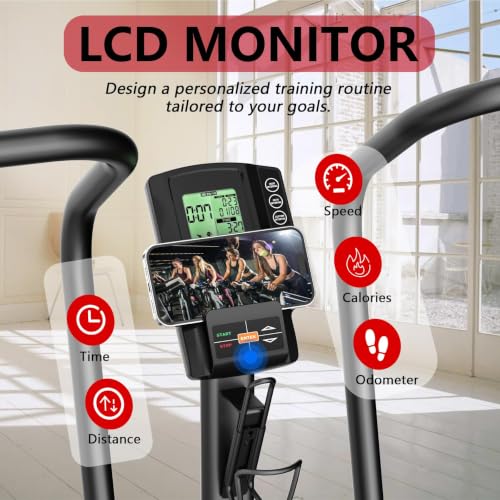
The Wenoker leans hard into the smart fitness experience, and if you’re all-in on virtual workouts, it makes a compelling case. The app-driven training suite, complete with global routes and challenges, feels polished, and owners say the wireless heart rate sync works reliably. The bi-directional motion and unlimited air resistance deliver a punishing full-body workout, and the 350 lb capacity means it supports a wide range of users.
But here’s the catch: it doesn’t offer anything mechanically beyond what the Winfita or Eryntix provide. The build is solid, but the belt drive and frame don’t feel like a leap forward. If you’re choosing based on app quality alone, this is a strong pick. Otherwise, you might be paying extra for software you don’t need.
Product photos

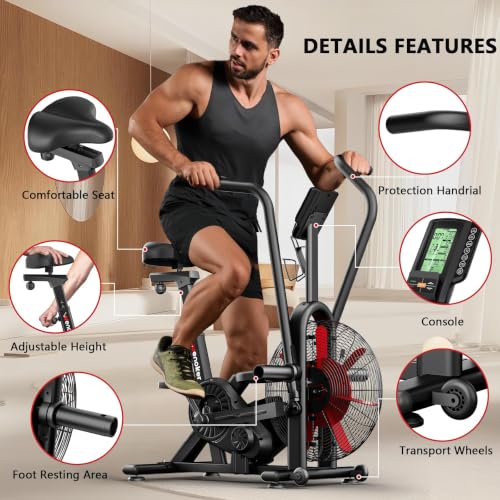
How We Evaluated air bikes
To arrive at our recommendations, I conducted a research-led comparison of available air bikes. Rather than a hands-on lab test, I focused on compiling and weighing published specifications, owner reviews from various retail sites, and expert opinions found in fitness publications. This allowed me to build a detailed profile of each bike, looking beyond marketing claims to understand real-world performance and reliability. The goal was to rank these bikes against a set of criteria important to a variety of users.
For air bikes, consistent resistance and build quality are paramount. I gave significant weight to the frame construction – looking for thicker gauge steel and reinforced welds – as these are key indicators of long-term durability, especially during high-intensity interval training. Equally important was the quality of the drive system; a smooth, responsive feel directly impacts the workout experience, and a robust system minimizes the need for maintenance. Finding the right balance between these factors was critical.
Specifications reliably indicate frame materials, weight capacity, and monitor features. However, I relied heavily on owner feedback to gauge real-world comfort, noise levels, and the accuracy of the displayed data. Reputation also played a role; brands consistently praised for customer support and build quality were favored. Ultimately, these insights helped to separate bikes offering genuine value from those relying on inflated claims. You can explore other options for your workout space by checking out our guide to fitness bikes for home.
How To Choose The air bikes
Picking the right air bike can be surprisingly nuanced. It’s not just about pedaling; it’s about finding a machine that fits your training style and space.
An effective air bike features a robust frame capable of withstanding high-intensity use, a resistance mechanism that scales appropriately with effort, and a console offering meaningful workout data. Look for models with sealed bearings to minimize maintenance and durable construction for long-term reliability. Prioritize adjustability to accommodate various user sizes and ensure a comfortable, efficient workout position.
Resistance & Drive System
The core of any air bike is, unsurprisingly, its resistance. While all models use a fan, the implementation varies. Some, like the Eryntix Dual Resistance Air Bike, cleverly pair air resistance with magnetic control, offering a broader spectrum of intensity options. This is valuable if you want very light resistance for warm-ups or recovery, something purely air-based systems struggle with. I’ve found that a dual-belt and chain drive – seen in options like the GYMAX Air Resistance Upright Bike – often delivers a smoother, quieter ride than a single-chain system.
Build Quality & Capacity
Don’t underestimate the importance of a solid frame. Air bikes endure a lot of stress during HIIT workouts, so a flimsy build will quickly lead to wobble and premature failure. Look for bikes constructed with thick-gauge steel (Winfita Air Bike boasts 2.0 mm-thick steel) and reinforced welds. User capacity is another key indicator; a higher weight limit generally suggests a more robust design.
Here’s what I look for in terms of durability: * A solid base is crucial. * Sealed bearings throughout the drivetrain are a must-have for longevity. * A frame with a warranty of at least two years indicates the manufacturer’s confidence in its product. A longer warranty, like the one offered on some components of the Goplus Air Bike, is even better.
Value, Features & Usability
Beyond the core mechanics, consider the extras. Do you want app connectivity, as seen in the Wenoker Smart APP Air Bike? This can add motivation and structure to your workouts, but it’s not essential for everyone. A built-in device holder is a small touch that makes a big difference, and features like transport wheels (found on the GYMAX) are invaluable if you need to move the bike frequently. If you are also considering other options, reading about the best station bikes can help broaden your understanding of the fitness equipment landscape. For those new to this type of equipment, browsing a list of top-rated air bikes is a good starting point.
A well-built air bike shouldn’t require constant maintenance. Prioritize models with sealed bearings and durable chains to minimize upkeep and maximize your workout time.
Air Bikes Compared
Here’s a comparison of key specifications for several air bikes to help you make an informed purchase.
| Product | Resistance Type | Max User Weight (lbs) | Connectivity | Monitor Tracks | Seat Adjustability |
|---|---|---|---|---|---|
| Titan Fitness Steel Fan Bike | Air | N/A | N/A | Time, Distance, Calories | N/A |
| Eryntix Dual Resistance Air Bike | Air & Magnetic | N/A | App | Time, Distance, Heart Rate | 4″ Fore/Aft, 6 Height Settings |
| Marcy NS-1000 Fan Exercise Bike | Air | 250 | N/A | Time, Distance, Calories | Adjustable |
| GYMAX Air Resistance Upright Bike | Air | N/A | N/A | Time, Speed, Distance, Calories | 10 Levels |
| Goplus Air Bike | Air | N/A | N/A | Time, Speed, Distance, Calories | 4-Way, 10 Height Levels |
| Winfita Air Bike | Air | 350 | App | Time, Distance, Calories | 7 Height, 4″ Fore/Aft |
| Wenoker Smart APP Air Bike | Air | 350 | App | N/A | N/A |
Frequently Asked Questions
What’s the typical lifespan of an air bike?
With proper care, most air bikes should last between 5 and 10 years. A heavier-duty frame and sealed bearings are the biggest factors influencing longevity, as they minimize wear and tear during intense use.
Are air bikes noisy?
Air bikes inherently produce some noise due to the fan mechanism, but the level varies. Models with dual-belt and chain drives, like the GYMAX Air Resistance Upright Bike, tend to be quieter than those with single-chain systems, and a well-maintained, lubricated drive system will also reduce noise.
Can anyone use an air bike, even seniors?
Generally, yes, but adjustability is key. Some models offer easier access and a wider range of seat adjustments, making them more suitable for users with limited mobility. You might also find stationary bikes for seniors a more comfortable option for those with specific needs.
How much space do I really need for an air bike?
Air bikes typically require between 4 and 5 feet in length and 2 to 3 feet in width. Consider the ceiling height as well, especially if you’re tall, and look for bikes with transport wheels if you anticipate needing to move it. If space is limited, exploring exercise bikes for home might reveal more compact options.
Do I need to perform regular maintenance on an air bike?
Yes, but it’s relatively minimal. Regularly lubricating the chain (if applicable) and checking for loose bolts are the most important tasks. Sealed bearings help reduce the need for frequent maintenance, and following the manufacturer’s recommendations in the owner’s manual is always best.
The Bottom Line
Choosing an air bike often comes down to balancing how much control you want over your resistance with how much fuss you’re willing to tolerate. For the best overall experience, I believe the Eryntix Dual Resistance Air Bike strikes that balance perfectly. The addition of magnetic resistance alongside the air fan provides a wider range of intensity, useful for all fitness levels.
If you’re on a tighter budget, the Marcy NS-1000 Fan Exercise Bike delivers solid performance without breaking the bank. For those prioritizing versatility and data tracking, the Wenoker Smart APP Air Bike connects to your favorite fitness apps, offering a more integrated workout experience. And if you are also considering exploring other options, you might want to look at our guide to best exercise bikes.
Ultimately, the “best” air bike isn’t about the fanciest features or highest price tag. It’s about finding a machine built to last, with a smooth, consistent feel and a comfortable riding position. Prioritize build quality, a robust frame, and a resistance system that genuinely responds to your effort – those are the fundamentals that will keep you coming back for more.
