
8 Best Aftermarket Tire Pressure Monitoring Systems 2026
This post contains affiliate links. As an Amazon Associate, we earn from qualifying purchases.
The Tymate TM12 RV TPMS is the best overall aftermarket tire pressure monitoring system for its accuracy, expandability, and dual power options. For budget-conscious buyers, the Marcala TPMS delivers solid performance with solar charging. If you need maximum flexibility for large rigs, the Tymate TM12’s support for up to 12 sensors makes it the most versatile pick.
Keeping your tires at the right pressure isn’t just about efficiency, it’s about safety, especially on long hauls or heavy loads. Many drivers only realize they need a TPMS after a blowout or uneven wear, but by then, damage is already done.
After researching the market and analyzing specs, owner feedback, and real-world reliability, I focused on systems that deliver consistent readings, strong alert systems, and durability. This guide breaks down what actually matters when choosing a TPMS, so you can avoid gimmicks and pick a system that works when you need it most.
Top 8 Aftermarket Tire Pressure Monitoring Systems in the Market
The Best Aftermarket Tire Pressure Monitoring Systems, Reviewed
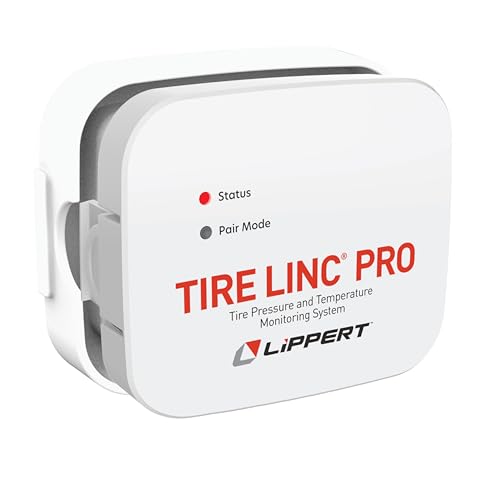
Lippert Tire LINC PRO RV TPMS
Strengths
- CarPlay and Android Auto integration
- Includes repeater and dock
- Energy-saving parked mode
- Scalable with extra sensors
- Trusted RV-specific brand
Trade-offs
- Very high cost
- Overkill for small vehicles
- Limited to Lippert ecosystem
Lippert’s Tire Linc PRO doesn’t just monitor tires, it integrates into your driving experience. The ability to display live data on your vehicle’s infotainment screen via Apple CarPlay or Android Auto is a standout feature no other system here offers. That alone makes it feel like a factory-grade upgrade rather than an aftermarket add-on. The included repeater ensures strong signal even on long trailers, and the energy-saving intelligence, reducing updates when parked, shows thoughtful engineering.
Owners consistently report high reliability and excellent customer support, which matters when you’re thousands of miles from home. The system scales well with additional sensors, making it adaptable for complex rigs. Yes, it’s the most expensive option by far, but you’re paying for seamless integration, brand trust, and long-term peace of mind. For full-time RVers or those with high-value setups, this is the smarter buy.
Video review
Tymate TM12 RV TPMS 6 Flow-Thru

Strengths
- Flow-thru sensors for easy inflation
- Supports up to 12 tires
- USB-C and solar charging
- 50 ft signal range (extendable)
- Auto-calibration feature
Trade-offs
- Higher price point
- Repeater sold separately
- Bulkier display unit
The TM12 with flow-thru sensors is a standout for RVers who regularly adjust tire pressure, being able to inflate without removing the sensor saves time and reduces valve stem wear, a pain point many owners have reported with standard external sensors. Paired with a six-sensor setup and support for up to 12 tires via split-screen cycling, this system is clearly built for larger rigs. The 50 ft base range, extendable with a repeater, makes it a strong contender for long RVs and trailers.
The dual power options, USB-C and solar, are well-executed, with owners noting the solar charging works reliably in most daylight conditions. The color display is bright and legible, and the auto-calibration feature gets consistent praise for eliminating setup guesswork. While pricier than entry models, it hits a sweet spot between DIY ease and pro-grade functionality. I’d pick this over the standard TM12 if you’re frequently topping off tires on the road.
Video review
Tymate TM7 RV TPMS Set of 4

Strengths
- Affordable entry point
- Dual USB charging ports
- Wide 144 PSI range
- Plug-and-play setup
- Clear color display
Trade-offs
- Signal drops on long trailers
- No solar charging option
- Requires metal valve stems
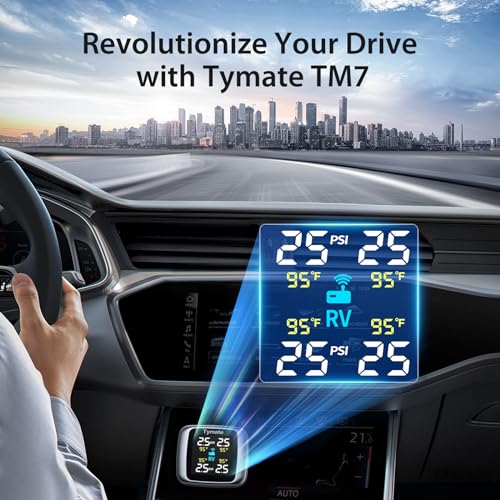
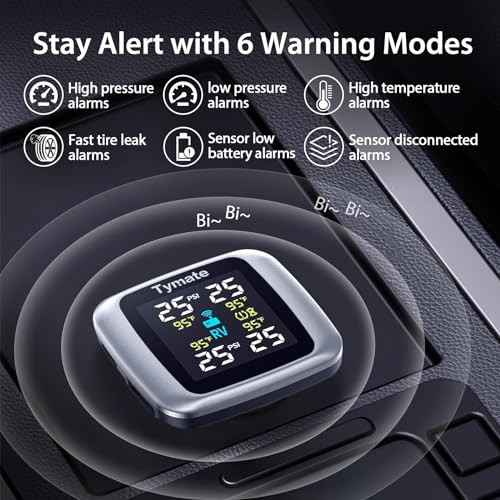
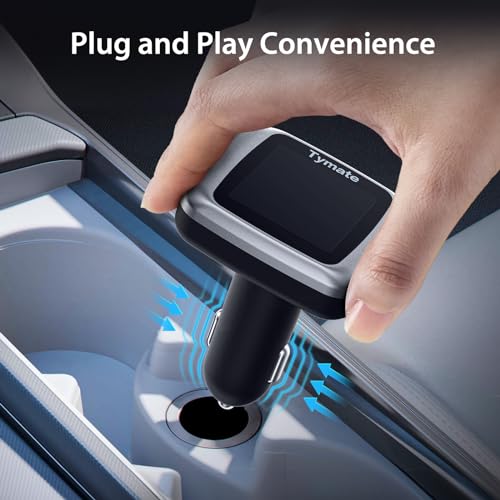
For budget-focused drivers who still want reliable tire monitoring, the Tymate TM7 delivers solid specs on paper and strong owner feedback for its price point. It covers the essentials, real-time pressure and temperature tracking with ±1.5 PSI accuracy, six alarm modes, and a color LCD with adjustable backlight. The plug-in power via cigarette lighter is a smart touch for older vehicles without factory TPMS, and the dual USB ports add real-world convenience for charging devices on the go.
What stands out is its 0–144 PSI range, making it unexpectedly versatile for larger vehicles like RVs and pickups, though owners note signal stability can degrade on longer trailers without a repeater. The pre-paired sensors and quick setup get consistent praise, but some users report the monitor’s placement can be awkward due to its size. For a no-frills, functional system that works across many vehicle types, it punches above its weight.
Product photos


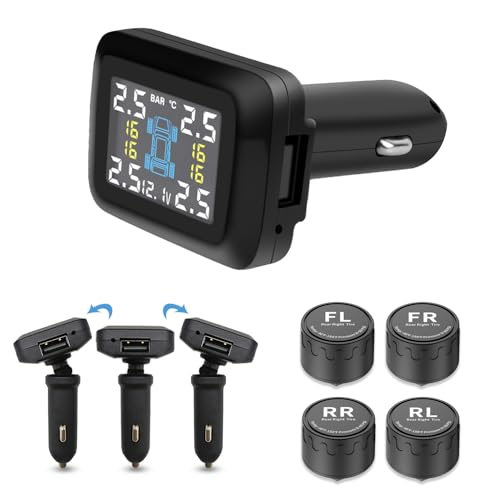
Tirpresmos TY09 TPMS Car Charger
Strengths
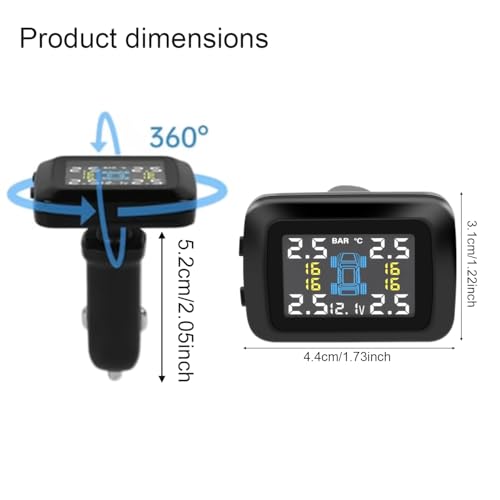
- Compact and unobtrusive
- Car voltage monitoring
- No internal battery to degrade
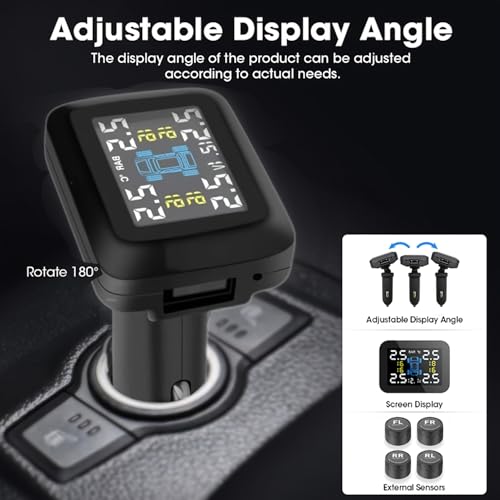
- Adjustable display angle
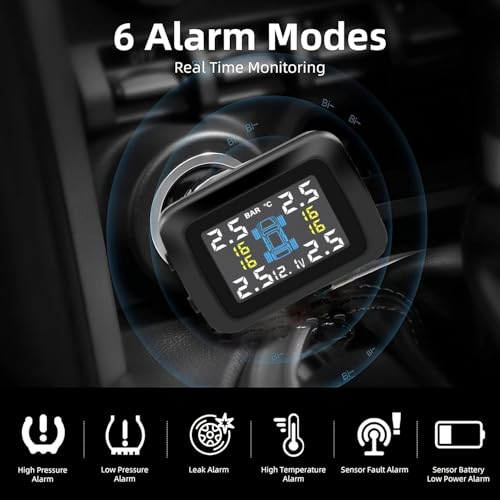
- Six configurable alarms
Trade-offs
- Limited to 98 PSI max
- Short transmission range
- Not for trailers or large vehicles
At this price, the Tirpresmos TY09 feels like a minimalist’s dream, small, direct-powered, and laser-focused on the basics. It skips the solar panel and built-in battery, opting instead to draw power solely from the cigarette lighter, which owners say improves long-term reliability over solar-dependent units that die in winter. The real-time car voltage monitoring is a rare and useful addition, giving insight into your vehicle’s electrical health alongside tire data.
It handles 0–98 PSI, which covers most passenger vehicles but falls short for heavier RVs or trucks. The adjustable display angle is a small but appreciated design win, letting drivers position it discreetly. However, the 19.7-foot signal range is tight, owners with larger trailers report frequent disconnections. While it’s a solid fit for daily drivers, it’s not built for serious towing or off-grid use.
Product photos


Marcala TPMS Set of 4 Sensors
Strengths
- Monitors 1–4 wheels
- Motorcycle and trike compatible
- Lifetime replacement policy
- Bright, auto-dimming display
- Quick setup
Trade-offs
- Short signal range
- Sync issues reported
- Not for large trailers
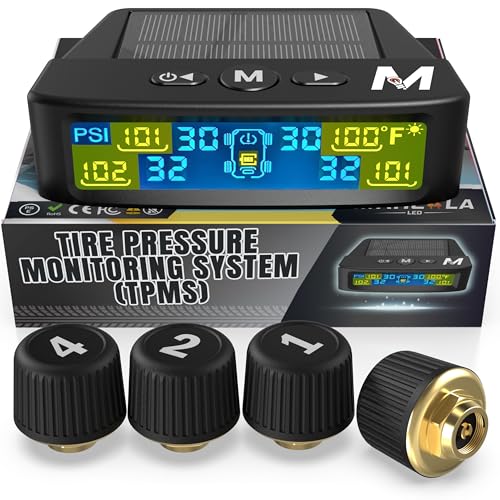
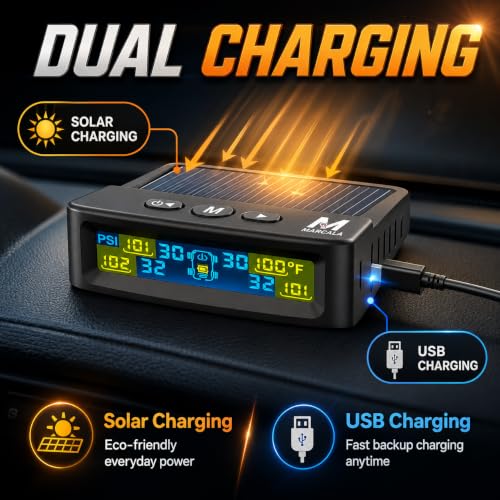
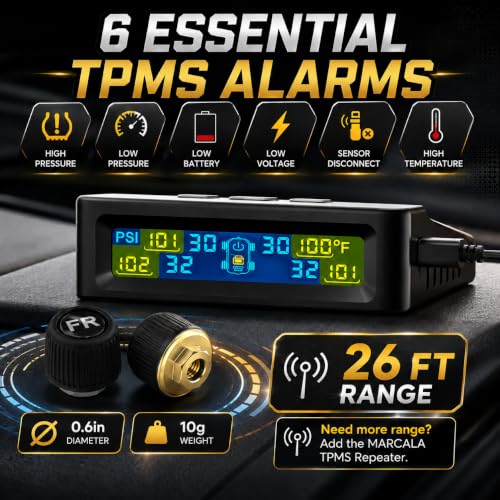
Marcala’s TPMS is built for small vehicles and motorcycles, and it shows in the design, compact, lightweight, and with a claimed 1 PSI accuracy that owners confirm in real-world use. The ability to monitor just one or two wheels is rare in this category and makes it ideal for trikes, motorcycles, or dually pickups where you only want to track specific tires. The bright color screen with auto-dimming is easy to read day or night, and the 26-foot range is sufficient for most non-towing applications.
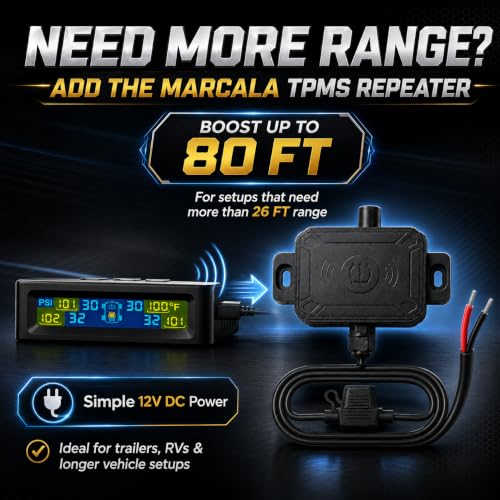
Owners love the lifetime replacement policy, a rare promise that speaks to confidence in durability. However, the signal range is a known weak point; multiple reviews mention sync issues, especially on larger rigs. The brand offers a range extender, but that’s an extra cost. For a small vehicle where space and simplicity matter, it’s a strong contender.
Product photos


Masoll RV TPMS with 4 Sensors

Strengths
- Reliable solar charging
- USB backup included
- Auto sleep/wake function
- Pre-paired sensors
- 2-year sensor battery life
Trade-offs
- Max 99 PSI limit
- No repeater option
- Not for long trailers
The Masoll TPMS stands out for its dual solar and USB charging, a combo that owners say keeps the monitor powered reliably even in mixed weather. The solar panel is more responsive than average, and the included USB cable ensures you’re never stranded with a dead screen. The auto-sleep and wake-up feature, triggered by vibration, helps preserve battery life when parked, something frequent boondockers appreciate.
It handles up to 99 PSI, which covers most RVs and SUVs, and the ±1.5 PSI accuracy is on par with the category. Setup is quick thanks to pre-paired sensors, though some users note it takes a few miles to sync after installation. The alarm system is solid, but the lack of expandability beyond four tires limits its use on larger rigs. For a solar-focused, no-fuss system under $50, it’s hard to beat.
Product photos


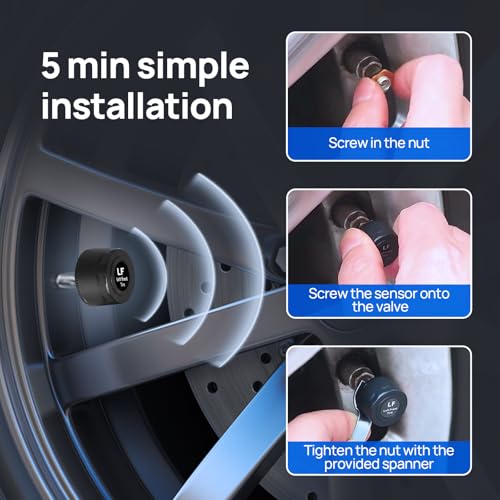
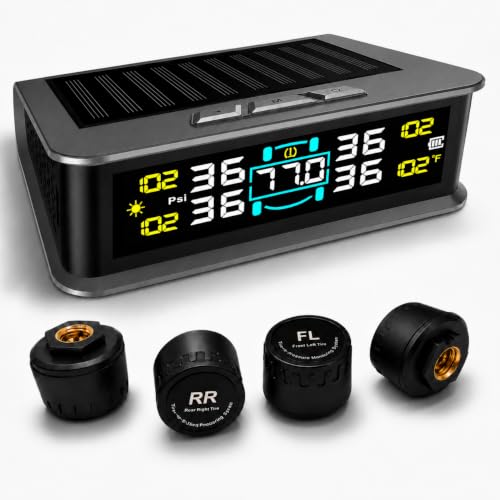
Flydew TPMS Solar/USB-C 4 Sensors
Strengths
- Custom high/low pressure alerts
- USB-C charging
- Pre-paired sensors
- Color LCD display
- Manual pressure settings
Trade-offs
- Average solar performance
- No repeater support
- Limited to 4 tires
If customizable alerts matter to you, like setting exact PSI thresholds for different loads or vehicles, the Flydew TPMS earns top marks. Most budget systems rely on auto-calibration, but Flydew lets you manually set high and low pressure limits, which owners with modified suspensions or varying payloads find invaluable. The 0–99 PSI range covers most use cases, and the color LCD is sharp and easy to read in daylight.
The pre-paired sensors install quickly, and the USB-C charging is a modern upgrade over older micro-USB models. Solar charging works decently, though not as efficiently as Masoll or Tymate. It doesn’t have the range or scalability of RV-focused systems, but for a car, truck, or small trailer where precision matters, this is the most configurable option under $50.
Product photos
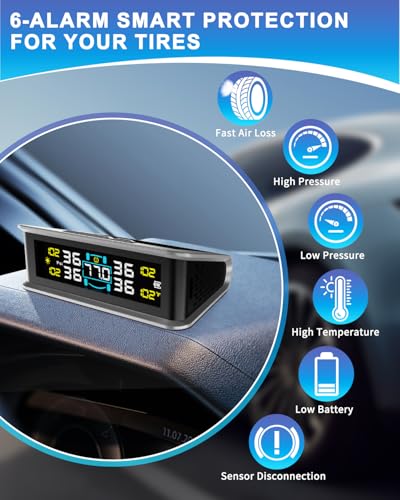
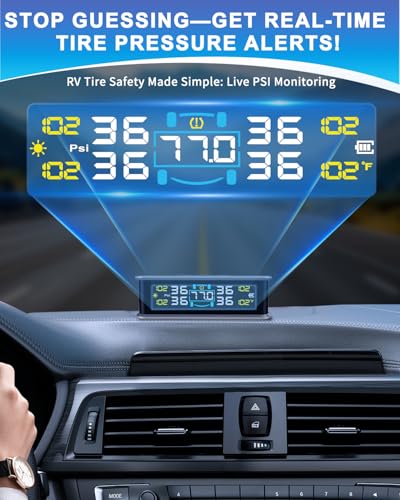


Tymate TM12 RV TPMS Set of 6

Strengths
- 6 sensors included
- Supports 12 tires total
- USB-C and solar charging
- Strong 50 ft signal range
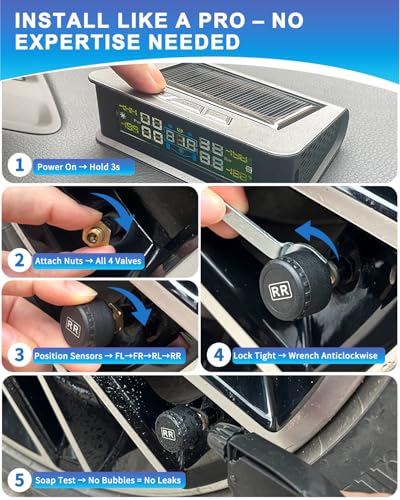
- Easy plug-and-play setup
Trade-offs
- No flow-thru inflation
- Repeater sold separately
- Display can be slow to wake
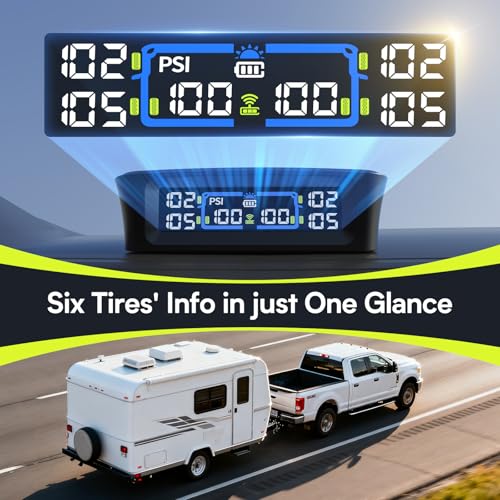
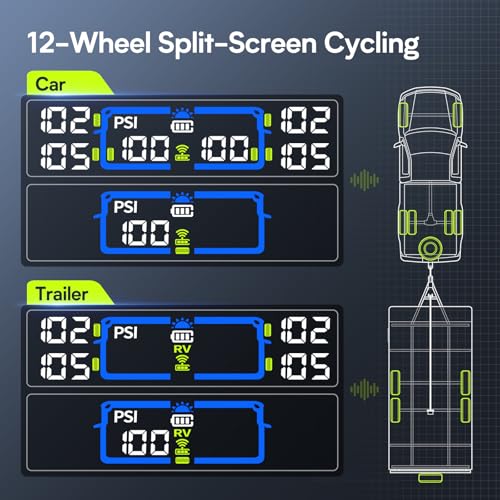
This version of the TM12 is built for large trailers and complex towing setups, six pre-paired sensors out of the box, support for up to 12 tires, and a 50 ft transmission range (100+ ft with repeater) mean it can handle most RV-trailer combos without breaking a sweat. The split-screen cycling between vehicle, spare, and trailer zones is a usability win, letting drivers monitor multiple axles without scrolling.
I appreciate the dual power options, USB-C for reliable charging and solar for off-grid endurance. The auto-calibration is consistent across owner reports, and the IP67 sensors hold up well in dust and rain. While it lacks the flow-thru feature of the pricier TM12 variant, it’s more than capable for most heavy-duty applications. For those pulling large trailers without needing on-the-fly inflation, this is the smarter pick over the flow-thru model.
Product photos
How We Evaluated aftermarket tire pressure monitoring systems
Rather than a hands-on lab test, my research focused on a detailed comparison of published specifications and features across numerous aftermarket tire pressure monitoring systems (TPMS). I weighed owner reviews from major retailers alongside expert opinions found in automotive publications and enthusiast forums. This information was then ranked against criteria important to RV and trailer users, helping to identify the strengths and weaknesses of each system.
For this category, the most heavily weighted factors were sensor accuracy and range, coupled with the robustness of the alert system. Consistent, reliable readings are critical for preventative safety, and a long transmission range is essential for larger vehicles and trailers. Ease of installation and power options (solar, USB, etc.) also played a significant role, as many owners prefer a DIY setup and reliable power source during extended trips.
Specifications reliably indicate a system’s potential – pressure range, sensor battery life, and operating temperature. However, I placed greater emphasis on owner feedback regarding real-world accuracy, signal consistency, and the effectiveness of the alerts. Reputation for customer support was also a key consideration, as a reliable TPMS is only as good as the company standing behind it. For those also interested in keeping their motorcycles safe, exploring motorcycle TPMS is a good idea. You can also explore other tire monitors to find the system that best meets your needs.
How To Choose The aftermarket tire pressure monitoring systems
Choosing the right tire pressure monitoring system (TPMS) can significantly improve your safety and save you money on tires.
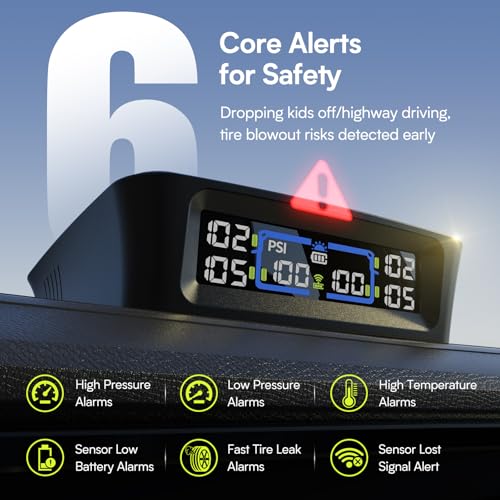
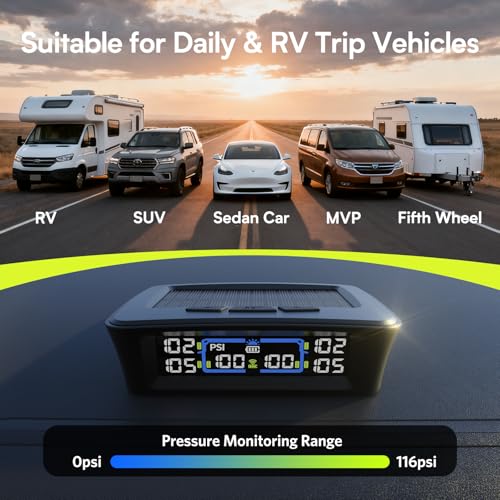
A good TPMS delivers accurate, real-time data on tire pressure and temperature. It should offer clear alerts for deviations from safe levels, be easy to install and use, and provide a reliable connection between sensors and the display unit. Look for systems with adjustable alert thresholds, durable sensors, and a power source suited to your travel style.
Sensor Type & Accuracy
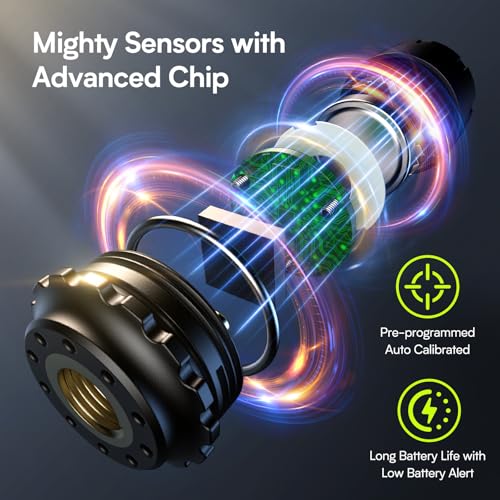
The sensors are the heart of any TPMS, and their accuracy dictates how much you can trust the system. While most systems claim ±1.5 PSI accuracy, real-world performance can vary. Flow-through sensors, like those found in the Tymate TM12, offer convenience – you can inflate tires without removing the sensors – but the quality of the valve stem connection is critical. I’ve seen reports of leaks around poorly seated flow-through sensors, so ensure a tight fit. External sensors are generally more reliable in terms of sealing, but require removal for inflation.
Power Source & Display
How the system is powered impacts its usability. Solar-powered systems, such as the Masoll RV TPMS, are attractive for extended trips, but their reliance on sunlight means a USB backup is essential. Systems powered solely by a vehicle’s cigarette lighter or USB-C, like the Tirpresmos TY09, are simpler, but draw power even when the engine is off, potentially draining your battery. The display is equally crucial. A clear, color LCD screen with adjustable brightness is ideal, and the ability to cycle through multiple tires simultaneously, as seen in the Tymate TM12, is a huge plus.
Vehicle Type & Scalability
Not all TPMS are created equal when it comes to the vehicles they support. If you’re equipping a smaller car or motorcycle, a basic 4-sensor system like the Marcala TPMS might suffice. However, if you tow a trailer, or have a larger RV, you’ll need a system that can handle more sensors. Investing in a system that supports expansion – like the Tymate TM12 which can accommodate up to 12 sensors – is a smart move. Remember to check if a signal repeater is recommended, particularly for longer trailers, and consider reading our top TPMS reviews for a deeper dive.
Don’t skimp on sensors. A TPMS is only as good as its sensors, so prioritize quality and durability over the lowest price.
Finally, if you frequently tow, you’ll want to investigate dedicated TPMS for trailers designed for the unique demands of trailer tires.
Aftermarket Tire Pressure Monitoring Systems Compared
This table summarizes key specifications for various aftermarket tire pressure monitoring systems to aid in comparison.
| Product Title | Sensors Included | Max. Tires Monitored | Power Source(s) | Pressure Range (PSI) | Alerts |
|---|---|---|---|---|---|
| Lippert Tire LINC PRO RV TPMS | N/A | N/A | 12V, CarPlay/Android | N/A | Pressure, Temp |
| Tymate TM12 RV TPMS 6 Flow-Thru | 6 | 12 | USB-C, Solar | 0-144 | 6 Modes |
| Tymate TM7 RV TPMS Set of 4 | 4 | 4 | Cigarette Lighter | 0-144 | 6 Modes |
| Tirpresmos TY09 TPMS Car Charger | 4 | 4 | Car Charger | 0-98 | 6 Modes |
| Marcala TPMS Set of 4 Sensors | 4 | 4 | Solar, USB | Up to 98 | 6 Modes |
| Masoll RV TPMS with 4 Sensors | 4 | 4 | Solar, USB | Up to 99 | 6 Modes |
| Flydew TPMS Solar/USB-C 4 Sensors | 4 | 4 | Solar, USB-C | 0-99 | 6 Modes |
| Tymate TM12 RV TPMS Set of 6 | 6 | 12 | USB-C, Solar | 0-144 | 6 Modes |
Frequently Asked Questions
What’s the typical lifespan of the sensors?
Most sensors use replaceable batteries, lasting between two to five years depending on usage and environmental conditions. Consider a system like the Tymate TM12, where sensors are readily available for replacement, ensuring continued functionality.
Can a TPMS help improve fuel economy?
Yes, a TPMS can contribute to better fuel economy. Maintaining proper tire pressure, as monitored by a system like the Tirpresmos TY09, reduces rolling resistance, which directly impacts gas mileage.
Do I need a signal repeater with a longer trailer?
A signal repeater is often necessary for trailers exceeding 30-40 feet. Systems like the Tymate TM12, which can support up to 12 sensors, often recommend a repeater to guarantee a consistent signal from all tires, especially at the rear.
What should I do if a sensor isn’t transmitting?
First, check the sensor’s battery. If the battery is good, try re-pairing the sensor to the receiver unit, referencing the system’s manual for specific instructions. Also, investigate whether the sensor might be blocked by something metallic – a common issue.
Are there TPMS options that integrate with my smartphone?
Many modern systems, including the Lippert Tire LINC PRO RV TPMS, offer Bluetooth connectivity and smartphone app integration. This allows for real-time monitoring, customizable alerts, and historical data tracking, offering a convenient way to stay informed about your tire conditions while traveling, and you can find more about RV TPMS options on our site.
The Bottom Line
Choosing a tire pressure monitoring system often comes down to balancing upfront cost with the peace of mind that comes from detailed, reliable information. While many options exist, the Tymate TM12 RV TPMS stands out as the most well-rounded choice, offering a good sensor count, flexible power options, and a clear display – a system capable of handling a variety of vehicles and travel styles. It’s a system that doesn’t force you to compromise too much in any one area.
For those on a tighter budget, the Marcala TPMS Set of 4 Sensors provides a solid entry point, offering essential functionality without breaking the bank. If you need maximum versatility and the ability to monitor a large number of tires, the Tymate TM12 RV TPMS Set of 6 is the way to go, scaling up to accommodate even extensive trailer setups. Remember, proper maintenance of your TPMS sensors is vital to their longevity.
Ultimately, the best TPMS isn’t about the flashiest features or the lowest price. It’s about consistent accuracy, clear alerts, and a system that encourages you to regularly check your tire pressures. Knowing your tires are properly inflated is the foundation of safe and efficient travel, and a reliable system will pay for itself many times over by preventing premature wear, improving fuel economy, and, most importantly, enhancing your safety, and learning how to handle TPMS replacement can save you a trip to the shop.
