
7 Best Aftermarket ACs for Classic Cars 2026
This post contains affiliate links. As an Amazon Associate, we earn from qualifying purchases.
The Coldmaster Universal Underdash AC Kit stands out as the best overall choice for classic car owners seeking reliable, strong cooling in a relatively complete package. For those on a tighter budget, the Universal AC Kit with Sanden Compressor delivers the same core performance at a lower price. If you drive a 1967–68 Camaro, the Vintage Air Gen 5 Camaro Kit is worth the premium for its perfect fit and factory-clean look.
Adding air conditioning to a classic car shouldn’t mean sacrificing reliability or authenticity. Most vintage rides weren’t built for modern climate control, so finding a system that cools well without overwhelming the engine or altering the interior is a real challenge. In this guide, I break down the top aftermarket options based on specs, component quality, and what actual owners report, so you can pick a system that works as well as it looks.
Top 7 Aftermarket Air Conditionings For Classic Cars in the Market
The Best Aftermarket Air Conditionings For Classic Cars, Reviewed
Coldmaster Universal Underdash AC Kit
Strengths
- Includes compressor and fan
- Plug-and-play wiring
- Good airflow and cooling
Trade-offs
- Mounting brackets not included
- Some customization still needed
- Sight glass not included
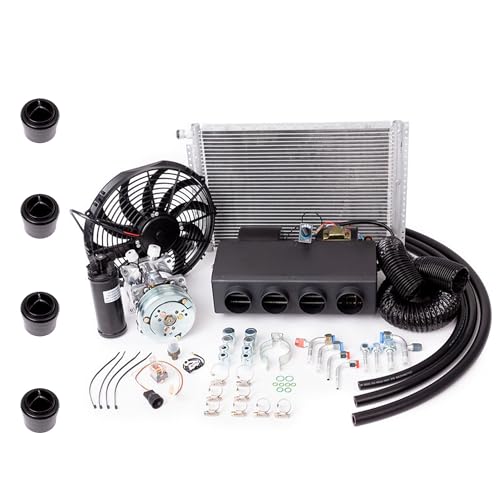
This is one of the most balanced universal kits I’ve seen for classic car builds. It includes a Sanden-style SD508 compressor, 12,700 BTU evaporator, condenser fan, and a plug-and-play harness, everything but the mounting brackets and refrigerant. The 359 CFM blower and quiet compressor design mean real-world comfort without constant mechanical noise.
Owners highlight the ease of wiring and the included starlight vents, which add a modern flair. It’s not as polished as a Vintage Air setup, but it delivers 80% of the performance at half the price. The regular-fit fittings help with clearance in tight engine bays. For most builds, this is the smarter buy unless you demand concours-level fitment.
Video review
Universal AC Kit with Sanden Compressor

Strengths
- Includes compressor and ducting
- Complete hose and fitting set
- High BTU with good airflow
Trade-offs
- No mounting brackets
- Universal fit means custom work
- No thermostat display
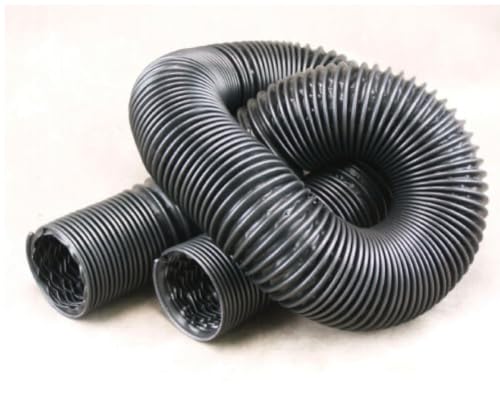
Priced the same as the defroster-focused kit but includes a full Sanden-type compressor, this one delivers more value for most builds. The 12,700 BTU evaporator, 10 feet of flex duct, and complete hose set make it one of the most thorough universal kits available. Owners appreciate the included starlight louvers and the fact that both crimp and clamp systems are supported, no special tools needed.
It shares the same solid CPF142018 condenser and CF1212 fan as higher-end setups, and the 1-year warranty adds peace of mind. While it still requires custom mounting, the inclusion of nearly every major component makes this my pick for the best overall value in a full retrofit.
Video review
Universal Under-Dash Heat & Cool Kit
Strengths
- Includes defroster vents
- High-quality aluminum components
- Reversible condenser fan
Trade-offs
- No compressor included
- Extensive fabrication required
- No brackets or hoses for compressor
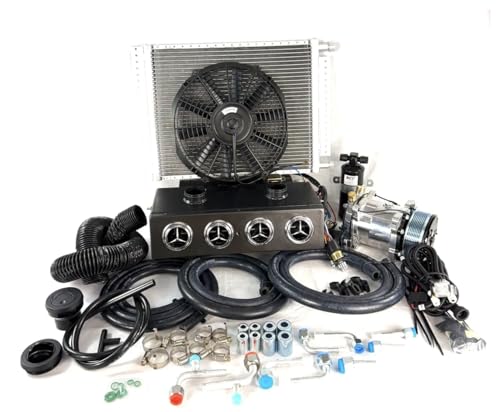
This premium kit stands out for including auxiliary defroster vents, an often-overlooked but critical feature for classic cars with poor windshield airflow. The 12,700 BTU evaporator and parallel-flow condenser mean solid cooling, and the reversible 12″ fan gives flexibility in tight spaces.
It’s one of the few kits that treats defrosting as seriously as cooling, which matters when you’re driving in humid climates. The aluminum drier and O-ring fittings suggest long-term reliability. However, like most universal kits, it demands dashboard cutting and custom bracket work. You’re paying for completeness and thoughtful design, not ease of install.
Product photos

Foruly R134a AC Retrofit Kit
Strengths
- Complete R134a conversion
- Includes essential retrofit parts
- Universal R12 compatibility
Trade-offs
- No compressor or evaporator
- Requires technical know-how
- No mounting hardware
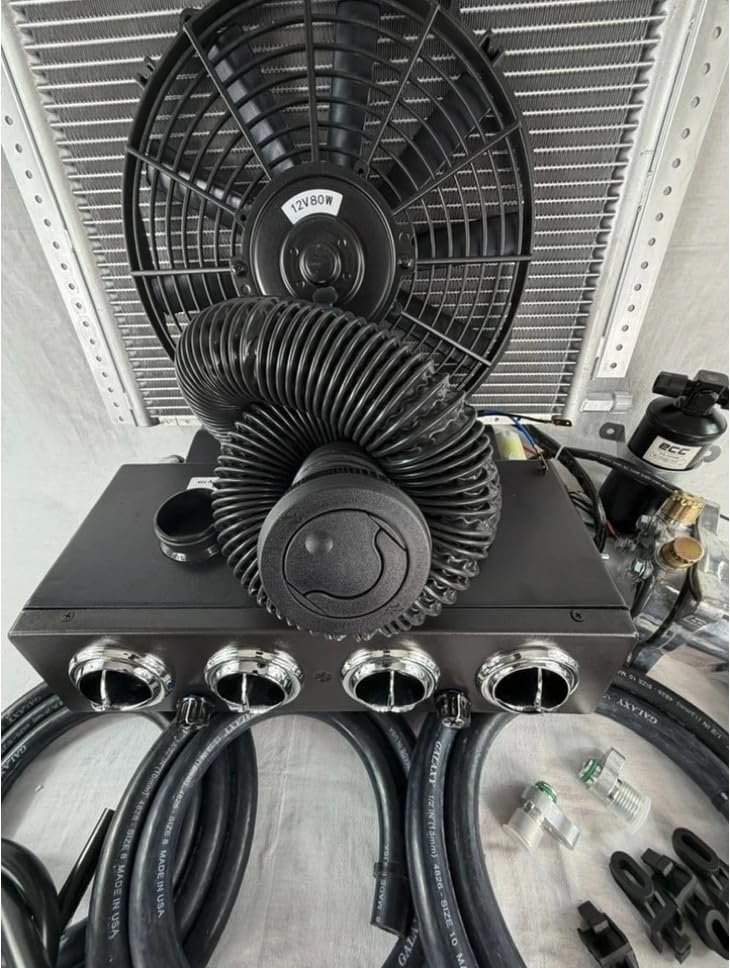
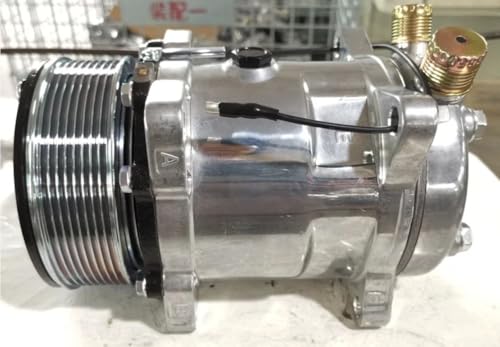
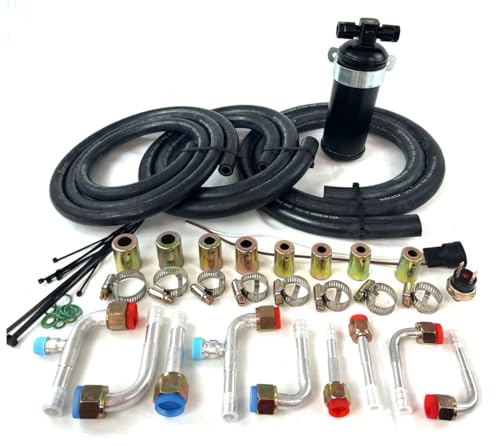
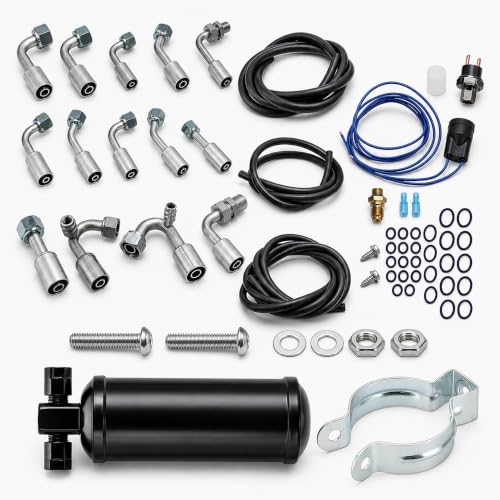
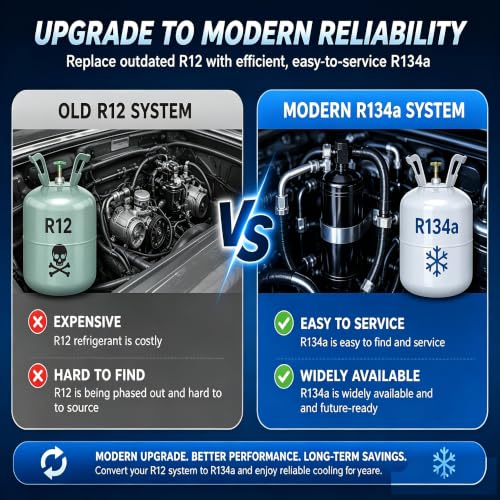
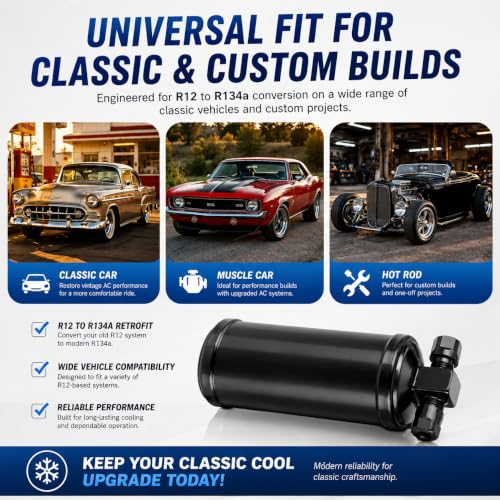
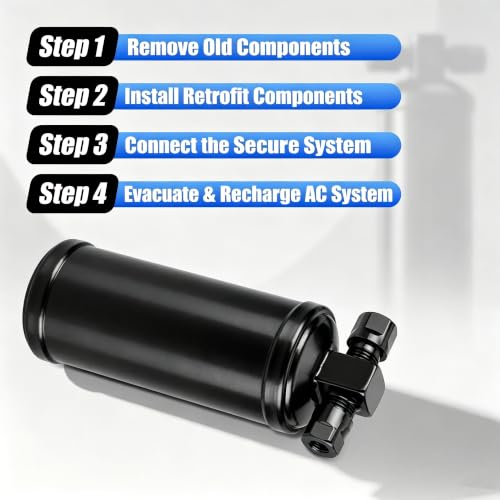
If you’re converting an old R12 system to R134a, this kit checks the core boxes. It includes barrier hoses, drier, binary switch, and retrofit cores, everything needed for a proper chemical and mechanical transition. Reviewers note it restores usable cooling in most vintage applications, though it won’t match modern car performance.
The universal fit helps across hot rods and custom builds, but installation still demands careful attention to hose routing and pressure settings. It’s not a plug-and-play solution, but for the price, it’s one of the more complete R12-to-R134a conversion kits out there. I’d pick this over piecing together components from different brands.
Product photos

LL-Motor88 12V Universal Evaporator
Strengths
- High BTU rating
- Integrated heater core
- Electronic thermostat
Trade-offs
- No compressor or condenser
- Extensive fabrication needed
- Basic wiring included
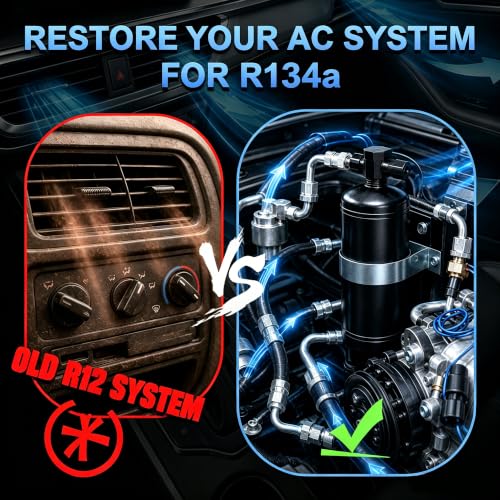
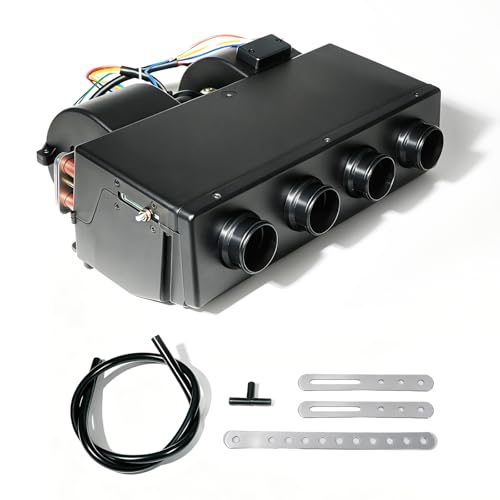
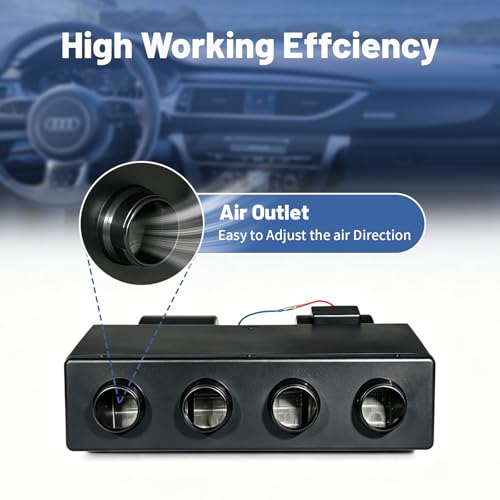
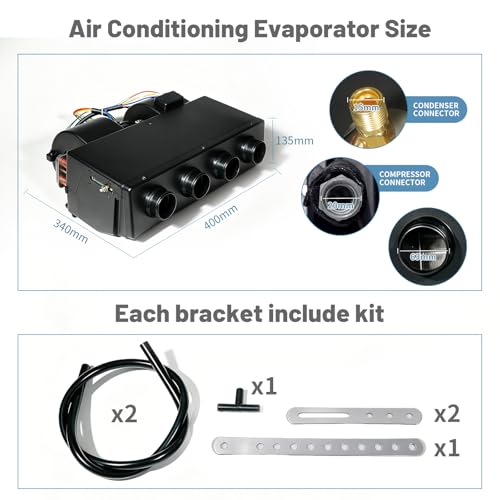
This is a budget-focused evaporator unit aimed at builders adding AC to cars that never had it. With a 16,297 BTU cooling rating and dual heater/evaporator design, it promises solid output for the price. The 22-pass coil and electronic thermostat suggest decent efficiency, and owners report it delivers cold air when properly integrated.
But it’s just one piece of the puzzle. You’ll need to source the compressor, condenser, and plumbing separately, which can add hidden costs. The universal fit means custom fabrication is unavoidable. If you’re deep into a scratch-built hot rod and want a low-cost starting point, this makes sense. For turnkey comfort, look elsewhere.
Product photos



Vintage Air Gen 5 Camaro Kit
Strengths
- Perfect fit for 67–68 Camaro
- High-end materials and finish
- Minimal fabrication required
Trade-offs
- Very high price
- Model-specific only
- Requires full system purchase
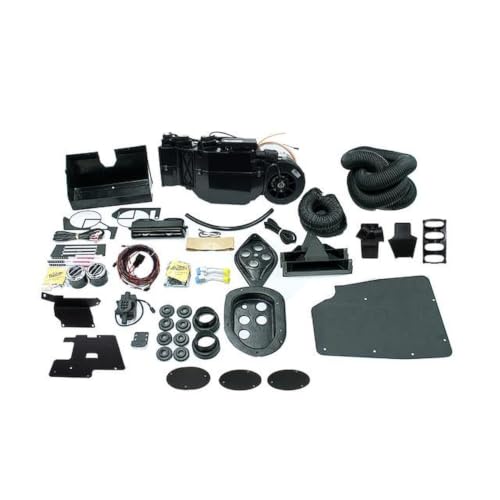
This is a precision-engineered solution for a very specific need: adding modern AC to a 1967–1968 Camaro that never had factory air. Vintage Air has spent decades mastering this niche, and their Gen 5 system is known for tight fitment, sleek under-dash design, and strong cooling.
The kit integrates smoothly with their matching condenser and compressor setups, and owners consistently praise the factory-like finish and reliability. It’s expensive, no doubt, but you’re paying for engineered simplicity, pre-bent lines, labeled harnesses, and minimal dashboard modification. If you own one of these F-bodies and want the cleanest possible install, this is the benchmark.
Product photos
Four Seasons Heating & AC Component
Strengths
- OEM-compatible design
- Low price point
- Validated quality control
Trade-offs
- Not for retrofit installs
- Limited cooling capacity
- Basic construction
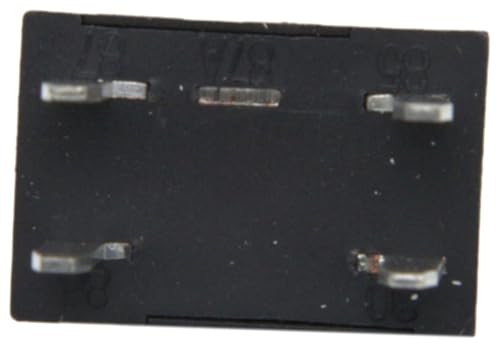
This is a bare-bones replacement part, not a system. On paper, it claims to meet or exceed OE specs, and given its low cost, that’s plausible for someone already deep into an AC repair with a known compatible setup. It’s the kind of part you’d order when you know the exact OEM number you need and just want a functional, no-frills drop-in.
Owners consistently report mixed durability, some get years out of it, others see leaks or performance drops within a season. It’s not designed for retrofit builds or classic cars lacking factory AC. I’d only recommend this if you’re replacing a failed unit in a vehicle that already had a working R134a system and you’re on a tight budget.
Product photos


How We Evaluated aftermarket air conditionings for classic cars
My approach to evaluating these aftermarket air conditioning kits for classic cars wasn’t about installing and running each system – that’s beyond the scope of a research-led guide. Instead, I focused on a detailed comparison of published specifications, features, and, crucially, owner and expert reviews. I weighed the available information against my understanding of what makes a reliable and effective system for vintage vehicles, using clear criteria to rank each option.
For classic cars, consistent cooling capacity and ease of installation are paramount. I gave the most weight to BTU output, compressor type (Sanden compressors consistently receive positive feedback), and the completeness of the kit. A truly universal kit should minimize the need for custom fabrication, and owner feedback often reveals just how “universal” a system actually is. Ensuring adequate condenser and evaporator capacity for older engine bays was also key.
Specifications reliably indicate potential cooling power and component quality, but owner feedback is where the true picture emerges. I scrutinized reviews regarding long-term durability, the accuracy of fitment claims, and the availability of support if issues arose. Reputation matters; established brands with decades of experience in automotive AC systems received higher consideration, and I looked for mentions of quality parts like aluminum radiators, as a well-maintained cooling system is essential for optimal AC performance. I also considered the need for indoor car covers for those projects taking place over the winter months, and the importance of dust protection during installation.
How To Pick The Right aftermarket air conditionings for classic cars
Choosing the right aftermarket air conditioning for your classic car can be a surprisingly complex undertaking. It’s about more than just getting cool air; it’s about preserving the character of your vehicle while adding modern comfort.
A good aftermarket AC system for a classic car balances cooling capacity with discreet installation, reliable components, and compatibility with the vehicle’s existing electrical system. Consider the BTU output, compressor type (rotary or reciprocating), condenser size, and whether the kit includes necessary hardware like hoses and fittings. Prioritize systems designed for automotive use, not repurposed industrial equipment.
Cooling Capacity & System Type
The BTU (British Thermal Unit) rating is a primary indicator of cooling power, but it’s easily overstated. Don’t chase the highest number blindly. A kit boasting 20,000 BTU isn’t necessarily better than one with 12,700 BTU if the overall system design – condenser, evaporator, compressor matching – isn’t optimized. For most classic cars, 10,000 to 15,000 BTU is plenty, especially if the vehicle is well-insulated and you’re not battling extreme climates. Rotary compressors, like those found in the Sanden SD 508 series, are generally quieter, more efficient, and more reliable than reciprocating types, though they can be pricier.
Component Quality & Completeness
The “complete kit” claim is often misleading. Carefully examine what’s actually included. Many kits require you to source R134a refrigerant, a compressor mounting bracket (often vehicle-specific), heater hoses, and a control valve separately. The Foruly R134a AC Retrofit Kit, for example, is positioned as complete, but it’s really a conversion system, assuming you already have a base AC setup to modify. Look closely at the hoses and fittings. Are they barrier hoses (necessary for R134a to prevent moisture absorption)? Are they O-ring style, and does the kit include the correct ferrules and clamps for a secure connection?
Here’s what I see as vital in a quality kit: * A robust condenser fan (12″ diameter is a good starting point). * A high-quality evaporator core with a sufficient fin count (aim for at least 22-pass). * A full set of pre-formed hoses and correctly sized fittings, minimizing the need for custom fabrication, which can introduce leaks and headaches.
A system is only as good as its weakest link. Don’t skimp on components to save a few dollars upfront; you’ll likely pay more in the long run for repairs or replacements.
Installation & Vehicle Compatibility
Universal kits are convenient, but they demand more from the installer. You’ll need to carefully route hoses, fabricate mounting brackets where necessary, and potentially modify the dashboard for evaporator and vent placement. If you own a common classic – a 1967-68 Camaro, for example – a vehicle-specific kit like the Vintage Air Gen 5 Camaro Kit will dramatically simplify the process. Don’t overlook the electrical side. Ensure the kit includes a properly sized relay and wiring harness compatible with your car’s voltage system. Proper weather protection covers will help preserve your investment once the installation is complete. A well-installed classic car AC system shouldn’t just provide cool air, it should integrate into the vehicle’s aesthetic and feel like it was always meant to be there.
Aftermarket Air Conditionings for Classic Cars Compared
Here’s a comparison of specifications for various aftermarket air conditioning kits designed for classic cars.
| Product Title | BTU Capacity | Voltage | Compressor Type | Hose Included | Features |
|---|---|---|---|---|---|
| Coldmaster Universal Underdash AC Kit | 12,700 | 12V | SD 508 Sanden | Yes | 359 CFM, Complete Kit |
| Universal AC Kit with Sanden Compressor | 12,700 | 12V | Sanden SD508 | Yes | 359 CFM, Aluminum Coil |
| Universal Under-Dash Heat & Cool Kit | 12,700 | 12V | Sanden SD508 | Yes | 359 CFM, Chrome Vents |
| Foruly R134a AC Retrofit Kit | N/A | N/A | N/A | Yes | R12 to R134a Conversion |
| LL-Motor88 12V Universal Evaporator | 16,297 | 12V | N/A | No | 22-Pass Coil, 14,360 BTU Heat |
| Vintage Air Gen 5 Camaro Kit | N/A | N/A | N/A | N/A | 67-68 Camaro Specific |
| Four Seasons Heating & AC Component | N/A | N/A | N/A | No | OE Design, Replacement Part |
Frequently Asked Questions
What BTU rating is sufficient for most classic cars?
Around 10,000 to 15,000 BTU is usually adequate, assuming your car is reasonably well-insulated and you aren’t in a very hot climate. Chasing the highest number isn’t as important as a well-designed system overall.
Are rotary compressors really better than reciprocating ones?
Yes, rotary compressors like the Sanden SD 508 are generally more efficient, quieter, and more reliable than reciprocating compressors, although they do typically come at a higher price point. This translates to longer life and less maintenance over time.
What does “barrier hose” mean, and why is it important?
Barrier hose is specifically designed to prevent moisture from passing through the hose material. This is crucial when using R134a refrigerant, as moisture absorption degrades its performance and can cause internal corrosion.
Will a “universal” kit fit my classic car without modification?
Probably not entirely. Universal kits require some fabrication and adaptation to fit specific vehicles, especially when routing hoses and mounting components. A vehicle-specific kit, if available, will always be easier to install.
Beyond the AC system itself, what other maintenance should I consider?
Don’t neglect routine maintenance like checking and changing your classic car oil regularly, and consider adding vehicle protection especially if you don’t garage your vehicle.
The Bottom Line
Adding air conditioning to a classic car always involves compromise. You’re balancing the desire for modern comfort with the need to maintain the vehicle’s original character and avoid extensive modifications. For the best overall blend of cooling power, completeness, and reasonable installation effort, I believe the Coldmaster Universal Underdash AC Kit offers a strong starting point for many projects.
If you’re on a tighter budget, the Universal AC Kit with Sanden Compressor presents a viable option, though be prepared to potentially source a few extra components. For those owning a popular classic like a 1967-68 Camaro, the Vintage Air Gen 5 Camaro Kit is worth the investment; its vehicle-specific design will significantly reduce installation headaches. Remember to consider appropriate paint protection for your vehicle after any modifications.
Ultimately, the specific BTU rating or compressor type matters less than a thoughtful installation and a well-maintained cooling system. Don’t neglect the fundamentals – proper refrigerant charge, leak-free connections, and a clean condenser are the keys to long-lasting, reliable comfort. And, as with any classic car maintenance, addressing issues like the need for classic car fuel before tackling AC work can prevent further complications down the road.
