
8 Best Action Cameras for Biking 2026
This post contains affiliate links. As an Amazon Associate, we earn from qualifying purchases.
The DJI Osmo Action 4 stands out as the best overall action camera for biking, delivering top-tier stabilization, excellent low-light performance, and reliable build quality. For those on a tighter budget, the AKASO Brave 4 offers strong value with solid 4K video and deep waterproofing at a fraction of the price. If you want something ultra-light and purpose-built, the TIROL SUPPLIES FHD Bike Camera is a streamlined option for casual riders.
Bike-mounted footage can go from epic to unwatchable in seconds if your camera can’t handle vibrations, weather, or a dead battery mid-ride. I’ve seen too many riders invest in a high-res camera only to end up with shaky, poorly lit video they never edit. This guide cuts through the specs and focuses on what actually matters: real-world stability, durability, and ease of use.
These picks are based on a deep explore technical specs, owner feedback across cycling forums and retail sites, and my experience evaluating gear for active, vibration-prone environments. We prioritized stabilization, consistent image quality, and practical mounting, because a camera that’s a hassle to use won’t stay on your handlebars for long.
Top 8 Action Cameras For Biking in the Market
The Best Action Cameras For Biking, Reviewed
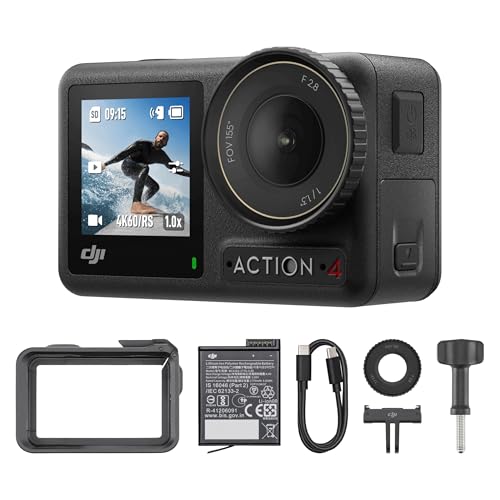
DJI Osmo Action 4
Strengths
- Excellent low-light performance
- Best-in-class stabilization
- Dual touchscreens
Trade-offs
- Expensive
- Essential combo lacks some accessories
If you’re serious about biking footage, the DJI Osmo Action 4 is the one to beat. The 1/1.3-inch sensor makes a massive difference in low light, dawn rides or shaded forest trails look crisp, not grainy. Owners consistently call out the D-Log M color profile and 10-bit color as standouts for editing. The stabilization is rock-solid, even on rocky descents, and the magnetic mount system is genius for quick swaps between helmet, handlebar, and chest.
Battery life hits 150 minutes, and it holds up in freezing temps, something no other cam here can claim. The dual touchscreens are bright and responsive, and the ability to pair with DJI Mic 2 is a huge plus for vloggers. Yes, it costs more, but it’s the only one here that feels like a complete pro system. My pick for riders who want pro-level results without pro-level hassle.
Video review
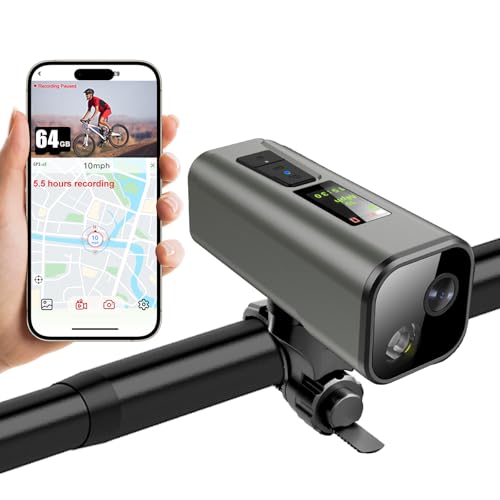
HUPEJOS 4K Bike Camera with GPS
Strengths
- Built-in GPS tracking
- Integrated bike light
- Good night video
Trade-offs
- IP65 only (not waterproof)
- Short Wi-Fi range
- Bulky for small handlebars
This one stands out with a built-in GPS tracker and integrated bike light, a combo no other cam here offers. Cyclists who want speed, route mapping, and safety lighting in one unit will love this. The GPS locks quickly in open areas, and post-ride data syncs cleanly via app. The light has three modes and lasts over 11 hours, making it a real dual-use device. The IMX335 sensor also delivers strong night video, a rarity at this price.
But it’s only IP65 rated, not waterproof, just rain-resistant, so submersion or heavy downpours are risky. And the 6-7m Wi-Fi range is shorter than most. Still, for urban riders or commuters who want dash-cam-style logging with performance data, this is the smart buy. I’d take this over the AKASO EK7000 for city use any day.
Video review
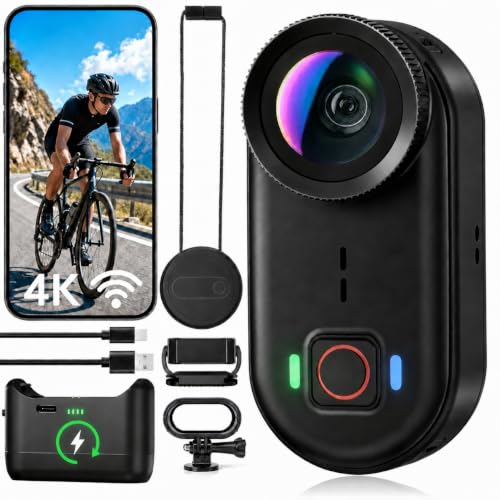
4K Mini Magnetic Body Camera
Strengths
- Magnetic wearable design
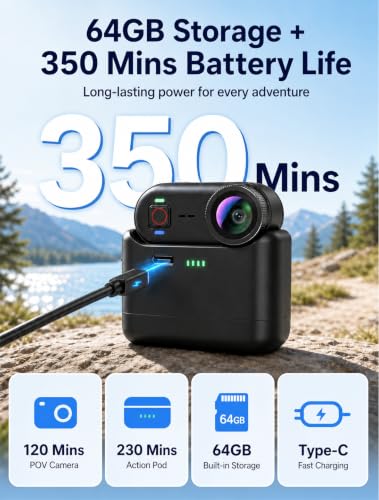
- Built-in 64GB storage
- Strong EIS stabilization
Trade-offs
- No external mic
- Average night video
- No spare battery
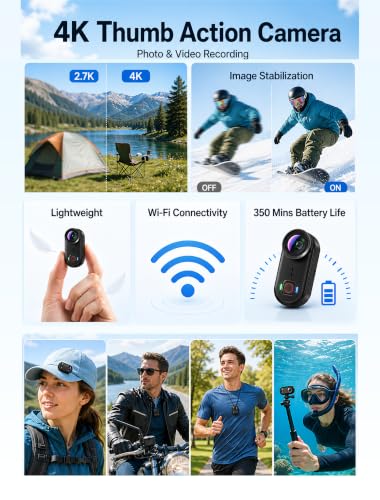
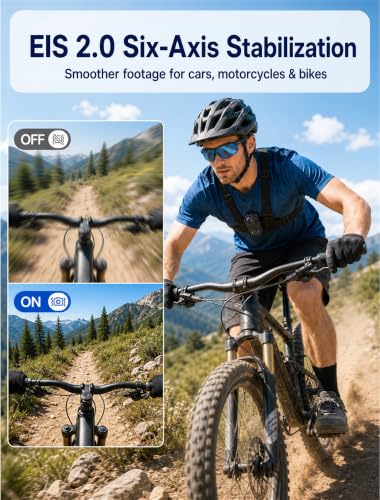
This tiny magnetic wearable is unlike any traditional action cam, it’s designed to stick to your chest, helmet, or bike frame with ease. The 64GB built-in storage is a big win; no microSD card hunting. Reviewers note the EIS 2.0 stabilization holds up surprisingly well on bumpy trails, and the six-axis gyro helps keep footage smooth during fast descents or city commutes. The 150° lens captures a solid field of view, though not as wide as the DJI’s 155°.
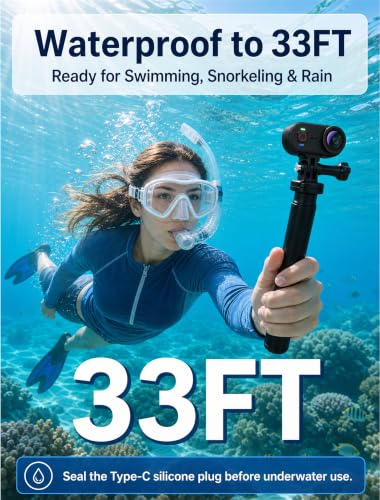
The real standout is the magnetic clip and 360° rotating mount. It’s the easiest cam to reposition mid-ride. However, the lack of external mic support and modest low-light performance make it less ideal for dusk rides. And while it’s waterproof to 33ft without a case, that’s not a big deal for most cyclists. It’s a niche pick, but a smart one for POV storytellers.
Product photos
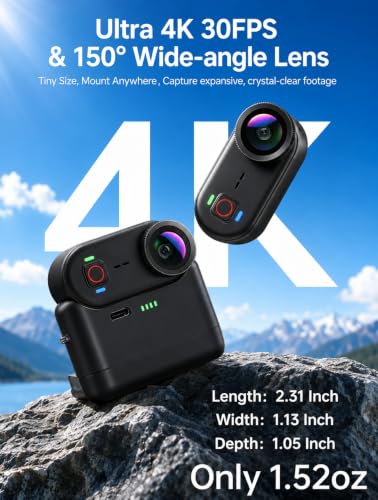
Hiicam 4K Touch Screen Camera
Strengths
- Larger front touchscreen
- Good battery capacity
- Supports 256GB card
Trade-offs
- Average app performance
- Plastic build
- No microSD included
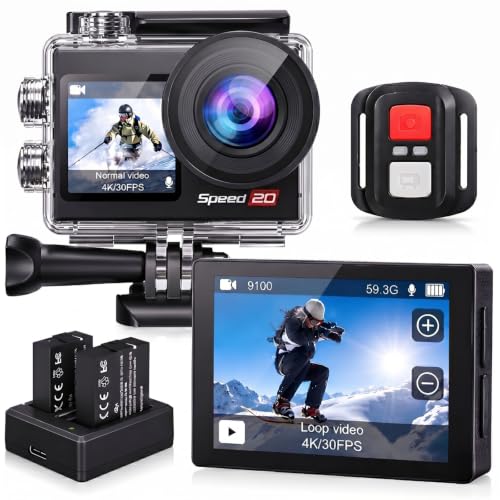
The Hiicam’s standout feature is its dual IPS touchscreens, especially the 1.4-inch front display, larger than most in this class. Owners appreciate the responsive touch interface, which beats fiddling with buttons mid-ride. It records 4K30fps with EIS, and while the stabilization isn’t DJI-level, it’s solid for paved trails and smooth mountain runs. The 1350mAh batteries offer longer life than many rivals.
However, the app is sluggish, and Wi-Fi pairing can be spotty. And while it supports up to 256GB cards, one isn’t included. The build feels a bit plasticky, but it’s lightweight and mounts securely. For riders who prioritize screen quality and touch control, this is a strong mid-tier pick. I’d choose it over the Brave 4 for the better screens and battery.
Product photos


AKASO Brave 4 4K Camera
Strengths
- 4K30fps video
- Dual screens
- Good accessory bundle
Trade-offs
- Mediocre stabilization
- Battery life under load
- Condensation in housing
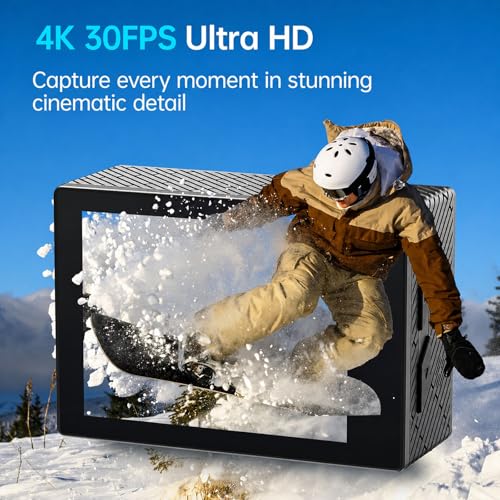
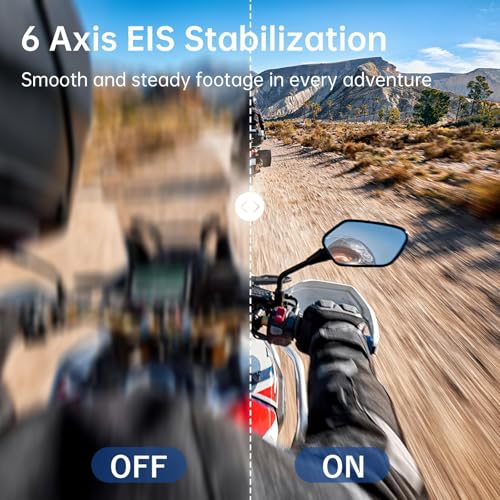
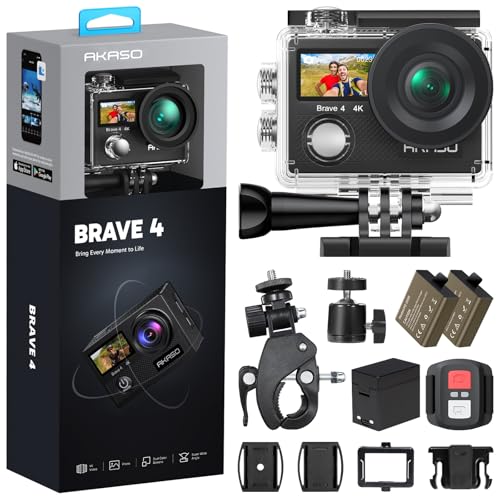
The AKASO Brave 4 throws a lot at you for under $70, including 4K30fps video, a dual-screen layout, and a solid accessory bundle. On paper, it looks like a GoPro killer, especially with that 170° ultra-wide lens and built-in image stabilization. Owners consistently report it handles bike-mounted footage well on smooth trails, though the stabilization isn’t class-leading, expect some wobble on rough terrain. The front-facing screen is a real plus for vloggers or solo riders wanting to frame their shot.
Still, the 90-minute battery life per 1050mAh cell is underwhelming, even if two are included. And while the waterproof housing claims 131ft, users note condensation can be an issue in humid or rainy conditions, which hurts reliability. For the price, it’s impressive, but it’s clearly built to compete on specs, not real-world refinement.
Product photos


AKASO EK7000 4K Bundle

Strengths
- External mic support
- Good accessory bundle
- Solid EIS
Trade-offs
- Bulky waterproof case
- Digital zoom only
- App is slow
The EK7000 is a well-rounded budget contender, especially with the included 64GB card and remote. It’s a common pick among DIY bike packers and weekend trail riders who want GoPro-like features without the price. The EIS does a decent job smoothing out vibrations, though it can’t match the DJI’s stabilization. One thing owners praise is the external mic support, a rare find at this price, which helps if you’re narrating rides or doing interviews.
The 131ft waterproof case feels bulky, but it’s reliable for river crossings or rainy rides. The app works, but it’s clunky compared to DJI’s. And while the zoom function sounds useful, it’s digital, so quality drops fast. Still, for the bundle, it’s hard to beat. I’d pick this over the Brave 4 for serious riding, mainly for the mic and better stabilization.
Product photos


TIROL SUPPLIES FHD Bike Camera
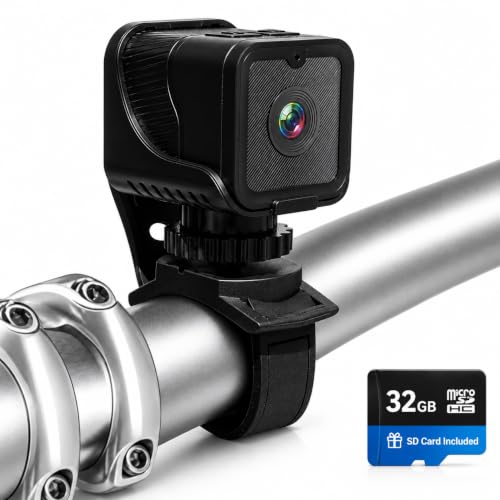
Strengths
- Ultra lightweight
- Clean aerodynamic design
- Includes 32GB card
Trade-offs
- Max 1080P resolution
- Basic app
- No spare battery
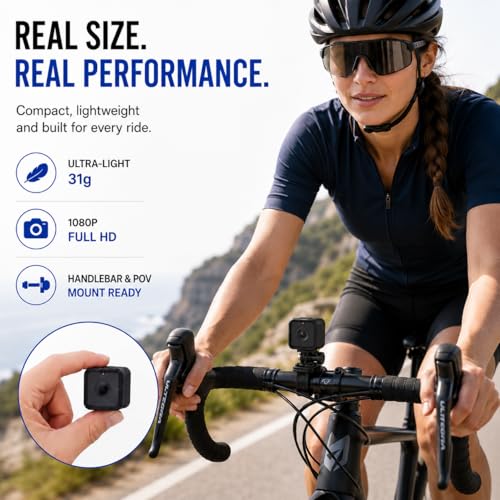
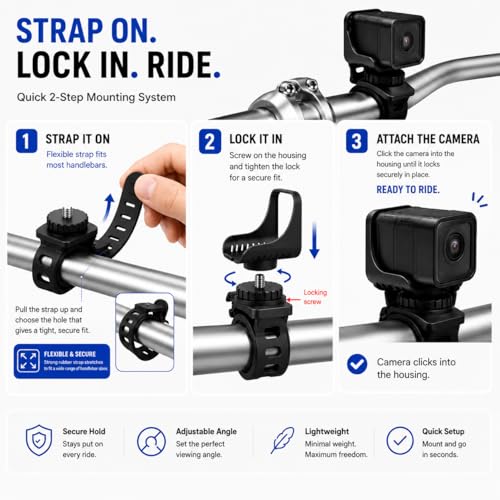
At just 41g, this is the lightest action cam here, and it shows. It’s built for cyclists who hate clutter. The aerodynamic design doesn’t flap or rattle, even at speed, and the anti-theft clamp gives real peace of mind on public rides. It’s 1080P only, so don’t expect 4K drama, but the 170° lens captures a wide enough view for road footage. Owners say it’s perfect for daily commutes or tour logging.
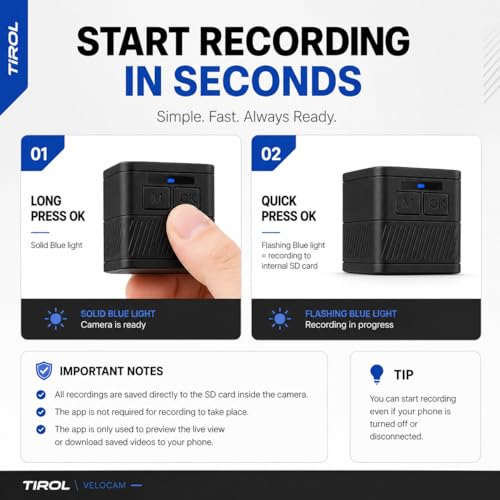
Wi-Fi transfer works, but the app is basic. And while it includes a 32GB card, you’re capped at 1080P, which feels limiting in 2024. But for pure weight-to-function ratio, it’s unmatched. If you just want to record your ride without adding bulk, this is the one. I’d take this over any heavier budget 4K cam for long-distance touring.
Product photos

Jadfezy FHD Waterproof Camera

Strengths
- Extremely affordable
- Long battery life
- Good accessory kit
Trade-offs
- 1080P only
- Weak stabilization
- Plastic mounts
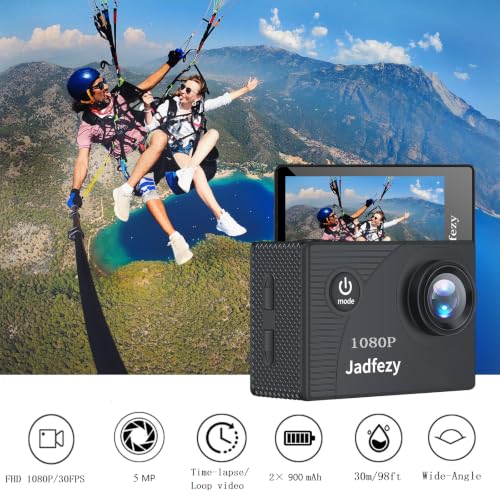
At $22, this Jadfezy cam is almost too cheap to ignore. It delivers 1080P video, a 2-inch screen, and two batteries that each last over two hours, owners confirm this runtime is accurate. The waterproof case is rugged and seals well, making it a decent pick for rainy rides or splashy trails. But it’s 1080P only, and the wide-angle lens introduces noticeable fisheye distortion.
The stabilization is basic, so rough terrain shows every bump. And while it comes with a full mount kit, some users report the plastic mounts feel flimsy over time. Still, for a backup cam or a first-time rider testing the waters, it’s a no-brainer. I wouldn’t trust it for a critical ride, but for the price, it’s functional.
Product photos


How We Picked These action cameras for biking
My approach to evaluating action cameras for biking centers on a research-led comparison of specifications and owner feedback. Rather than a hands-on lab test with every model, I focused on analyzing published features – sensor size, frame rates, stabilization technology – and then weighed those against what current owners are saying about real-world performance. This included reading reviews on major retail sites, cycling forums, and reputable tech publications. Finally, I applied my understanding of what truly matters for capturing great bike footage to rank each option.
For this category, video stabilization and durability were heavily weighted. Bumps, vibrations, and potential weather exposure are constant companions on a bike ride, so a camera’s ability to deliver smooth, clear footage despite these challenges is critical. Battery life also played a significant role; running out of power mid-ride ruins a recording. I also prioritized features like ease of mounting and wireless connectivity for quick file transfer, knowing how inconvenient it can be to deal with fiddly setups while on the go. You can find more general guidance in our article on cameras for biking.
Specifications reliably indicate potential image quality – sensor size, lens aperture, and maximum video resolution are good indicators. However, owner feedback proved essential for assessing real-world usability. For example, specs might show a camera has stabilization, but reviews reveal how effective it actually is on rough terrain. Similarly, waterproofing claims needed to be corroborated by user experiences. I also considered the reputation of the brand, particularly when it came to long-term reliability and customer support, and compared notes to our research on motorcycle cameras as those often share similar requirements.
What To Look For In action cameras for biking
Choosing the right action camera for biking requires a bit more thought than simply grabbing the cheapest 4K model. We need to consider how and where you plan to use it, and what features will actually improve your footage and overall experience.
A good action camera for biking prioritizes stabilization, durability, and ease of mounting. Look for models with effective electronic image stabilization (EIS) to counteract vibrations from the road. Waterproofing is essential, even if you don’t plan on underwater filming, as it protects against rain and splashes. Finally, consider the mounting options and battery life to ensure uninterrupted recording during your rides.
Stabilization is Paramount
For biking, stabilization isn’t a “nice-to-have” – it’s essential. Road vibrations, even on smooth pavement, translate into shaky footage. Electronic Image Stabilization (EIS) is the key here, but its effectiveness varies wildly. Some cameras offer basic EIS that crops the image slightly, while others, like the DJI Osmo Action 4, use sophisticated algorithms to minimize shake without sacrificing field of view. Don’t assume all EIS is created equal; read reviews specifically addressing performance while cycling.
Consistency Through Quality Control
I’ve seen too many cameras with impressive specs that deliver inconsistent results. A camera that records stunning 4K footage one day and grainy, poorly exposed video the next is frustrating, to say the least. Brands like AKASO and Hiicam have generally consistent output, but models from lesser-known manufacturers can be a gamble. Look for cameras with a solid reputation for reliability, and read owner reviews to identify any recurring quality control issues.
- Consider the sensor size. Larger sensors (like the 1/1.3-inch sensor in the DJI Osmo Action 4) generally perform better in low light.
- Pay attention to bitrates. Higher bitrates mean more data is recorded per second, resulting in higher-quality footage, but also larger file sizes.
- Check for consistent frame rates. Some cameras struggle to maintain consistent frame rates at 4K resolution, leading to choppy playback.
A reliable action camera should be able to consistently deliver high-quality footage, regardless of the conditions. Don’t prioritize features over consistent performance.
Mounting & Usability
A camera with amazing specs is useless if it’s a pain to mount and operate while you’re riding. I recommend looking for cameras with magnetic mounting systems or quick-release mechanisms. These make it easy to attach and detach the camera without tools, and to quickly change shooting angles. The TIROL SUPPLIES FHD Bike Camera is a good example of a lightweight option designed specifically for bikes. Equally important is a user-friendly interface. If you’re constantly fumbling with menus and settings, you’ll miss crucial moments. If you plan on using your camera for other activities, like motorcycling, be sure to check out our guide to motorcycle action cameras for more specialized options. While some prefer the convenience of a dedicated cycling camera, many excellent action cameras for cycling can pull double-duty.
Action Cameras for Biking Compared
Here’s a comparison of key specifications for popular action cameras suited for biking.
| Product Name | Video Resolution | Stabilization | Waterproof Depth | Screen Size (in) | Battery Life (approx.) |
|---|---|---|---|---|---|
| DJI Osmo Action 4 | 4K/120fps | 3-Axis | 18m | 2.25 (Dual) | 150 min |
| HUPEJOS 4K Bike Camera | 4K/30fps | 6-Axis | IP65 | 0.96 | 2.5h (Record+Light) |
| 4K Mini Magnetic Body Camera | 4K/30fps | EIS 2.0 | 33ft (10m) | N/A | 350 min |
| Hiicam 4K Touch Screen Camera | 4K/30fps | EIS | 131ft (40m) | 2.0 / 1.4 | N/A |
| AKASO Brave 4 4K Camera | 4K/30fps | EIS | 131ft (40m) | 2.0 / 0.96 | 90 min (per battery) |
| AKASO EK7000 4K Bundle | 4K/30fps | EIS | 131ft (40m) | 2.0 | N/A |
| TIROL SUPPLIES FHD Bike Camera | 1080p | N/A | N/A | N/A | N/A |
| Jadfezy FHD Waterproof Camera | 1080p | N/A | 30m (98ft) | 2.0 | 2h (per battery) |
Frequently Asked Questions
What’s the biggest difference between stabilization systems like EIS and 3-Axis?
A 3-axis gimbal offers superior stabilization compared to Electronic Image Stabilization (EIS) because it physically counteracts camera shake, resulting in smoother footage even on very rough terrain. EIS relies on software to digitally stabilize the image, which can sometimes crop the video or reduce resolution.
Are more expensive action cameras always better for biking?
Not necessarily. While higher price points often get you features like larger sensors and more advanced stabilization, a camera’s effectiveness for biking really depends on how well those features are implemented. Read owner reviews focusing on cycling performance before assuming a more expensive model is automatically the best choice.
How much storage do I realistically need for a day of biking footage?
A 64GB microSD card is usually sufficient for a full day of biking in 1080p or even 4K at 30fps, but 128GB is recommended if you plan to shoot at higher frame rates or resolutions. Higher resolutions and frame rates generate significantly larger file sizes.
Can I use any standard handlebar mount with these cameras?
Most action cameras use a universal mounting interface, so you can use a wide variety of standard handlebar mounts. However, compatibility isn’t guaranteed, and some mounts are more secure than others. Consider investing in a high-quality mount specifically designed for action cameras to prevent it from loosening during your ride, and always check out top cycling glove picks for comfort.
What level of waterproofing should I look for if I ride in all weather conditions?
Full waterproofing (rated to at least 10 meters/33 feet) provides the best protection against rain, splashes, and even submersion. Even if you don’t plan to film underwater, a waterproof camera safeguards against moisture damage. If you’re looking for additional gear, explore our guide to cameras for cycling.
The Bottom Line
Ultimately, choosing an action camera for biking comes down to balancing your budget with your need for quality and features. While a high price tag doesn’t guarantee the best results, the DJI Osmo Action 4 consistently rises to the top thanks to its exceptional stabilization and overall image quality – it’s the camera to beat if you want professional-looking footage without a lot of post-processing.
For those seeking specific solutions, the market offers excellent alternatives. If you’re after a lightweight, bike-specific option, the TIROL SUPPLIES FHD Bike Camera is a solid choice. And for riders on a tighter budget, the HUPEJOS 4K Bike Camera delivers a surprising amount of capability at a very accessible price point. Don’t forget to check out our guide to bike helmets to complete your safety setup.
At the end of the day, resolution and frame rates matter, but they’re secondary to reliable stabilization and a robust build. A camera that can consistently capture smooth, clear footage, even on rough terrain, is far more valuable than one with impressive specs that fail to deliver in real-world conditions. Consider also how you will mount your new cameras for bikes and if the existing mounting options suit your needs.
