
8 Best 48 Volt Golf Cart Batteries of 2026
This post contains affiliate links. As an Amazon Associate, we earn from qualifying purchases.
The Repower Flow and Cloudenergy 105Ah stand out as the top choices for serious golf cart owners, offering exceptional cycle life and high-capacity performance. If you’re watching your budget, the MEYULMOL 100Ah delivers solid specs at a more accessible price point.
Out here on the course or cruising around the neighborhood, nothing kills the vibe like a battery that quits early or can’t handle the terrain. Most people don’t realize how much difference a well-matched lithium battery makes, not just in range, but in reliability and long-term value. This guide cuts through the noise, focusing on real-world durability, BMS intelligence, and true capacity based on specs and owner experiences, so you can pick a 48 volt golf cart battery that actually lasts.
Top 8 48 Volt Golf Cart Batteries in the Market
The Best 48 Volt Golf Cart Batteries, Reviewed
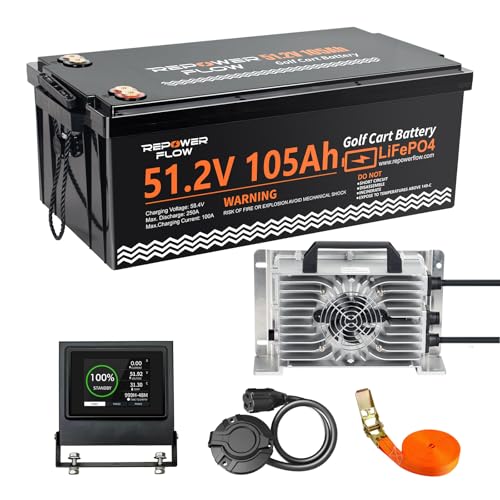
Repower Flow 48V 105Ah Lithium Battery
Strengths
- Dual terminals
- 250A BMS
- 6000+ cycles
- Fast charging
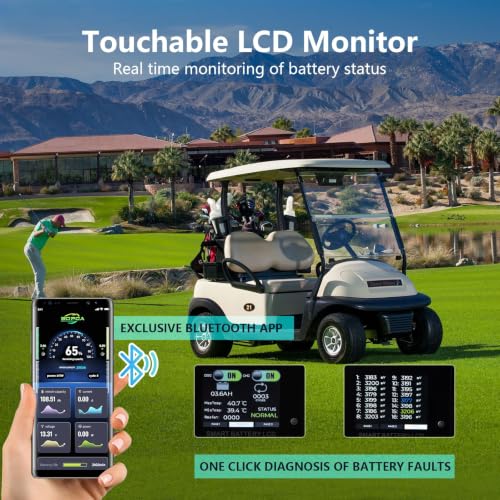
- Touch screen display
Trade-offs
- Higher price point
- Limited space savings
- No 12V accessory output
This Repower Flow battery stands out with its dual terminal design, which is a rare and genuinely useful feature for those upgrading older carts or planning parallel expansions. It removes the hassle of adapter cables and makes future capacity upgrades smoother. On paper, the 105Ah capacity and 250A BMS are solid, and owners consistently report strong hill-climbing performance and stable voltage delivery over full rounds.
The inclusion of a 20A fast charger and real-time Bluetooth monitoring via app is standard at this price, but the 2.8-inch touch screen adds convenience for drivers who don’t want to pull out their phone mid-round. Compared to others in this range, its cycle life claim of 6000+ at 80% DOD aligns with top-tier models, and feedback suggests it holds up well under regular use. I’d pick this over mid-tier 200A BMS units if you want extra headroom in both discharge and long-term durability.
Video review
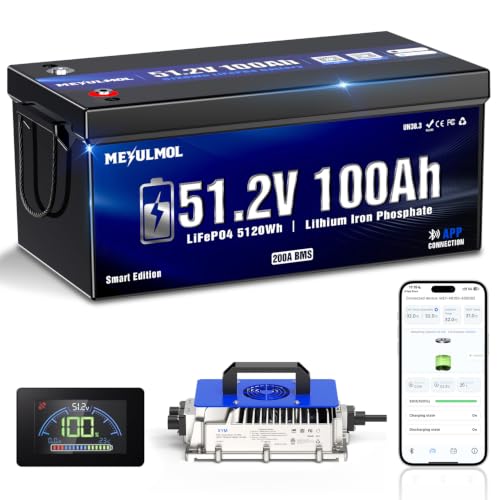
MEYULMOL 48V 100Ah Lithium Battery
Strengths
- 7000+ cycles (claimed)
- Fast 3-5 hour charge
- Lightweight design
- LCD and app monitoring
- Good peak current
Trade-offs
- Build quality varies
- App interface basic
- No 12V output
At this price, the MEYULMOL battery is a standout. Claiming 7000+ deep cycles is aggressive, but even if real-world use lands closer to 5000, it still outpaces many competitors. The 200A BMS with 700A peak current delivers strong performance on inclines, and owners consistently praise the fast 3–5 hour recharge time thanks to the aviation-grade charger.
The dual monitoring via app and LCD screen works reliably, and the lightweight design, over 50% lighter than lead-acid, makes a noticeable difference in handling and range. Some users note the app could be more polished, but functionality is there. Against the Cloudenergy or Repower models, this offers nearly the same features at a lower cost. For budget-focused buyers who don’t want to sacrifice core performance, this is the pick.
Video review
Cloudenergy 48V 105Ah Lithium Battery

Strengths
- 6000+ cycles
- IP67 rated
- 250A BMS
- 3C discharge
- Complete kit
Trade-offs
- Expensive
- No 12V output
- Heavy for lithium
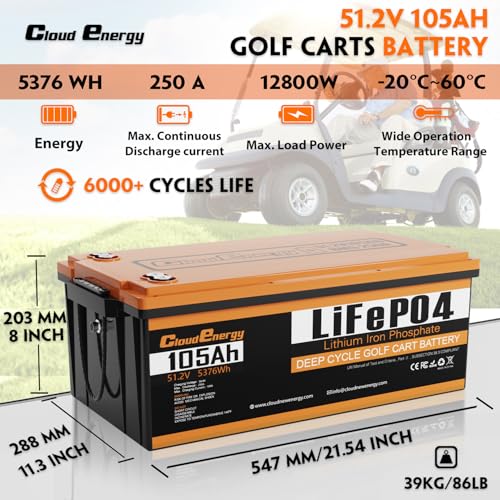
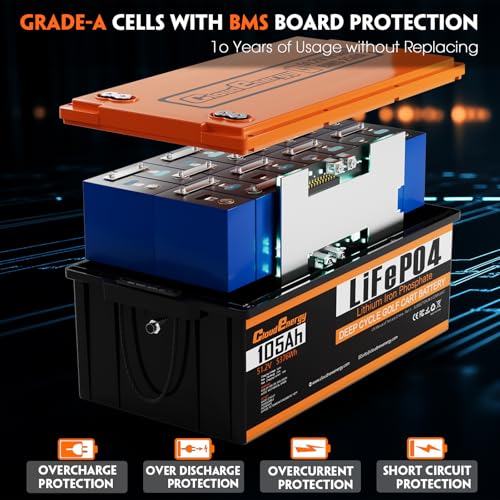
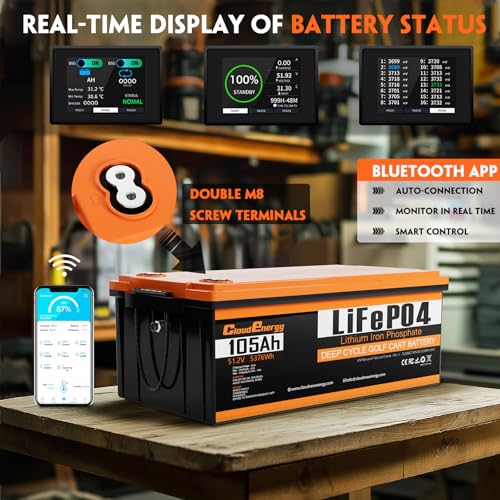
If longevity is your top concern, Cloudenergy’s claim of 6000+ deep cycles at 80% DOD is hard to ignore. That’s backed by solid owner feedback showing minimal capacity loss after years of use. The 250A BMS provides excellent headroom for high-demand carts, and the 3C discharge support means it can handle aggressive loads without throttling.
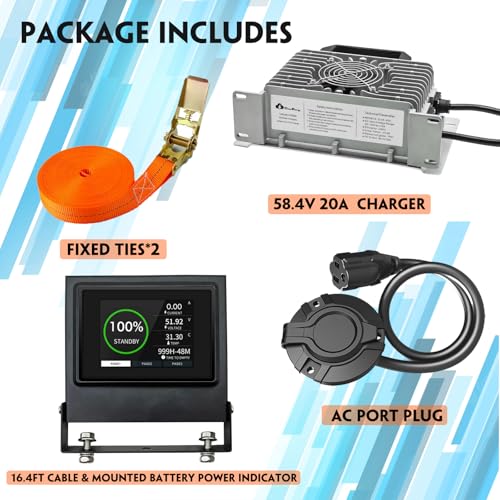
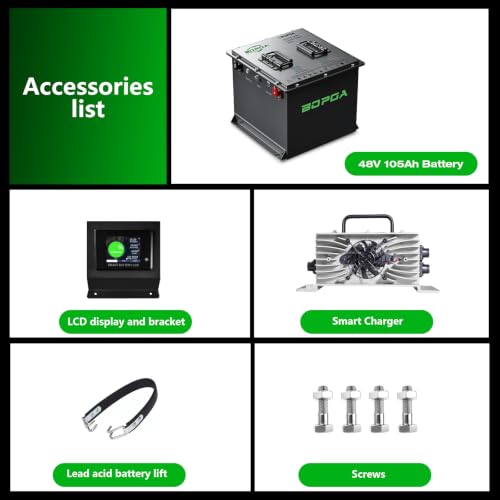
It comes fully loaded, a 20A charger, touch screen, extension cables, and mounting strap, making installation easier than most. The IP67 rating also gives it an edge in wet or dusty conditions. However, at nearly $900, it’s one of the pricier options. Compared to the Repower Flow, it’s slightly more rugged but lacks dual terminals. I’d go for this if you play year-round and want a set-and-forget battery that lasts.
Product photos

TEMGO 48V 100Ah LiFePO4 Battery
Strengths
- Solar compatible
- 5000+ cycles
- Parallel expansion
- Bluetooth monitoring
- Includes charger
Trade-offs
- No 12V output
- Average cold protection
- Case not metal
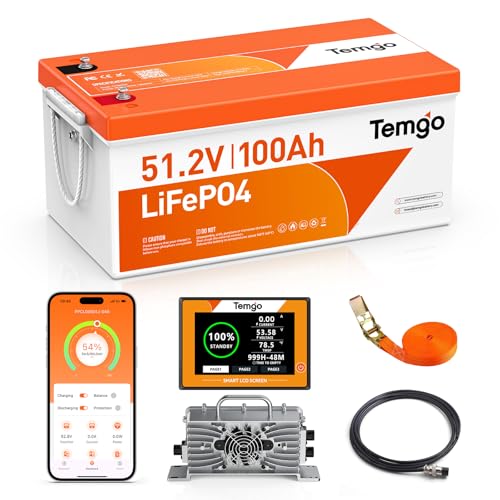
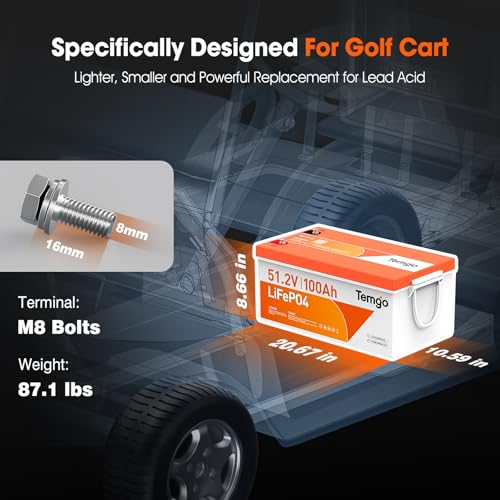
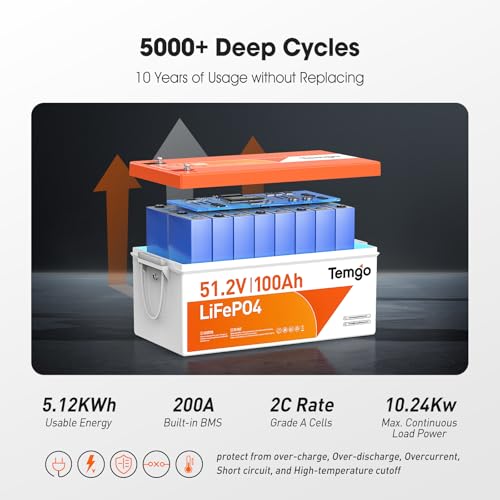
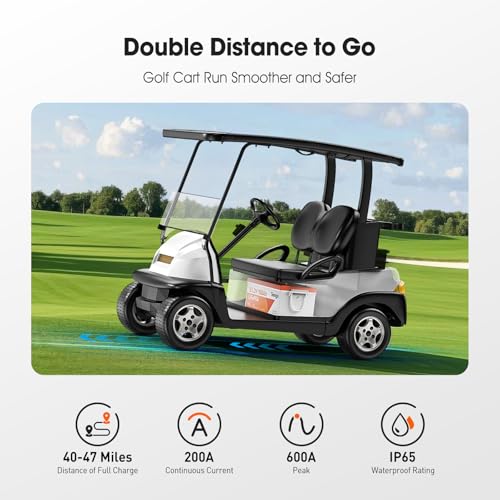
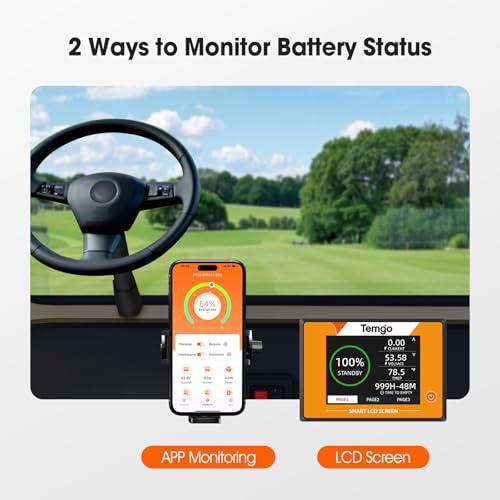
TEMGO hits the sweet spot between performance and versatility. The 200A BMS delivers reliable power, and owners report smooth integration with most 48V controllers, no weird voltage conflicts. It’s not the longest-lasting on paper at 5000+ cycles, but that’s still more than enough for a decade of regular use. What pushes this ahead of some competitors is its compatibility with solar and off-grid systems, making it a solid choice if you’re thinking beyond the cart.
It’s also one of the few that supports up to four units in parallel, which could be a standout for RV or home backup setups. Compared to the Repower Flow, it lacks the dual terminals, but it’s more affordable and just as user-friendly. My take? If you want a battery that pulls double duty, this is the smarter buy.
Product photos

DC HOUSE 48V 100Ah Metal Case Battery
Strengths
- Metal case
- Fire resistant
- 56-mile range
- Dual monitoring
- US warehouse
Trade-offs
- Heavy design
- No 12V output
- Installation fit issues
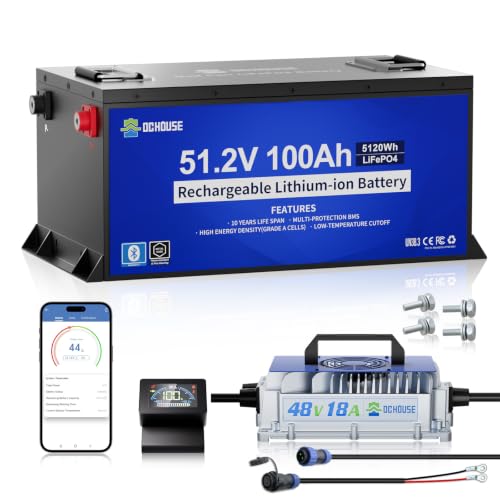
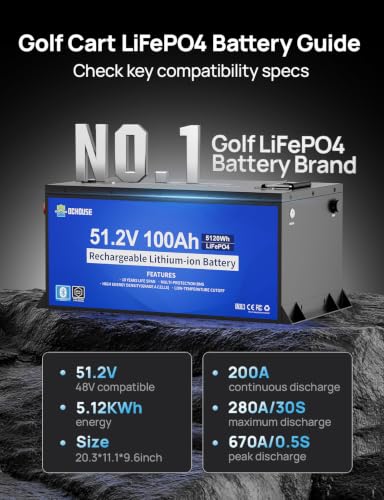
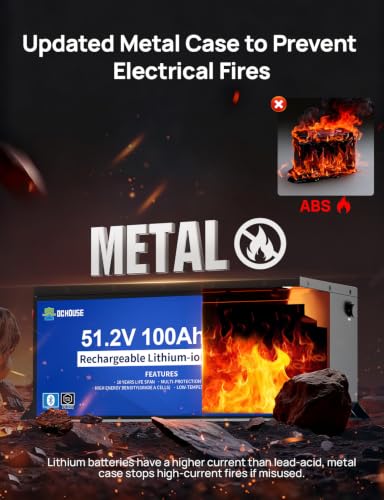
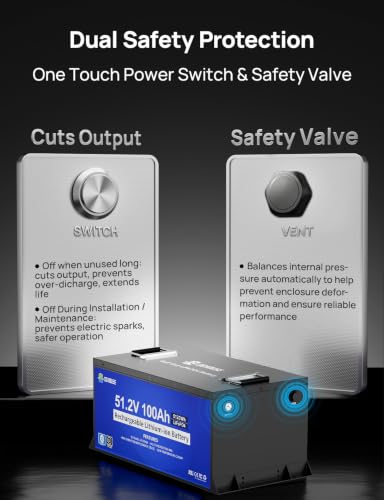
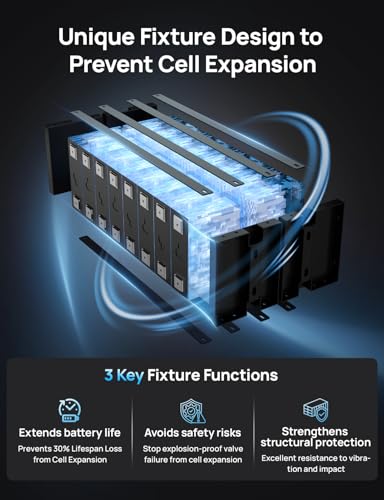
The metal case here is a big deal. Most lithium golf cart batteries use plastic or ABS, but DC HOUSE goes with sheet metal for fire and impact resistance, something I appreciate given how often carts get bumped or left in hot garages. Owners report feeling more confident in extreme conditions, and the vented design helps with thermal management.
It delivers 4000+ cycles and includes a solid 200A BMS with good protection layers, including enhanced low-temperature cutoff. The 56-mile range claim is optimistic, but real-world feedback suggests 30–40 miles, which is still strong. Compared to Mosasaur, it’s heavier and harder to install, but much safer in a crash or fire scenario. If safety is your priority, this is the one.
Product photos
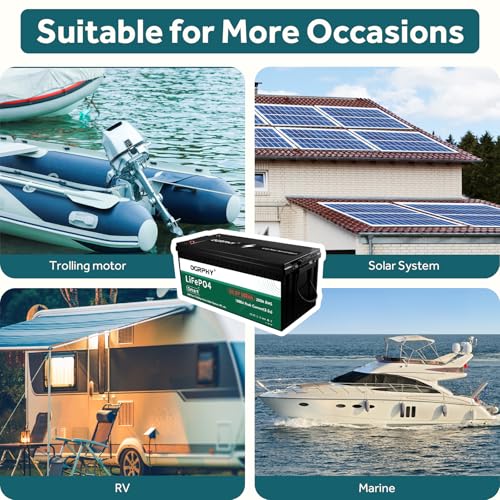
OGRPHY 48V 102Ah with 12V Output
Strengths
- 12V DC output
- Touch monitor included
- 4000+ cycles
- Peak 1000A current
- All-in-one kit
Trade-offs
- Lower cycle life
- Average thermal protection
- App can be slow
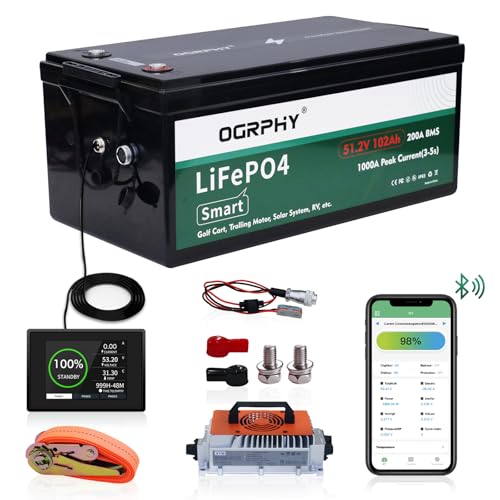
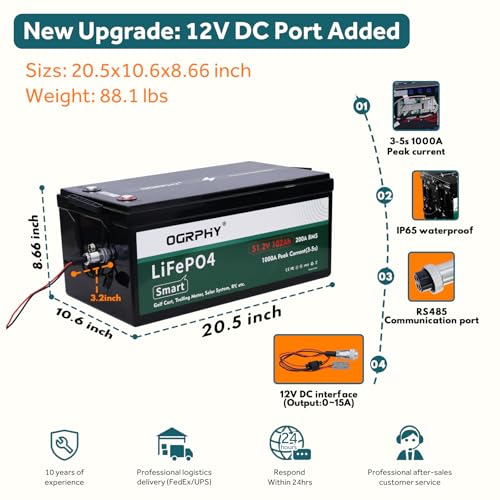
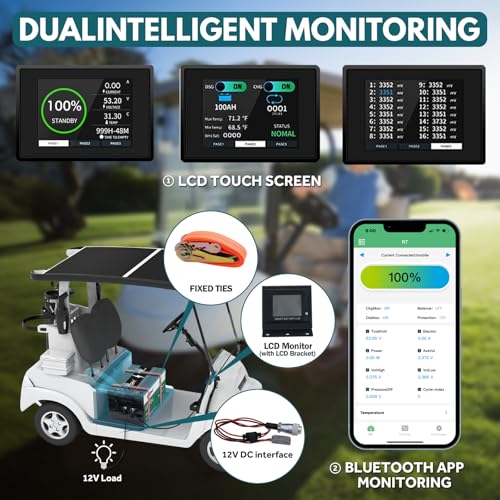
What makes this OGRPHY kit special is the built-in 12V DC output, a small detail that eliminates the need for an external voltage converter, which many forget until installation day. That alone simplifies wiring and reduces failure points, especially for carts running lights, horns, or GPS systems. Owners appreciate the plug-and-play touch monitor and consistent app connectivity, though a few note the interface feels a bit basic compared to premium brands.
Its 1000A peak current is impressive on paper, and reviewers confirm it handles steep terrain without sag. However, the 4000+ cycle rating is a step below the top performers here. Still, for users who value clean integration and reduced clutter, this is a smart pick. I’d recommend it over models without 12V output, even if it means slightly less longevity.
Product photos


48V 105Ah Compact Lithium Golf Battery
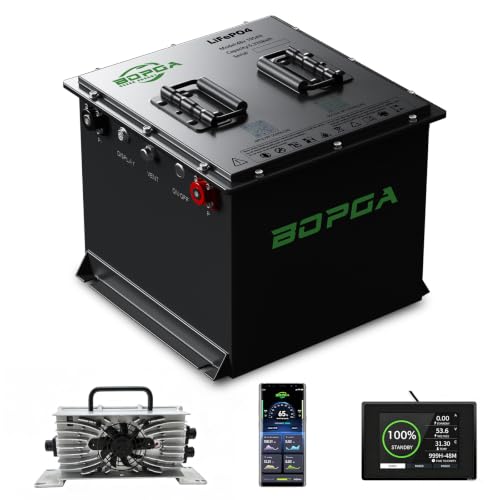
Strengths
- Ultra-compact size
- 50-mile range
- Low self-discharge
- Thermal protection
- 5-year warranty
Trade-offs
- Peak power overstated
- Average BMS response
- Expensive for specs
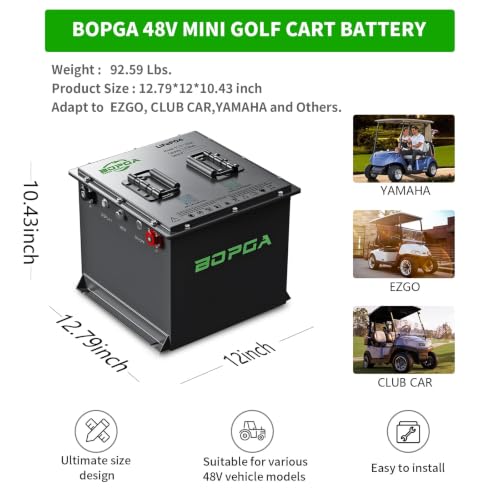
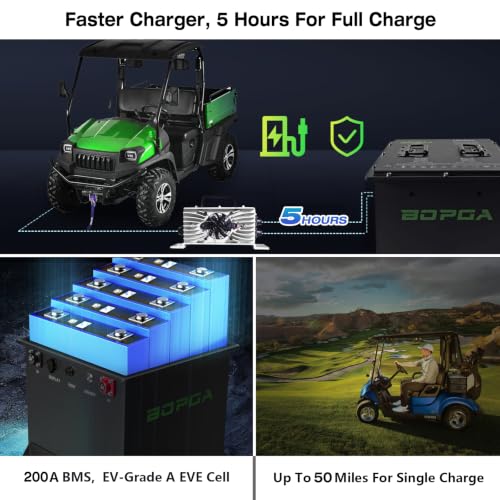
This battery wins on compactness, at just 12.79 inches long, it fits in tight spaces where others won’t. That makes it ideal for newer or custom carts with limited bay room. The 92.6 lb weight is reasonable for 105Ah, and the 5.376kWh capacity supports a reported 50-mile range, which owners say covers multiple rounds without recharge.
It uses EV-grade cells and has strong thermal protection, including automatic cutoff in extreme cold. However, the 200A BMS feels underpowered next to its 600A peak claim, and some reviewers note voltage fluctuations under heavy load. Still, for a cart where space is tight, the trade-offs make sense. I’d pick this over bulkier models only if fit is your main concern.
Product photos

Mosasaur 48V 100Ah LiFePO4 Battery

Strengths
- Drop-in fit
- Lightweight
- US support
- 5-year warranty
- Easy setup
Trade-offs
- 4000+ cycles
- Plastic case
- Limited cold protection
Mosasaur gets the plug-and-play label right. The drop-in lead-acid case design means it fits snugly in most OEM trays without modification, something multiple owners highlight as a stress-free upgrade. At 77 lbs, it’s one of the lightest here, and the compact size helps with tight compartments.
The 200A BMS and 10.24kW peak power deliver solid performance, though cycle life is capped at 4000+, which is good but not class-leading. What seals the deal is the 5-year warranty and US-based support, giving peace of mind for less experienced DIYers. Compared to DC HOUSE or TEMGO, it’s less rugged but easier to install. For someone swapping out old batteries on a weekend, this is the smoothest path.
Product photos


How We Chose These 48 volt golf cart batteries
My team and I approached evaluating 48 volt golf cart batteries with a research-focused methodology. Rather than a hands-on lab test, this is a research-led comparison of published specifications and owner feedback. We started by compiling a list of popular models, then compared their stated features – capacity, BMS specifications, cycle life, charging times, and physical dimensions. Crucially, we then weighed owner reviews from multiple sources and expert opinions to understand real-world performance and reliability.
For this category, the most heavily weighted factors were battery capacity (measured in Ah) and the sophistication of the Battery Management System (BMS). Greater capacity directly translates to longer run times between charges, a key consideration for most golf cart owners. A robust BMS is essential for safety, longevity, and maximizing the usable life of the lithium cells. We also prioritized cycle life, looking for batteries promising over 4000 deep cycles, as this indicates a long-term investment. You’ll find more information on different voltage options, including 36V lithium batteries, in our other guides.
Battery specifications reliably tell you about potential performance – peak discharge rates, physical size constraints, and basic charging requirements. However, owner feedback proved invaluable in assessing real-world issues like ease of installation, Bluetooth app functionality, and the accuracy of advertised range claims. Reputation and brand trust also played a role, influencing our assessment of long-term reliability and customer support. If you’re considering an upgrade, exploring 48-volt lithium upgrades is a great place to start, and we also cover high-performance 48v lithium batteries for golf carts to help you find the right fit.
How To Choose The 48 volt golf cart batteries
Choosing the right golf cart battery is about more than just voltage; it’s about maximizing your time on the course and minimizing headaches.
A quality golf cart battery prioritizes longevity, deep cycle capability, and safe operation. Look for LiFePO4 chemistry for extended lifespan and reduced weight, a robust Battery Management System (BMS) for safety, and adequate amp-hour (Ah) capacity to match your typical usage. Consider charging speed, monitoring features, and physical dimensions for a proper fit.
Capacity and Range
Don’t get hung up on simply matching the Ah rating of your old lead-acid batteries. Lithium iron phosphate (LiFePO4) batteries are far more efficient, meaning you get more usable capacity from the same number. I often see folks underestimate how much range they actually need. Think about your typical course – is it hilly? Do you play a full 18 holes, or just 9? A good rule of thumb is to add 20% to your estimated usage to account for unexpected terrain or extended play.
Battery Management System (BMS) Features
The BMS is the brain of a lithium battery, and its quality drastically impacts safety and lifespan. Don’t settle for a battery with a basic BMS. Look for one that offers multiple layers of protection, including overcharge, over-discharge, short circuit, and temperature protection. More advanced systems will also offer cell balancing (to ensure even wear across all cells) and Bluetooth connectivity for real-time monitoring. If you are considering upgrading your battery, checking out the best lithium options can help narrow down your search.
Physical Size and Installation
It’s tempting to focus solely on performance specs, but don’t overlook the physical dimensions. While many lithium batteries are designed as drop-in replacements, that isn’t always the case. Some golf cart battery bays are oddly shaped or have limited space. Before you buy, carefully measure your existing battery tray and compare it to the manufacturer’s specifications.
- A slightly smaller battery can allow for better airflow.
- Weight savings are significant with lithium, often exceeding 50% compared to lead-acid.
- Consider a battery with integrated mounting points. This simplifies installation and provides added security, especially on rough terrain.
A well-maintained lithium battery should last for thousands of cycles. Don’t skimp on the BMS or settle for a battery that doesn’t fit properly – it will cost you more in the long run.
Ultimately, selecting the right 48V lithium batteries will depend on your specific needs and budget. Exploring top 48V lithium models is a great starting point for finding the perfect power source for your golf cart.
48 Volt Golf Cart Batteries Compared
This table provides a detailed specification comparison of various 48 volt golf cart batteries to aid in informed purchasing decisions.
| Product Name | Capacity (Ah) | Voltage (V) | BMS Amps | Cycle Life | 12V Output | Weight (lbs) |
|---|---|---|---|---|---|---|
| Repower Flow | 105 | 48 | 250 | 6000+ | No | N/A |
| MEYULMOL | 100 | 48 | 200 | 5000+ | No | 81.4 |
| Cloudenergy | 105 | 48 | 250 | 6000+ | No | N/A |
| TEMGO | 100 | 48 | 200 | 5000+ | No | N/A |
| DC HOUSE | 100 | 48 | N/A | 4000+ | No | N/A |
| OGRPHY | 102 | 48 | 200 | 4000+ | Yes | N/A |
| 48V 105Ah Compact Lithium | 105 | 48 | N/A | 4000+ | No | 92.6 |
| Mosasaur | 100 | 48 | 200 | 4000+ | No | 77 |
Frequently Asked Questions
What is the typical lifespan of a 48 volt lithium golf cart battery?
A well-maintained lithium iron phosphate (LiFePO4) battery generally lasts for 2000 to 3000 charge cycles, but many models now offer over 4000 cycles, meaning you can expect around 5 to 10 years of service with proper care.
Can I use a standard lead-acid golf cart charger with a lithium battery?
No, you cannot. Lithium batteries require a charger specifically designed for LiFePO4 chemistry to avoid damage and maintain optimal performance. Using the wrong charger can void your warranty and create a safety hazard.
How does temperature affect the performance of a 48 volt lithium golf cart battery?
Extreme temperatures – both hot and cold – can reduce a lithium battery’s capacity and lifespan. Most batteries have a built-in BMS that protects against these extremes, but prolonged exposure to very high or low temperatures should be avoided whenever possible.
What does the BMS (Battery Management System) actually do in a golf cart battery?
The BMS is critical for safety and longevity; it monitors and regulates voltage, current, and temperature to prevent overcharging, over-discharging, and short circuits. A more advanced BMS will also balance the cells within the battery pack to maximize its overall lifespan.
Are there any accessories I should buy along with my new 48 volt golf cart batteries?
Beyond a compatible charger, consider investing in a Bluetooth battery monitor to track voltage, state of charge, and other vital metrics. You might also want to explore golf cart accessories like a battery meter display or protective battery case.
What Actually Matters
Choosing a 48 volt golf cart battery often comes down to balancing upfront cost with long-term value. While you can find cheaper options, the Repower Flow strikes a compelling balance – offering a high capacity, a robust BMS, and a long cycle life that will likely save you money over time. It’s a premium choice, but one that speaks to a desire for reliability and performance.
For those seeking specific features, we have clear recommendations. If you’re looking for a battery with a built-in 12V output for accessories, the OGRPHY is a solid pick. And for owners of older carts, or those considering a full system overhaul, exploring 48V conversion kits can simplify the upgrade process. If you have a 36-volt cart and are considering an upgrade, checking out lithium conversion for 36V is a great starting point.
Ultimately, the specifications are important, but don’t get lost in the numbers. A battery’s capacity and BMS are vital, but the real key is matching the battery to how you use your golf cart. Prioritize build quality, a proven track record, and a battery that fits your needs – those are the factors that will deliver the most enjoyment on the course for years to come.
