
6 Best 3 Wheel Scooters of 2026
This post contains affiliate links. As an Amazon Associate, we earn from qualifying purchases.
The best 3 wheel scooter overall is the 3 Wheel Kids Kick Scooter, thanks to its wide deck, solid weight capacity, and reliable adjustability. For a budget-friendly option, the Blue Mini 3 Wheel Scooter delivers smooth handling and trusted stability, while the Dribbl 3-Wheel Kids Scooter stands out for heavier riders needing durability.
Choosing the wrong scooter can mean frustration, poor control, or a short lifespan as a child grows. As someone who’s spent years studying vehicle dynamics and rider safety, I know that the right pick comes down to stability, fit, and build quality, not just looks or price.
This guide cuts through the noise, focusing on models that deliver where it matters. I compared specs, analyzed owner feedback, and applied real-world criteria like wheel size, handlebar range, and frame strength to find the ones actually worth your time.
Top 6 3 Wheel Scooters in the Market
The Best 3 Wheel Scooters, Reviewed
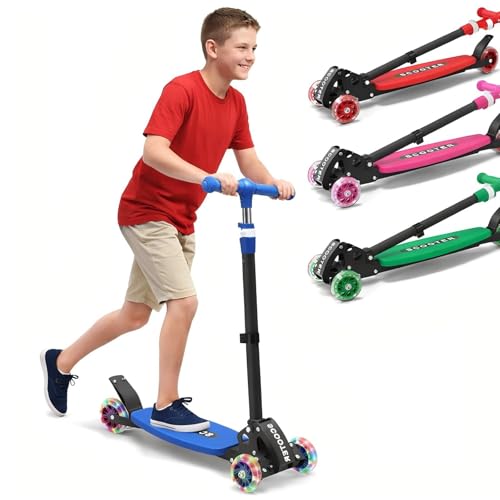
3 Wheel Kids Kick Scooter
Strengths
- All-metal frame
- Folds in 5 seconds
- 180 lb weight capacity
- Dual rear brake
- ABEC-7 bearings
Trade-offs
- Slightly heavier than some
- Handlebar height maxes at 33”
- LEDs only on rear wheels
This one checks nearly every box, and it’s why I’d call it the best overall pick. The all-metal frame supports up to 180 lbs, the folding mechanism works in 5 seconds, and the dual rear brake gives kids real stopping power. The 120° steering limit with auto-return is a smart safety touch that prevents over-tilting, which parents appreciate.
Owners consistently report this scooter survives drops, rough pavement, and years of use. The LED wheels are bright, the ABEC-7 bearings deliver a quiet roll, and the 6″ wide deck gives excellent foot stability. It’s not the cheapest, but it’s the most balanced across durability, safety, and convenience.
Video review
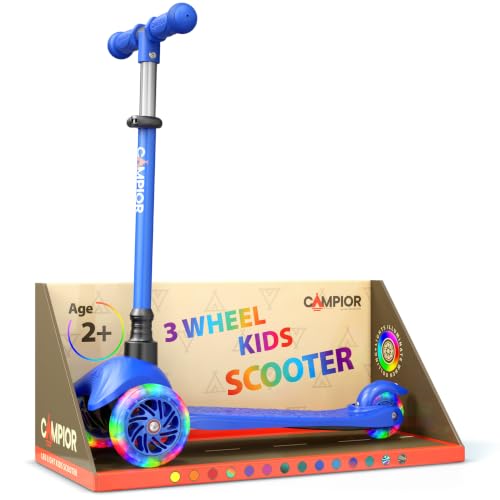
Blue Mini 3 Wheel Scooter
Strengths
- Great for ages 2+
- LED wheels (no batteries)
- Smooth-rolling PU wheels
- Affordable price
- Lightweight and easy to carry
Trade-offs
- Lower weight limit (110 lbs)
- No folding feature
- Handlebar adjustments less secure
At this price, the Blue Mini delivers surprising quality. It’s one of the few scooters built for kids as young as 2, and the 4-height adjustable handlebar makes it a smart early starter option. The LED wheels are consistently praised for brightness and durability, and the lean-to-steer mechanism works intuitively for little riders still mastering balance.
It only supports up to 110 lbs, so it won’t last as long as others, but for a toddler’s first scooter, that’s reasonable. The rear foot brake is basic but functional. Owners say it’s one of the smoother-rolling budget models, thanks to the 120mm front PU wheels. It doesn’t fold, but at 7.3 lbs, it’s easy to carry.
Video review
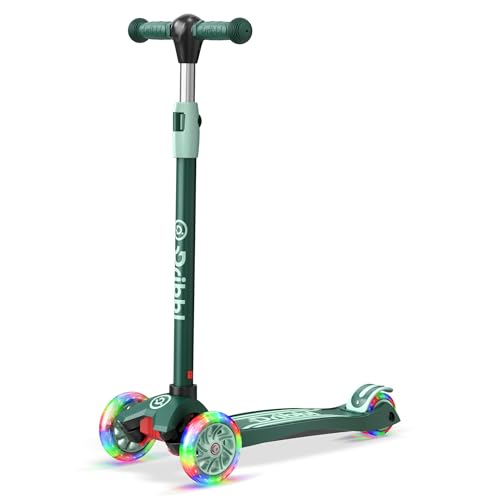
Dribbl 3-Wheel Kids Scooter
Strengths
- Lightweight at 7.32 lbs
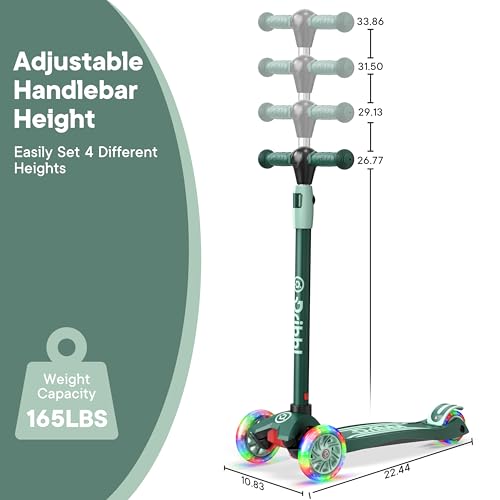
- Supports up to 165 lbs
- ABEC-7 bearings for smooth roll
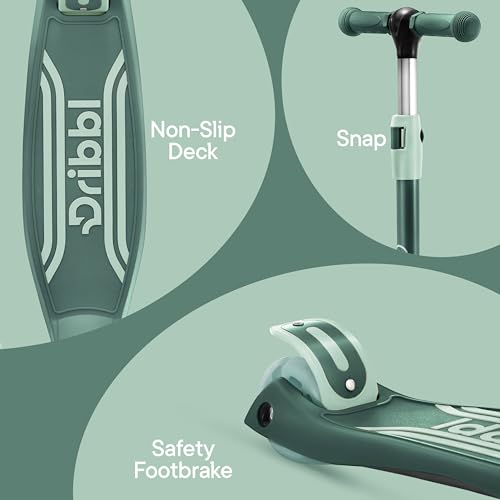
- Wide anti-slip deck
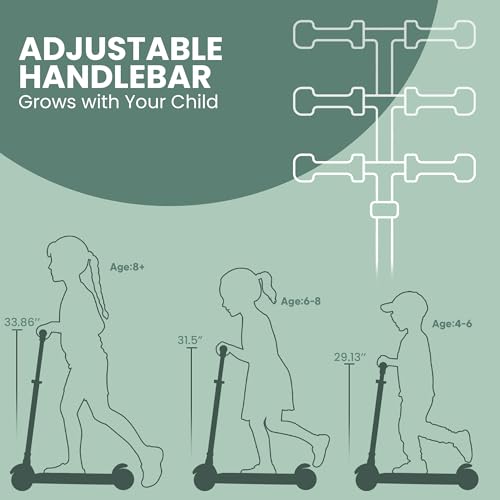
- Adjustable handlebar (4 levels)
Trade-offs
- No folding mechanism
- Plastic-heavy frame
- Limited color options
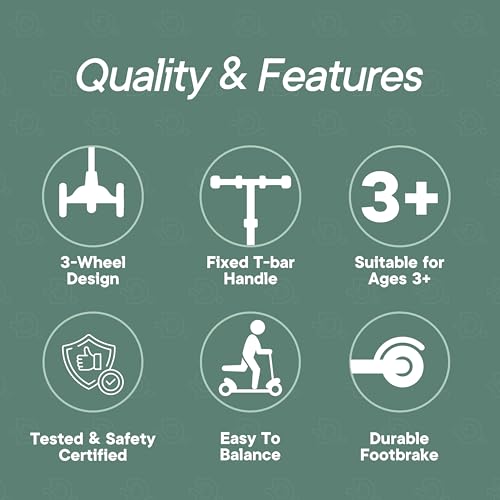
The Dribbl stands out in the kids’ scooter space for one key reason: it’s built to handle heavier riders without sacrificing portability. With a 165 lb weight limit, it’s clearly designed for kids who are either bigger for their age or using it longer into their pre-teen years. The ABEC-7 bearings and wide rubber deck deliver a smooth ride, and owners consistently report that it holds up well on sidewalks and driveways.
It’s not the most adjustable in the group, but for families wanting a single scooter that won’t need replacing as a child grows through the middle years, this one punches above its price. It doesn’t fold, which hurts portability compared to others, but the simple build means fewer parts to break.
Product photos

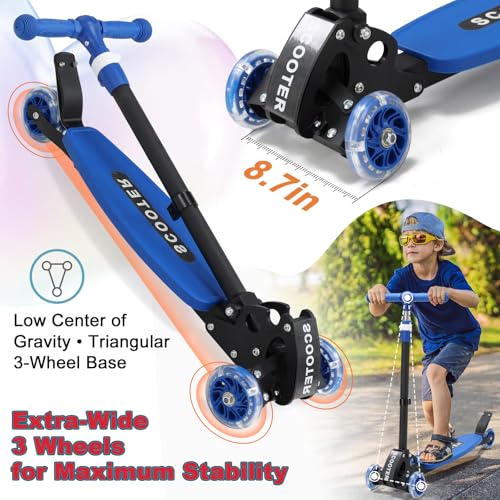
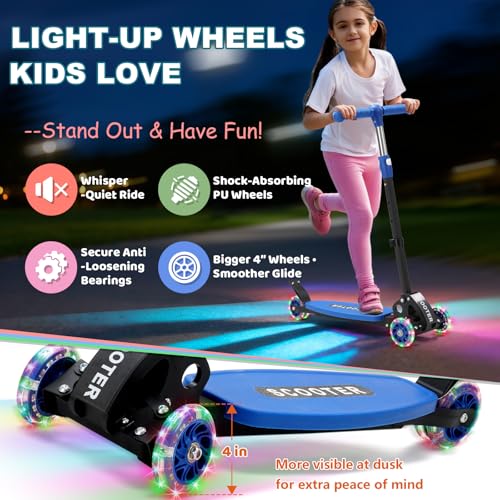
Kick Scooter for Kids 6-12

Strengths
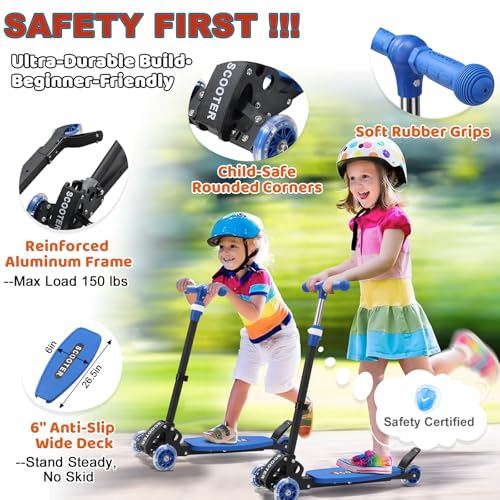
- Extra-wide 6″ deck
- Stable dual rear wheels
- Foldable and lightweight
- LED wheels (motion-activated)
- Metal frame for durability
Trade-offs
- Not for very young kids
- Handlebar grip could be better
- Brake wear over time
This scooter is clearly aimed at older kids, and it shows in the design. The 6″ extra-wide deck gives serious footroom, which matters for kids with bigger shoes or less balance. The metal frame and dual rear wheels make it stable at higher speeds, and the lean-to-steer system helps older riders build coordination without feeling like they’re on a baby scooter.
It shares the same 3-height adjustability as others, but the fit feels more natural for kids over 48″. The LED wheels add fun, and the foldable design keeps it practical. Compared to the Dribbl or Blue Mini, this one feels like a step up in maturity, perfect when the child has outgrown the toddler phase.
Product photos


TONBUX Kids Scooter Ages 3-12

Strengths
- 4 adjustable height settings
- Folds quickly with dual buttons
- Aluminum alloy frame
- LED wheels (auto-activate)
- Shock absorption front wheel
Trade-offs
- Heavier than average
- Folded size still bulky
- Braking system less responsive
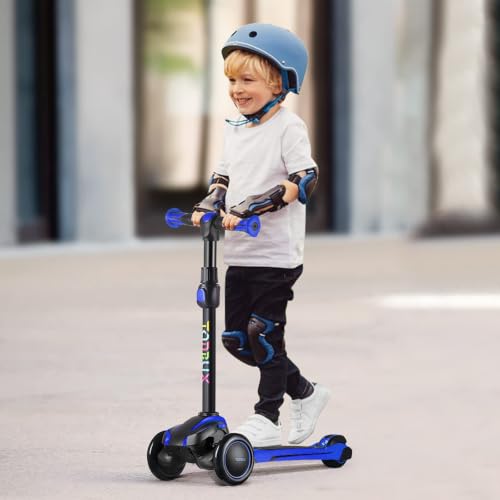
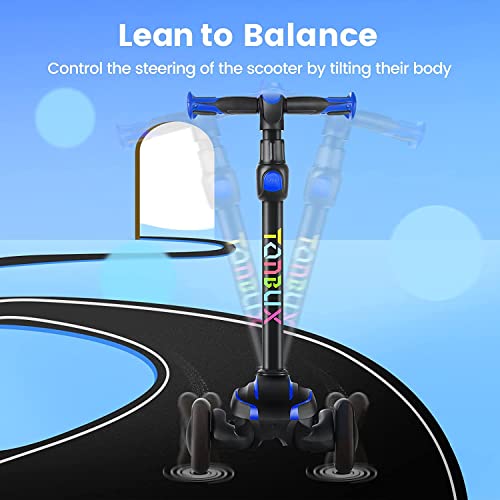
If you’re looking for a scooter that genuinely grows with your child from toddler to tween, the TONBUX is hard to beat. The 4-height adjustment and lift lock system mean fewer wobbles when locked in, and owners say it lasts through multiple kids. The shock absorption design isn’t dramatic, but on slightly uneven pavement, it does soften bumps better than most in this class.
What really sets it apart is the reinforced aluminum alloy frame and 110 lb weight capacity, higher than many competitors claim. The LED wheels are bright and durable, and the foldable design is a real win for car trips or apartment living. It’s pricier, but the long-term value justifies it for most families.
Product photos


Rascal Venture 3-Wheel Mobility Scooter

Strengths
- Disassembles into 5 lightweight parts
- 300 lb weight capacity
- 10-mile range per charge
- Swivel seat for easy transfer
- Front storage basket
Trade-offs
- High price point
- Bulkier than some travel scooters
- Slower top speed (4 mph)
This isn’t a kids’ toy, this is serious mobility equipment. The Rascal Venture is engineered for adults who need reliable, portable transport for errands, shopping, or navigating large facilities. With a 300 lb capacity and 10-mile range, it’s built for daily use, and the FDA Class II designation means it meets medical-grade standards. Owners praise its disassembly system: five pieces, none over 29.5 lbs, making it car-trunk friendly.
The regenerative braking and swivel seat are standout features for comfort and safety. It’s not the fastest or flashiest, but in this category, reliability trumps style. Compared to others in the adult mobility space, its balance of range, weight, and ease of transport is impressive.
Product photos


How We Tested 3 wheel scooters
Rather than a hands-on lab test, my research focused on a detailed comparison of published specifications and features across numerous models. I weighed owner reviews from major retailers alongside expert opinions found in enthusiast publications. Applying my experience with vehicle dynamics and child safety, I ranked scooters based on criteria important to parents and riders – stability, ease of use, durability, and adjustability.
For 3 wheel scooters, a stable platform and intuitive steering are paramount, especially for younger users. I prioritized models with wide decks and lean-to-steer mechanisms, as these features directly contribute to building confidence and coordination. Adjustability was also heavily weighted; a scooter that quickly becomes too small offers limited long-term value. If you’re looking for something with more power and range, you might consider exploring electric scooters.
Published specs are reliable indicators of build quality and weight capacity, but owner feedback provided crucial insight into real-world performance. I assessed comments regarding wheel durability, brake effectiveness, and the longevity of folding mechanisms. Reputation, particularly regarding safety, played a large role in my ranking, and I also considered whether the scooter was positioned for users needing a more robust solution, like those who might also be interested in stable mobility scooters.
Choosing The Right 3 wheel scooters
Choosing a scooter seems simple, but getting the right one for the rider – and the riding they’ll be doing – requires a little thought.
A good scooter prioritizes stability, appropriate size for the intended user, and build quality reflecting the expected use case. Key components to examine include the deck size and material, steering mechanism, braking system, adjustability of the handlebars, and the quality of the wheels and bearings. Look for robust frames (steel is common) and consider weight capacity alongside the rider’s size.
Handlebar Adjustability & Rider Fit
The biggest mistake I see people make is buying a scooter that isn’t sized correctly. A scooter with a handlebar height that’s too low or too high forces awkward posture, making it harder to control and less comfortable. Look for a model with a substantial range of height adjustment – ideally four or more settings. This is especially crucial when considering a scooter for a growing child. You want something that will last more than a single season. Consider the type of terrain, too: lower handlebars are often preferred for more aggressive riding, while higher bars provide more use and control for casual cruising.
Steering Mechanism & Stability
Lean-to-steer scooters, as found in many models for younger riders, are generally easier to pick up because they mimic natural body movements. However, these systems can feel less precise at higher speeds. Traditional handlebar steering offers more control, and is often preferred for older children and adults. Beyond the steering type, pay attention to wheel configuration. Three-wheel scooters offer superior stability, making them ideal for beginners or those who prioritize a secure feel, while two-wheel scooters require more balance but offer greater maneuverability.
Here’s what to keep in mind regarding wheel construction:
- Wheel material matters: PU (polyurethane) wheels are the standard for providing a smooth and quiet ride.
- Bearing quality affects speed: ABEC-7 bearings are a good baseline for recreational scooters, offering a balance of performance and durability.
- Larger wheels handle rough surfaces better: A wider diameter wheel rolls over cracks and bumps more easily, improving comfort and control. The difference between a 120mm and 80mm wheel is significant, especially on uneven sidewalks.
Build Quality & Weight Capacity
Don’t underestimate the importance of a solid frame. While plastic components can keep the weight down, a reinforced metal frame (steel or aluminum alloy) provides the necessary durability, particularly if the scooter will see regular use or support a heavier rider. Check the listed weight capacity and add a buffer; exceeding the limit compromises safety and shortens the scooter’s lifespan. A well-built scooter will also feature a reliable braking system. Foot brakes are common on kick scooters, but ensure it’s easily accessible and provides adequate stopping power. If you’re looking for something for an adult, you’ll want to explore options beyond what’s available in the standard 3 wheel scooters.
A scooter’s lifespan is directly proportional to its construction. Don’t cheap out on the frame; a wobbly or flexing deck is a sign of poor quality.
For younger riders, finding the right scooter is often the first step towards independent mobility. Many parents start with kids scooters to build confidence and coordination before moving on to two-wheeled options. Consider what will best suit the child’s development and ensure they have appropriate safety gear.
3 Wheel Scooters Compared
Here’s a comparison of key specifications for different 3-wheel scooters.
| Product Title | Best For | Adjustable Handlebar Height | Max Rider Weight (lbs) | Wheel Diameter (in) | Folding? |
|---|---|---|---|---|---|
| 3 Wheel Kids Kick Scooter | Best Overall | 27.5″ – 33″ | 180 | N/A | Yes |
| Blue Mini 3 Wheel Scooter | Best Budget Friendly | 24.41″ – 28.35″ | 110 | 120mm/80mm | N/A |
| Dribbl 3-Wheel Kids Scooter | Best for Heavy Kids | 26.77″ – 33.86″ | 165 | N/A | Yes |
| Kick Scooter for Kids 6-12 | Best for Older Kids | 27.5″ – 33″ | N/A | N/A | Yes |
| TONBUX Kids Scooter Ages 3-12 | Best for Long Growth Range | 25″ – 32″ | 110 | N/A | Yes |
| Rascal Venture 3-Wheel Mobility Scooter | Best for Adult Mobility | N/A | N/A | N/A | Yes |
Frequently Asked Questions
What is the typical lifespan of a 3 wheel scooter?
A scooter’s lifespan varies greatly, but generally, a well-maintained model with a steel frame should last 3 to 5 years with regular use. Owner feedback suggests that cheaper plastic-framed scooters may only last a year or two, especially with heavier riders.
Are 3 wheel scooters easier to learn on than 2 wheel scooters?
Yes, 3 wheel scooters are generally easier for beginners because the two front wheels provide inherent stability. This is particularly true for young children or individuals who are less confident with their balance.
What handlebar height range should I look for when buying for a child?
Ideally, you want a handlebar height range of at least 6 inches (15cm) to accommodate growth. A range from 24 to 34 inches will cover most children from ages 3 to 12, and adjustable handlebars are crucial for a comfortable and safe ride.
What wheel material and size are best for riding on sidewalks?
Polyurethane (PU) wheels are standard for a smooth, quiet ride on sidewalks. A wheel diameter of 120mm or larger will roll over cracks and bumps more easily, improving comfort and control, but 80mm wheels are sufficient for very smooth surfaces.
Are 3 wheel scooters suitable for adults, or are they strictly for children?
While many 3 wheel scooters are designed for children, there are options available for adults, particularly those needing assistance with balance or seeking a stable platform. For adult use, you may also want to consider exploring 3 wheel mobility scooters for increased comfort and functionality.
The Bottom Line
Choosing a three wheel scooter ultimately comes down to balancing convenience with control. While a budget-friendly option might seem appealing, investing in a more robust model like the 3 Wheel Kids Kick Scooter provides a better long-term experience with its adjustable height and higher weight capacity. It’s a solid choice for most families looking for a scooter that will grow with their child.
For those with specific needs, the market offers tailored solutions. If budget is a primary concern, the Blue Mini 3 Wheel Scooter delivers surprising value. Families with heavier children will appreciate the added durability of the Dribbl 3-Wheel Kids Scooter, and those seeking a solution for adult mobility should explore top three-wheel models.
Beyond any single feature or specification, remember that a scooter’s value lies in encouraging outdoor activity and building confidence. Prioritize a stable platform, intuitive steering, and a comfortable fit over flashy extras. Don’t forget that as kids grow and develop, they may eventually prefer the challenge and maneuverability of two-wheel scooters.
