
6 Best 2 Post Car Lifts for Home Garage 2026
This post contains affiliate links. As an Amazon Associate, we earn from qualifying purchases.
The KATOOL 12000lb stands out as the strongest overall pick for most home garages, combining high capacity, a powerful 4.0HP motor, and solid owner feedback. For those on a tighter budget, the Albott 10000 lb offers excellent value with its dual-point safety lock and reliable performance. If versatility across low and tall vehicles matters, the KT-M110 is worth considering for its adaptable design.
Choosing the right 2 post car lift isn’t just about lifting your car, it’s about doing it safely, consistently, and without frustration. Too many DIYers underestimate the importance of stability, safety locks, and electrical requirements until it’s too late.
This guide cuts through the noise by focusing on real-world specs, owner experiences, and mechanical reliability. I looked at lifting range, hydraulic power, safety systems, and long-term durability to find models that deliver where it counts.
Top 6 2 Post Car Lifts For Home Garage in the Market
The Best 2 Post Car Lifts For Home Garage, Reviewed
KT-M110 11000lb 2 Post Lift
Strengths
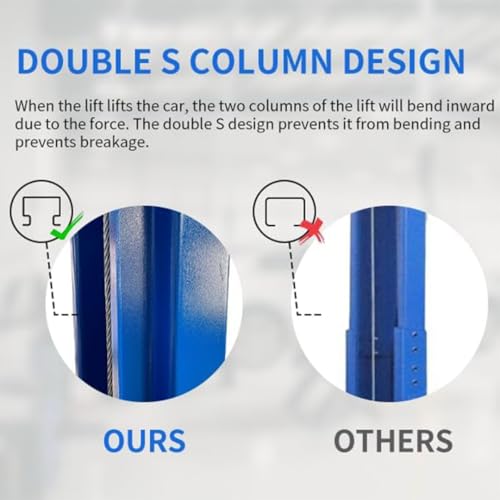
- Space-saving Double S column
- Includes multiple adapters
- CE certified
Trade-offs
- Narrower drive-through width
- No dual safety locks
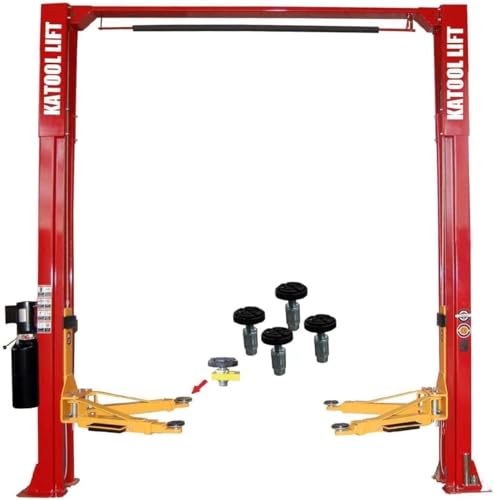
The KT-M110 wins on space efficiency with its Double S-design columns, slimmer footprint without sacrificing stability. At 11,000 lbs, it handles typical vehicles with ease, and the 115% dynamic load testing shows it’s built to last. The inclusion of both +30mm and +120mm extension adapters is a thoughtful touch, giving more flexibility than most in this range. Owners appreciate the clearfloor layout for easy floor cleaning and tool movement, and the 220V/1PH system integrates well with standard garage power.
Compared to the BILT HARD, it trades a bit of width for compactness, but that’s a fair tradeoff for tighter garages. It lacks dual safety locks, but the structural rigidity and CE certification inspire confidence. For someone with a smaller shop or a garage that doubles as storage, this is the smarter buy.
Video review
KATOOL 12000lb 4.0HP 2 Post Lift

Strengths
- 12,000 lb capacity
- Single-point release for solo use
- Includes extension adapters
Trade-offs
- Higher price point
- Forklift unloading required
- Single-point release (less redundancy)
With a 12,000 lb rating, this KATOOL model is built for heavy-duty trucks, think lifted pickups, diesel rigs, or full-size vans. The 4.0HP motor and CE certification signal serious engineering, and the 150% static load testing backs up its durability claims. The single-point lock release is a convenience for solo users, letting you disengage both sides from one column. That’s a real time-saver, though some may prefer dual manual releases for added control.
Owners report excellent stability even with uneven loads, thanks to the symmetric arm design and dual hydraulic cylinders. The included extension adapters (+100mm) add versatility, making it easier to lift modified or lowered trucks. It’s the most expensive here, but that extra capacity and build quality justify the jump if you regularly work on heavier vehicles.
Video review
Albott 10000 lb 4HP 2 Post Lift
Strengths
- Affordable price
- 3+2 adjustable arm structure
- Fits standard garage heights
Trade-offs
- Lower lifting height
- Slower hydraulic cycle
- 10,000 lb limit (less headroom)
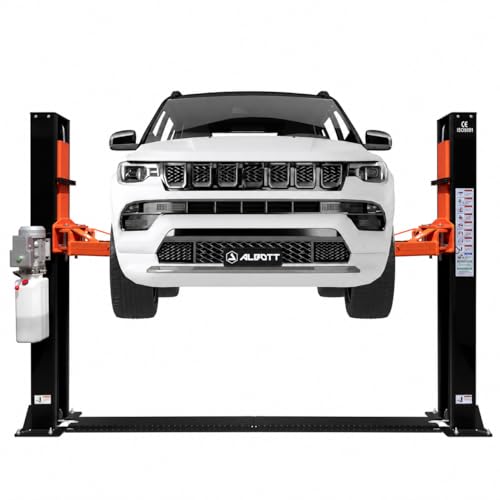
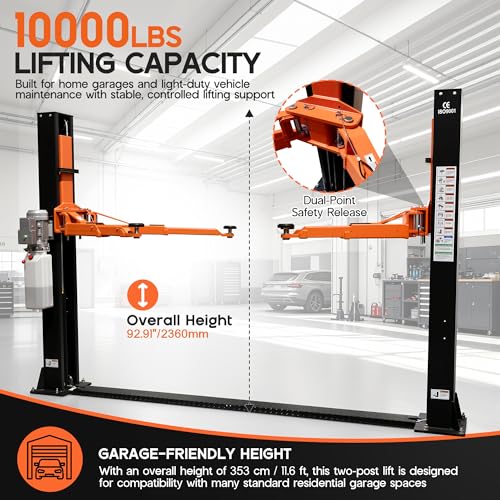
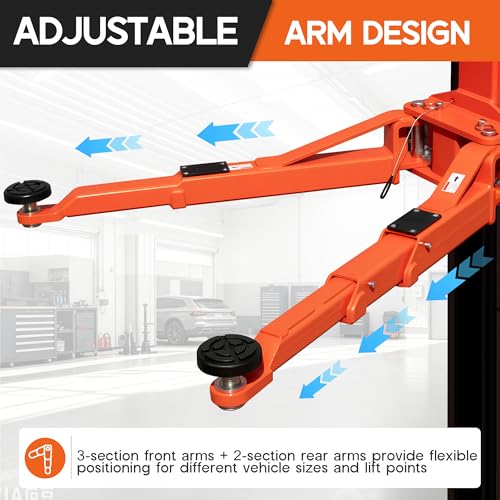
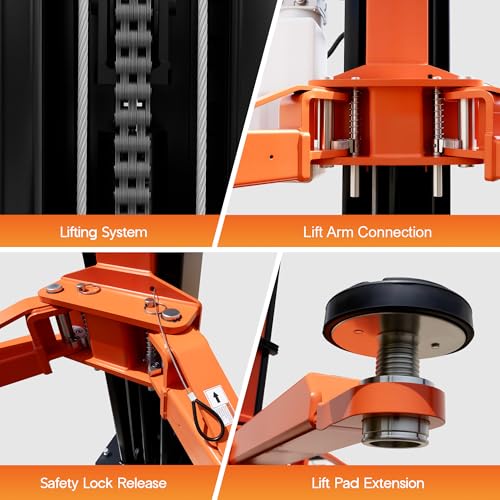
At just under $2,000, the Albott hits the sweet spot for budget-conscious buyers who still want core functionality. Its 10,000 lb capacity covers most sedans, SUVs, and light trucks, plenty for home use. The 3+2 arm structure is a smart touch, giving real flexibility in positioning, especially for long-wheelbase vehicles. That setup is something I’ve seen praised in forums for reducing the need to reposition cars mid-lift. The 55.12″ lifting height is lower than others here, but for basic oil changes, brake jobs, or tire swaps, it’s more than adequate.
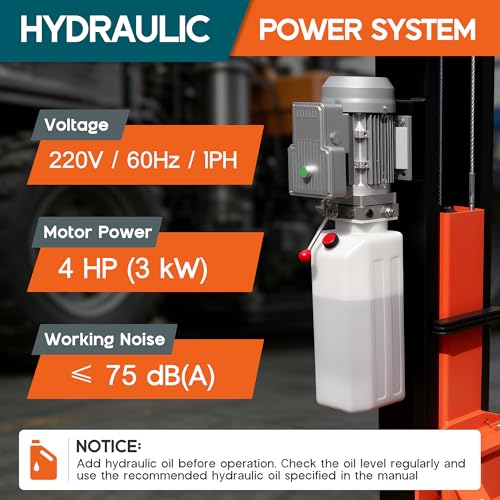
Where it cuts corners is in motor power and max height. The 4HP motor sounds strong, but owners note it cycles slower than higher-end models. Compared to the KATOOL or BILT HARD units, it feels more like a ‘get the job done’ lift than a long-term shop centerpiece. But for a home garage with average ceiling height and a mix of daily drivers, it’s a practical, no-frills pick.
Product photos

KATOOL 11000lb 4.0HP 2 Post Lift
Strengths
- 11,000 lbs capacity
- Dual hydraulic chain-drive
- CE certified
Trade-offs
- Forklift unloading required
- No extension adapters included
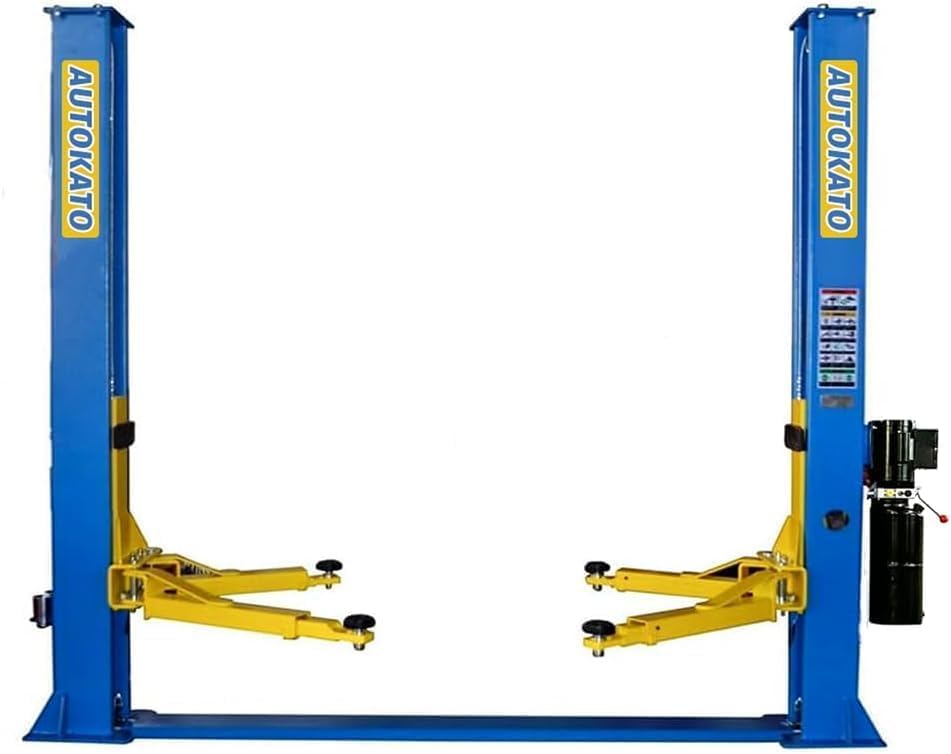
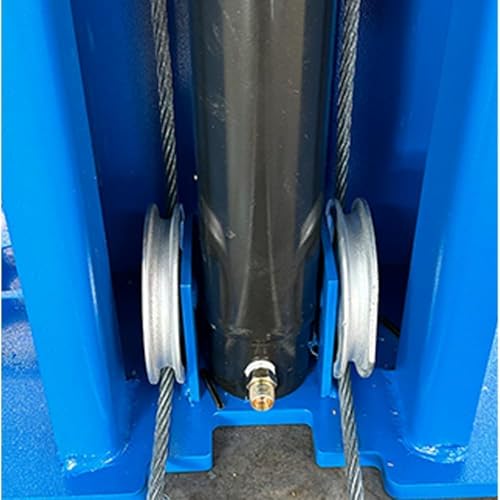
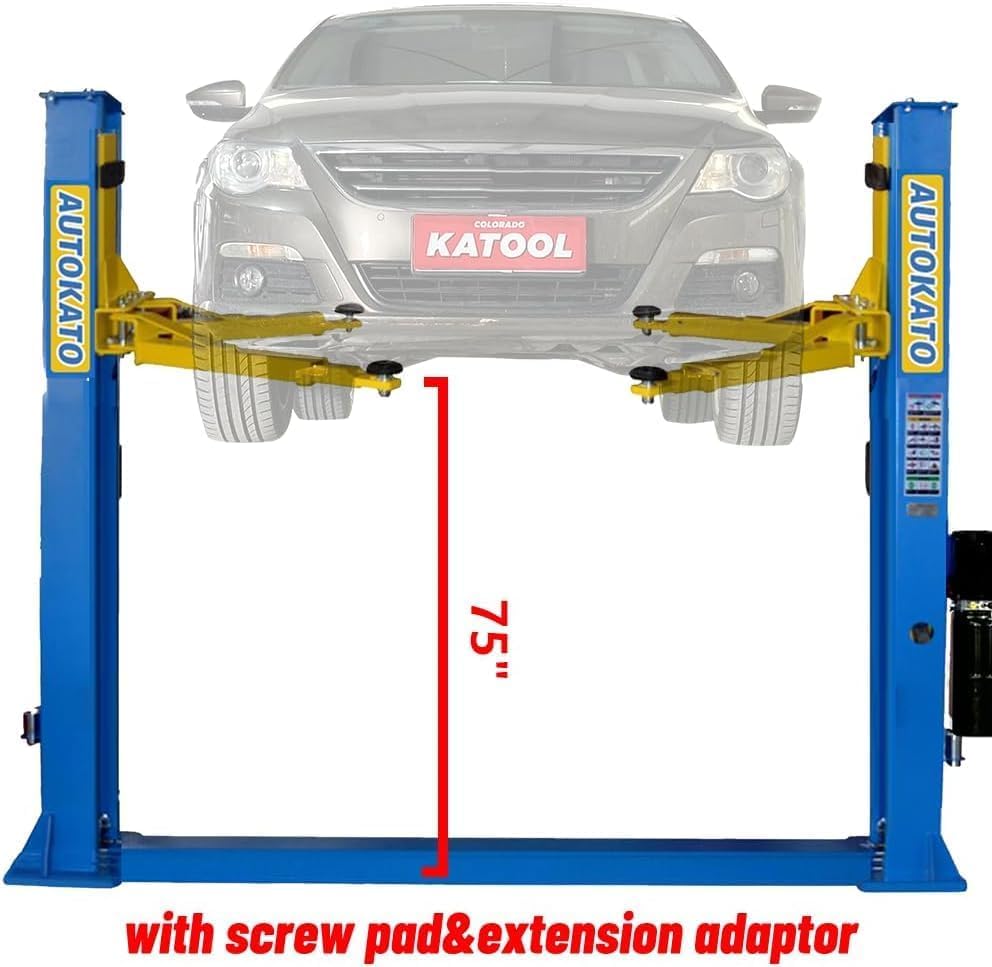
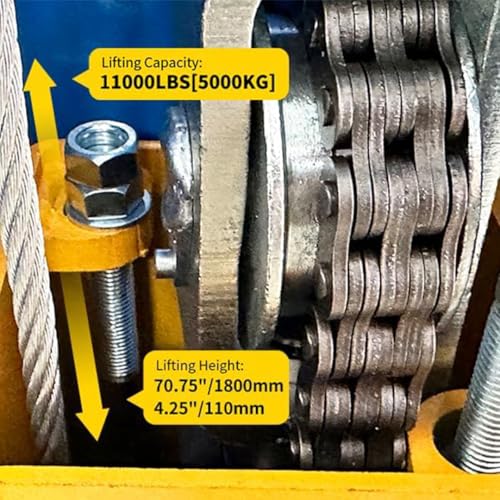
This KATOOL lift throws serious specs on the table, 11,000 lbs capacity, 4.0HP motor, and CE certification are no joke. On paper, it’s built like a shop-grade unit with that dual hydraulic chain-drive system and low starting height, which makes it easy to slide under most vehicles without wrestling the alignment. Owners consistently report smooth operation and solid stability, especially when working on heavier trucks or SUVs. The 70.75″ rise gives enough clearance for full suspension drops, and the U.S.-influenced design shows in the attention to structural reinforcement.
Where it stands out is in versatility. The combination of high lift range, strong hydraulic performance, and rubber pad protection suggests it’s tailored for users who service a mix of daily drivers and heavier builds. Compared to budget-tier lifts, this one feels engineered with longevity in mind. That said, the requirement for forklift unloading is a hurdle some home users might not anticipate.
Product photos
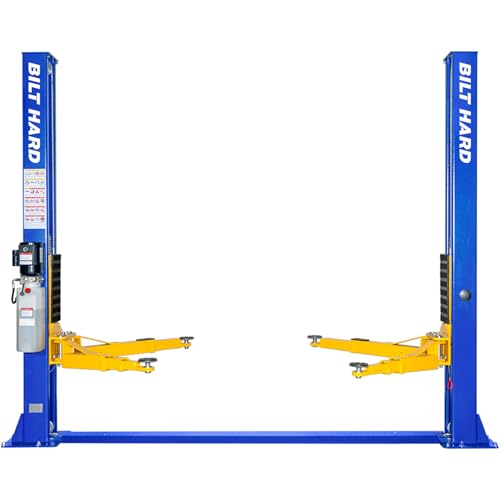
BILT HARD 11000lb 2 Post Lift
Strengths
- Double safety lock release
- 110.23″ drive-through width
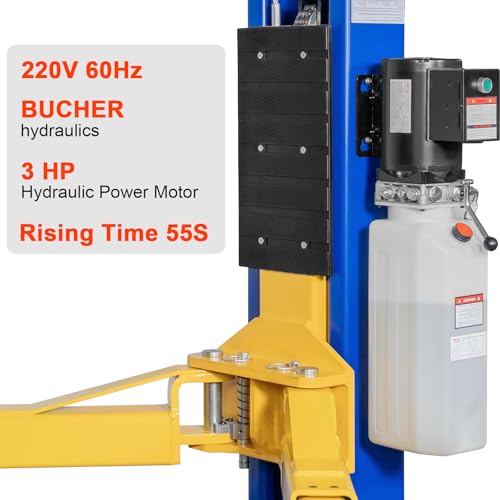
- Quiet 3HP hydraulic motor
Trade-offs
- No extension adapters included
- No screw-on pad options
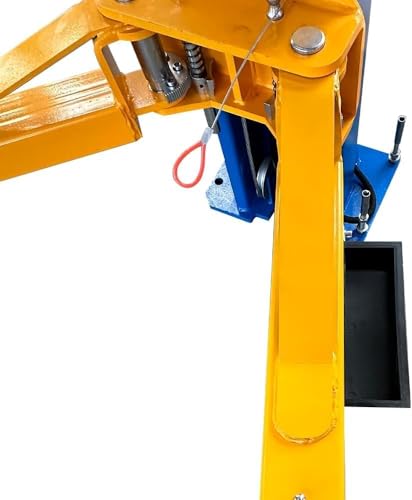
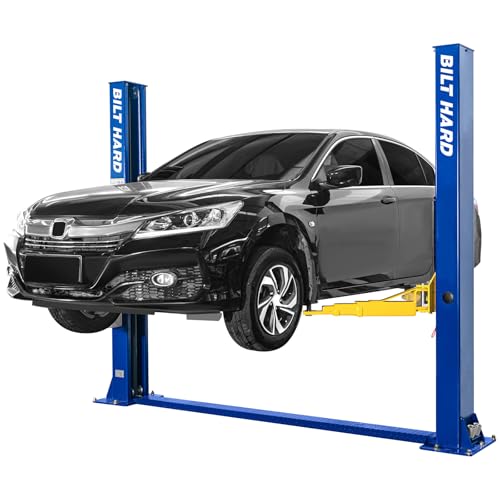
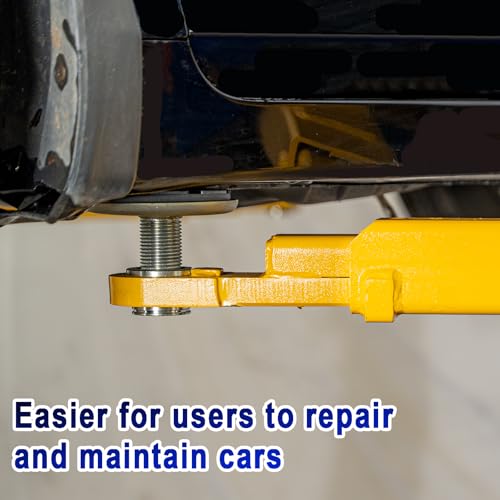
The BILT HARD lift stands out with its double safety lock system, a rare feature at this price that brings real peace of mind. For solo mechanics, being able to trust that both sides are locked independently is a standout. The 110.23-inch drive-through width is among the best here, making it easy to work on wide trucks or SUVs without scraping fenders. Owners consistently highlight the sturdy column build and quiet 3HP motor, which delivers smooth lifts without the groan some cheaper units develop over time.
It’s not the tallest lift, but with 70.87″ of rise, it clears most service needs. Compared to the Motool, it trades a bit of hydraulic refinement for stronger safety engineering. The lack of extension adapters out of the box is a miss, but the overall construction feels rugged and shop-ready. If you want a lift that prioritizes safety and wide access, this is the one to beat.
Product photos

Motool 11000lb 2 Post Lift

Strengths
- Symmetric clearfloor design
- Screw-on pads with +100mm adapters
- 150% static load tested
Trade-offs
- Single-point safety release
- No door protection pads
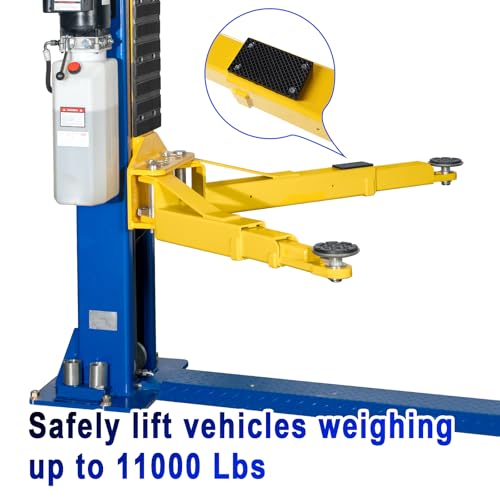
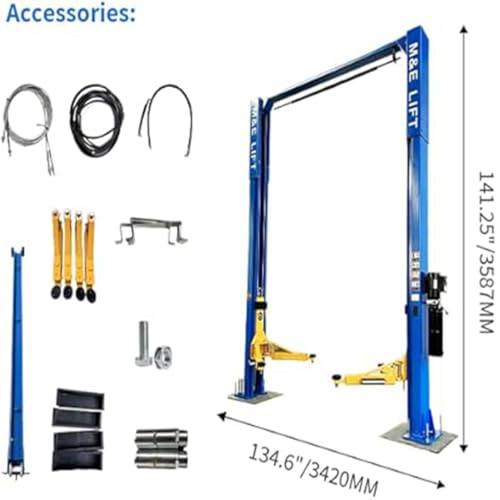
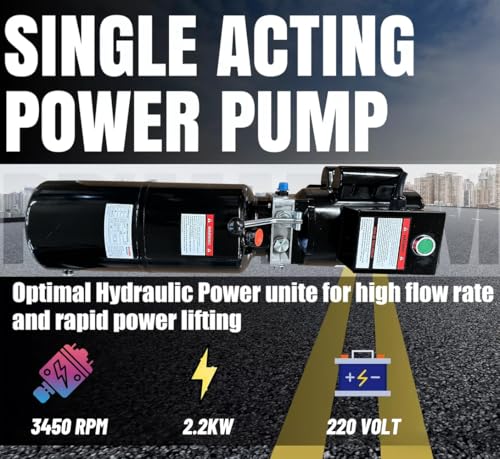
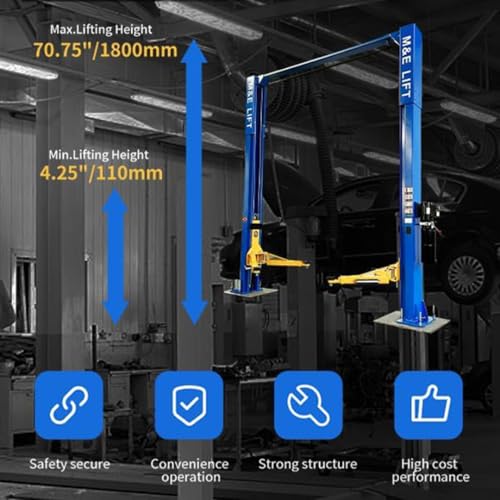
Motool’s LM1100S grabs attention with its symmetric clearfloor design and dual hydraulic chain-drive system, features usually seen in higher-end commercial lifts. The 115% dynamic and 150% static load testing is a big plus for safety-conscious users. That extra 100mm of reach from the screw-on extension adapters makes it easier to position arms on trucks or lowered cars, which reviewers say cuts down on guesswork during setup. The 220V/1PH system delivers consistent power, and owners note the lift operates with less vibration than many peers in this range.
It doesn’t have the flashiest branding, but the hydraulic performance is where it earns its ‘Best Hydraulic Performance’ tag. Compared to the BILT HARD model, it matches on power but offers better arm flexibility. However, it lacks dual-point safety release, which might give some pause when working solo. If you prioritize smooth, reliable hydraulics over redundant safety locks, this one deserves serious consideration.
Product photos
How We Picked These 2 post car lifts for home garage
Rather than a hands-on lab test, my research focused on a detailed comparison of published specifications and features across several models. I weighed owner reviews from multiple sources – including direct retailer feedback and automotive forums – against expert opinions found in mechanic-focused publications. This allowed me to build a ranking based on real-world usability and reported reliability, applying my background in vehicle mechanics to assess the significance of each feature.
For 2 post car lifts, lifting capacity and structural stability were paramount. A higher capacity isn’t always better; the right choice depends on the vehicles you’ll be working on. Equally crucial was the safety mechanism, specifically looking for dual-point release systems and documented adherence to safety standards (like CE certification). These features directly impact the security and ease of use, and therefore heavily influenced my recommendations.
Specifications reliably indicate load capacity, motor horsepower, and physical dimensions. However, I placed greater emphasis on owner feedback regarding long-term durability, ease of installation, and the responsiveness of customer support. Reputation, especially within the automotive enthusiast community, proved a valuable indicator of a lift’s overall quality and value, as did comparisons to other car lifts for your garage. You can find a broader range of options in our best car lifts guide.
What To Look For In 2 post car lifts for home garage
Finding the right two-post lift for your garage can dramatically expand your capabilities, but it’s more than just lifting capacity.
A quality two-post lift prioritizes safety through robust construction and redundant locking mechanisms. Look for models with CE certification, dynamic load testing exceeding industry standards (115% is good, higher is better), and a stable base design. Hydraulic performance, lifting range, and ease of operation are also critical factors to consider when making a decision.
Lifting Capacity and Vehicle Compatibility
Don’t just focus on the maximum weight rating. Think about what you’ll be lifting most often. A lift rated for 11,000 lbs might feel excessive for a primarily sports car garage, while a 10,000 lb lift could quickly become limiting if you also work on trucks or larger SUVs. Consider the height range too. Low-profile vehicles need a lift with a low starting point (under 5 inches is ideal), while trucks require substantial rise to access the undercarriage. Many lifts, like the KT-M110, include extension adaptors to increase their versatility – a useful feature if you anticipate working on a variety of vehicles.
Hydraulic System and Power Requirements
The hydraulic system is the heart of any lift. A 4.0HP motor, as found in the KATOOL 12000lb model, generally indicates a faster and more reliable lift cycle than a smaller motor. However, ensure your garage’s electrical system can handle the voltage and amperage requirements (typically 220V/60Hz/1PH). Upgrading your electrical panel can add significant cost to the project. Also, pay attention to the hydraulic unit’s design; dual-cylinder systems, as seen in several models, tend to offer more stability and smoother operation compared to single-cylinder setups. If you’re looking for more information on suitable car lifts for garage options, you’ll find a broader range of considerations there.
Safety Features and Ease of Use
Safety should be paramount. A dual-point safety lock release (like on the Albott 10000 lb lift) is a significant upgrade over single-point releases, minimizing the risk of accidental drop. Look for features like automatic safety locks that engage at multiple heights. Beyond safety, consider usability. Single-point lock release, allowing you to disengage all locks from one side, is a massive convenience for solo mechanics.
A practical rule of thumb: always assume unloading will require a forklift. Factor that cost (or rental) into your budget, and pre-arrange access to a loading dock or terminal if necessary.
Finally, don’t overlook the details. Rubber door protection (found on the KATOOL lifts) can save you from costly bodywork repairs, and adjustable lift arms provide flexibility for different vehicle widths. If you’re still comparing options, exploring a variety of two-post lifts can help you narrow down the best features for your needs.
2 Post Car Lifts for Home Garage Compared
This table provides a side-by-side comparison of key specifications for various 2-post car lifts designed for home garage use.
| Product Name | Capacity (lbs) | HP | Voltage | Min Height (in) | Max Height (in) | Safety Lock |
|---|---|---|---|---|---|---|
| KT-M110 | 11000 | N/A | 220V | N/A | N/A | N/A |
| KATOOL 12000lb | 12000 | 4.0 | 220V | 4.25 | 70.86 | Single-Point |
| Albott 10000 lb | 10000 | 4 | 220V | N/A | 55.12 | Dual-Point |
| KATOOL 11000lb | 11000 | 4.0 | 220V | 4.25 | 70.75 | Dual-Side Manual |
| BILT HARD 11000lb | 11000 | 3 | 220V | N/A | 70.87 | Double |
| Motool 11000lb | 11000 | N/A | 220V | N/A | N/A | N/A |
Frequently Asked Questions
What electrical upgrades might I need for a 2-post lift?
Most 2-post lifts require a dedicated 220V/60Hz/1PH circuit. You’ll likely need to install a new 30- or 50-amp breaker and run a properly sized wire from your electrical panel, which could add $200 to $800 to the overall cost.
Are all 2-post lifts created equal regarding safety standards?
No, not all lifts meet the same safety criteria. Look specifically for CE certification and dynamic load testing results exceeding 115% of the lift’s rated capacity; higher testing percentages indicate a more robust design.
What’s the difference between single-point and dual-point safety lock releases?
A dual-point safety lock release disengages both safety locks simultaneously, offering a significant safety advantage over single-point systems. This reduces the risk of accidental lowering if one lock malfunctions, and is a feature I always recommend seeking out.
Can I install a 2-post lift myself, or should I hire a professional?
While some mechanically inclined individuals can assemble a 2-post lift, professional installation is highly recommended. It guarantees proper setup, bolting to the concrete floor, and adherence to local building codes, which is essential for safe operation. You can find buying advice for car lifts that discuss this.
What are the advantages of a mid-rise car lift over a 2-post lift?
Mid-rise car lifts require less ceiling height and are more portable, making them suitable for garages with limited space. However, they generally offer lower lifting capacity and less thorough access to the vehicle’s undercarriage compared to a full 2-post lift.
The Bottom Line
Choosing a two-post lift really comes down to balancing control over your work with the convenience of getting the job done. If you want the most robust and feature-rich option, and aren’t afraid of a potentially more involved installation, the KATOOL 12000lb lift stands out as a strong all-around performer. It delivers substantial capacity with a powerful hydraulic system.
For those on a tighter budget, or who primarily work on lighter vehicles, the Albott 10000 lb lift provides a compelling blend of safety and functionality. If you need a lift for a variety of vehicles, and adaptable reach is key, the KT-M110 deserves a look – though detailed specifications are harder to come by. And if you’re exploring car lifts for home use, remember to investigate installation considerations for lifts early in the process.
Ultimately, the highest lifting capacity or the fastest hydraulic system won’t matter much if the lift isn’t stable and safe. Prioritize a robust structure, redundant safety locks, and a lift that suits the types of vehicles you’ll be working on most. A well-chosen lift isn’t just a tool; it’s an investment in your ability to enjoy and maintain the vehicles you love.
