
7 Best 10 Ply Truck Tires for Towing (2026)
This post contains affiliate links. As an Amazon Associate, we earn from qualifying purchases.
The Travelstar Ecopath AT is the best overall 10-ply truck tire for towing, offering strong load capacity and solid performance across conditions. For budget-focused buyers, the Transeagle ST II delivers reliable value, especially for trailer use, while the Accelera M/T-01 stands out if you regularly tow in rugged off-road environments.
Towing puts serious demands on your tires, excess weight, heat buildup, and long miles can quickly expose weak or poorly matched rubber. Choosing the wrong tire isn’t just a comfort issue, it’s a safety risk.
As someone who’s spent years dissecting vehicle dynamics and tire behavior, I looked at load ratings, tread designs, and real-world owner feedback to identify the most capable 10-ply options for towing. These picks reflect a balance of strength, longevity, and suitability for different hauling needs, from highway rigs to off-grid work sites.
Top 7 10 Ply Truck Tires For Towing in the Market
The Best 10 Ply Truck Tires For Towing, Reviewed
Travelstar Ecopath AT LT285/75R16

Strengths
- 50,000-mile tread warranty
- Strong wet and dry traction
- 3D siping for grip
Trade-offs
- Slightly heavier than some
- Not true mud terrain
- Limited snow rating
This Travelstar Ecopath AT in the LT285/75R16 size is the most balanced performer in the lineup, and for that reason, it earns my pick as the best overall 10-ply tire for towing. The all-terrain tread strikes a smart middle ground, deep enough for gravel, mud, and wet roads, but tuned for highway stability and low noise. With a 3,750-lb single-load capacity and 50,000-mile tread warranty, it’s built for real-world hauling demands. The 3D siping and step-down blocks improve wet traction, and owners report strong performance in rain and light snow, which matters for year-round towing.
What seals the deal is the included road hazard protection since 2025, a rare perk in this segment. Compared to the LT275/65R20 version, this size fits more classic trucks and older diesels with smaller wheel wells. I’d choose this for a work-oriented half-ton or three-quarter-ton truck that tows frequently on mixed roads. It doesn’t excel in extreme off-road like the Accelera, but for most buyers, this is the smarter, more versatile buy.
Video review
Travelstar Ecopath AT LT275/65R20
Strengths
- Smooth highway ride
- Optimized for modern trucks
- Good fuel efficiency
Trade-offs
- Less off-road clearance
- Higher cost per set
- Tread wear varies by load
If your rig spends most of its time on the highway pulling a heavy trailer, this LT275/65R20 version of the Travelstar Ecopath AT is the better fit. The 20-inch size is common on modern three-quarter and one-ton trucks, and the optimized footprint delivers stable handling at speed. The all-season tread is tuned for reduced road noise and improved fuel efficiency, key when logging long miles. With the same 3,750-lb load capacity and 50,000-mile warranty as its smaller sibling, it shares the same durability and road hazard coverage, but in a size that matches today’s larger pickups.
Owners note its smooth ride and confidence in crosswinds when towing, which speaks to sidewall rigidity. It’s not as nimble off-road as the 285/75R16, but for highway-focused towing, especially with fifth wheels or goosenecks, this is the smarter fit. I’d pick this over the smaller size if you drive a newer diesel dually or heavy-duty SRW truck and prioritize ride quality and stability over trail capability.
Video review
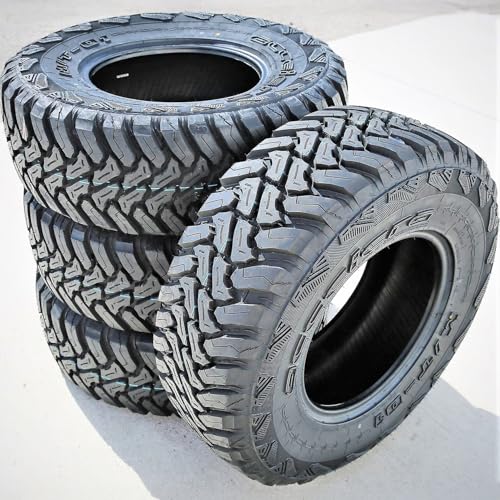
Accelera M/T-01 LT265/65R17
Strengths
- Aggressive mud-terrain tread
- High load capacity
- Strong off-road grip
Trade-offs
- Noisy on highways
- Reduced fuel efficiency
- Faster tread wear on pavement
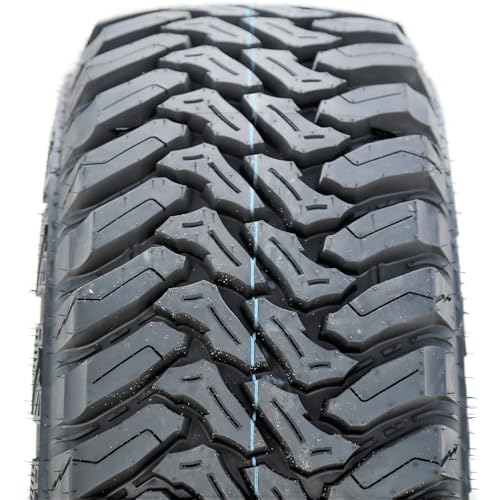
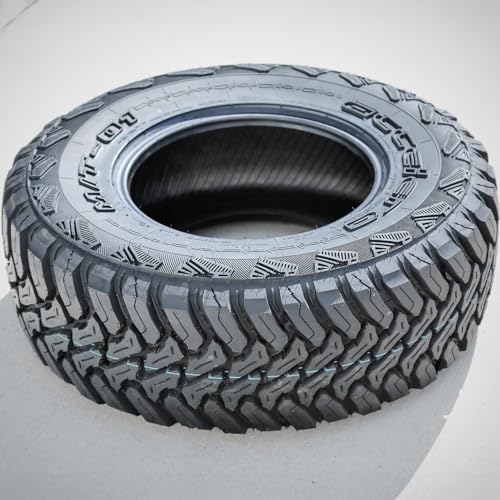
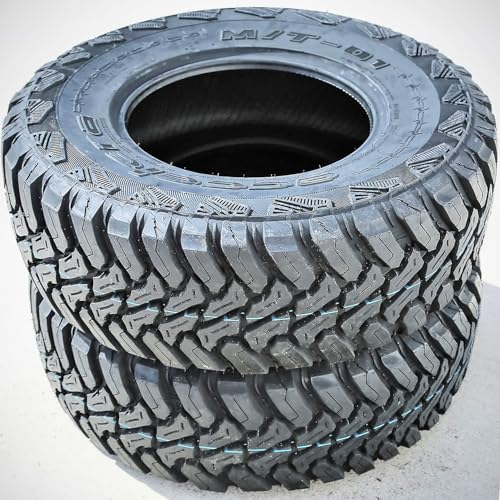
If you’re towing a trailer through mud, rock crawls, or forest roads, the Accelera M/T-01 makes a strong case as the most capable option here. The mud-terrain tread is aggressive, with deep voids and chunky shoulder blocks that bite into loose terrain. With a 3,086-lb single-load capacity and 10-ply E rating, it can handle serious weight, and the Q-speed rating (99 mph) gives more flexibility than typical trailer tires. Owners consistently report confidence in off-road towing scenarios where grip matters more than ride refinement.
But that capability comes at a cost. The trade-offs are real: louder highway noise, higher rolling resistance (which can hurt fuel economy), and faster tread wear on pavement. This isn’t a tire for cross-country RV trips on interstates. I’d pick these only if you regularly tow heavy equipment, like a UTV trailer or off-road camper, through rugged terrain. For that use, the M/T-01 delivers serious traction where others would slip.
Product photos

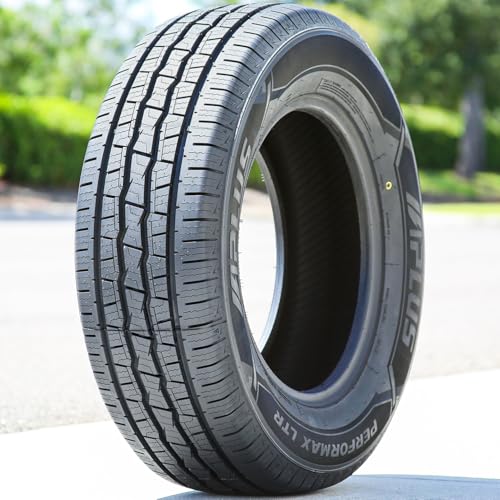
Aplus Performax LTR LT235/85R16
Strengths
- Very low price point
- All-season tread pattern
- 60,000-mile tread life claim
Trade-offs
- Shorter real-world tread life
- Soft sidewall under load
- Inconsistent wet grip
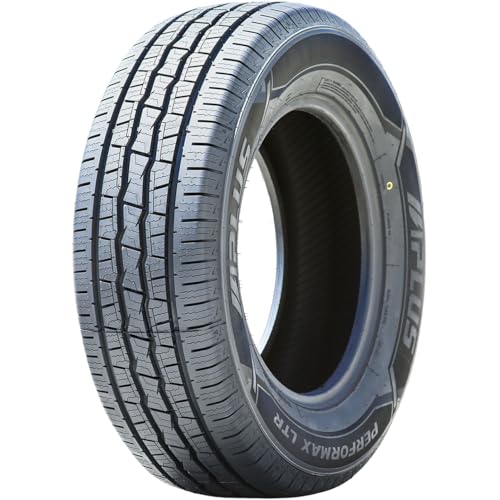
At under $120, this Aplus Performax tire stands out for one reason: price. It’s among the cheapest 10-ply light truck tires on the market, and that matters for buyers replacing a single spare or working with tight margins. The specs show a load range E rating, all-season tread, and a claimed 60,000-mile tread life, ambitious numbers for the class. On paper, that sounds impressive, but owner feedback tells a more cautious story. Many report faster tread wear than expected, especially when used on dual-rear-wheel vans or constant-load applications.
I wouldn’t recommend these for full-time towing rigs. The sidewall stiffness and tread compound don’t inspire confidence under heavy, sustained loads. But for a work van that does occasional hauling or a backup tire for a camper, it’s a functional compromise. If you’re not towing near capacity or logging long highway miles, the Performax gets you rolling without breaking the bank. Just don’t expect the durability of a premium all-terrain.
Product photos

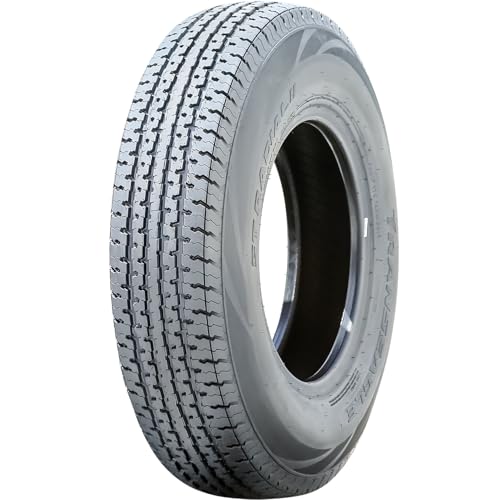
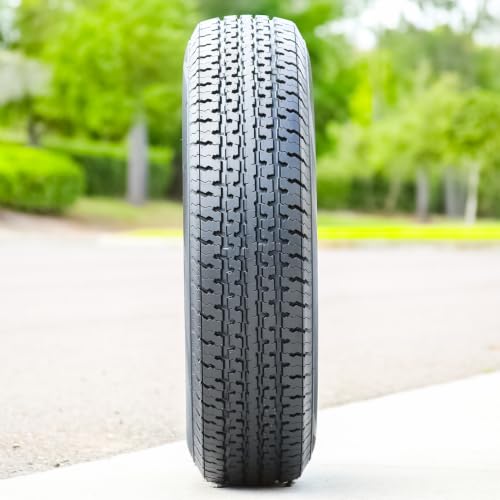
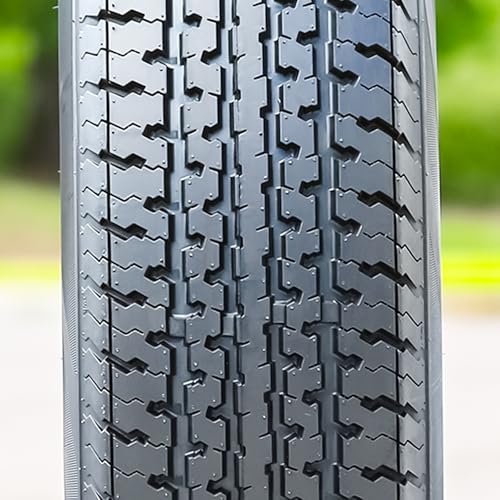
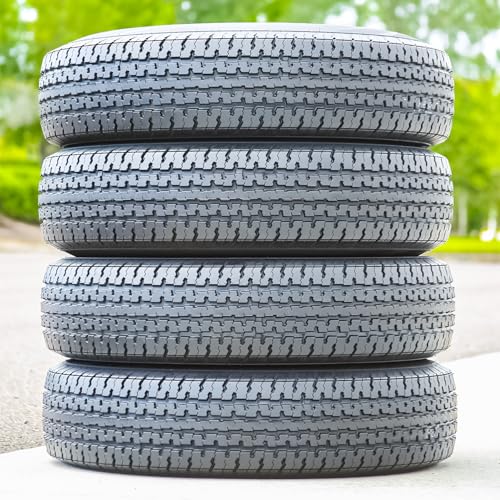
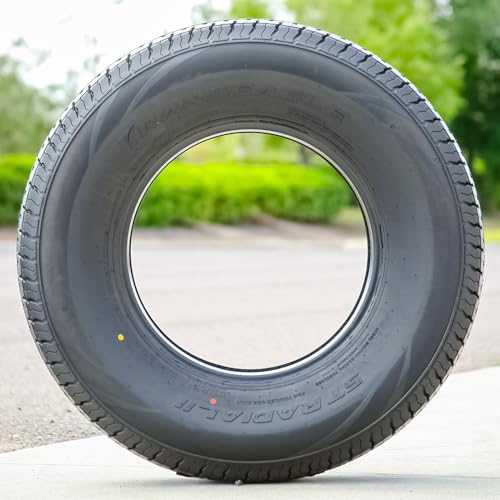
Transeagle ST II ST225/75R15
Strengths
- High load capacity
- Radial construction for durability
- Low rolling resistance
Trade-offs
- Average wet weather grip
- Not for off-road
- One black sidewall only
This Transeagle ST II in the 225/75R15 size is a staple for trailer owners who need reliable, high-load capacity without overspending. With a per-tire load rating up to 2,833 lbs, it’s built for heavier utility or RV trailers, and the E (10-ply) rating ensures resistance to sidewall damage from curbs or uneven loading. The all-season tread isn’t deep or aggressive, but it’s designed for straight-line stability, not cornering grip. Reviewers frequently praise its even wear and low noise on long trips, though some note reduced confidence in heavy rain.
What makes this a standout for trailer use is the balance of load capacity, radial construction for heat dissipation, and price. Compared to the smaller ST205 set, this size supports significantly more weight, making it a smarter pick if you’re towing near 5,000 lbs or more. I’d choose this over the smaller Transeagle if your trailer demands higher load margins and you’re not venturing off pavement.
Product photos
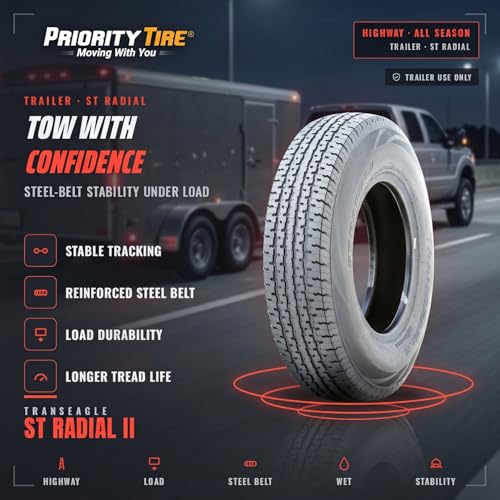
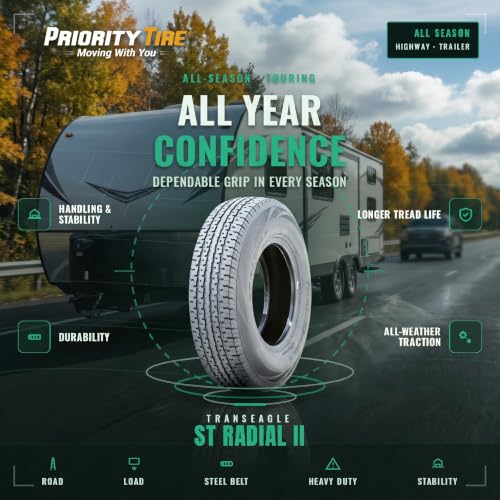
Transeagle ST II ST205/75R14
Strengths
- Solid load rating for size
- Radial construction for heat resistance
- Good value for set of four
Trade-offs
- Average wet traction
- Basic tread design
- Not for heavy loads
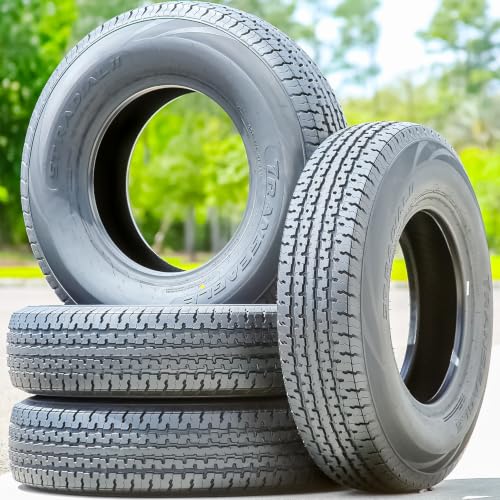
Transeagle has built a reputation in the trailer tire space by offering reliable, no-frills performers at accessible prices, and this ST II set fits that mold. With a load index supporting nearly 2,300 lbs per tire and a speed rating of 87 mph, these are competent for medium-duty trailers, utility, camping, or small boat haulers. The all-season tread pattern isn’t aggressive, but reviewers note it holds up well in dry and light wet conditions, though snow performance is minimal. The radial construction helps reduce heat buildup, a key factor in preventing blowouts during long hauls.
Where these shine is value. For buyers not towing massive loads or venturing into extreme climates, these deliver the core needs: load stability, puncture resistance, and consistent wear. They’re not going to impress on a mountain pass in rain, but for straight-line highway towing on fair weather runs, they’re a sensible, cost-effective pick. I’d stack them against pricier brands only if you’re budget-conscious and not pushing weight limits.
Product photos
SUPERGUIDER HD 10.00-16 F-2
Strengths
- Heavy-duty load capacity
- Excellent cut resistance
- Minimal soil compaction
Trade-offs
- Not for highway use
- Limited wet traction
- Niche application only
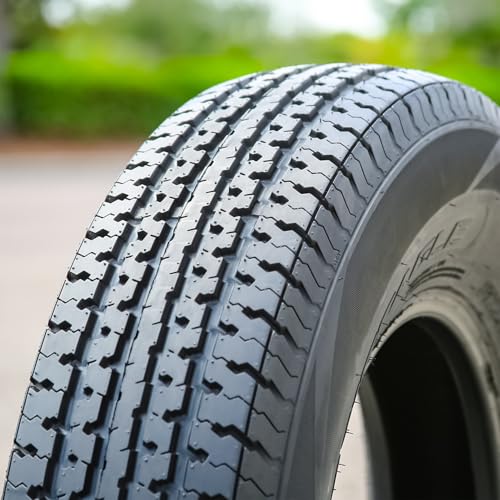
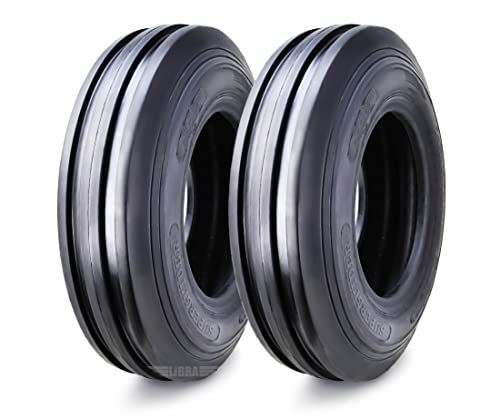
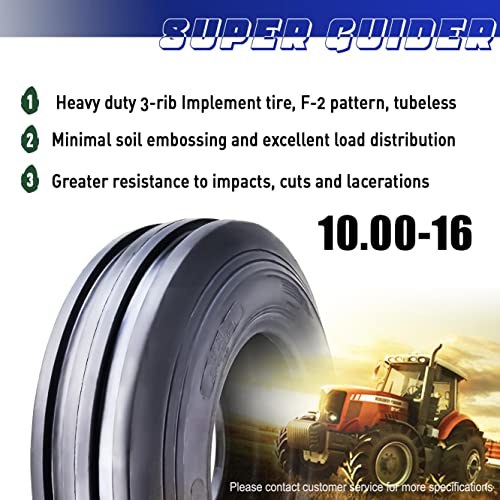
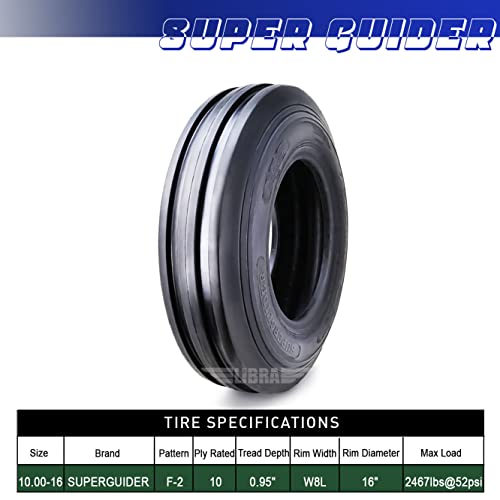
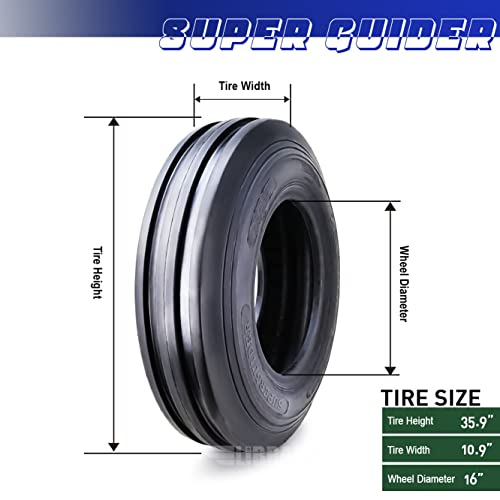
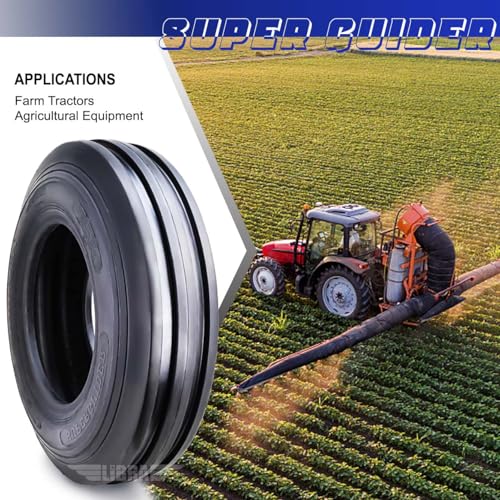
This isn’t a tire you’d mount on your daily driver pickup for towing a boat across state lines. The SUPERGUIDER HD is built for implements, think mowers, sprayers, or utility trailers that spend more time off pavement than on it. On paper, the 3-rib F-2 pattern suggests stability under heavy loads and minimal soil disturbance, which matters if you’re working on sensitive ground. Owners consistently report solid durability when hauling heavy loads across rough terrain, and the tubeless 10-ply construction helps resist punctures and cuts better than many budget alternatives.
Still, this tire’s niche is clear. It’s not designed for highway speeds or all-season grip in wet conditions. The lack of siping or aggressive sidewall lugs means you won’t want to rely on it for slippery inclines or muddy haul roads. I’d pick this only if you’re outfitting a farm trailer or heavy implement that needs load-bearing toughness without constant road travel.
Product photos
How We Picked These 10 ply truck tires for towing
My approach to evaluating 10-ply truck tires for towing centered on a research-led comparison of specifications and owner feedback. Rather than a hands-on lab test, I compared published load ratings, speed ratings, and tread patterns across numerous models. I then weighed owner reviews from various retailers and forums, alongside expert opinions from tire testing sites, to understand real-world performance and durability. This allowed me to build a ranking based on practical suitability for different towing needs.
For this category, load capacity and construction were the most heavily weighted factors. Towing demands a tire that can reliably handle significant weight, so the 10-ply rating and specific load index were critical. Equally important was the tread pattern; all-terrain designs offer versatility, while dedicated highway treads prioritize a smoother, quieter ride – and specialized implement tires offer maximum durability for agricultural work. These features directly impact safety and overall towing experience.
Specifications reliably indicate a tire’s maximum capabilities – load range, maximum pressure, and speed rating all provide a baseline understanding. However, owner feedback proved invaluable in assessing how these tires actually perform under load, over long distances, and in varied conditions. Reputation for durability and resistance to sidewall damage were also heavily influenced by real-world user experiences, and informed my assessment of long-term value. Considering all options, exploring 10-ply trailer tires is also a worthwhile effort.
How To Choose The 10 ply truck tires for towing
Choosing the right truck tires for towing requires careful consideration of your specific needs.
A good 10-ply truck tire balances load capacity, durability, and the type of terrain it will encounter. Key specs to examine include load range (indicating maximum weight capacity), speed rating, tread pattern (for on- or off-road use), and the tire’s overall construction. Prioritize tires with a load index that exceeds your vehicle’s maximum trailer weight and a treadwear warranty for long-term value.
Understanding Load Range and Ply Rating
The “10-ply” designation isn’t about the actual number of fabric layers anymore; it’s a historical reference to load capacity. Today, it signifies a tire built for heavier loads. Don’t assume all 10-ply tires are equal. Focus on the load index number itself. A higher number means the tire can handle more weight. For serious towing, especially with larger trailers, you’ll want to look at tires with Load Range E or F. When comparing options, always ensure the tire’s load index meets or exceeds the Gross Vehicle Weight Rating (GVWR) and Gross Combined Weight Rating (GCWR) of your truck when towing.
Tread Pattern and Terrain
The tread pattern dramatically impacts performance. All-terrain tires, like the Travelstar Ecopath AT, offer a good balance for those who occasionally venture off-pavement, but a dedicated mud-terrain tire (such as the Accelera M/T-01) provides superior grip in challenging conditions. Highway tires (like the Aplus Performax LTR) prioritize a quiet ride and fuel efficiency, but they’ll struggle with anything beyond well-maintained roads. Here’s a breakdown of what to think about: * A smooth, shallow tread is best for highway use. * An aggressive, open tread excels in mud and loose gravel. * A hybrid tread (like many all-terrain designs) aims to blend both, but often compromises on optimal performance in either extreme.
A tire’s tread life is directly linked to how well it’s suited to your driving style and the terrain. Don’t skimp on quality to save a few dollars; a premature replacement will cost you more in the long run.
Balancing Value and Specific Use Case
While premium brands often command a higher price, there are excellent value options available for specific applications. If you’re primarily towing a trailer on the highway, the Transeagle ST II ST225/75R15 is designed specifically for trailer use and offers a strong value proposition. For agricultural implements and heavy loads, even considering specialized options like the SUPERGUIDER HD 10.00-16 F-2 might be necessary. Don’t overlook tires specifically designed for trailers; they often have reinforced sidewalls and construction to handle the unique stresses of trailer towing. Finding the right balance between price and performance often means carefully evaluating your needs and prioritizing the features that matter most. Don’t hesitate to explore options beyond standard light truck tires, sometimes, the best solution isn’t always the most obvious. If you’re looking for versatile options, consider checking out our guide to the 10-ply all-terrain tires for a wider range of choices. And for those needing truly robust options, our review of heavy-duty truck tires can offer further insights.
10 Ply Truck Tires for Towing Compared
Here’s a comparison of key specifications for 10-ply truck tires designed for towing.
| Product Name | Tire Size | Load Index | Speed Rating | Load Range | Tread Life (Miles) |
|---|---|---|---|---|---|
| Travelstar Ecopath AT LT285/75R16 | LT285/75R16 | 126/123 | R | E | 50,000 |
| Travelstar Ecopath AT LT275/65R20 | LT275/65R20 | 126/123 | S | E | 50,000 |
| Accelera M/T-01 LT265/65R17 | LT265/65R17 | 120/117 | Q | E | N/A |
| Aplus Performax LTR LT235/85R16 | LT235/85R16 | N/A | N/A | E | 60,000 |
| Transeagle ST II ST225/75R15 | ST225/75R15 | 117/112 | N | E | N/A |
| Transeagle ST II ST205/75R14 | ST205/75R14 | 109/104 | N | E | N/A |
| SUPERGUIDER HD 10.00-16 F-2 | 10.00-16 | N/A | N/A | N/A | N/A |
Frequently Asked Questions
What load index do I actually need for towing?
You should prioritize a tire with a load index that meets or exceeds your vehicle’s Gross Vehicle Weight Rating (GVWR) and Gross Combined Weight Rating (GCWR) when towing. Don’t rely solely on the “10-ply” designation; the number itself is what matters for determining the weight capacity.
Are all-terrain tires a good choice for frequent towing?
All-terrain tires offer a versatile option if you encounter varied terrain, but understand they represent a compromise. If you primarily tow on highways, dedicated highway tires will provide a smoother ride and better fuel economy – and exploring tires for travel trailers is wise.
What’s the difference between Load Range E and F tires?
Load Range F tires have a higher load capacity than Load Range E tires, making them better suited for heavier towing applications. If you consistently tow near or at your vehicle’s maximum capacity, considering 12-ply truck tires or Load Range F is a smart decision.
What should I look for in a tire’s sidewall construction when towing?
Reinforced sidewalls are crucial for resisting damage from potholes or debris, especially when carrying a load. Tires designed specifically for trailers often feature this enhanced construction, offering better durability and puncture resistance.
How does speed rating affect my towing setup?
Speed rating indicates the maximum speed at which a tire can safely carry a load. For towing, prioritize a tire with a speed rating that matches or exceeds your vehicle’s maximum towing speed, and always adhere to posted speed limits – a lower speed rating may necessitate reducing your towing speed.
The Bottom Line
Choosing the right 10-ply truck tires for towing often comes down to balancing how much control you want over your budget versus how much you’re willing to invest in long-term reliability. For the best overall combination of capability and value, I recommend the Travelstar Ecopath AT LT285/75R16. It strikes a good balance between load capacity, all-terrain versatility, and a reasonable price point, making it a solid choice for many towing applications.
If you have very specific needs, there are excellent alternatives. For those prioritizing a budget-friendly option specifically designed for trailer towing, the Transeagle ST II ST225/75R15 is a standout. And for those needing maximum durability for agricultural implements or extremely heavy loads, the SUPERGUIDER HD 10.00-16 F-2 is worth serious consideration. Understanding best 10-ply tires will help you make the best choice.
Ultimately, remember that specifications are just a starting point. The load index and tire construction are critical, but focusing on finding tires suited to how you tow, the roads, the loads, and the distances, will yield a safer and more satisfying experience. Don’t get lost in the details of tread patterns or speed ratings without first confirming you’re getting tires with the appropriate Load Range E tires for your vehicle and trailer.
