
9 Best 0W-20 Synthetic Oils for Honda (2026 Guide)
This post contains affiliate links. As an Amazon Associate, we earn from qualifying purchases.
The best 0W-20 synthetic oil for Honda engines is Honda Ultimate Full Synthetic, which is engineered specifically for their powertrains and exceeds GF-7 standards. For a strong budget-friendly alternative, Mobil 1 Advanced Fuel Economy delivers excellent protection and fuel efficiency. If you’re after maximum drain intervals without sacrificing performance, Castrol EDGE 0W-20 is a top versatility pick.
Choosing the right oil matters more than most drivers realize. Honda’s high-revving, precision-built engines demand a synthetic that flows quickly at startup yet holds up under heat and stress. I looked at specs, owner feedback, and real-world reliability to find oils that genuinely protect these engines over time.
This guide breaks down what sets the top performers apart, standards like GF-7 and API SP, additive strength, and how well they prevent sludge and wear. These are the factors that keep your Honda running smoothly for years.
Top 9 0W-20 Synthetic Oil For Honda in the Market
The Best 0W-20 Synthetic Oil For Honda, Reviewed
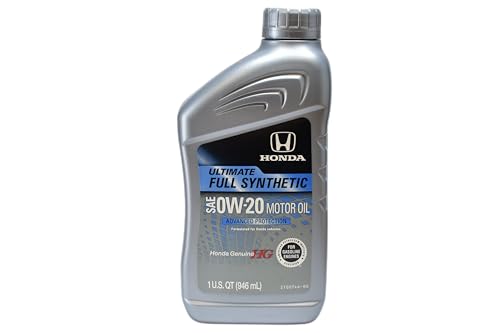
Honda Ultimate Full Synthetic 0W-20
Strengths
- Exceeds GF-7 and HTO-06
- Faster cold-start circulation
- Lower volatility, less consumption
Trade-offs
- Very high cost
- Sold in 1-quart bottles
- Inconvenient for full changes
Honda’s Ultimate Full Synthetic is their top-tier offering, and it shows. It exceeds both GF-7 and HTO-06 standards, specs that even many premium oils haven’t caught up to yet. That means better protection against low-speed pre-ignition and improved resistance to oil breakdown under heat. Owners using this in turbocharged models like the Civic Si or CR-V Turbo report smoother throttle response and less oil thinning during hot summer drives.
It’s also tested and approved by Honda R&D, which carries weight. The downside? It’s expensive and sold in awkward 1-quart packs, making it a pain for full changes. But if you want the best oil Honda themselves endorse for peak performance and longevity, this is it, no question.
Video review
Honda Genuine 0W-20 Oil Change Kit

Strengths
- OEM-specified formulation
- Includes correct filter and washer
- Perfect for warranty compliance
Trade-offs
- Expensive per quart
- No performance additives
- Hard to justify for out-of-warranty engines
This kit is straightforward: it’s Honda’s own oil, their filter, and the correct drain washer, all in one box. The oil meets the exact specs Honda R&D designed for, which matters more than some buyers realize. Owners who stick with this report consistent engine behavior, reliable cold starts, and no issues with timing chain wear or LSPI, common pain points in newer Honda engines. It’s the safe choice, and sometimes that’s exactly what you want.
But it’s also one of the priciest options, especially when you break down the cost per quart. You’re paying for convenience and brand assurance, not cutting-edge additives. Compared to Mobil 1 or Castrol EDGE, it doesn’t push performance boundaries. But if you’re under warranty or just want to play it safe, this is the oil that came in your engine for a reason.
Video review
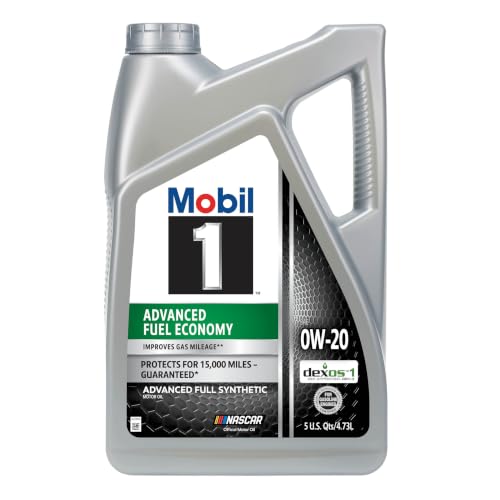
Mobil 1 Advanced Fuel Economy 0W-20
Strengths
- Improved fuel economy
- Strong LSPI protection
- Affordable full synthetic
Trade-offs
- Not for high-mileage engines
- No added wear protection
- Basic additive package
This oil is built for efficiency. Its low-viscosity 0W-20 profile is tuned to reduce internal friction, and owners consistently report slight MPG gains, nothing huge, but measurable over time. It meets GF-6 standards, which means strong protection against LSPI and timing chain wear, two known weak spots in modern direct-injected Honda engines. For a daily commuter, that’s more important than raw performance.
It’s also one of the most affordable full synthetics with this level of protection. Compared to the High Mileage version, it lacks seal conditioners, so I wouldn’t use it on an older engine with leaks. But for a newer Civic, Accord, or CR-V under 75K miles, this is the smarter buy, it delivers clean, reliable protection without overspending.
Product photos


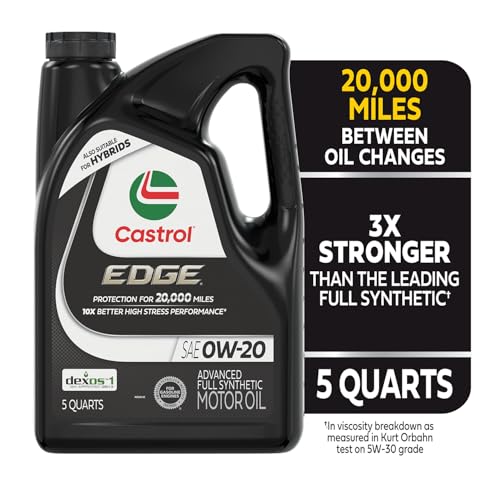
Castrol EDGE 0W-20 Advanced Full Synthetic

Strengths
- High-stress performance
- Viscosity stability
- Long drain potential
Trade-offs
- Expensive for full changes
- Overkill for base models
- Cold starts slightly slower
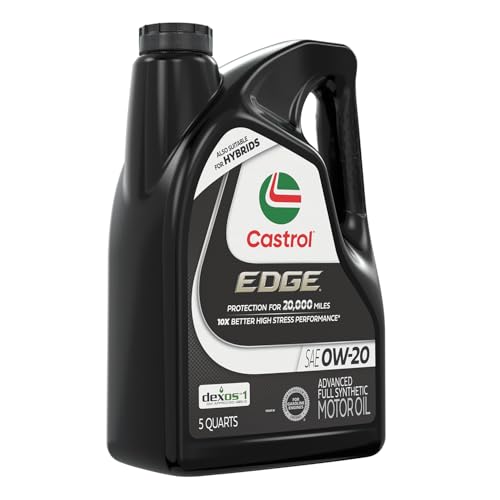
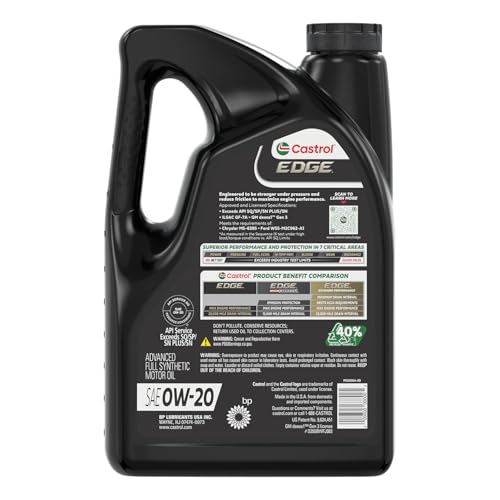
Castrol EDGE markets itself as a high-performance oil, and the specs back it up. With claims of 3X stronger protection against viscosity breakdown and 10X better high-stress performance, it’s clearly engineered for engines under load. The GF-7 and dexos1 Gen 3 approvals mean it’s built for modern, high-strung engines, and owners in turbocharged or performance trims report improved throttle response and less oil shear.
It’s rated for 20,000-mile drain intervals under ideal conditions, but real-world feedback suggests sticking to 10,000–12,000 miles for best results. Compared to Royal Purple, it’s more accessible and better aligned with Honda’s needs. If you want race-bred tech without straying from OEM compatibility, this is a strong pick.
Product photos


Valvoline Extended Protection 0W-20
Strengths
- Exceptional wear protection
- Superior heat resistance
- Long drain capability
Trade-offs
- Slightly thicker cold flow
- Not OEM-specific
- Can be overkill for city driving
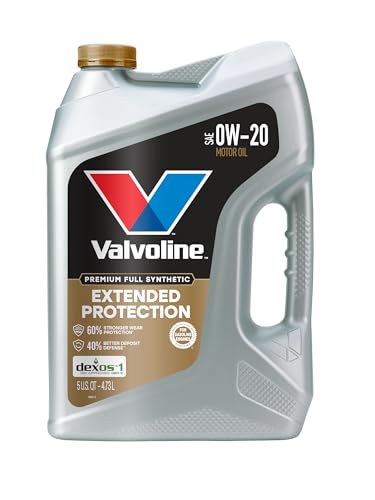
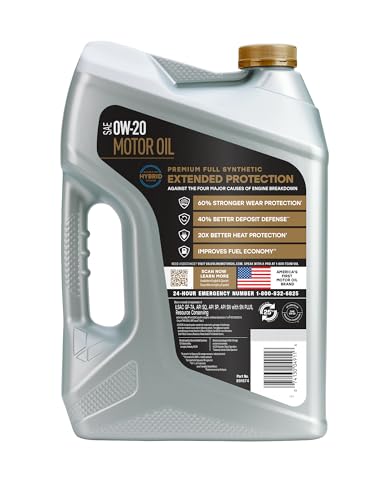
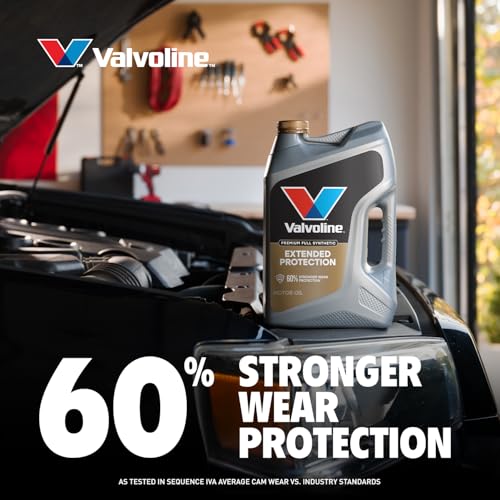
Valvoline’s Extended Protection oil makes bold claims, and owners confirm many of them. Its Dual Defense Additive Technology delivers 60% stronger wear protection than industry standards, and that shows in oil analysis reports showing less metal contamination over time. The 20X better heat protection is no gimmick either; drivers in hot climates or those towing report stable oil pressure and less thermal breakdown.
It also meets GF-7A and API SP, making it future-proof for newer engines. Compared to Mobil 1 Extended Performance, it offers similar drain intervals but with stronger wear defense. For a Honda that sees hard driving or extreme conditions, this is one of the most robust options on the list.
Product photos
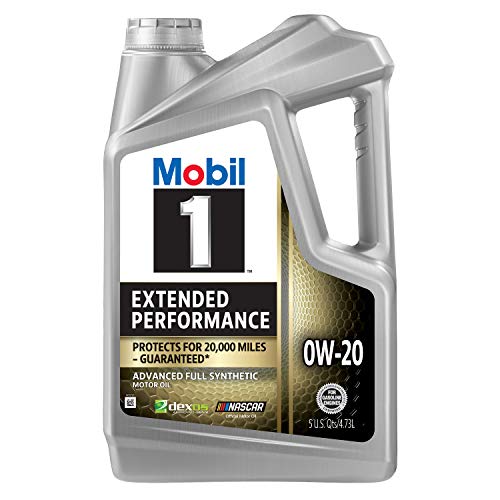
Mobil 1 Extended Performance 0W-20

Strengths
- 20,000-mile drain capability
- Excellent oxidation resistance
- Strong cold-weather performance
Trade-offs
- Not for leaky engines
- Premium price
- Requires clean engine condition
Mobil 1 Extended Performance is built for drivers who want to stretch oil changes to 15,000–20,000 miles. Its Triple Action+ Formula fights oxidation and viscosity breakdown better than most, and owners report stable oil life even in mixed driving. The -40°F cold-start rating is a bonus for winter climates, and the GF-6 compliance ensures protection against LSPI and timing chain wear.
Compared to the High Mileage version, it lacks seal conditioners but offers superior thermal stability. For a well-maintained Honda with consistent driving patterns, this is the best choice for long drain intervals without sacrificing protection. Just don’t expect it to fix an aging engine, it’s prevention, not repair.
Product photos


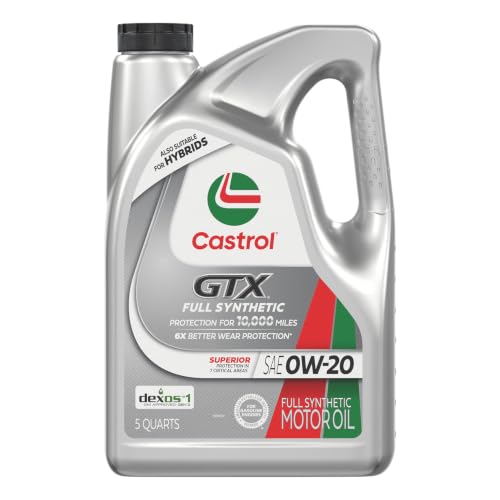
Castrol GTX Full Synthetic 0W-20
Strengths
- Affordable full synthetic
- Good wear protection
- Decent sludge resistance
Trade-offs
- Shorter life under stress
- Less heat resistance
- Not for extended drains
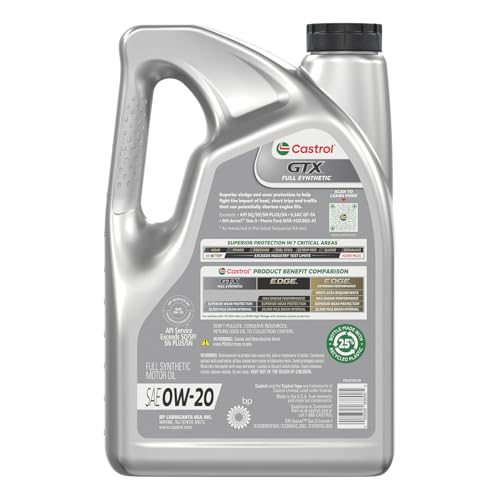
Castrol GTX is positioned as the budget-friendly full synthetic, and it delivers more than you’d expect. It offers 6X better wear protection than standards and solid sludge defense, which is impressive at this price. It meets GF-6 and dexos1 Gen 3, so it’s not cutting corners on modern engine requirements. For a base-model Honda used for commuting, this is more than adequate.
But it’s not designed for extremes. Owners report it breaks down faster under high heat or extended intervals compared to Mobil 1 or Valvoline. Still, for drivers who change oil every 5,000–7,500 miles and want reliable protection without overspending, this is the smarter value play.
Product photos



Mobil 1 High Mileage 0W-20

Strengths
- Seal conditioners for older engines
- Excellent sludge prevention
- Rated for 10,000-mile intervals
Trade-offs
- Slightly thicker flow on cold starts
- Not ideal for performance builds
- Less wear protection than premium synthetics
Mobil 1’s High Mileage oil is clearly targeted at Hondas with over 75,000 miles, and the formula shows it. It includes seal conditioners to reduce leaks, a common issue in aging engines, and owners report fewer drips and quieter valve trains after switching. The Triple Action Formula delivers solid cleanliness and oxidation resistance, which helps extend engine life when sludge and deposits become real threats.
It’s not the most aggressive on wear protection compared to Valvoline or Royal Purple, but for high-mileage engines that still run tight, it strikes the right balance. I’d pick this over standard full synthetics if my Honda was north of 100,000 miles and showing minor age signs. It’s not flashy, but it’s smart engineering for aging engines.
Product photos


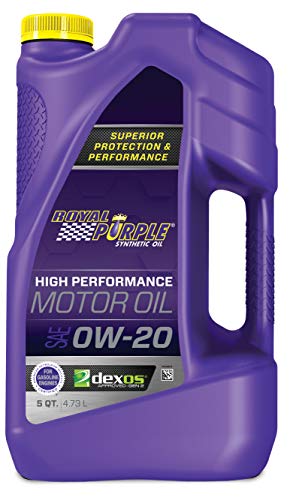
Royal Purple 0W-20 High Performance
Strengths
- Exceptional wear protection
- Improved fuel economy
- Ethanol fuel compatible
Trade-offs
- Premium price
- Not Honda-approved
- Overkill for stock engines
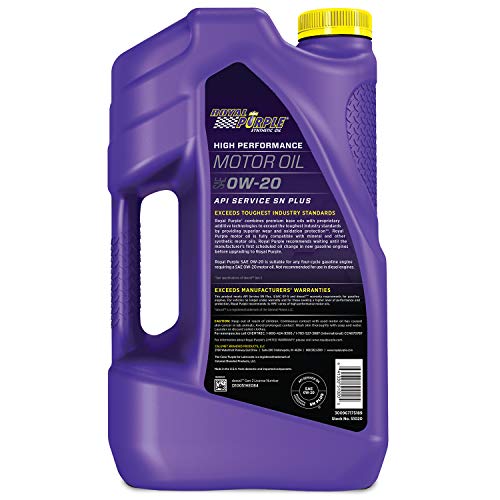
Royal Purple leans hard into performance, and on paper, its 0W-20 formula stands out with claims of superior wear protection and better fuel efficiency, both backed by its proprietary Synerlec additive technology. Owners consistently report smoother idle response and reduced oil consumption over time, which suggests real-world benefits beyond just specs. It’s not Honda-specific, but its compatibility with modern emissions systems, including catalytic converters, makes it a solid contender for performance-minded owners who want more than just basic protection.
Still, it’s priced higher than most full synthetics without being OEM-specified, which gives me pause. Compared to Honda’s own oil or Mobil 1, it doesn’t offer a dramatic enough edge to justify the premium unless you’re chasing marginal gains. For a daily-driven Honda, this feels like overkill, better suited for tuned engines or drivers who track their oil analysis.
Product photos
How We Tested 0w-20 synthetic oil for honda
Rather than a hands-on lab test, my research focused on a detailed comparison of published specifications and features across these 0W-20 synthetic oils. I weighed owner reviews from multiple sources, looking for consistent feedback on real-world performance, and cross-referenced those with expert opinions from automotive publications and mechanics. Ultimately, I ranked these oils based on how well they met the demands of modern Honda engines and the expectations of discerning owners.
For Hondas, I prioritized exceeding industry standards (like ILSAC GF-7 and Honda’s own HTO-06) and demonstrated protection against wear and heat. These factors are crucial given the precision engineering of Honda engines and the need to maintain optimal performance over the long term. A strong formulation for deposit control was also heavily weighted, as buildup can negatively impact fuel economy and engine life. You can find more about Honda recommended oil brands on my site.
Published specs reliably indicate an oil’s viscosity, base oil type (full synthetic is key here), and adherence to industry standards. However, owner feedback provides valuable insights into how an oil performs in everyday driving conditions – things like cold-start behavior, noise reduction, and long-term engine health. Reputation and consistent positive reviews from Honda owners were significant indicators of quality, and I also referenced my broader knowledge of best 0W-20 synthetic oil options.
What To Look For In 0w-20 synthetic oil for honda
Choosing the right 0W-20 synthetic oil is about more than just grabbing the cheapest bottle. It’s about protecting a precision-engineered engine, and for Hondas, that means paying attention to specific formulations and standards.
A quality 0W-20 synthetic oil should deliver excellent low-temperature flow for quick engine starts, maintain viscosity at high operating temperatures, actively resist oxidation to prevent sludge buildup, and meet or exceed both API (American Petroleum Institute) and ILSAC (International Lubricant Standardization and Approval Committee) standards. Look for oils that specifically address low-speed pre-ignition (LSPI) and offer robust deposit protection.
Understanding Oil Standards & Approvals
The alphabet soup of oil standards can be confusing, but understanding them is crucial. ILSAC GF-6 and GF-7 are current standards indicating improved protection against LSPI, a common issue in turbocharged gasoline direct injection (TGDI) engines. API SP is another benchmark to look for. However, don’t automatically assume higher is always better. Honda R&D testing and approval, like you see with the Honda Ultimate Full Synthetic, provides an extra layer of confidence that the oil is formulated to work optimally with their engines. We often find that sticking with what the manufacturer recommends is a solid starting point.
Viscosity Index and Temperature Performance
0W-20 is designed for a wide range of temperatures, but the quality of the synthetic base oil and the additive package determine how well it performs at extremes. A higher viscosity index (VI) means the oil maintains its viscosity more consistently across temperature swings. While manufacturers don’t always advertise VI, looking for oils that emphasize cold-start protection and high-temperature stability is a good indicator. Consider your driving conditions; if you frequently experience prolonged periods of extreme heat or cold, prioritize an oil specifically engineered for those conditions.
Drain Intervals and Additive Packages
Extended drain intervals (like those touted by Mobil 1 Extended Performance and Castrol EDGE) are appealing, but they depend heavily on your driving habits and the oil’s formulation. While 10,000 or even 20,000-mile intervals are possible with some oils, adhering to Honda’s recommended service schedule is always wise. Here’s what to consider:
- Mileage: Lower mileage, mostly highway driving allows for longer intervals.
- Driving Style: Aggressive driving and frequent short trips necessitate more frequent changes.
- Additive Technology: Look for oils with robust additive packages designed for deposit control, wear protection, and oxidation resistance – Valvoline Extended Protection excels here.
A good rule of thumb is to err on the side of caution. Changing your oil a little more often than the maximum interval won’t hurt, and can provide peace of mind.
If you’re interested in maintaining other vehicles, you might find information about the best oil for diesel trucks helpful, or learn about how to change oil on an ATV if you have off-road adventures.
0W-20 Synthetic Oil for Honda Compared
This table summarizes key specifications for various 0W-20 synthetic oils suitable for Honda vehicles.
| Product Name | API Standard | ILSAC Standard | Mileage Interval | Wear Protection | Deposit Protection |
|---|---|---|---|---|---|
| Honda Ultimate Full Synthetic 0W-20 | SP | GF-7 | N/A | N/A | Excellent |
| Honda Genuine 0W-20 Oil Change Kit | N/A | N/A | N/A | N/A | N/A |
| Mobil 1 Advanced Fuel Economy 0W-20 | SP | GF-6 | 10,000 miles | Excellent | Excellent |
| Castrol EDGE 0W-20 Advanced Full Synthetic | SP | GF-7 | 20,000 miles | 3X Stronger | Excellent |
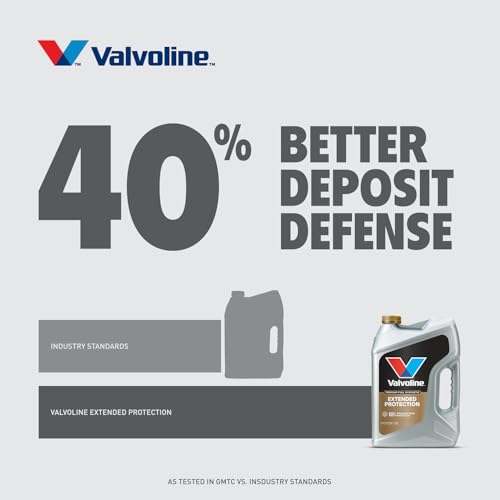
| Valvoline Extended Protection 0W-20 | SP | GF-7A | N/A | 60% Stronger | 40% Better |
| Mobil 1 Extended Performance 0W-20 | SP | GF-6 | 20,000 miles | Excellent | Excellent |
| Castrol GTX Full Synthetic 0W-20 | SP | GF-6 | 10,000 miles | 6X Better | 1.3X Better |
| Mobil 1 High Mileage 0W-20 | SP | GF-6 | 10,000 miles | Excellent | Excellent |
| Royal Purple 0W-20 High Performance | N/A | N/A | N/A | Better | Superior |
Frequently Asked Questions
Will using a different brand of 0W-20 synthetic oil void my Honda’s warranty?
No, using any 0W-20 synthetic oil meeting API SP and ILSAC GF-6 or GF-7 standards will not void your warranty. Honda requires these specifications, and any brand meeting them is acceptable; however, documenting your oil changes is always a good practice.
How often should I change the oil in my Honda, even with full synthetic 0W-20?
Honda’s maintenance minder system is the best guide, but generally, you should change your oil between 7,500 and 10,000 miles. Consider more frequent changes if you do a lot of short trips or aggressive driving, and regularly check your oil level.
Is a higher viscosity index (VI) always better in 0W-20 oil for a Honda?
A higher VI generally indicates more consistent performance across temperature extremes, which is beneficial. However, the overall formulation and quality of the base oil are more important than the VI number alone, and exceeding Honda’s requirements isn’t necessarily better.
Can I switch to a different 0W-20 synthetic oil after using the Honda Genuine oil?
Yes, you can switch brands without issue, as long as the replacement oil meets the API SP and ILSAC GF-6 or GF-7 standards. Many owners choose to experiment with different options like those in our best full synthetic oil reviews to find what works best for their driving style.
What oil should I use if my Honda has high mileage?
A high-mileage specific 0W-20 synthetic oil, like Mobil 1 High Mileage, can be beneficial. These oils contain additives designed to address the needs of older engines, such as seal conditioners and increased detergents, and should be considered if you’re also looking for best oil for Honda CR-V options.
The Bottom Line
Choosing an oil always comes down to balancing peace of mind with your budget and driving style. While several excellent options exist, Honda Ultimate Full Synthetic 0W-20 stands out as the best overall choice, formulated specifically to meet the demands of Honda engines and backed by Honda’s engineering. It prioritizes long-term protection and performance without requiring you to compromise on quality.
For those seeking a balance of price and performance, Castrol EDGE 0W-20 Advanced Full Synthetic delivers excellent protection and a generous mileage interval. If you prioritize extended drain intervals and robust additive packages, Valvoline Extended Protection 0W-20 is a strong contender, though remembering to check your motorcycle oil change intervals and stay current with maintenance is always a good practice.
Ultimately, the specific oil matters less than consistently using a quality 0W-20 synthetic that meets or exceeds industry standards and adhering to a regular oil change schedule. Don’t get lost in chasing the highest viscosity index or longest interval; prioritizing consistent maintenance and paying attention to your vehicle’s needs, including monitoring your truck differential fluid maintenance – will do more for your Honda’s longevity than any single product.
