
Are Windshields Worth It on a Motorcycle? A Complete Guide
This post contains affiliate links. As an Amazon Associate, we earn from qualifying purchases.
A motorcycle windshield is worth it if you ride more than an hour at highway speeds or face varied weather. The core benefit is reducing rider fatigue by deflecting wind pressure from your chest and face, which makes longer trips sustainable. Windshields do not replace legally mandated eye protection, and installing the wrong size or cleaning with harsh chemicals damages them permanently.
That fatigue reduction isn’t just about comfort. It’s a physical fight against constant air pressure that drains your neck and shoulder muscles, pulling your focus from the road. A shield that manages airflow correctly lets you ride farther with less strain. Get the sizing or installation wrong, and you trade wind blast for turbulent buffeting that’s arguably worse.
The rest walks the choice between a small deflector and a full fairing, the legal realities most riders miss, and the specific maintenance that keeps a polycarbonate shield from going cloudy in a season.
Key Takeaways
- A windshield cuts fatigue on rides over 60 minutes, but a poorly sized one causes head-buffeting turbulence that’s more tiring than clean air.
- No state accepts a windshield as a substitute for DOT-approved eye protection (goggles or a face shield). The Virginia DMV manual states this explicitly.
- Polycarbonate is the standard for impact resistance, but it is destroyed by common cleaners like gasoline, paint thinner, and aftermarket rain-sheeting products.
- Quick-release systems like the National Cycle SwitchBlade offer versatility but cost more; permanent mounts are simpler and often stock on touring bikes.
- Hardware fails. A 2026 NHTSA service bulletin for BMW adventure bikes required swapping factory M5x20 windscreen screws for shorter M5x16 screws to stop a persistent, annoying rattle.
The Core Benefit: Trading Wind Blast for Manageable Airflow
A motorcycle without a windshield delivers a clean, unobstructed blast of air to your torso and helmet. It feels free until you hold 70 mph for an hour. The constant pressure works your core and neck muscles, and the roar in your helmet demands you raise your voice to communicate. Dehydration hits faster because the wind evaporates sweat from any exposed skin. This is rider fatigue, and it’s the primary thing a good windshield mitigates.
A well-designed shield doesn’t eliminate wind. It redirects it. The goal is to create a pocket of calmer air around the rider while pushing the turbulent flow up and over your helmet. When it works, you feel less pushed back in the seat, the helmet noise drops noticeably, and you arrive feeling less drained. The effect is most pronounced on naked bikes, cruisers, and adventure tourers, any bike where you sit upright in the airstream.
Where this goes sideways: Installing a windshield that’s too short or mounted too low. Instead of redirecting air over your head, it smacks the turbulent flow directly into your face shield or helmet brow, creating a pounding, oscillating buffet. This head-buffeting is more fatiguing than the clean wind blast you started with and often triggers headaches within 30 minutes.
The right height is individual, but a common rule is to sit on the bike and have a helper measure from the headlight to your chin. The top edge of a well-sized touring windshield should sit level with your nose or eyes when you’re in your normal riding posture. Many recommended windshields from brands like Memphis Shades or National Cycle come in multiple heights for this reason.
The Legal Stance: Windshield ≠ Eye Protection
This is the most critical and misunderstood point. In nearly every jurisdiction with a helmet law, the law specifies approved eye protection: a face shield attached to the helmet, or separate goggles that meet a standard like ANSI Z87.1. A motorcycle’s windshield is almost never an approved substitute.
The Virginia DMV Motorcycle Operator Manual states it bluntly: “The operator must also wear a face shield or safety glasses/goggles or have the motorcycle equipped with safety glass or windshield of a type approved by the Virginia State Police.” It then clarifies: “A windshield is not a substitute for a face shield or goggles, as most windshields will not protect eyes from wind.”
The manual notes that a windshield is valuable for long-distance riding to protect against wind, cold, and rain, which can cause fatigue, but it never calls it eye protection.
Why does this matter? Legally, you can still be cited for not wearing proper eye protection even with a tall windshield. Practically, windshields have gaps at the sides, and turbulence can whip small debris around them. Your best helmets will have a sealed face shield, and that’s what does the actual protecting. A windshield is a comfort and fatigue-fighting accessory, not a primary safety device like a helmet or protective jackets.
| Protection Type | What It Covers | Legal Status |
|---|---|---|
| DOT-Approved Helmet & Face Shield | Direct impact, abrasion, and all wind/debris to the eyes. | Legally sufficient everywhere. |
| Motorcycle Windshield | Reduces overall wind pressure and some large debris. | Not legally accepted as eye protection. |
| Goggles (ANSI Z87.1) | Sealed protection for eyes only. | Legally sufficient if worn. |
The 3-Level Trade-Off: Size vs. Wind Management
Windshields aren’t one-size-fits-all. The choice pits coverage against versatility and looks. Here are the three main tiers.
Level 1: Sport Deflectors
These are small, often under 12 inches tall, and mount close to the headlight. They take the brunt of the wind off your chest but leave your head in clean airflow. Best for: riders who want a slight reduction in torso pressure on short highway blasts without changing the bike’s sporty profile. They offer minimal weather protection and do nothing for helmet noise. The Harley-Davidson “Low” profile windshield (part number 58277-95) is a classic example.
Level 2: Mid-Height Touring Shields
The 16- to 20-inch range is the sweet spot for most riders. It pushes airflow up to the helmet’s chin bar or visor, drastically cutting noise and fatigue. This is the workhorse for day trips and light touring. The key is adjustability; many aftermarket kits let you tweak the angle to fine-tune the air pocket. These shields start to affect the bike’s handling in strong crosswinds, as they present a larger sail area.
Level 3: Full Fairings & Tall Touring Windscreens
Over 20 inches tall, these are common on dedicated touring bikes like Gold Wings or BMW K 1600s. They create a full cockpit, with the rider in near-still air. Passengers benefit hugely. The trade-off is weight, complexity, and a dramatic change in the bike’s center of pressure, which requires a stable chassis. They can also act like a greenhouse on hot days. For riders who cover serious miles in all weather, this level is non-negotiable.
Quick-Release vs. Permanent Mount: Your Convenience Budget
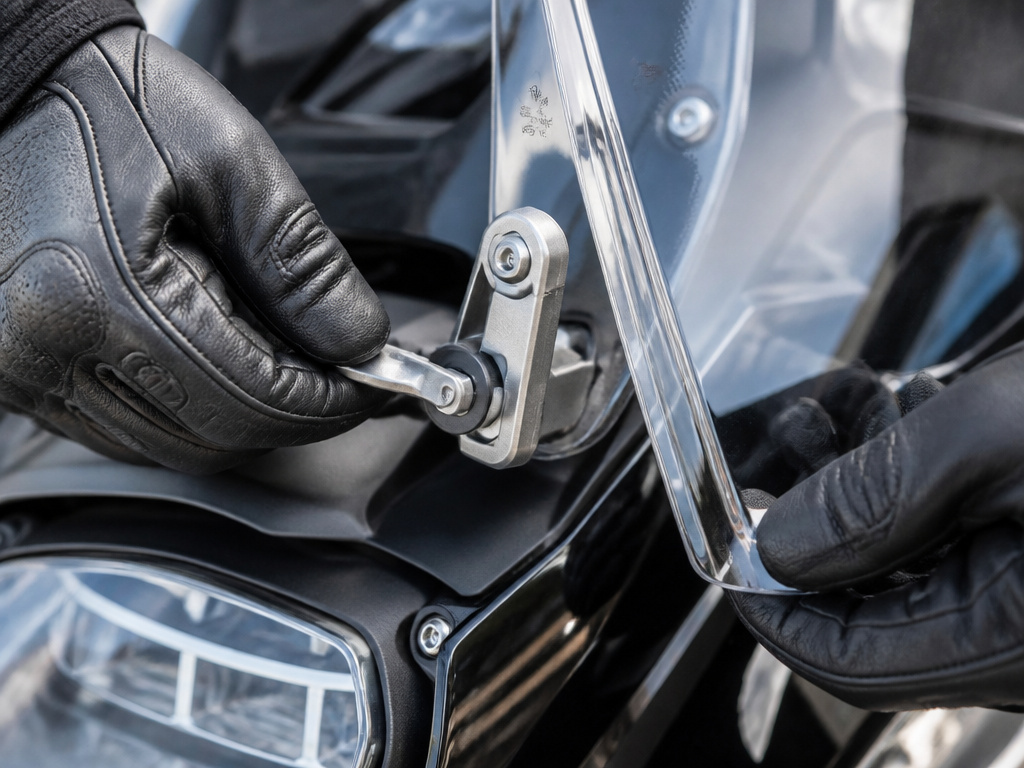 How the shield attaches matters as much as its size. You have two paths.
Quick-Release Systems
Brands like National Cycle specialize in this. Their SwitchBlade windshields use a patented clamp mechanism that allows removal or installation in under five seconds without tools. The QuickSet line does the same in about 15 seconds. This is the ultimate in versatility: off for a hot summer day in the canyons, back on for the slab ride home. The downside is cost and a slight potential for vibration or rattling if the clamps aren’t perfectly maintained. It’s a premium solution for riders who view the windshield as a modular tool.
Permanent Mounts
This is the traditional method: the windshield bolts through brackets to dedicated mounts on the fork or frame. It’s solid, usually cheaper, and common on OEM accessory kits. The drawback is obvious, removal requires tools and 15-30 minutes of work, so you’re less likely to take it off. This is fine if you’ve settled on one shield size for all your riding. The installation must be done precisely; an official NHTSA windscreen service bulletin for BMW models (MC-11030064-0001) was issued because factory M5x20 screws were bottoming out in shallow threads, causing the whole screen to rattle. They mandated replacement with shorter M5x16 screws.
I prefer a quick-release system for any bike that sees mixed duty. The ability to ditch the screen for backroad blasts transforms the bike’s character, and stowing it takes less time than gearing up. For a pure touring machine that never deviates from the interstate, the solidity of a permanent mount wins.
The Polycarbonate Problem: Strength vs. Chemical Fragility
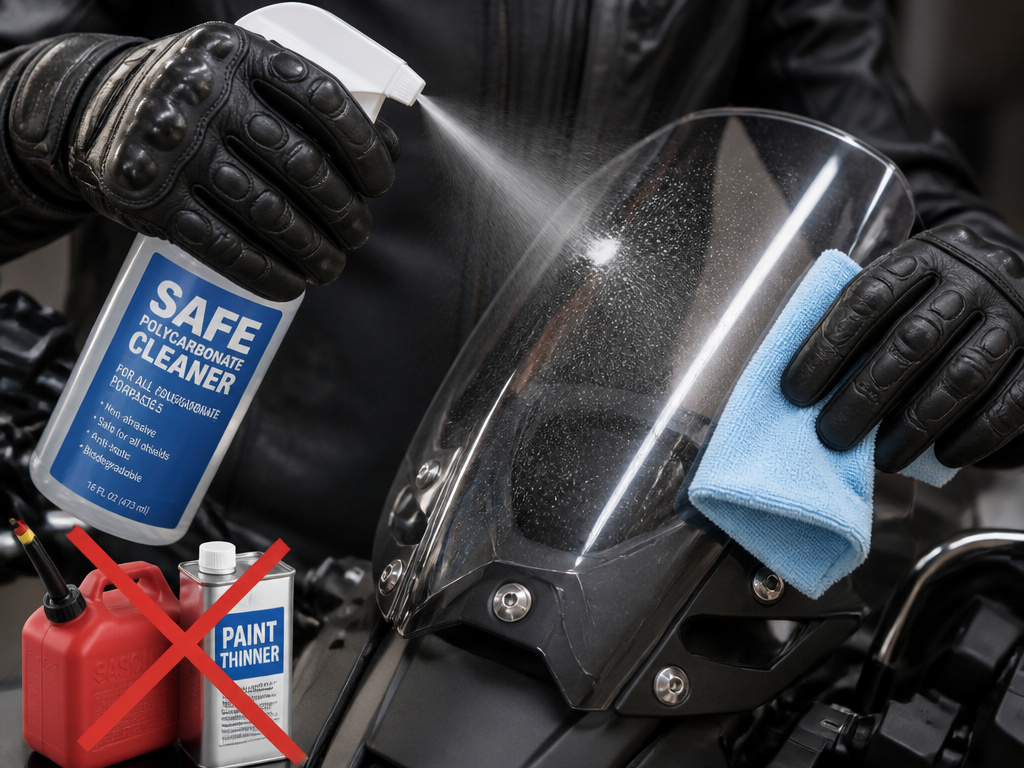 Virtually all modern motorcycle windshields are made from polycarbonate (Lexan). It’s the right choice. National Cycle notes it’s 10 times stronger than high-impact acrylic and 20 times more impact-resistant than standard acrylic. It can take a rock strike that would shatter glass.
But polycarbonate has an arch-nemesis: chemicals. The polymer chains are vulnerable to solvents and certain hydrocarbons. Manufacturer manuals are unanimous and severe on this.
Harley-Davidson’s service portal warns: “Do not use harsh chemicals or rain sheeting products, which can cause windshield surface damage, such as dulling or hazing.” It specifically bans benzene, paint thinner, and gasoline. Honda’s installation guide for its SXS1000 windscreen says the same: “Never use petroleum solvents such as gasoline, thinner, benzine, acid or alkaline cleaners.”
Common mistake: Using a generic “plastic cleaner” or a detailer spray not formulated for polycarbonate. Many contain mild solvents that, over repeated applications, cloud the shield from the edges inward. Once hazed, the damage is permanent; polishing rarely restores optical clarity.
Cleaning is simple: cool water, a microfiber cloth, and maybe a drop of dish soap for bug guts. For stubborn bugs, soak a towel and lay it on the shield for 10 minutes. Never use a brush or abrasive pad. Dedicated windshield cleaners from brands like Lexol or Honda Pro are formulated to be safe.
The Real Costs (Beyond the Price Tag)
A windshield adds ongoing ownership tasks. The hardware needs periodic checks. That BMW service bulletin is a perfect example: a part as simple as a screw, if wrong, creates a nagging failure. Torque specs matter. Harley-Davidson specifies 6.8–8.5 N·m (5.0–6.3 ft-lbs) for the shoulder bolts on its Quick-Clamp systems. Overtightening cracks the polycarbonate; undertightening lets it vibrate and stress-fracture.
Windshields also change your bike’s aerodynamics. A tall screen catches crosswinds, requiring more rider input to maintain a straight line. It can also affect engine cooling on some models by blocking airflow to the radiator. And a clean, tall windshield can reflect sunlight directly onto the instrument cluster, overheating gauges, something both Harley and Honda manuals warn about.
Finally, there’s storage. A spare windshield needs a bag and a place where it won’t get scratched. It’s one more thing to manage, unlike riding gloves or motorcycle boots that just go in a closet.
So, Are They Worth It?
For most riders, the answer is a conditional yes. If your typical ride involves more than 30 minutes of highway or you tour, a well-chosen windshield is a game-changer for comfort and endurance. It pays for itself in reduced fatigue.
The default pick: a mid-height, quick-release windshield from a reputable manufacturer like National Cycle or a model-specific kit from Memphis Shades. This gives you the flexibility to adapt and the quality to avoid optical distortion. For a purely utilitarian bike like an adventure tourer, the OEM accessory windshield is usually the safest bet for fit and durability.
Skip the windshield if you primarily ride in town, on backroads under 50 mph, or on a sportbike where the riding position already tucks you behind a tiny fairing. The wind management there is built into the bike’s geometry, and adding a shield often just adds weight and complexity.
The worth comes from matching the tool to the job. A windshield is a tool for managing airflow over distance. Use it when that’s the job.
Frequently Asked Questions
Does a windshield actually improve safety?
Indirectly, yes. By reducing fatigue and improving comfort, it helps a rider stay alert and focused longer. It does not replace crash protection from gear like motorcycle pants or a helmet, and it is not a substitute for approved eye protection. A clear, undamaged shield also improves visibility in rain by sheeting water away.
Will a windshield hurt my motorcycle’s fuel mileage?
It can improve it slightly at steady highway speeds by improving aerodynamics, reducing the drag coefficient created by the rider’s body. The effect is minor, maybe 1-3%, and is offset if you install a very large, flat shield that acts as a air brake. A well-designed, curved touring shield is usually a net positive for fuel efficiency.
Can I install one myself?
Most bolt-on aftermarket kits are designed for owner installation. The critical steps are following the torque specifications precisely, ensuring all mounting surfaces are clean, and checking for clearance with the handlebars at full lock. If the instructions mention a service manual, you need one. If you’re unsure, especially on a valuable bike, have a dealer or experienced mechanic do it. A poorly installed windshield can fail catastrophically.
How do I stop buffeting?
Buffeting is usually a height or angle issue. First, try adjusting the angle of the shield to be more vertical, which often pushes the turbulent air higher. If that doesn’t work, the shield is likely too short for your height and seating position. The next step is a taller windshield or adding a laminar lip spoiler to the top edge to manage airflow separation.
Are expensive windshields really better?
Often, yes. The difference is in the optical clarity of the polycarbonate (no distortion), the quality of the mounting hardware (resists vibration), and the sophistication of the aerodynamic design. A cheap, universal-fit shield is more likely to distort your view, vibrate, and buffet. For a daily rider, invest in a model-specific kit from a known brand.
The Bottom Line
A motorcycle windshield is worth the investment if you ride distances where fatigue sets in. Its value is in comfort, not in replacing a face shield or goggles. Success hinges on choosing the right size, installing it correctly with proper torque, and maintaining it with the right chemicals, or rather, the lack of wrong ones. Get those things right, and a good shield doesn’t just change a ride; it extends how far you can go.
