
Are Teardrop Trailers Worth the Cost? A 5-Year TCO Analysis
This post contains affiliate links. As an Amazon Associate, we earn from qualifying purchases.
A teardrop trailer is worth the investment if you camp at least fifteen weekends a year and prioritize quick setup over indoor space. For couples or solo travelers with a vehicle rated for at least 2,000 pounds, a quality teardrop delivers better 5-year value than a canvas camper or tent, but it fails completely for families or anyone who needs a bathroom.
The financial breakpoint isn’t the sticker price. It’s the number of trips you’ll actually take versus the trips you’ll skip because packing is a chore. A tent is cheap but sits in the closet. A canvas camper offers more space but demands 45 minutes of setup in the rain. A teardrop’s five-minute deploy turns “maybe next weekend” into a real trip, and that frequency is what justifies the cost.
What follows is the real math: purchase price, resale, maintenance, and the hidden costs competitors ignore. We’ll cover the single biggest towing mistake, the galley upgrade you’ll want immediately, and the specific failure that hits five-year-old units. By the end, you’ll know exactly which camping rig fits your driveway, your budget, and your actual weekends.
Key Takeaways
- Teardrops retain 60–75% of their value after five years, beating canvas campers and caravans on resale.
- The #1 buying error is matching the trailer to an under-rated car; check your vehicle’s manual, not the brochure, for the true Gross Trailer Weight (GTW).
- Plan for a 2-burner stove upgrade, the standard single-burner setup makes cooking for two painfully slow.
- Roof seals and hatch hinges are predictable failure points between years five and ten, especially with sun exposure.
- In humid climates, monthly mattress inspections are non-negotiable to prevent mold in the sealed cabin.
The Real 5-Year Cost Comparison (Canvas vs. Teardrop vs. Tent)
Forget the MSRP. The real question is total cost of ownership over five years of actual use. This includes purchase, depreciation, maintenance, and the intangible cost of skipped trips. The data from Australian manufacturers shows a clear pattern.
Bottom line: A quality Australian-made teardrop retains 60–75% of its value over five years. The caravan sector average is 45–55%. That stronger resale significantly closes the upfront price gap with canvas campers.
Here’s how the three most common entry-level options stack up when you factor in everything.
| Option | Upfront Cost | Setup Time | 5-Year Resale Value | Trip Cancellation Cost |
|---|---|---|---|---|
| Tent | $200–$1,500 | 30–60 min | ~$0 (wear-out) | High. Poor weather or late arrivals kill plans. |
| Canvas Camper Trailer | $10,000–$45,000 | 20–45 min | 40–50% (canvas degrades) | Medium. The setup chore delays Friday departures. |
| Hard-Shell Teardrop | $20,000–$40,000 | 5 min | 60–75% (galvanised chassis holds) | Low. Near-instant setup enables spontaneous trips. |
The “Trip Cancellation Cost” is the hidden killer. A tent is a fair-weather friend. A canvas camper needs drying out and re-proofing. A hard-shell teardrop with a galvanised steel chassis works in the rain, the wind, and after a long workweek. That reliability means you use it more, which spreads the fixed cost over more nights.
If you camp fewer than ten weekends a year, a tent or a used pop-up camper is the rational choice. If you exceed fifteen weekends, the teardrop’s efficiency pays back in time and enjoyment. The sweet spot for a new teardrop trailer is the frequent-use couple.
When a Canvas Camper Beats a Teardrop
The teardrop isn’t always the answer. A canvas camper trailer wins on one metric: internal standing room. If your camping style involves playing cards at a table during a three-day rainstorm, the teardrop’s bed-only interior will claustrophobe you into leaving. For families with kids who need that indoor play space, a canvas camper or a larger small travel trailer is the better tool.
The #1 Towing Mistake (And How to Avoid It)
Common mistake: Assuming your SUV’s brochure “max towing” figure applies to your specific vehicle. That number often requires a factory tow package your car might not have.
The most dangerous error is weight mismatch. Owners see a 1,800-pound “dry weight” and think their crossover is fine. They forget to add the weight of batteries, water, propane, and gear. The real Gross Trailer Weight (GTW) can easily be 500 pounds heavier.
Here’s the fix: Open your vehicle’s owner’s manual. Find the “Trailer Towing” section and locate the exact GTW rating for your model, engine, and drivetrain. Then, subtract 15% as a safety buffer for hills and wind. That’s your realistic ceiling. For most compact SUVs like a Honda CR-V or Subaru Outback, that ceiling is around 1,500 pounds. This immediately rules out many heavier teardrop campers.
Verify these three numbers in this order:
- Vehicle GTW rating (from the manual).
- Trailer’s actual loaded weight (ask the builder for the “wet” weight).
- Hitch receiver rating (Class II is 3,500 lbs; most teardrops need Class I or II).
Skipping this math risks trailer sway, burned-out transmissions, and illegal towing. It’s the fastest way to turn a dream rig into a roadside disaster.
What You Actually Get (And What You’ll Miss)
The brochure shows a cozy bed and a sleek galley. The reality is more nuanced. Living with a compact RV trailer like a teardrop means embracing its limits.
The bed is legit. A queen-size memory foam mattress is standard in quality models. Sleep quality beats any tent or camper stretcher.
The galley is a compromise. It’s an outdoor kitchen. The standard single-burner stove and 12V cooler look neat but cook slowly. Planning real meals? Budget for a 2-burner upgrade immediately. The much-hyped rear hatch is also a major point of failure, more on that below.
Storage is clever but limited. You get cubbies under the bed and maybe some galley cabinets. It forces minimalist packing. If you’re a “pack for every scenario” person, you’ll struggle. This is the domain of efficient tiny travel trailers.
There is no bathroom. You are tent camping with a hard shell. This is the non-negotiable trade-off for the teardrop’s size and weight. Your bathroom is the campground facility, a portable toilet, or the woods.
| System | Teardrop Reality | Common Owner Upgrade |
|---|---|---|
| Cooking | Single-burner stove, small cooler. | 2-burner camp stove, 12V compressor fridge. |
| Climate | Small space heats/cools fast. | Maxxair Maxxfan roof vent is critical. Portable heater for cold. |
| Power | 100W solar “standard.” | 200W portable panel + lithium battery for real off-grid. |
| Water | 5-10 gallon jerry can system. | Integrated 15-20L tank with foot pump for the galley. |
The T@B 320 model is often cited as the benchmark that gets the layout right, with thoughtful storage and a proper HVAC option. It’s a good example of a quality small trailer where the design matches the promise.
Where Teardrops Fail First (The 5-10 Year Timeline)
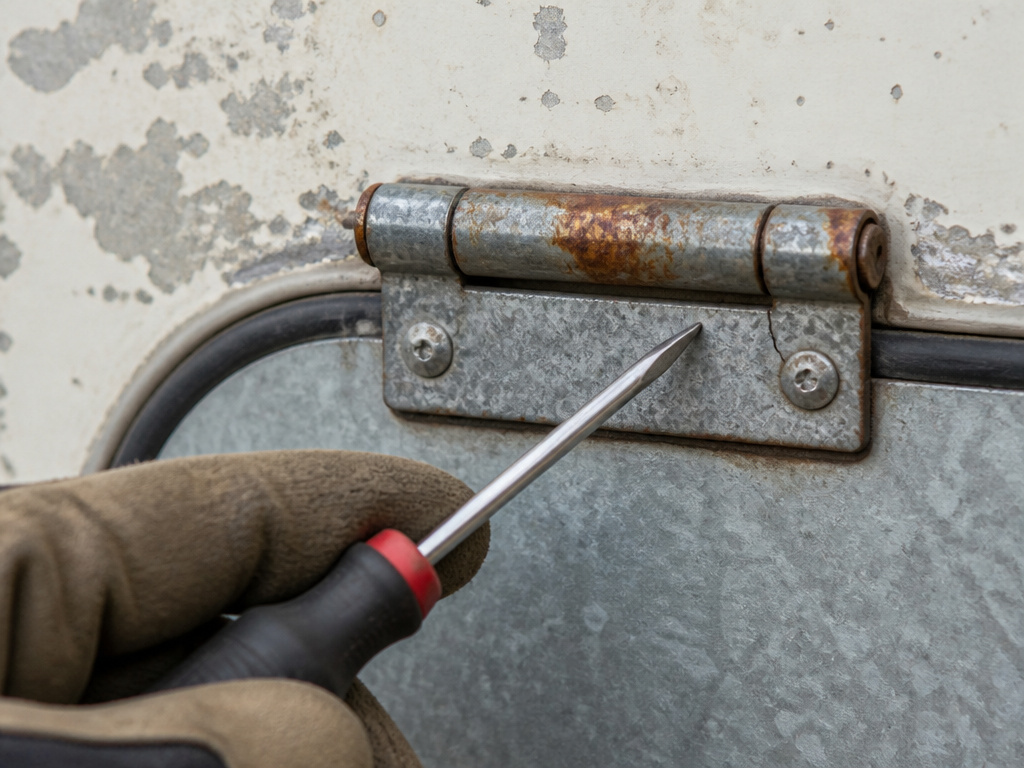
Teardrops are simple, but they are not maintenance-free. Road vibration, UV exposure, and weather take a toll. Knowing the failure timeline lets you inspect and prevent.
Years 1-3: The Shakedown Phase
Loose fasteners from road vibration are typical. Check all interior and exterior screws and bolts after your first long trip. The 12V electrical connections are another weak spot; look for flickering lights.
Years 3-5: Battery and Seal Aging
The deep-cycle lead-acid battery will need replacement. Storing it with a low charge kills it faster. Roof seals around vents and skylights dry out and crack. Resealing is a messy but straightforward weekend job.
Where this goes sideways: A weakened hatch hinge. One owner reported a gust of wind snapping a fatigued hinge backward, requiring duct tape to get home. The galley was unusable for the rest of the trip. Inspect those hinge pins and strut mounts annually.
Years 5-10: The Big Three
This is when neglected units show their age. The three most common issues are: 1. Water Intrusion: Cracked sealant leads to soft floors or wall delamination. A musty smell is the first clue. 2. Corrosion: On non-galvanised frames, rust bubbles appear, especially near the axle. 3. Strut Failure: The hydraulic struts holding the galley hatch lose pressure. The hatch won’t stay open, becoming a safety hazard.
A teardrop stored outside in a coastal or harsh winter climate ages twice as fast. A garage or covered storage isn’t a luxury; it’s a longevity investment.
Who Should Absolutely Skip a Teardrop?
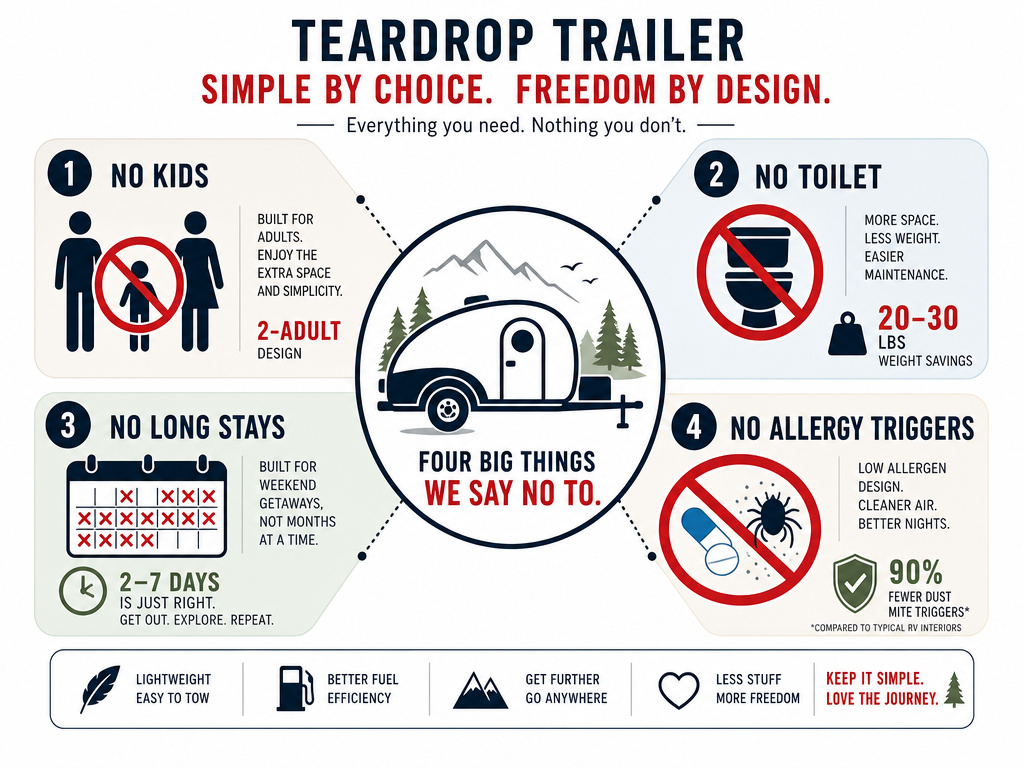
The teardrop is a specific tool for a specific job. It fails utterly for these campers:
- Families with children. There is no kid sleeping space. Period. Look at small camper trailers with bunk beds or pop-up options.
- Bathroom-essential campers. If you won’t use a campground restroom at 2 a.m., this is the wrong rig.
- Full-time travelers. The lack of interior living space and storage will grind you down within months.
- Those with severe allergies or asthma. The sealed, compact interior can trap dust and allergens, and mold is a real risk in humid climates without vigilant cleaning.
For these groups, the higher cost and tow weight of a larger mini travel trailer or hybrid are justified. The teardrop’s efficiency is its greatest strength and its most limiting constraint.
The Verdict: How to Decide for Yourself
Don’t ask if a teardrop is “worth it.” Ask these three questions in order:
- What’s my vehicle’s true tow rating? (Check the manual. Be honest.)
- How many nights will I camp per year? (Be realistic. Past behavior predicts the future.)
- Can I live without an indoor bathroom and standing room? (This is the deal-breaker.)
If your answers are “over 1,500 lbs,” “more than 15 nights,” and “yes,” then a teardrop is likely an excellent value. You’ll benefit from the low tow stress, high fuel economy, and spontaneous trip capability.
If any answer gives you pause, rent one first. Companies like Outdoorsy rent specific models for a weekend. Test the bed, use the galley, and experience the bathroom walk. That real-world test is cheaper than any buyer’s remorse.
For the right person, the agile couple who sees a campground as a base for hiking, not a lounge, a teardrop isn’t just a purchase. It’s a season pass to the outdoors.
Frequently Asked Questions
Do teardrop trailers hold their value?
Yes, exceptionally well. Quality teardrops from reputable builders retain 60-75% of their value after five years. This beats the average for caravans (45-55%) and canvas campers, which depreciate faster due to material wear. A galvanised steel chassis and a reputation for reliability are the key factors.
What is the biggest downside to a teardrop trailer?
The complete lack of an indoor bathroom and interior standing room. You cook outside and sleep inside. All living apart from sleeping happens outdoors or under an awning. If bad weather traps you inside, you’re lying in bed. This is the core trade-off for the teardrop’s low weight and easy towing.
Can a normal car tow a teardrop?
Many normal cars can, but you must verify. A typical lightweight teardrop has a loaded weight of 1,200-1,800 pounds. A Honda CR-V, Subaru Outback, or similar compact SUV with a factory hitch can usually handle this. Sedans like a Toyota Camry need to check their specific GTW rating, many are limited to 1,000 pounds. Never guess.
Are teardrops good for winter camping?
They can be, but it’s an exercise in insulation management. Most lack built-in furnaces. You’ll rely on a portable propane heater (with proper ventilation) and excellent sleeping bags. The small space heats up quickly with body heat but also loses heat fast. Condensation on the single-pane windows is a constant battle. It’s doable, but not comfortable for beginners.
How often does a teardrop need maintenance?
Follow a tiered schedule. Before every trip: check tire pressure, hitch connection, and lights. Every 6 months or 5,000 miles: inspect wheel bearings, brake systems (if equipped), and reseal any suspect seams. Annually: service the wheel bearings, deep-clean the interior, and inspect the roof and hatch seals. Batteries need monitoring monthly when in storage.
Before You Go
The teardrop trailer isn’t for everyone, and that’s its strength. It filters for the camper who values mobility over mansion-like space. Its worth is measured in trips taken, not square footage. If your idea of camping is waking up somewhere new every morning with minimal fuss, the math works in its favor. Just know the limits, respect the weight ratings, and buy the best you can afford, your future spontaneous weekends depend on it.
