
Are 3 Wheeled Motorcycles Safer? Stability vs. Risk Analysis
This post contains affiliate links. As an Amazon Associate, we earn from qualifying purchases.
Three-wheeled motorcycles are not inherently safer than two-wheelers. They trade the immediate tip-over risk of a stopped bike for more complex handling risks while moving, specifically a higher potential for tripped rollovers in corners and a documented history of electronic stability system failures.
That’s the short, direct answer. The stability from three contact points feels more secure at a light, but it changes the physics of every turn and swerve you will ever make.
What follows is a breakdown of the three things that change: the center of gravity, the cornering forces, and the electronic systems that try to keep you upright. By the end, you’ll know which configuration is genuinely more forgiving for a new rider, and which specific failure modes to check before you buy a used model.
Key Takeaways
- Three-wheelers have a higher center of gravity due to the added chassis weight and geometry, which lowers the lateral acceleration needed to initiate a rollover compared to a car.
- Factory trikes like the Harley-Davidson Tri-Glide can brake hard (0.74–0.91 g deceleration), but most of that force comes from the rear brakes, a reversal from two-wheeled physics that changes evasive maneuvering.
- A 2019-2020 Harley Trike recall (NHTSA 0175) exists because a faulty wheel speed sensor could activate a single rear brake unexpectedly, pulling the vehicle into a sudden, uncommanded turn.
- You cannot lean a three-wheeler. You steer it. This requires more upper-body strength to counter cornering forces and significantly raises the risk of an inside wheel lifting in a sharp turn.
The Two Key Stability Factors (and the One That’s a Trap)
Forget “three points of contact.” That matters when you’re parking. The real stability story is told by weight distribution and rollover threshold, numbers pulled straight from engineering reports.
The tested Harley-Davidson Tri-Glide had a center of gravity height of 21.4 inches. With a rider, that combined center rises to about 23.1 inches. Using the vehicle’s track width, this gives a lateral acceleration limit of approximately 0.68 g before rollover initiation. For reference, many passenger cars exceed 1.0 g.
That’s from a J.S. Held study on three-wheeled motorcycle dynamics. The number is the first clue: a trike’s rollover threshold is lower than a sports car’s. It’s higher than most two-wheelers (which fall over before they roll), but it’s a finite, calculable limit you can reach in a turn.
The second factor is where the weight sits. On the tested Tri-Glide, nearly 70% of the weight was on the rear axle. That’s why the same study found the rear brake provided most of the vehicle’s impressive 0.74–0.91 g deceleration. You stop with your feet, not your hands. This is why organizations like the Georgia Department of Driver Services warn that evasive maneuvers differ. Their official guide states swerving is “seldom the best option” and advises braking before or after a swerve, never during. The Georgia three-wheel vehicle regulations codify this handling shift from motorcycle to a new vehicle class.
The trap is assuming this applies to all three-wheelers. There are two main configurations: “tadpole” (two wheels front, one rear, like the Can-Am Spyder) and “delta” (one front, two rear, like a trike). Their stability profiles are different. A delta trike is more prone to tripped rollovers. A tadpole model can understeer like a car if you over-commit to a corner. This is a major reason the debate over trike motorcycles versus two-wheelers lacks a single answer.
| Configuration | Stability Strength | Primary Handling Risk |
|---|---|---|
| Delta (Trike) | High straight-line stability, confident braking | Tripped rollover in sharp corners, inside wheel lift |
| Tadpole (Spyder) | Lower rollover threshold, car-like steering | Understeer at limit, requires more steering force |
| Two-Wheeled | Leaning countersteer for agile cornering | Low-speed tip-over, requires balance skill |
The takeaway is that a three-wheeler doesn’t simplify riding. It changes the rulebook. If you’re moving from a traditional bike, you must unlearn leaning and learn to shove the bars. This is a key point covered in the Motorcycle Safety Foundation training document, which dedicates sections to the unique steering and braking techniques needed.
Cornering Force and the Liftoff Threshold
Here is where the rubber meets the road, literally. A two-wheeled motorcycle leans into a turn, using tire camber for grip. A three-wheeler stays upright. The cornering force pushes directly against the suspension, trying to lift the inside wheel.
Think of a go-kart. Take a corner too fast and the inside rear wheel lifts. The same physics apply to a trike, just with more weight. In a delta configuration, lifting an inside rear wheel shifts all the vehicle’s weight onto the two remaining contact patches: the outside rear wheel and the front wheel. The vehicle can suddenly over-rotate, leading to a tripped rollover. This is not a theoretical worry. An MDPI Vehicles journal paper on tripped rollovers explicitly names delta-type three-wheelers as more prone to this exact accident, especially with variable loading from passengers or cargo.
Common mistake: Cranking the steering wheel to correct an understeering tadpole trike. The front tires are already at their grip limit. Adding more steering angle just pushes the vehicle wider. The correction is to relax steering input and let the front tires regain grip.
This explains the real-world advice from owners at rallies. They say you must slow down more for corners. A rider quoted in a South Dakota news report after a fatal Can-Am Spyder crash put it bluntly: “You cannot take corners fast, you just can’t.” The vehicle’s geometry and your own strength are the limiting factors. This makes a strong case for certain motorcycles with automatic transmissions, as they remove gear-shifting distraction, allowing you to focus solely on steering and braking inputs.
What about reverse trikes with two front wheels, like the Piaggio MP3? Reviews of models like the MP3 500 note its dual front wheels make losing front grip “virtually impossible,” letting its traction control focus only on the rear wheel. This is a different kind of safety, reduced chance of a front washout, but it doesn’t eliminate the cornering force problem. You still can’t lean it.
When Electronics Fail: The Recall You Must Check
Modern three-wheelers rely on complex electronics for stability: Anti-lock Braking Systems (ABS), Traction Control (TC), and sometimes Dynamic Stability Control (DSC). These systems read wheel speed sensors dozens of times a second to prevent lockups and slides. When they fail, the result is a sudden, violent command instead of a gradual loss of aid.
Harley-Davidson issued Recall 0175 for its 2019-2020 Tri-Glide models (FLHTCUTG, FLRT, FLHTCUTGSE). The official NHTSA trike traction control recall document states the cause clearly: a faulty rear Wheel Speed Sensor (WSS) signal could cause the system to activate one rear brake unintentionally.
The part nobody mentions: Unintended activation of just one rear brake on a trike doesn’t just slow you down. It creates a massive yaw moment, pulling the entire vehicle sharply toward the side with the braking wheel. At highway speed, this is an immediate loss-of-control event.
The fix was a software reflash to calibration 40800140R. If you’re looking at a used 2019-2020 Tri-Glide, this recall must be verified as completed by a dealer. This is a critical safety patch, not optional maintenance. It’s also a reminder that the perceived safety of modern aids comes with a dependency on flawless software and sensor function, a complexity traditional two-wheeled chopper motorcycles simply don’t have.
The lesson extends beyond one brand. Any three-wheeler with stability control is only as safe as its sensor suite and the software interpreting that data. Mechanical simplicity, as found in classic sidecar motorcycles, offers a different kind of predictable, analog safety.
The Strength and Skill Factor
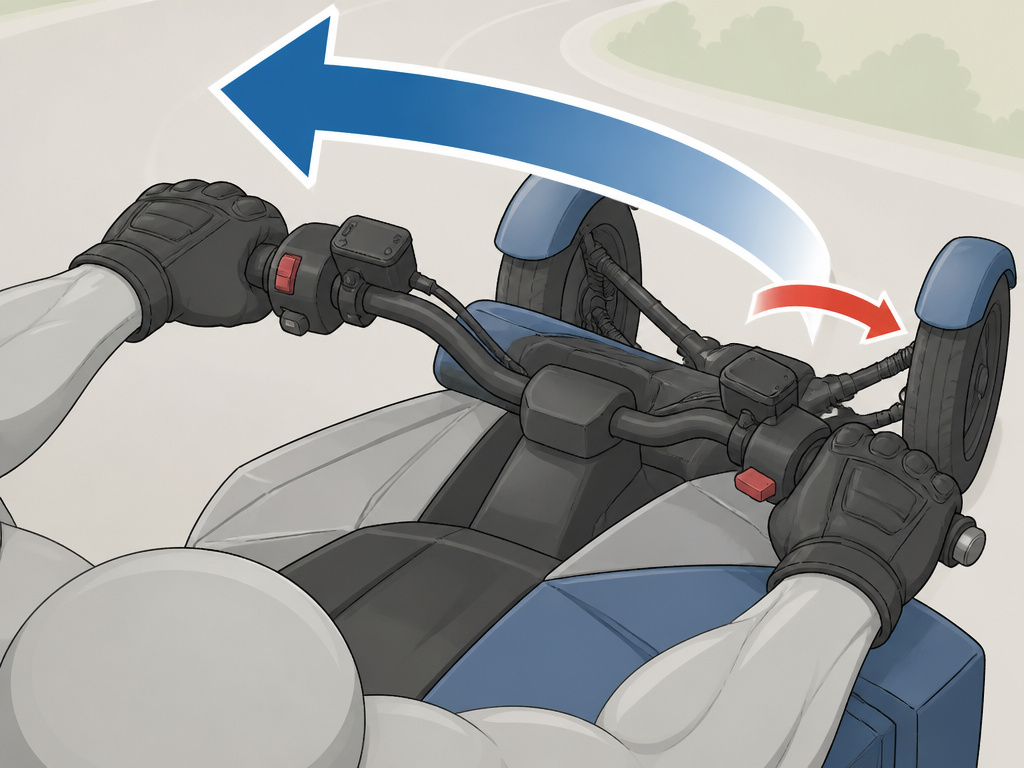
Safety comparisons often ignore the human element. Riding a three-wheeler is physically different.
You steer against cornering forces. In a tight turn, the wheel wants to straighten. You must hold a constant steering torque. A certified trainer cited in the South Dakota report said, “It takes a lot more strength to steer… They don’t have the upper body strength required.” This isn’t about fitness; it’s about sustained force. Fatigue sets in on long, winding roads.
Furthermore, the skills don’t transfer directly from two wheels. The MSF’s guide for three-wheelers doesn’t just recommend training, it details different procedures for group riding (no staggered formation), evasive swerving, and even responding to animals. The instinct to lean is gone, replaced by a steering input that feels slower and heavier.
For some riders, this trade-off is worthwhile. Those with mobility issues or who simply dread dropping a heavy motorcycle for large riders at a stop find the trike’s static stability liberating. For smaller riders, a light, manageable motorcycle for petite riders might be easier to maneuver at low speed than a heavy trike that fights back in corners. It’s a deeply personal calculation.
So, are they safer?
For low-speed, urban riding where the risk is being hit by a car or tipping over at a stop, a three-wheeler’s visibility and stability can be a net safety gain. For open-road, high-speed, or mountainous cornering, the increased risk of a tripped rollover and the physical demands of steering can make it less forgiving than a well-ridden two-wheeler. The safest choice is the one you are specifically trained to operate. For many, that means seeking out automatic motorcycles for beginners that bridge the gap between complexity and control.
Frequently Asked Questions
Are three-wheeled motorcycles safer for seniors?
They can be, but with a major caveat. The stability at a stop is a huge benefit for those with weak knees or balance issues. However, the increased steering effort required in corners can be a problem for those with diminished upper-body strength. A proper test ride on a winding road is essential.
Do you need a motorcycle license for a three-wheeler?
Licensing varies by state. Many states, like Georgia, have specific endorsements or regulations for three-wheeled vehicles, distinct from a standard motorcycle license. Always check your local Department of Driver Services requirements.
Is a Can-Am Spyder safer than a Harley trike?
They present different risks. The Spyder’s tadpole layout has a lower rollover threshold but is more prone to understeer. The Harley trike’s delta layout is more prone to inside wheel lift and tripped rollovers. Neither is “safer” in an absolute sense; they fail in different ways at the limits.
What is the main cause of three-wheeler accidents?
Loss of control in corners, often leading to rollovers, is a predominant cause. This can be due to excessive speed for the corner radius, sudden steering corrections, or encountering road imperfections like potholes that upset the suspension.
Do three-wheelers have better brakes?
Factory three-wheelers often have powerful automotive-style disc brakes and ABS. The J.S. Held study showed a Tri-Glide could achieve decelerations in the upper half of the range for two-wheeled motorcycles. However, the brake balance is heavily rear-biased, which changes how you use them in an emergency.
The Bottom Line
The question “are three-wheeled motorcycles safer?” is a qualified no. They are different. They swap the acute risk of a tip-over for the chronic, higher-speed risks of complex handling and system failure.
Your decision should start with an honest assessment of where and how you ride. If your world is city streets and highway straights, a trike’s stability could be a net benefit. If you live for twisty backroads, the physics of a non-leaning vehicle add a layer of risk that training can mitigate but never erase.
Before you buy, do two things. First, take a dedicated three-wheel rider course, the techniques are not intuitive. Second, research any recalls on your specific model, like the critical federal safety recall notice for certain Harleys. Safety depends on matching the machine’s limits to your environment and your skill, not on the number of wheels. Sometimes, the safer choice is the simpler one.
