
20-Inch vs. 18-Inch Wheels: Which Is Better for Your Ride?
This post contains affiliate links. As an Amazon Associate, we earn from qualifying purchases.
The answer depends entirely on your road surface. For pothole-strewn urban streets and technical off-road trails, 18-inch wheels with their taller, more flexible sidewalls are objectively better for ride quality and durability. For smooth asphalt and a focus on sharp, on-road handling, 20-inch wheels offer superior responsiveness and a sportier stance.
That 1.5-inch difference in sidewall rubber is where your daily experience lives. On a typical UK or northeastern US road, a 20-inch wheel transmits a deep thump where an 18-inch wheel delivers a muted bump. On a racetrack or a freshly paved interstate, the 20-inch setup carves corners with surgical precision.
This guide walks the choice between 18-inch and 20-inch wheels through the three variables that actually matter: the surfaces you drive, the mechanical math of fitment, and the long-term costs you sign up for. We’ll move past generic “bigger wheels are harsher” to show when that harshness is a performance feature, and when it’s just a mistake you feel for years.
Key Takeaways
- Sidewall height is the deciding factor. An 18-inch wheel accommodates a taller, more flexible tire sidewall that cushions impacts, making it the clear winner for comfort and off-road durability.
- Your factory suspension expects a specific wheel. Jumping more than ±10mm in offset, or changing overall diameter by more than 3%, accelerates bearing wear, confuses your ABS, and throws your speedometer off.
- The cost difference compounds. A set of four 20-inch all-terrain tires can cost 25-40% more than their 18-inch equivalents, and they wear faster under identical conditions.
- Off-road capability isn’t about the rim diameter. It’s about sidewall flex. A 35-inch tire on an 18-inch wheel has over an inch more flexing rubber than the same tire on a 20-inch wheel, which directly translates to traction on rocks and ruts.
- Most drivers should default to 18-inch. Unless you prioritize sporty aesthetics and drive primarily on well-maintained roads, the 18-inch wheel is the more comfortable, durable, and financially sensible choice.
The Performance Trade-Off: Comfort vs. Handling
The debate isn’t about which wheel is universally better. It’s about which performance attribute you’re buying. A taller sidewall on an 18-inch wheel acts as a secondary suspension system, absorbing energy before it reaches your car’s springs and struts. A shorter sidewall on a 20-inch wheel turns that tire into a rigid extension of the rim, delivering every steering input instantly.
The trade-off is physical and immediate. On a coil-sprung vehicle with a tall load, a flexible 35-inch tire sidewall on a 17-inch wheel can introduce a vague, sloppy feeling during emergency maneuvers. The same driver, in the same truck on 20-inch wheels, will report tighter, more responsive steering. The ride, however, firms up noticeably. One test, using Cooper Discoverer AT3 XLT tires, found the 20-inch version needed about five PSI less pressure than the 18-inch to achieve a similar ride over rocky terrain, precisely because its shorter sidewall lacked the innate cushioning.
Keep your overall rolling radius within 3% of the factory specification. Stray beyond this, and you’ll watch your speedometer drift, it may read 65 mph when you’re doing 70. More critically, your ABS and stability control systems will be working from miscalibrated wheel-speed data, which can lengthen stopping distances during a panic brake.
Common mistake: Prioritizing looks over load rating. That sleek 20-inch wheel might have a lower maximum load rating than your stock 18-inch steelie. Exceed it, and you’re not just risking a blowout; you’re violating the FMVSS 110 tire selection standard, which requires the vehicle’s load not exceed 94% of the tire’s marked rating at the recommended pressure.
Where You Drive Changes Everything: Paved vs. Unpaved
Your daily route determines the right answer more than any magazine spec sheet.
For city and suburban drivers facing potholes, expansion joints, and neglected asphalt, the 18-inch wheel is a pragmatic ally. The extra sidewall rubber is a sacrificial layer. It’s cheaper to replace a gouged tire than to repair a bent or cracked $400 alloy wheel. This isn’t theoretical. Workshop records show a disproportionate number of 20-inch alloy wheel repairs come from urban pothole strikes.
For the off-roader, the choice is even more stark. The key practice of “airing down”, reducing tire pressure to 15-20 PSI for better traction in sand or over rocks, is only safe with a tall sidewall. A low-profile tire on a 20-inch wheel lacks the flex to bulge safely at low pressures; the bead can dislodge from the rim. An 18-inch setup with a 35-inch tire gives you over an inch more sidewall to play with, allowing the tire to conform to obstacles rather than transmitting force directly to the expensive wheel.
| Terrain Type | Winner (18″ vs 20″) | Why |
|---|---|---|
| Urban / Poor Roads | 18-inch | Taller sidewall absorbs pothole impacts, protects wheel from damage, reduces cabin noise. |
| Smooth Highway | 20-inch | Shorter sidewall improves steering response and high-speed stability; ride firmness is less noticeable. |
| Technical Rock Crawling | 18-inch | Allows safe, extreme airing down for maximum traction; sidewall flex protects rim from direct contact. |
| Light Trails / Overlanding | Toss-up | 20-inch offers better on-road manners to the trailhead; 18-inch is more forgiving on the actual trail. |
The tire market reflects this functional divide. There is a significantly broader selection of dedicated, aggressive off-road tire patterns, like the Cooper Discoverer AT3 XLT or BFGoodrich KO2, available in 18-inch fitments. Your options in a true 20-inch off-road tire are narrower and often carry a premium price tag.
The Math You Can’t Ignore: Fitment & Consequences
Changing wheel size isn’t an aesthetic free-for-all. It’s a geometric puzzle with real mechanical consequences. Get one number wrong, and you’re buying a new set of tires, rolling your fenders, or visiting the bearing shop ahead of schedule.
First, the overall diameter (or rolling radius). This is the tire’s total height from the ground to the top. When you swap from an 18-inch to a 20-inch wheel, you must pair it with a lower-profile tire to keep this number nearly identical. Aim to stay within 3% of the factory spec. A proper correct tire size calculator is non-negotiable here.
Second, offset. This is the distance from the wheel’s mounting surface to its centerline. It determines how far the wheel sits in or out from the fender. The golden rule: stay within ±10mm of your factory offset.
Where this goes sideways: Exceeding the ±10mm offset tolerance. A wheel with 25mm less offset (poking out further) can cause the tire to chew into the fender liner on bumps. More insidiously, it shifts the load on your wheel bearings, wearing them out in 30,000 miles instead of 80,000.
Third, the bolt pattern. This is non-negotiable. Common patterns like 5×114.3 (Honda, Toyota) or 5×120 (BMW) are not interchangeable. Even if you force it on with wobble bolts, you’re creating a dangerous point of failure.
Let’s say you want to upgrade a Ram 1500. You might be looking at tires for 20-inch wheels. If your truck came with 18s, you need to ensure the new 20-inch tire’s overall diameter matches. A typical swap might be from a 275/65R18 (32.1″ diameter) to a 275/55R20 (31.9″ diameter). That’s within the 3% window.
| Spec | Why It Matters | Safe Tolerance | Tool Needed |
|---|---|---|---|
| Overall Diameter | Speedometer, ABS, gearing | ≤ 3% of stock | Online tire calculator |
| Offset | Bearing load, fender clearance | ±10mm of stock | Manufacturer spec sheet |
| Bolt Pattern | Safe mounting to hub | Must match exactly | Physical measurement |
| Load Rating | Safety, legality | Must meet or exceed OEM | Tire sidewall stamp |
If you’re considering wheel spacers to adjust offset or fit wider tires, understand the risk. A 1-inch wheel spacer effectively acts as a permanent adapter, increasing lever forces on your lugs and bearings. While they can be safe when installed correctly with hub-centric rings and longer, high-grade lug bolts, they add complexity and a potential failure point many manufacturers advise against.
18-Inch vs. 20-Inch: A Direct Comparison by Use Case
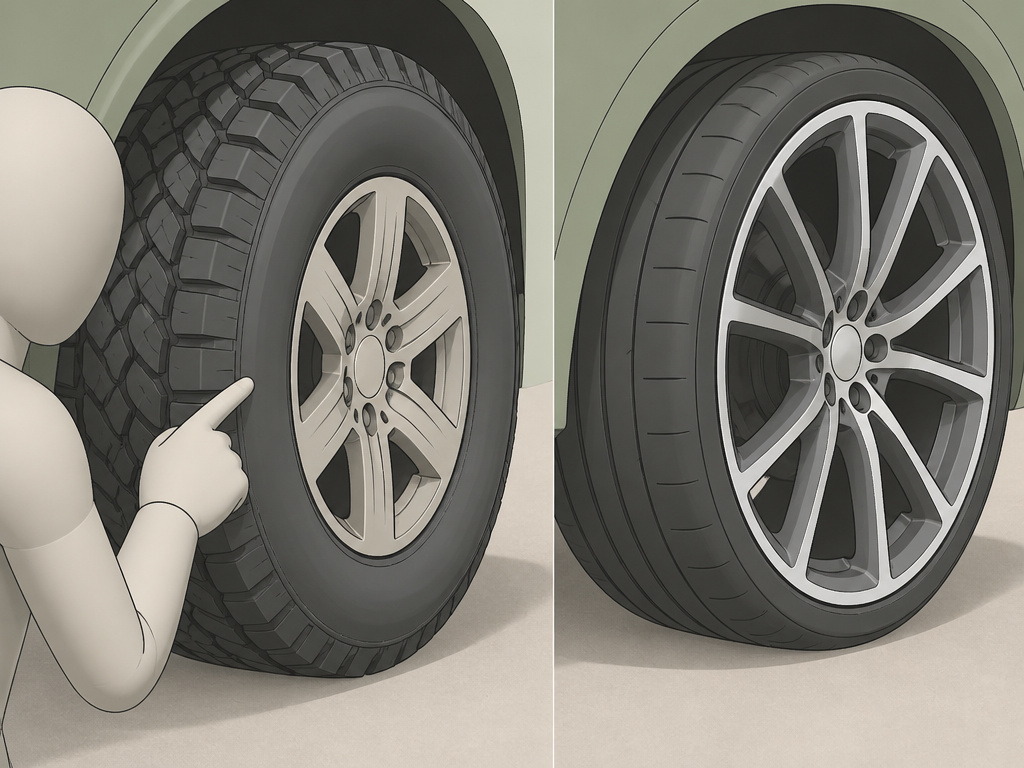 This isn’t a vague “it depends.” For specific, common scenarios, one size is demonstrably better. Here’s the head-to-head.
The Daily Driver / Family SUV
Winner: 18-inch. You’re hauling groceries, kids, and navigating construction zones. The priority is isolating the cabin from road harshness and avoiding expensive wheel repairs. The taller sidewall of an 18-inch tire soaks up imperfections. Tires for 18-inch wheels are also more affordable and abundant. The minor sacrifice in razor-sharp steering feel is irrelevant when your cargo is complaining about a bumpy ride.
The Sport Sedan / Performance Coupe
Winner: 20-inch (on smooth roads). If your weekend fun involves canyon carving and you live where roads are well-maintained, the 20-inch wheel’s superior turn-in and lateral stiffness are tangible benefits. The firmer ride is part of the performance package. Pair them with quality ultra-high-performance tires, not the cheapest all-seasons.
The Half-Ton Pickup (Mixed Use)
Toss-up. This is the hardest call. For a truck that sees highway miles and light trails, the 20-inch wheel offers a more confident, planted feel on pavement. But the moment you air down for sand or encounter a rocky path, you’ll wish for the 18-inch all-terrain tires and their extra sidewall. If you never leave the pavement, 20s can work. If your truck has a real job off-road, 18s are the tool for it.
The Dedicated Off-Road Rig
Winner: 18-inch. This is non-negotiable. The science of traction and rim protection is settled. A tire for 20-inch wheels in a true off-road size is a liability. The shorter sidewall cannot safely air down to the pressures needed for rock crawling (sub-15 PSI), and the wheel itself is vulnerable. The aftermarket for beadlock wheels and aggressive tread patterns is built around 17-inch and 18-inch diameters for a reason.
The Long-Term Costs: More Than Just the Sticker Price
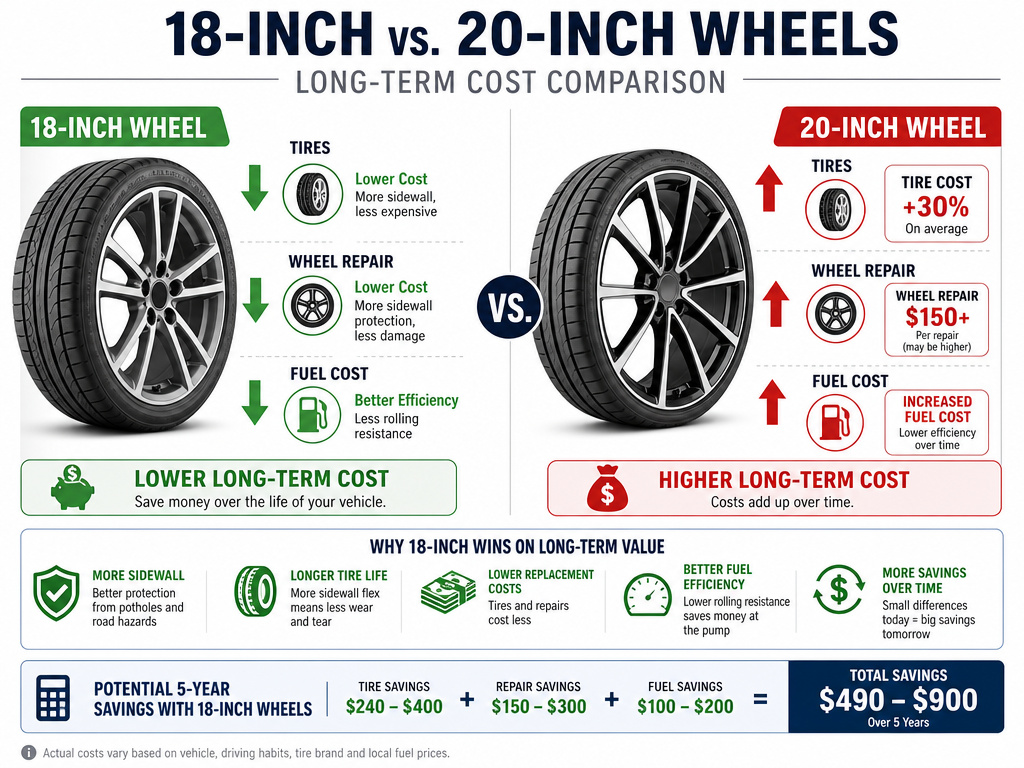 The initial purchase is just the first payment. The ongoing costs of a 20-inch wheel setup are a cascade of higher numbers.
Tire Replacement: This is the biggest hit. A premium 20-inch all-terrain tire like a Toyo Open Country AT3 can be 30% more per tire than its 18-inch counterpart. Over the life of the vehicle, that difference compounds.
Wheel Repair: Low-profile tires offer less protection. A curb strike that might scuff an 18-inch tire’s thick sidewall can bend the lip of a 20-inch alloy. Repair costs for bent wheels start around $150 each.
Suspension Wear: The reduced unsprung weight of a quality 18-inch forged wheel is easier on shocks and struts. Heavier 20-inch cast wheels make the suspension work harder, potentially shortening its life. This is especially true if you’ve also altered the offset, putting atypical stress on wheel bearings.
Fuel Economy: Heavier wheels and wider tires (common with 20-inch upgrades) increase rolling resistance. You might not notice it on the dashboard, but your fuel cost over 100,000 miles will.
Easy to miss: The availability and cost of winter tires. If you live in a snowy climate, finding dedicated winter tires in a 20-inch size is harder and more expensive. Many drivers with 20-inch summer wheels keep a set of smaller, cheaper 18-inch wheels with winter tires, a hidden second cost of the upgrade.
For most owners, the financially sensible path is to stick with the factory size or go one inch up, the “Plus One” rule. Jumping from 18-inch to 20-inch is a “Plus Two” move that multiplies costs and compromises. Unless you’re building for shows or have a dedicated performance car, the math favors the smaller wheel.
Frequently Asked Questions
Does switching from 18-inch to 20-inch wheels ruin ride quality?
It changes it, often drastically. The ride becomes firmer and more communicative. On broken pavement, that translates to a harsher, more jarring experience. On glass-smooth roads, it feels precise and sporty. Ruin is subjective, but for comfort-focused drivers, it’s a downgrade.
Can I put 20-inch wheels on a car that came with 18s?
Technically, yes, if you match the bolt pattern, offset, and crucially, the overall tire diameter. You must select a lower-profile tire for the 20-inch rim so the total wheel+tire height remains within 3% of the original 18-inch setup. You also must ensure the wheels clear your brake calipers and suspension components.
Are 20-inch wheels better for handling?
On dry, smooth pavement, yes. The shorter, stiffer sidewall reduces flex during cornering, providing quicker steering response and more grip at the limit. This is why performance cars often spec larger wheels. The trade-off is a loss of compliance over bumps, which can actually reduce grip on imperfect roads.
Which is better for off-roading, 18 or 20-inch wheels?
18-inch wheels are objectively better for serious off-roading. The taller sidewall allows for safe airing down to very low pressures (15-20 PSI) for maximum traction, and it acts as a buffer to protect the wheel from rocks and ruts. A tire for 20-inch wheels in this context is more vulnerable and less capable.
Do bigger wheels affect speedometer accuracy?
Yes, directly. Your speedometer is calibrated to the revolutions per mile of your factory tire size. If your new wheel-and-tire combo has a different overall diameter, your speedometer will be off. A larger diameter will make the speedometer read slower than your actual speed; a smaller diameter makes it read faster. Staying within the 3% rule minimizes this error.
The Bottom Line
For the overwhelming majority of drivers, those navigating city streets, hauling families, or venturing off the pavement, the 18-inch wheel is the better, more rational choice. It delivers superior comfort, better protection for your investment, and lower long-term costs. The 20-inch wheel is a specialist’s tool. It’s for the driver whose priority is on-road athleticism and style, who has the budget for higher consumable costs, and who primarily travels on roads worthy of the setup.
If you want one answer that fits the most people: stick with 18-inch wheels, or use the “Plus One” rule to go to a 19-inch if you crave a sharper look. The jump to 20-inch is a commitment to a specific, less forgiving driving experience. Make that choice with your eyes open to the trade-offs, not just the Instagram appeal.
