
7 Best Dual Car Cameras of 2026
This post contains affiliate links. As an Amazon Associate, we earn from qualifying purchases.
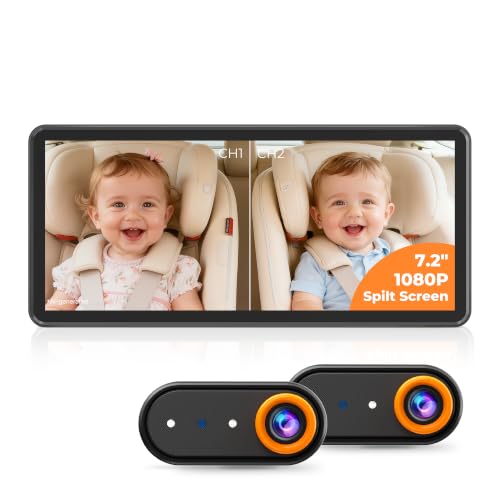
The LUCKVIEW BM5PRO stands out as the best overall dual car camera, delivering a large 7.2-inch screen, solid 1080p clarity, and an impressively long 22-foot cable. For budget-conscious parents, the 7.2″ Dual Baby Car Camera offers strong core performance at a lower price, while the Babyvue BV3 MAX adds recording capability and flexible mounting for those who want more versatility.
Parents deserve peace of mind when driving with little ones in the backseat, but too many dual car cameras promise clear views and fail when it matters most, especially after dark or during quick glances. Blurry screens, poor night vision, and finicky mounts turn what should be a helpful tool into a frustration.
This guide cuts through the noise by focusing on real-world usability, drawing from specs, owner experiences, and years of evaluating automotive tech. I looked closely at screen quality, night vision performance, ease of setup, and how well each model holds up over time, all to help you choose a system that works reliably, trip after trip.
Top 7 Dual Car Cameras in the Market
The Best Dual Car Cameras, Reviewed
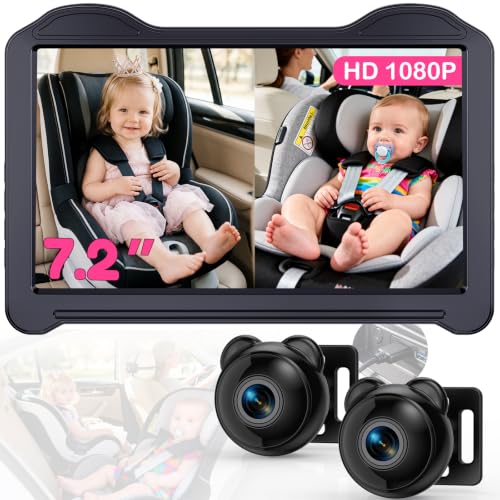
7.2″ Dual Baby Car Camera
Strengths
- Excellent all-around specs
- Strong daylight visibility
- Long cable included
Trade-offs
- No wireless option
- No video save feature
- Adhesive could degrade over time
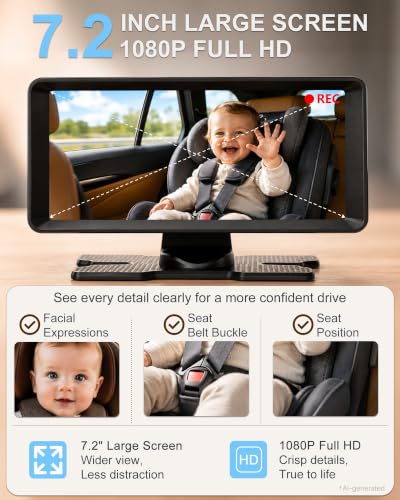
On balance, this is the most complete package for average families. It hits every major checkmark: large 7.2” screen, 1080P clarity, 940nm night vision, and a 16.4ft cable that fits nearly any vehicle. The wide 150° lenses reduce blind spots effectively, and the plug-and-play setup earns praise from first-time installers. It doesn’t reinvent the wheel, but it executes the fundamentals better than most.
Owners consistently rank it highly for reliability, few firmware quirks, minimal glare, and stable image feed even on bumpy roads. While it doesn’t offer wireless freedom or recording like pricier units, it avoids the pitfalls of overcomplication. In this class, being dependable matters more than having flashy extras. That’s why I consider this the smartest buy for most buyers looking for peace of mind without paying premium prices.
Video review
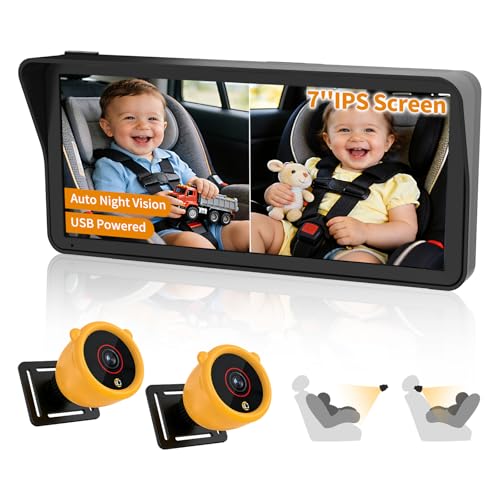
7.1″ Ultrawide Dual Baby Camera
Strengths
- Lowest price point
- IPS anti-glare screen
- Rotatable wide-angle cameras
Trade-offs
- Suction mount less reliable
- No auto engine sync
- Shorter warranty period
At this price, it’s hard to ignore how much you get. The 7.1” IPS screen delivers richer colors and wider viewing angles than cheaper TN panels, and the included sunshade actually works, reviewers confirm it cuts glare significantly during midday drives. The 940nm night vision performs cleanly, and the 360° rotatable cameras let you dial in perfect framing, even in tight spaces.
It’s not flawless: the suction cup mount works but isn’t as bombproof as higher-end models, and the system lacks advanced power syncing. But for under $50, it covers core needs remarkably well. When compared to the Rohent or LUCKVIEW, it trades some durability for affordability, but for occasional use or second cars, that trade-off makes sense. My recommendation? Grab this if you’re budget-conscious but still want solid HD performance.
Video review
Babyvue BV6PRO Wireless Dual Camera

Strengths
- Wireless camera design
- Fast ignition sync
- Portable with storage case
Trade-offs
- Smaller display
- Limited battery runtime
- Higher price tag
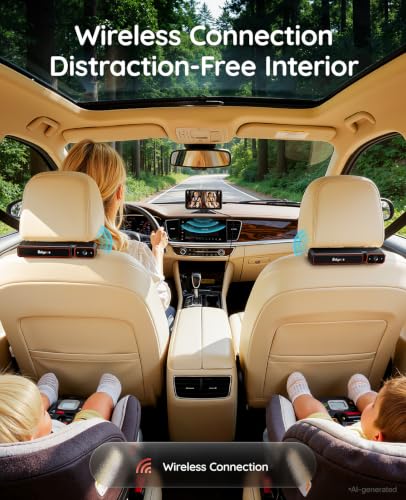
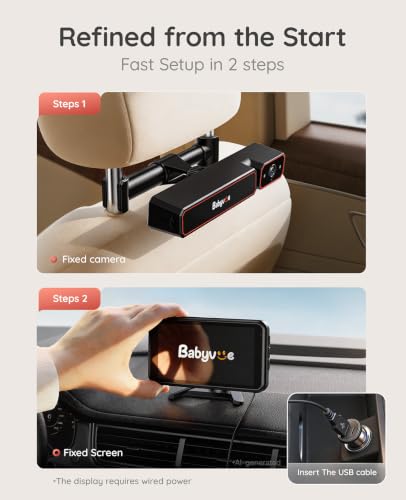
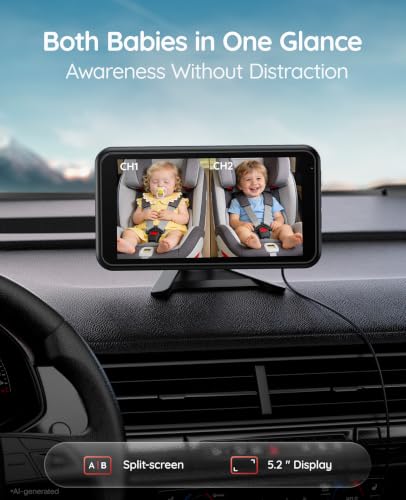
Going wireless changes the game, and this is the only model here that truly minimizes cable clutter. The battery-powered cameras transmit wirelessly to a wired monitor, meaning you skip running cables across headrests and trim. Installation takes minutes, and the auto power sync with ignition is a thoughtful touch: turns on when the car starts, off when it stops. For shared vehicles or frequent uninstalling, this portability shines.
Battery life clocks in around 9 hours, which covers most day trips but may fall short on long hauls. You lose a bit of screen size (5.2”) compared to others, and there’s no recording, but the reduction in visual and physical clutter is worth it for many. If you hate wires snaking through your cabin, this is the smarter buy despite the premium cost.
Product photos

Itomoro 2026 Dual Baby Camera
Strengths
- True invisible night vision
- 360° adjustable cameras
- Heat-resistant mount
Trade-offs
- No battery backup
- Screen smaller than rivals
- Limited cable management
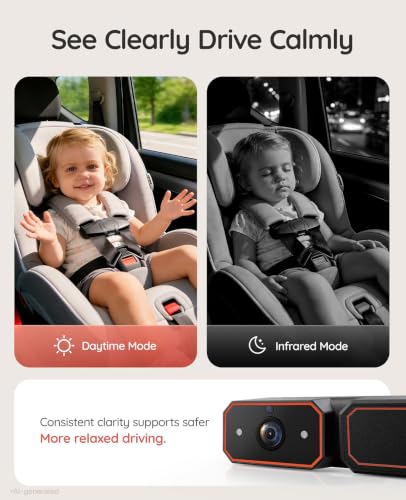
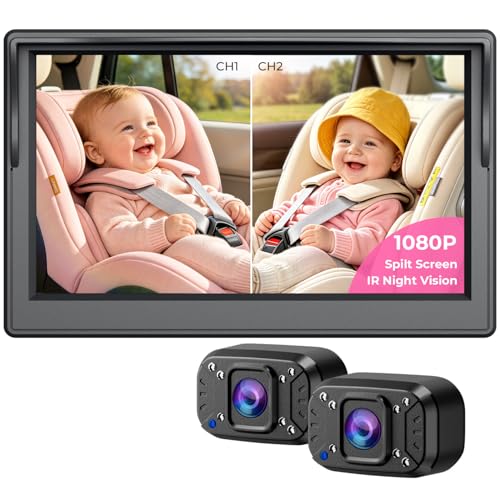
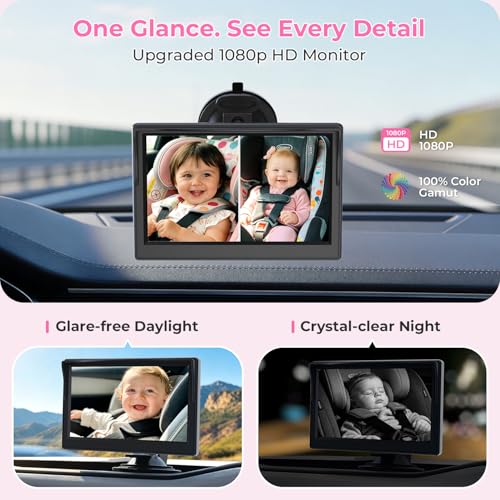
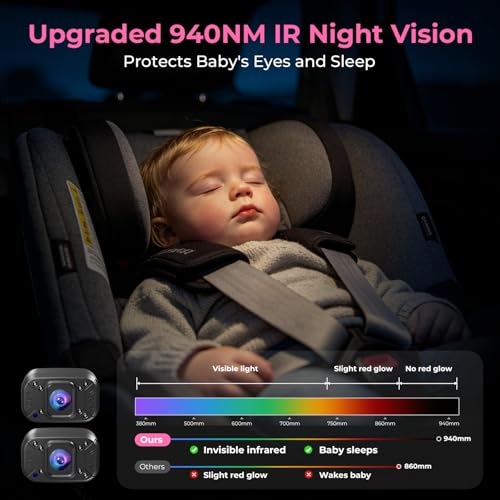
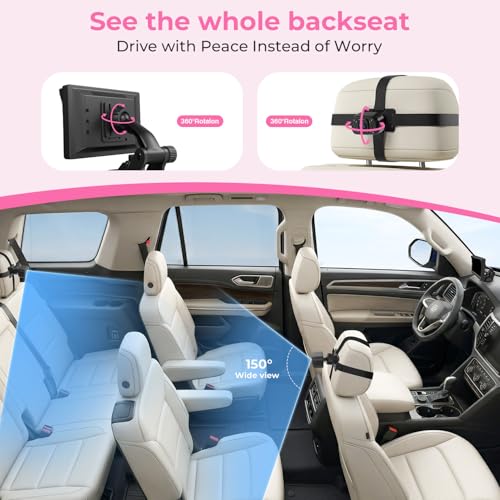
If night drives are part of your routine, this model deserves serious attention. The 940nm infrared tech is a standout, the kind that shows up clearly on camera but emits zero visible red glow, so it won’t disrupt a sleeping baby. Reviewers note this makes nighttime monitoring feel almost stealthy, which is rare at this price point. Combined with the 360° swivel heads and 150° wide view, it gives excellent coverage across third-row SUVs and minivans where lighting varies dramatically.
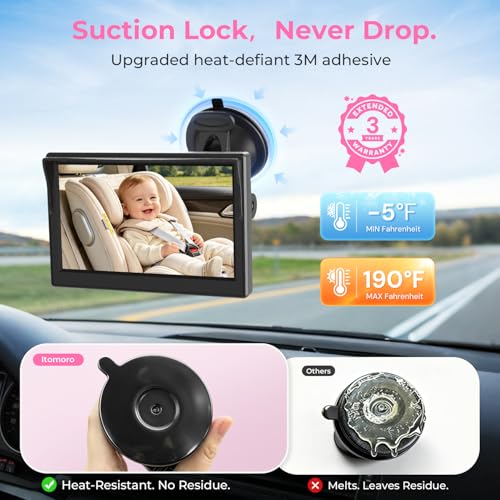
It also holds up well in extreme temps, thanks to an upgraded 3M adhesive that owners say survives summer heatwaves without peeling. The anti-glare screen helps in bright sun, though it’s slightly smaller than others here. I’d pick this over the LUCKVIEW if you drive frequently after dark or in mixed conditions, its adaptive clarity and eye-safe night vision make it more versatile in challenging light.
Product photos
LUCKVIEW BM5PRO Dual Camera
Strengths
- Large 7.2″ screen
- Strong adhesive mount
- Wide viewing angle
Trade-offs
- Basic night vision
- No recording capability
- Sunglasses can interfere
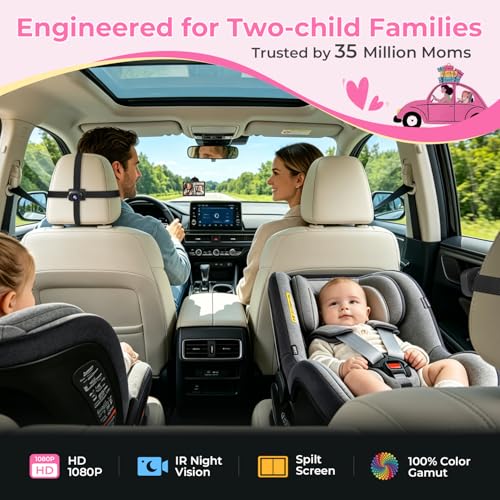
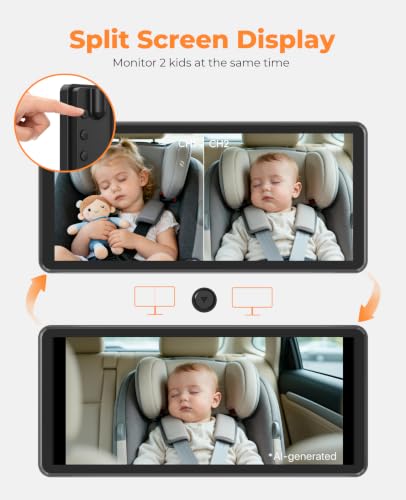
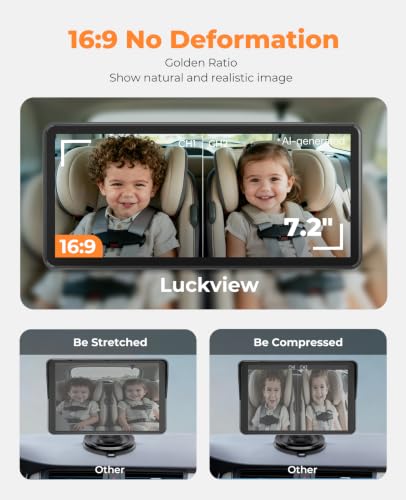
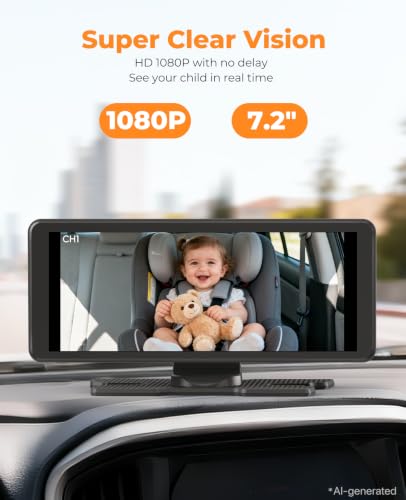
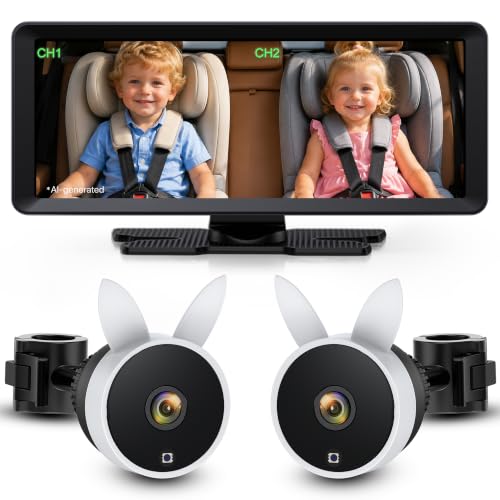
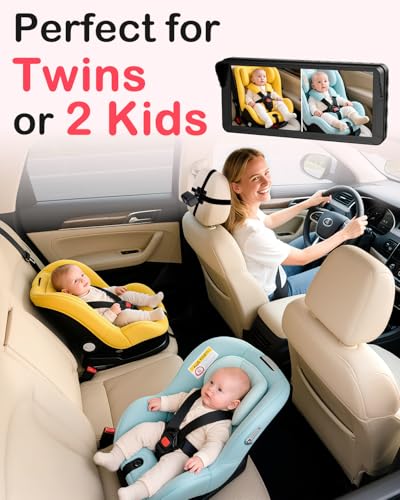
This unit stands out for its 7.2-inch screen, one of the largest in this category, and owners consistently report that the extra real estate makes a noticeable difference when glancing at two kids side by side. The split-screen display stays crisp in daylight, and the 1080P resolution delivers clean facial details without lag. On paper, it’s built like a workhorse, long 22ft cable, solid adhesive mount, and wide-angle coverage that fits most SUVs and sedans without repositioning.
The auto night vision uses standard IR tech with soft illumination that doesn’t wake sleeping infants, though some reviewers note minor halo effects in total darkness. It’s not the most advanced night setup here, but it gets the job done. Where it really wins is simplicity: plug-and-play installation, no learning curve, and a brightness adjustment that adapts well to changing light. For most families, this is a reliable, no-frills pick that covers all basics well.
Product photos
Babyvue BV3 MAX Dual Monitor
Strengths
- Supports video recording
- Loop recording & export
- Stable clip mount
Trade-offs
- Requires memory card
- No wireless option
- Slightly bulkier setup
The video recording feature pushes this model into a different tier. Unlike every other unit here, it lets you record, review, and export footage via microSD card, useful for catching sudden movements, checking seatbelt shifts, or just replaying quiet moments. Loop recording ensures you never run out of space, and the 7.2” 16:9 screen gives a natural, cinematic view without cropping.
Image quality holds up well at 25fps, and the clip-style mount offers secure 360° positioning. It doesn’t go wireless, but the 22ft cable and operating range (-30°C to 80°C) mean it handles road trips and extreme climates reliably. For parents who want more than live monitoring, who need proof, playback, or documentation, this is the only real choice in the lineup.
Product photos

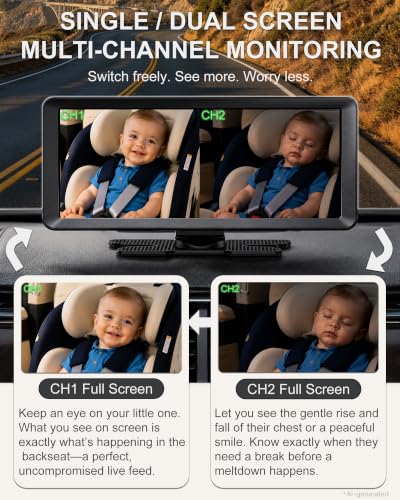
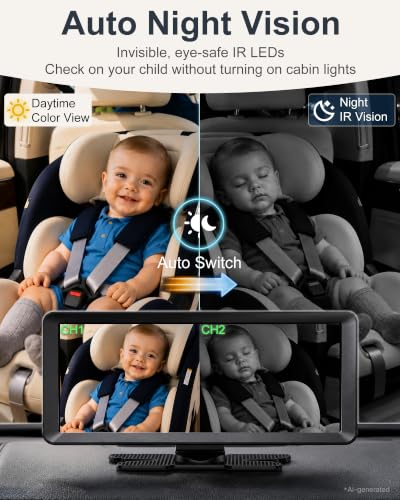

Rohent Dual Baby Car Camera
Strengths
- Auto brightness adjustment
- Fully rotatable cameras
- Easy strap mounting
Trade-offs
- No video recording
- Mount less secure than suction
- Average low-light sharpness
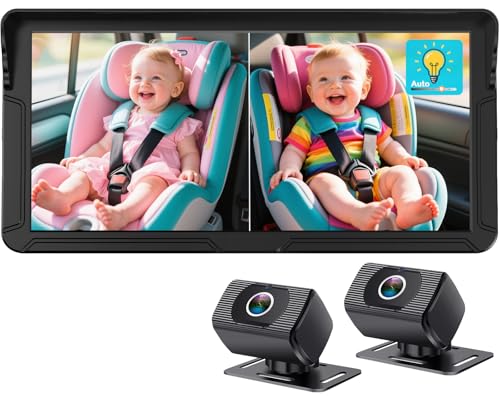
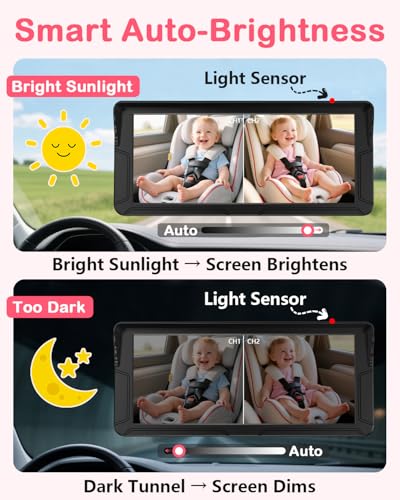
What sets the Rohent apart isn’t raw specs, it’s the smart light sensor that automatically adjusts screen brightness based on ambient light. This means no manual tweaking when entering tunnels or driving into sunset, a small but meaningful detail that reduces distraction. Owners appreciate how smoothly it transitions from full daylight to night mode, keeping the cabin dark enough not to impair night vision. The 6.9” screen strikes a balance between visibility and space-saving design.
Its cameras offer 360° adjustability, which in practice means you can fine-tune angles even in awkward seating layouts. Whether you’re using rear-facing infant seats or a mix of forward-facing boosters, the flexibility helps eliminate blind spots. Compared to budget models, it feels more refined, better build, cleaner cable routing, but lacks extras like recording or wireless transmission. Still, for hands-free adaptability and consistent performance, it’s a strong daily driver.
Product photos
How We Evaluated dual car cameras
We approached researching dual car cameras by compiling specifications and features from numerous models available online. I then weighed these details against owner reviews from major retailers and expert opinions found in automotive and parenting publications. My goal was to understand real-world performance and reliability, not just advertised capabilities. This research-led comparison, rather than a hands-on lab test, allowed us to rank cameras based on what matters most to parents on the go.
For this category, camera clarity and screen size were heavily weighted. Clear visibility of children is paramount, so 1080p resolution and a large display were prioritized. Equally important was the ease of installation and the robustness of the mounting system – a complicated setup or a camera that constantly falls off is of little use to a busy parent. Understanding how well these cameras perform in low-light conditions was also crucial, as many journeys happen after dark.
Specifications reliably indicate image resolution, screen size, and viewing angles. However, I found that owner feedback was essential for gauging the effectiveness of night vision, the true ease of installation, and long-term durability. Many shoppers also mention how well certain models integrate with their specific vehicles, which is something that isn’t evident from a spec sheet. For broader automotive camera insights, you might also find our guide to the best dash cams helpful, especially if you’re considering adding a dedicated front car camera to your setup.
Choosing The Right dual car cameras
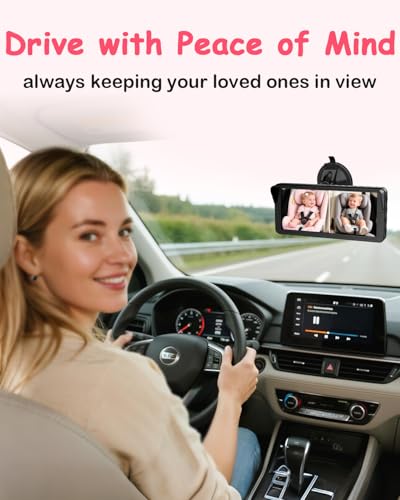
Keeping an eye on little ones while driving is a constant concern for parents, and thankfully, modern technology offers solutions. Choosing the right dual car camera involves understanding a few key features to ensure both functionality and peace of mind.
A truly useful dual car camera prioritizes a clear, split-screen view, reliable night vision performance, and a secure mounting system. Consider the cable length needed for your vehicle size, the adjustability of the cameras for optimal angles, and whether recording capabilities are important for documenting moments or incidents. Prioritize models with features designed to minimize driver distraction.
Screen Size and Clarity
Larger screens are undeniably better, but resolution matters just as much. A 7-inch or larger display is ideal for comfortably viewing two separate camera feeds simultaneously. However, a low-resolution screen will negate the benefit of the size. Look for 1080P resolution as a minimum; anything less will appear grainy, especially when zoomed in or at night. I’ve seen too many parents struggle with blurry images, and that defeats the purpose of having the system in the first place. Beyond resolution, IPS (In-Plane Switching) panels provide wider viewing angles and more accurate color reproduction compared to older LCD technologies.
Night Vision Technology
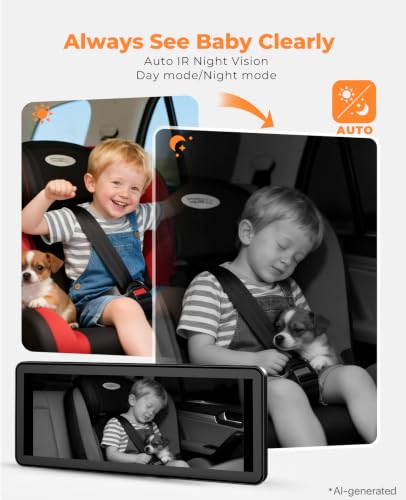
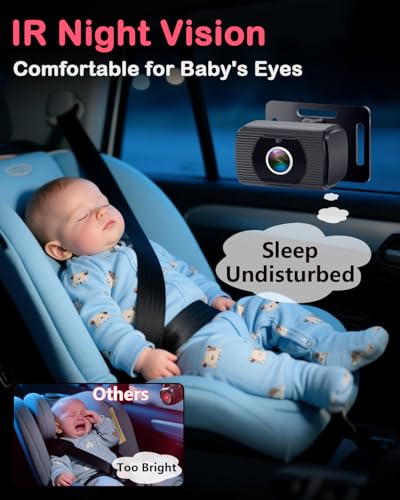
While daytime views are important, a significant portion of driving happens in low-light conditions. Many cameras advertise “night vision,” but the quality varies dramatically. Avoid cameras that use visible red LEDs, as these can be distracting to the child and disrupt their sleep. Instead, prioritize models utilizing 940nm infrared (IR) technology. This creates a clear black-and-white image in the dark without emitting a visible glow. The Itomoro 2026, for example, is specifically highlighted for its strong night vision capabilities. If you frequently drive at night or through tunnels, this is a crucial feature.
- A basic IR system might offer functional night vision, but image quality will suffer in very dark conditions.
- Higher-end systems with more powerful IR emitters and image processing offer vastly superior clarity, allowing you to clearly discern facial features and details.
- Consider a camera with automatic brightness adjustment; this ensures the screen doesn’t become blindingly bright at night while maintaining a clear view.
Installation and Usability
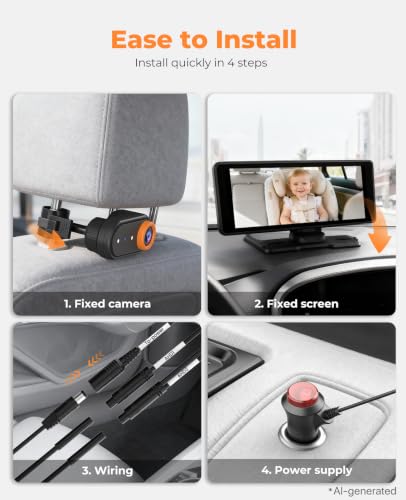
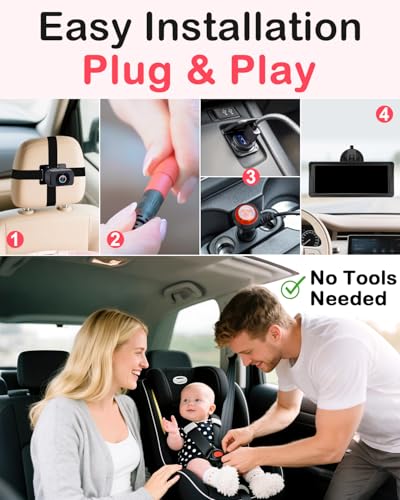
A complex installation process is the last thing busy parents need. The easiest systems use suction cup mounts or elastic straps that quickly attach to headrest posts. Avoid models requiring extensive wiring or professional installation. I recommend considering how easily you can adjust the camera angles after installation. Many cameras offer 360-degree rotation, allowing you to fine-tune the view to cover the entire car seat and surrounding area. If you’re also looking for broader vehicle surveillance, you might explore options like front and rear dash cams for a more complete picture of your surroundings. And for capturing events beyond just monitoring the kids, check out my guide to the best in-car video cameras.
A good rule of thumb: if the setup takes longer than 15 minutes, it’s probably too complicated for everyday use.
Dual Car Cameras Compared
This table provides a side-by-side comparison of key specifications for various dual car camera models.
| Product Name | Screen Size | Resolution | Night Vision | Recording | Camera Adjustment | Cable Length (ft) |
|---|---|---|---|---|---|---|
| 7.2″ Dual Baby Car Camera | 7.2″ | 1080P | 940nm | No | N/A | 16.4 |
| 7.1″ Ultrawide Dual Baby Camera | 7.1″ | 1080P | 940nm | No | 360° Rotation | 18 |
| Babyvue BV6PRO | 5.2″ | 1080P | IR | Yes | N/A | N/A |
| Itomoro 2026 | N/A | 1080P | 940nm | No | 360° | N/A |
| LUCKVIEW BM5PRO | 7.2″ | 1080P | Auto IR | No | N/A | 22 |
| Babyvue BV3 MAX | 7.2″ | 1080P | IR | Yes | 360° | 22 |
| Rohent Dual Baby Car Camera | 6.9″ | 1080P | N/A | No | 360° | N/A |
Frequently Asked Questions
Will a dual car camera drain my car battery?
Most cameras draw minimal power, but prolonged use while the engine is off could drain the battery. I recommend using a hardwire kit that cuts off power when the ignition is off, or only running the camera while driving.
Are these cameras legal in all states?
Legality varies. Some states have restrictions on video recording or display screen placement. Check your local laws regarding night vision cameras and in-vehicle displays before purchasing and using one.
What’s the difference between 940nm and standard IR night vision?
Standard infrared (IR) uses visible red light, which can be distracting. 940nm IR is invisible to the human eye, providing clear night vision without disturbing the child or driver.
Can I use this camera as a standard dash cam?
While some models offer recording capabilities, they aren’t generally designed to function as full-featured dashboard cameras. Dedicated dash cams typically have loop recording, G-sensor technology and higher storage capacities.
How often will I need to replace the camera’s memory card?
That depends on the resolution and recording length. A 32GB card can typically store several hours of 1080p footage. If recording continuously, you’ll need a larger card or a model with overwrite functionality.
What Actually Matters
Ultimately, choosing a dual car camera comes down to balancing peace of mind with practicality. While features abound, the 7.2″ Dual Baby Car Camera strikes the best overall balance of screen size, resolution, and straightforward design. It delivers a clear view without unnecessary complexity, making it a solid choice for most parents.
For those prioritizing recording capabilities, the Babyvue BV3 MAX stands out. And if you’re often driving in very low light, the Itomoro 2026’s impressive 940nm night vision is a significant advantage. Don’t overlook the importance of considering additional safety tech, like the best rear car cameras for a more complete view of your surroundings.
Beyond specs, remember that a clear view of your child is only useful if it doesn’t distract you from the road. Prioritize a system that’s easy to install, adjust, and interpret at a glance. Don’t get caught up in chasing the highest resolution or most advanced features; a reliable, user-friendly camera is far more valuable than a complicated gadget.
