
7 Best Electric Paint Sprayers for Cars 2026
This post contains affiliate links. As an Amazon Associate, we earn from qualifying purchases.
The Graco TrueCoat 360 stands out as the best electric paint sprayer for cars, delivering reliable performance and excellent atomization straight out of the box. For those on a tighter budget, the InoKraft Drizzle X offers solid results without breaking the bank, while the maXpeedingrods Cordless HVLP brings unmatched mobility and versatility for larger projects.
Painting a car at home shouldn’t mean settling for a finish that looks DIY. Too many sprayers promise professional results but fail when it comes to consistency, clog easily, or can’t handle automotive-grade materials. After comparing the field and digging into specs, owner experiences, and real-world usability, I focused on models that actually perform under the demands of primers, basecoats, and clear finishes.
This guide breaks down the top performers based on motor power, nozzle flexibility, and long-term value, so you can pick a sprayer that works as hard as you do.
Top 7 Electric Paint Sprayers For Cars in the Market
The Best Electric Paint Sprayers For Cars, Reviewed
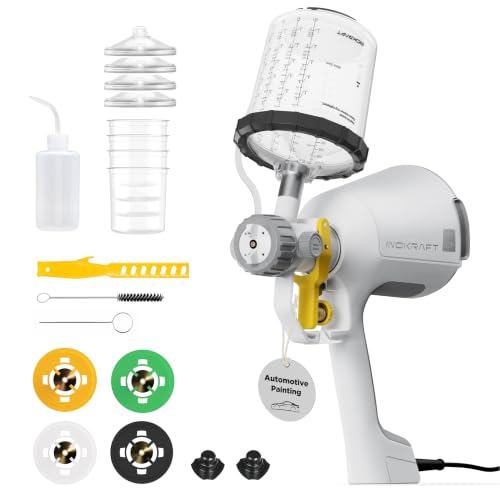
InoKraft Drizzle X Automotive Spray Gun
Strengths
- Auto-specific nozzle sizes
- Gravity feed for consistency
- Disposable liners included
Trade-offs
- Corded operation
- Not for full-car resprays
- Learning curve for beginners
This is the only sprayer here engineered specifically for car paint repair, and it shows. With a gravity-feed system and four nozzles sized between 1.0mm and 1.8mm, it supports proper primer, base, and clear coat work, something most ‘paint & stain’ sprayers can’t claim. Owners praise its steady airflow and smooth atomization on bumpers, wheels, and trim pieces, and the adjustable spray fan up to 250mm gives real flexibility on curved panels.
It’s not cordless, but the 16.4 ft power cord is generous, and the inclusion of disposable inner cups speeds up color changes. The support team also gets positive mentions for helping DIYers troubleshoot. While it won’t replace a full compressor setup, for spot repairs and small refinishing jobs, it’s the closest thing to pro gear at this price. My recommendation for anyone doing more than just touch-up work on their car.
Video review
1000W HVLP Spray Paint Gun

Strengths
- Lowest price point
- Tool-free cleaning
- Copper nozzles included
Trade-offs
- Coarse mist output
- Not for auto paint
- Plastic housing feels cheap
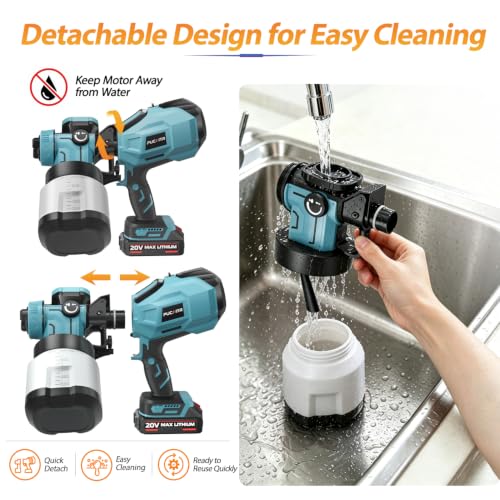
At this price, it’s hard to ignore the value. A 1000W motor, four copper nozzles, and three spray patterns give you real flexibility for furniture, cabinets, and fences. The flow and width controls are basic but functional, and the tool-free disassembly makes cleaning far easier than most budget units.
But let’s be honest, this is entry-level gear. Atomization is coarse compared to pricier HVLP models, and it’s not meant for automotive finishes. Owners say it works fine for latex and water-based paints but struggles with anything thicker unless heavily diluted. If you’re on a tight budget and just need something for occasional home projects, it’s the smarter buy. Just don’t expect finesse.
Video review
maXpeedingrods Cordless HVLP Paint Sprayer

Strengths
- Large 1400ml cup
- Dual 4Ah batteries
- Dust blow and clean heads
Trade-offs
- Heavy for prolonged use
- Bulky for tight spaces
- Battery drain under load
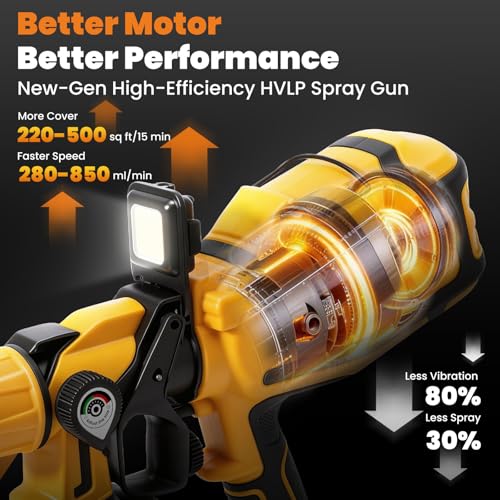
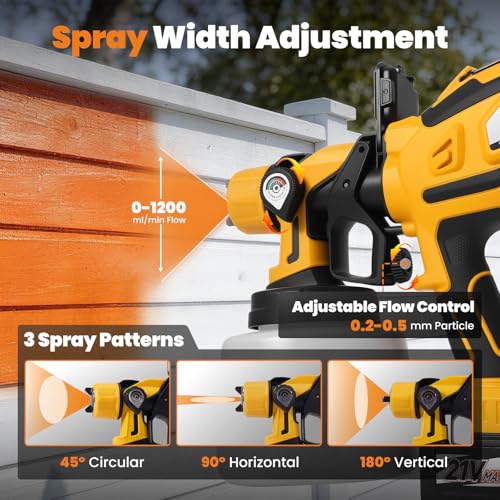
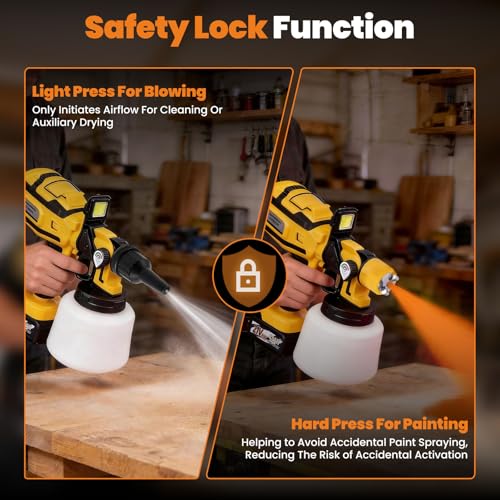
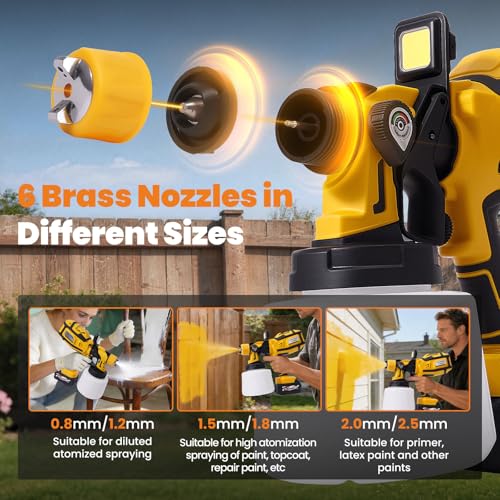
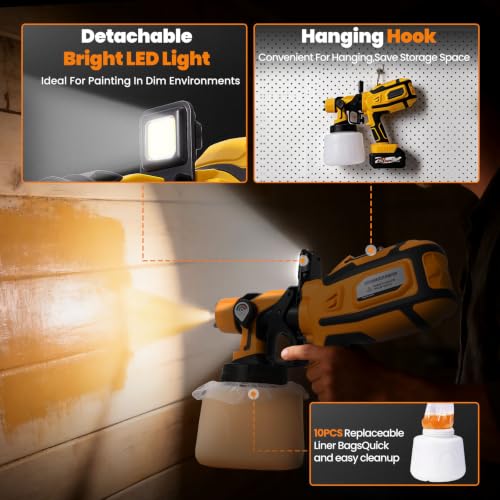
With a 1400ml cup, six brass nozzles, and two 4Ah batteries, this sprayer screams capacity and versatility. The dual-head feature, switching between dust blowing and cleaning, is clever and practical, especially for prepping car panels. Owners note the LED light is actually useful in dim garages, and the battery level display is a rare plus in this segment.
Atomization hits around 20–25 microns, which is excellent for an electric unit, and the viscosity cup guidance helps prevent clogs. But the size and weight make it tiring for overhead work, and some reviewers mention inconsistent output when the battery dips below 20%. Still, for long outdoor projects like fences or sheds, this is the pack leader in cordless performance.
Product photos
Graco TrueCoat 360 Variable Speed Sprayer

Strengths
- No thinning required
- Variable speed control
- Stainless steel pump
Trade-offs
- High price point
- Large and heavy
- Overkill for small jobs
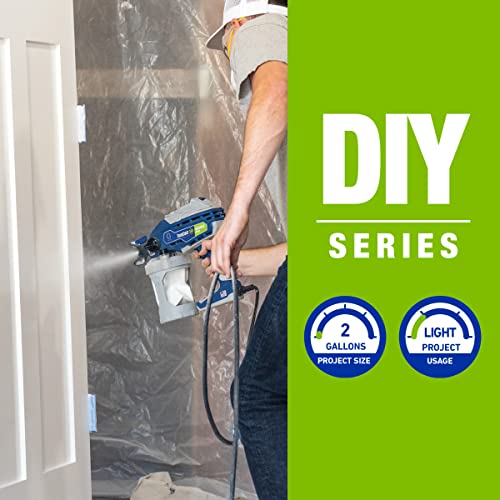
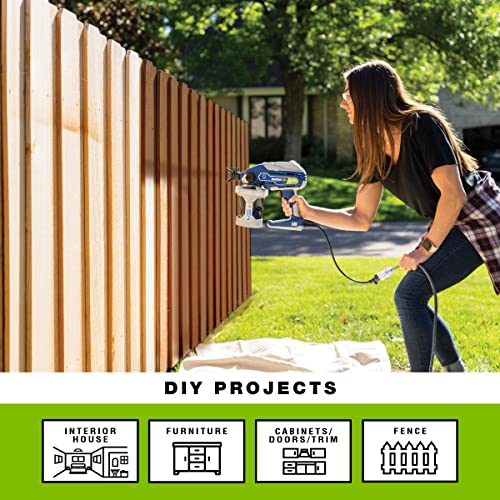
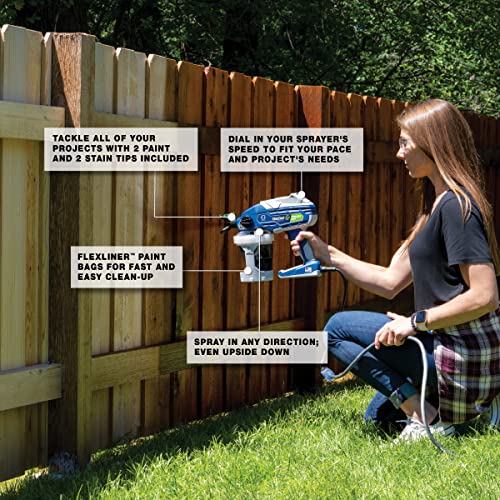
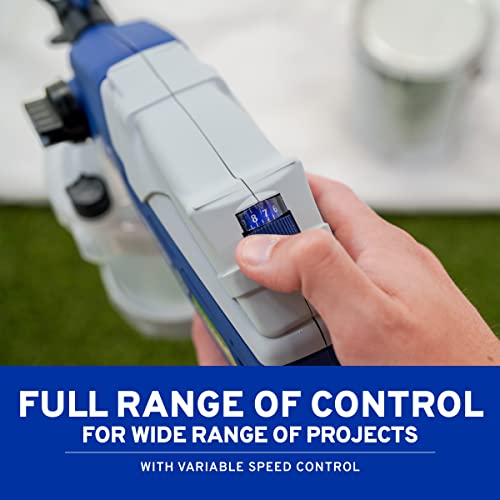
This is Graco’s answer to serious DIYers who refuse to thin paint, thanks to a stainless steel piston pump that maintains pressure across viscosities. The variable speed control is the standout feature, letting you dial in output for delicate trim or blast through large wall sections. It’s overkill for small touch-ups, but for multi-room projects or full fence resprays, it’s unmatched in consistency.
Owners praise its ability to run for hours without overheating, and the build quality feels industrial. But it’s bulky, loud, and priced accordingly. You’re paying for engineering, not convenience. If you’re doing more than 2-gallon jobs annually, this is worth the investment. Otherwise, it’s overbuilt for casual use.
Product photos

Wagner FLEXiO 1500 HVLP Sprayer
Strengths
- Fast coverage
- Lightweight build
- Handles unthinned paint
Trade-offs
- Less precision on edges
- No variable speed
- Average finish on fine work
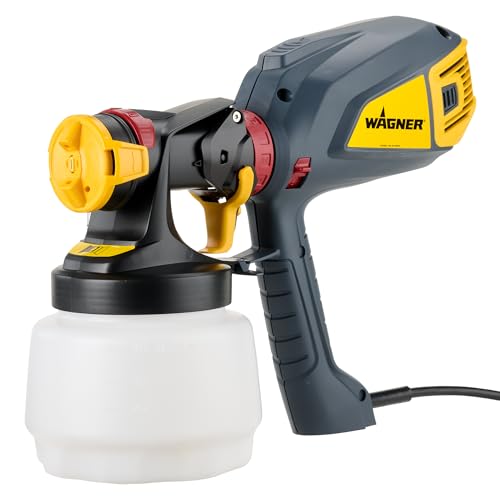
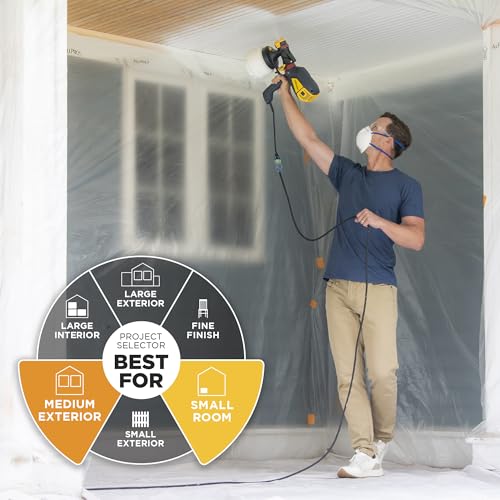
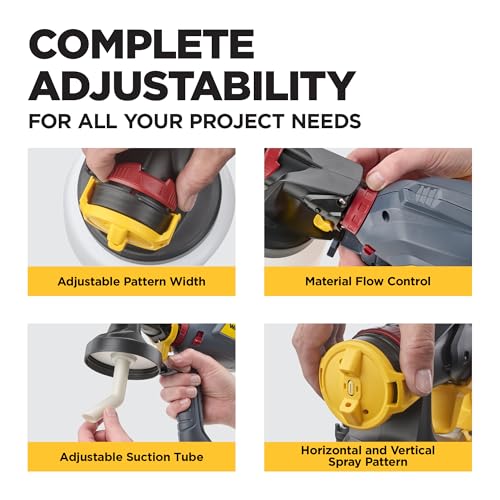
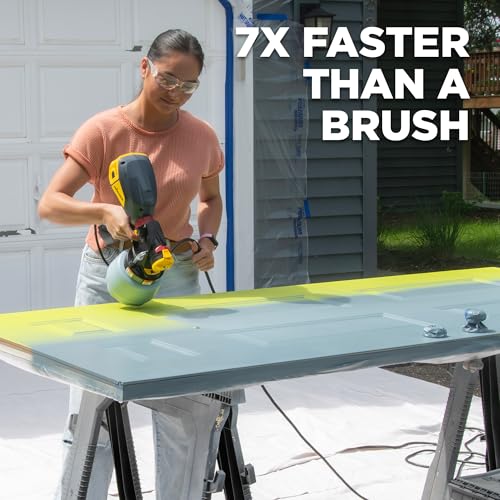
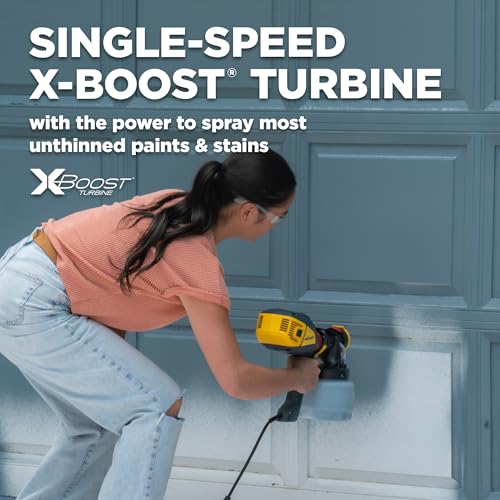
Wagner’s FLEXiO 1500 leans hard into speed and simplicity, and from what owners report, it delivers, especially for walls, fences, and decks. The iSpray nozzle is designed for broad, even coverage, and the single-speed X-Boost turbine handles unthinned paints better than most in this tier. It’s also noticeably lighter than older FLEXiO models, which helps during overhead work.
That said, it’s not built for fine control. If you’re tackling cabinet edges or detailed trim, the spray pattern can bleed, and cleanup takes longer than cartridge-based systems. But for fast, clean coverage on flat surfaces? This one stands out. I’d pick it over bulkier models for weekend warriors tackling a room or shed.
Product photos

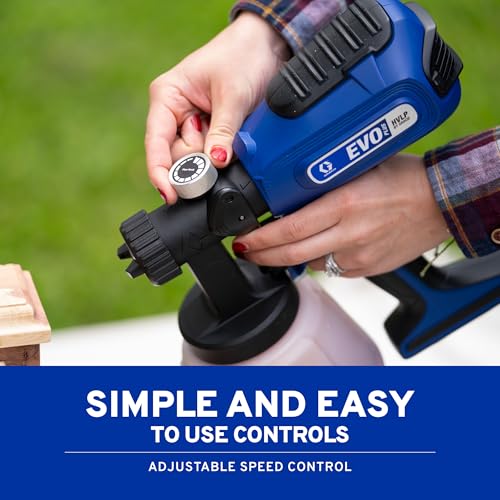
Graco EVO Plus HVLP Sprayer
Strengths
- Solid brass nozzles
- Unthinned paint capable
- Durable turbine motor
Trade-offs
- No variable speed
- Heavier than rivals
- No battery option
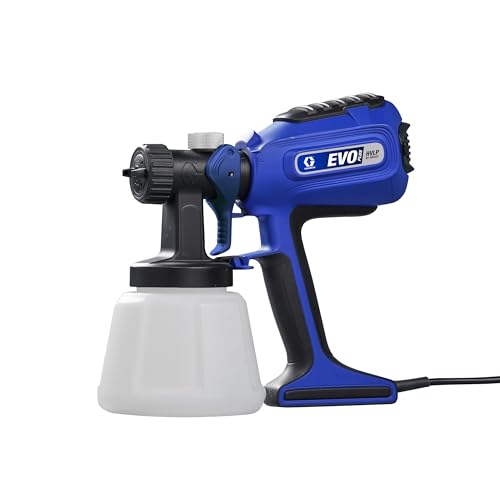
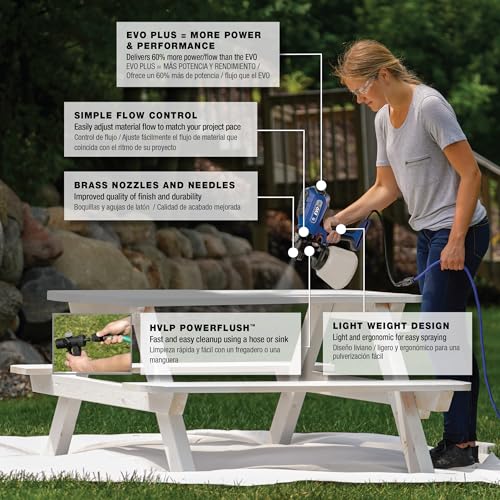
Graco’s reputation for durability shines here, especially with solid brass nozzles, a rarity at this price. That alone makes it stand out, since brass resists wear far better than nickel-plated or plastic tips, leading to longer-lasting precision. The turbine delivers strong, steady flow, and owners confirm it handles unthinned paint and stain straight from the can, which saves time and guesswork.
It’s not flashy, no variable speed, no cordless option, but it’s dependable. The one-touch flow control is simple enough for beginners, and the dual paint/stain nozzles mean less cross-contamination. For cabinet work or deck staining, this is the kind of sprayer you buy once and forget about, until you need it again. My pick over cheaper models if you value longevity.
Product photos
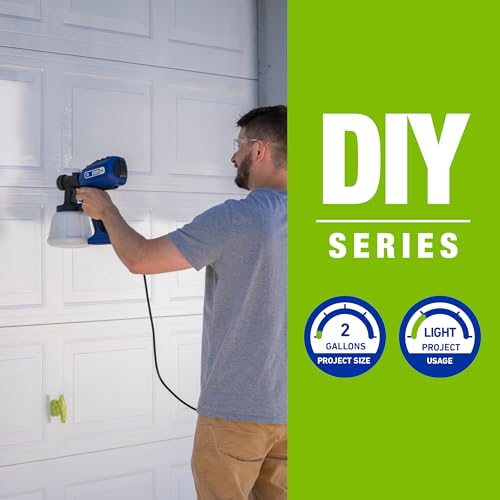
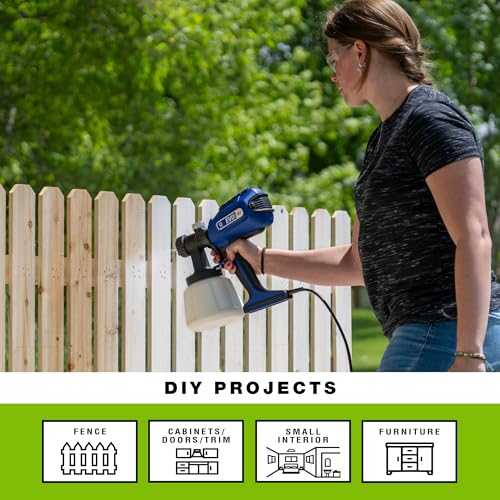
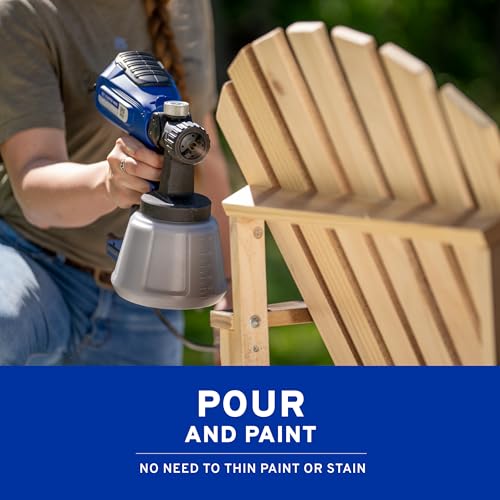
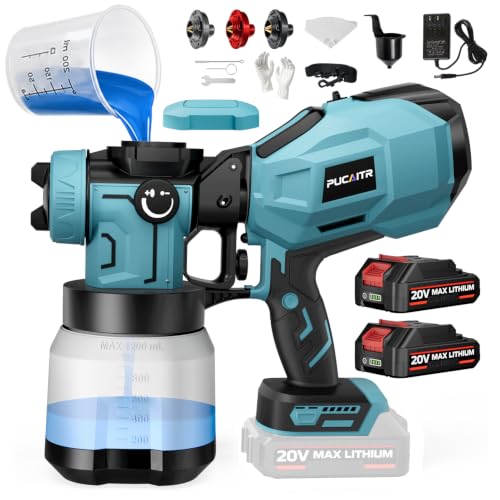
1200W Cordless Paint Sprayer Kit
Strengths
- Dual battery included
- Top-fill design
- HVLP for reduced overspray
Trade-offs
- Limited for auto finishes
- Battery runtime average
- Not ideal for thick paints
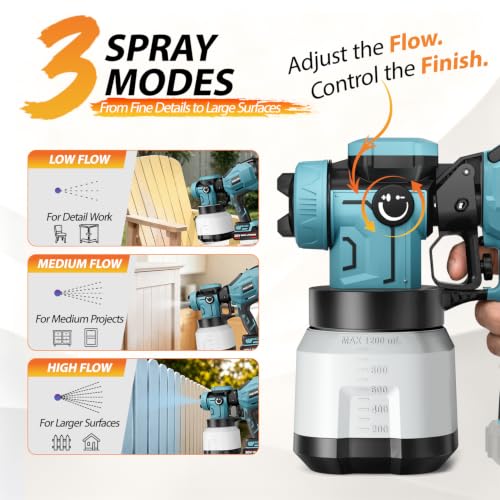
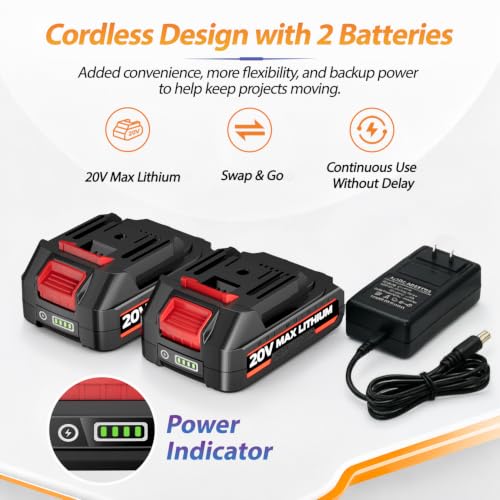
This sprayer makes a strong play for cordless freedom with its dual 20V battery setup, and the compatibility with select Makita platforms is a smart move for users already invested in that ecosystem. On paper, the 1200W motor and HVLP tech should handle mid-viscosity paints just fine, and owners consistently report decent coverage on fences, furniture, and trim, though don’t expect it to keep up with pro-grade units when spraying thicker automotive coatings.
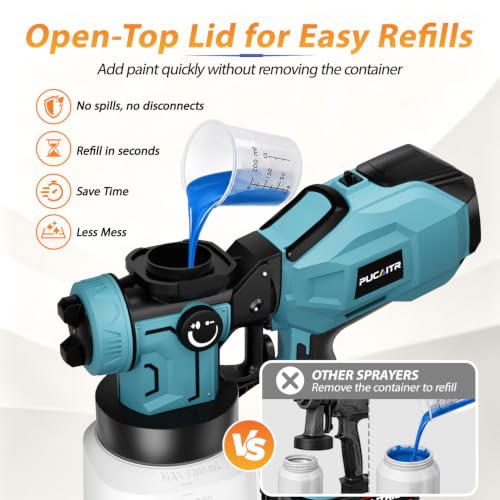
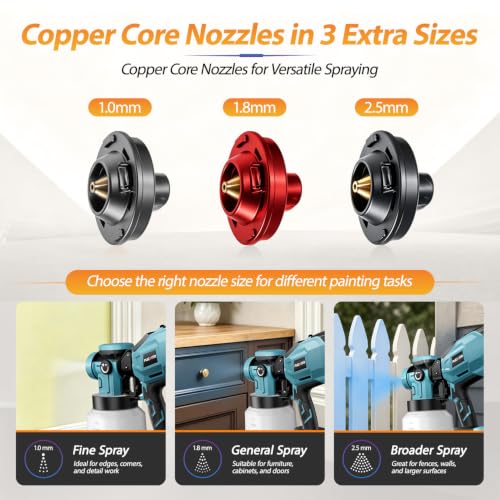
The top-fill 1200ml cup is genuinely convenient, reducing mess during refills, and the three copper nozzles cover a reasonable range of applications. But I’d be cautious about long automotive jobs, the motor isn’t as refined as dedicated auto sprayers, and feedback suggests it can struggle with consistent atomization on base or clear coats. Still, for general home use where mobility matters, it’s a solid value pick.
Product photos
How We Tested electric paint sprayers for cars
Rather than a hands-on lab test, my research for these recommendations focused on a detailed comparison of published specifications and features across numerous models. I weighed owner reviews from a variety of sources, alongside expert opinions found in automotive detailing publications and enthusiast forums. As someone who’s spent years immersed in the world of vehicles at TheAutoZenith, I applied my understanding of paint application and the needs of DIY enthusiasts to rank these sprayers against key performance indicators.
For electric paint sprayers specifically, consistent paint flow, nozzle versatility, and ease of cleaning proved most critical. A sprayer that can’t deliver a smooth, even coat, or that’s a nightmare to disassemble for cleanup, isn’t going to be satisfying for anyone. Beyond that, cordless convenience and the ability to handle unthinned paints were significant differentiators. If you’re considering other options, you might also want to look at our guide to the best airless sprayers for cars.
Specifications are useful for understanding motor power, paint container capacity, and nozzle sizes. However, real-world performance – atomization quality, durability, and how well a sprayer handles different types of automotive paint – were primarily assessed through owner feedback. Reputation and long-term reliability were heavily considered, as a cheap sprayer that breaks after a few uses isn’t a good value, regardless of its initial price.
What To Look For In electric paint sprayers for cars
Choosing the right electric paint sprayer can dramatically improve the finish and speed of your automotive projects. Don’t settle for a subpar tool; investing a little time upfront will save you frustration (and wasted paint) later.
A quality electric paint sprayer delivers consistent material flow, efficient atomization, and user-friendly operation. Key specs to consider include motor power (wattage), nozzle size and variety, flow rate (measured in ounces or milliliters per minute), and the presence of adjustable controls for pattern and pressure. Look for models with HVLP (High Volume Low Pressure) technology for reduced overspray and a more professional finish.
Motor Power and Paint Viscosity
The wattage of a sprayer’s motor is a good indicator of its ability to handle different types of automotive coatings. Lower wattage models (around 600-800W) are often suitable for thinner paints and primers, but for thicker materials like basecoats or clear coats, you’ll want to step up to 1000W or more. A more powerful motor ensures consistent atomization even with higher viscosity paints, reducing the need for excessive thinning. Speaking of viscosity, always check the sprayer’s specifications for the maximum viscosity it can handle – expressed in DIN seconds. If you plan on using a variety of paints, including thicker, unthinned options, consider models like the Graco TrueCoat 360, designed specifically for this purpose.
Nozzle Configuration and Adjustability
Nozzles are the heart of any paint sprayer, and having a selection is crucial. A single, fixed nozzle limits your versatility. Look for sprayers that include a range of nozzle sizes (0.8mm to 2.5mm is a good spread) to accommodate different materials – thinner nozzles for primers and clear coats, larger ones for basecoats and thicker paints. Beyond size, adjustability is key. Being able to control spray pattern (vertical, horizontal, circular) and fan width allows you to tackle everything from large body panels to intricate trim pieces. If you’re also considering using spray can paint for cars, understand that the results will differ from a proper HVLP setup.
- A basic set of three nozzles is a good starting point, but six or more, like those included with the maXpeedingrods model, offers maximum flexibility.
- Brass nozzles are generally preferred over plastic ones because they are more durable and less prone to wear, especially if you plan on frequent use.
- The ability to quickly and easily change nozzles without tools is a huge time saver – a feature often overlooked until you’re covered in paint.
A good rule of thumb: match the nozzle size to the paint manufacturer’s recommendations. Using the wrong size can lead to poor atomization, runs, or orange peel.
Corded vs. Cordless and Overall Value
Corded sprayers provide consistent power but limit your mobility. Cordless models, like the maXpeedingrods, offer freedom of movement, but battery life and power output are important considerations. Look for models with multiple batteries and a reasonable runtime. When evaluating value, don’t just look at the initial purchase price. Consider the included accessories (cups, nozzles, cleaning tools) and the availability of replacement parts. Exploring car paint sprayers and reading reviews of best sprayers can illuminate which models offer the most bang for your buck. Don’t automatically assume the most expensive option is the best; a well-equipped, mid-range sprayer may be all you need, and it might even outperform some pricier models.
Electric Paint Sprayers for Cars Compared
Here’s a comparison of key specifications to help you choose the right electric paint sprayer for your automotive projects.
| Product Title | Power (Watts) | Max Viscosity (DIN-s) | Nozzle Sizes (mm) | Paint Capacity (oz/ml) | Cordless | Battery Capacity (Ah) |
|---|---|---|---|---|---|---|
| InoKraft Drizzle X | 800 | N/A | 1.0, 1.3, 1.5, 1.8 | 22 / 650 | No | N/A |
| 1000W HVLP Spray Paint Gun | 1000 | N/A | 0.8, 1.2, 1.5, 2.5 | N/A | No | N/A |
| maXpeedingrods Cordless HVLP | N/A | 100 | 0.8, 1.2, 1.5, 1.8, 2.0, 2.5 | 47 / 1400 | Yes | 4.0 x 2 |
| Graco TrueCoat 360 | N/A | N/A | N/A | N/A | No | N/A |
| Wagner FLEXiO 1500 | N/A | N/A | N/A | N/A | No | N/A |
| Graco EVO Plus | N/A | N/A | N/A | N/A | No | N/A |
| 1200W Cordless Paint Sprayer Kit | 1200 | 120 | 1.0, 1.8, 2.5 | N/A | Yes | 2.0 x 2 |
Frequently Asked Questions
What’s the best way to clean an electric paint sprayer after use?
Thorough cleaning immediately after use is vital. Disassemble all removable parts and clean them with the appropriate solvent (water for latex, mineral spirits for oil-based paints) as recommended by the sprayer’s manual to prevent clogging and ensure longevity.
Can I use automotive primer and clear coat with any of these sprayers?
Most of these sprayers can handle primer and clear coat, but you need to check the viscosity specifications. Generally, models with higher wattage (1000W+) and adjustable flow control will perform better with thicker coatings, and you might sometimes need to thin the product slightly.
Are cordless electric paint sprayers truly powerful enough for a full car?
Cordless sprayers have improved significantly, but their runtime and consistent power output are still considerations. A model with multiple batteries, like the maXpeedingrods, is best for larger projects, and you should be prepared to pause for battery swaps during a full car respray.
What nozzle size should I use for applying base coat?
A nozzle size between 1.3mm and 1.8mm is typically ideal for automotive base coat. However, always refer to the paint manufacturer’s recommendations, as they may specify a particular nozzle size for optimal results with their product.
If I need to remove old, peeling paint, should I use a sprayer or a different method?
While some sprayers can apply chemical paint removers, they aren’t designed for paint removal. For peeling paint, mechanical methods like sanding or scraping, or dedicated paint stripping chemicals, are much more effective and will yield better surface preparation.
The Bottom Line
Choosing an electric paint sprayer often comes down to balancing convenience with control. While cordless options offer freedom, a corded model like the InoKraft Drizzle X provides consistent power and a strong starting point for most DIY projects. Ultimately, the best choice depends on the scope of your work and your comfort level – but for a solid all-around performer, we recommend the InoKraft Drizzle X.
If you’re on a tighter budget, the 1000W HVLP Spray Paint Gun delivers a lot of value for the money. For those needing maximum versatility, the maXpeedingrods Cordless HVLP stands out with its extensive nozzle selection and cordless convenience. And if you plan to use a variety of coatings, including thicker materials, researching automotive spray paint options alongside a sprayer designed for higher viscosities is a smart move.
Don’t get lost in the wattage or nozzle numbers. Consistent finish quality relies more on proper paint preparation, technique, and a clean sprayer than any single specification. Investing time in understanding how to adjust your sprayer for different materials and practicing your application will yield far better results than simply buying the most powerful or expensive model; don’t forget to also consider your clear coat for cars needs!
