
Are 1/4 Inch Wheel Spacers Safe? The Critical Overlooked Risk
This post contains affiliate links. As an Amazon Associate, we earn from qualifying purchases.
Yes, a 1/4 inch wheel spacer can be safe, but only under one condition: you must have enough undamaged threads on your factory wheel studs to achieve a minimum of 8 full turns of the lug nut after the spacer is installed. That 6mm (0.236″) thickness eats into your available thread. If your studs are short, worn, or the spacer is hub-centric (requiring longer studs), the spacer creates a direct path for the wheel to detach. Manufacturer guidelines like those from the NSW government explicitly state spacers should not be used unless original equipment, and racing standards like SFI 44.1 treat them as a wear item with a five-year service life for a reason.
That single thread-engagement rule is the whole game. It separates a calculated, minor correction from a guaranteed mechanical failure. The rest of your decision—hub-centric versus slip-on, material quality, torque specs—only matters if you pass this first test. Fail it, and you’ve bolted a known point of failure onto your hub.
What follows is a breakdown of why that 1/4 inch measurement is deceptive, the legal and mechanical red flags most installers ignore, and the exact steps to verify your setup won’t end with a wheel in the ditch. We’ll also look at when you should walk away from spacers entirely and buy the right wheels instead.
Key Takeaways
- A 1/4 inch (6mm) slip-on spacer requires at least 8-10 full turns of thread engagement on your factory studs. If you can’t achieve that, the spacer is unsafe.
- Hub-centric bolt-on spacers are inherently safer for any thickness over 5mm because they use their own integrated studs, eliminating the thread-engagement gamble.
- Many regions, including parts of Australia, legally prohibit spacers unless they were original factory equipment, voiding insurance if an accident is linked to the modification.
- Spacers increase leverage on wheel bearings. A 1/4 inch change might seem minor, but it accelerates bearing wear predictably, leading to premature failure.
- Quality is non-negotiable. Forged aluminum (like 6082-T6) or magnetic steel spacers from reputable brands are the only option; cheap cast spacers can fracture under load.
The Physics Behind a Quarter Inch
People hear “1/4 inch” and think it’s trivial. It’s less than the width of a pencil. On a 3,000-pound vehicle, that seems like nothing. That’s the first mistake.
A wheel spacer doesn’t just fill space. It moves the wheel’s entire mounting surface away from the hub. This changes the lever arm acting on your wheel bearings and studs. Think of a breaker bar. A one-foot bar gives you modest leverage. Add a six-inch pipe extension, and the same force yields far more torque on the socket. A 1/4 inch spacer is that extension. It increases the bending moment on each wheel stud and increases the radial load on the wheel bearing. The effect is small per mile, but over 10,000 miles, that compounded stress shows up as accelerated bearing wear and stud fatigue.
The real danger isn’t the spacer breaking. It’s what the spacer does to the hardware you already trust.
Common mistake: Assuming factory studs are long enough for any thin spacer. Stud length varies wildly by manufacturer and model. A 6mm spacer on a Lexus with short hub bolts might leave only 4 threads engaged, a failure point that reveals itself not on the first drive, but on the first severe pothole or hard brake.
The Critical 1/4 Inch Question: Slip-On vs. Hub-Centric
You have two paths for a 1/4 inch spacer, and they are worlds apart in safety.
Slip-on spacers are simple metal discs with holes. They slide over your existing studs and sit flush against the hub. The wheel then mounts directly to the original studs. Their safety hinges entirely on one thing: leftover thread.
Hub-centric bolt-on spacers are thicker assemblies. They bolt to your hub using your factory lug nuts or bolts. They have their own set of studs pressed into the spacer, onto which your wheel then mounts. This design preserves—or even improves—thread engagement because the new studs are matched to the spacer’s thickness.
Here’s the breakdown:
| Spacer Type | How It Works | Safe for 1/4 inch? | The Risk If You Get It Wrong |
|---|---|---|---|
| Slip-On | Slides over factory studs; wheel uses original nuts. | Conditional. Only if ≥8 threads engage after spacer is on. | Insufficient engagement lets wheel nuts vibrate loose; wheel can detach. |
| Hub-Centric Bolt-On | Bolts to hub; has integrated studs for the wheel. | Yes. Built-in studs guarantee correct engagement. | Poor quality or improper hub bore can cause vibration and hub damage. |
| Generic “Universal” Spacer | Often slip-on with slotted holes for multiple bolt patterns. | Almost Never. Poor centering creates violent imbalance. | Destructive vibration shakes lug nuts loose and destroys wheel bearings within months. |
For a 1/4 inch application, the hub-centric bolt-on spacer is the superior choice. It removes the thread-engagement variable. Brands like BONOSS or Motorsport Tech offer models in this thickness with precise hub-centric rings. The slip-on spacer is a compromise that demands rigorous verification. You must physically test-fit a lug nut and count the turns.
How to Measure Thread Engagement (The 30-Second Test)
Don’t guess. This test tells you if a slip-on spacer is even an option for your car.
- Remove one lug nut and slide your 1/4 inch spacer onto the stud.
- Hand-thread the lug nut back on. Count how many smooth, full rotations it takes to finger-tighten the nut flush against the spacer (or the wheel, if you have it mounted).
- The number: You need a minimum of 8 full turns. 10 is comfortable. Fewer than 6 is an immediate rejection—do not install the spacer.
If you fail this test, your only safe options are a hub-centric bolt-on spacer or extended wheel studs. Installing extended studs is a more involved job, often requiring a press and bearing disassembly, which is why most people should just upgrade to a bolt-on spacer.
The Legal and Warranty Minefield

Safety isn’t just about mechanics. It’s about compliance. This is where the official line from manufacturers and regulators becomes crystal clear, and it contradicts much of the aftermarket sales pitch.
Take the NSW vehicle standards guideline. It states plainly: “Wheel spacers or adaptors must not be used for wheel conversions between the wheel mounting face and the wheels unless fitted as original equipment by the vehicle manufacturer.” This isn’t a suggestion; it’s a legal condition for registration in New South Wales, Australia. Similar rules exist in other jurisdictions. Even if your local laws are murkier, your insurance company will use such documents to deny a claim if a spacer is deemed a contributing factor in an accident.
Manufacturers agree. A Lexus service bulletin for 2021–2024 models warns that non-compatible wheels or hub bolts “may result in wheel(s) coming off, which could increase the risk of a vehicle crash.” They explicitly do not recommend aftermarket parts. Installing spacers, even 1/4 inch ones, can void your powertrain warranty and any suspension-related warranty claims.
Where this goes sideways: Thinking your insurance covers modifications you didn’t disclose. If you don’t report adding spacers and have a wheel-off accident, the adjuster’s investigation will start and end with that undisclosed modification. Your claim will be denied.
When to Walk Away From Spacers Entirely
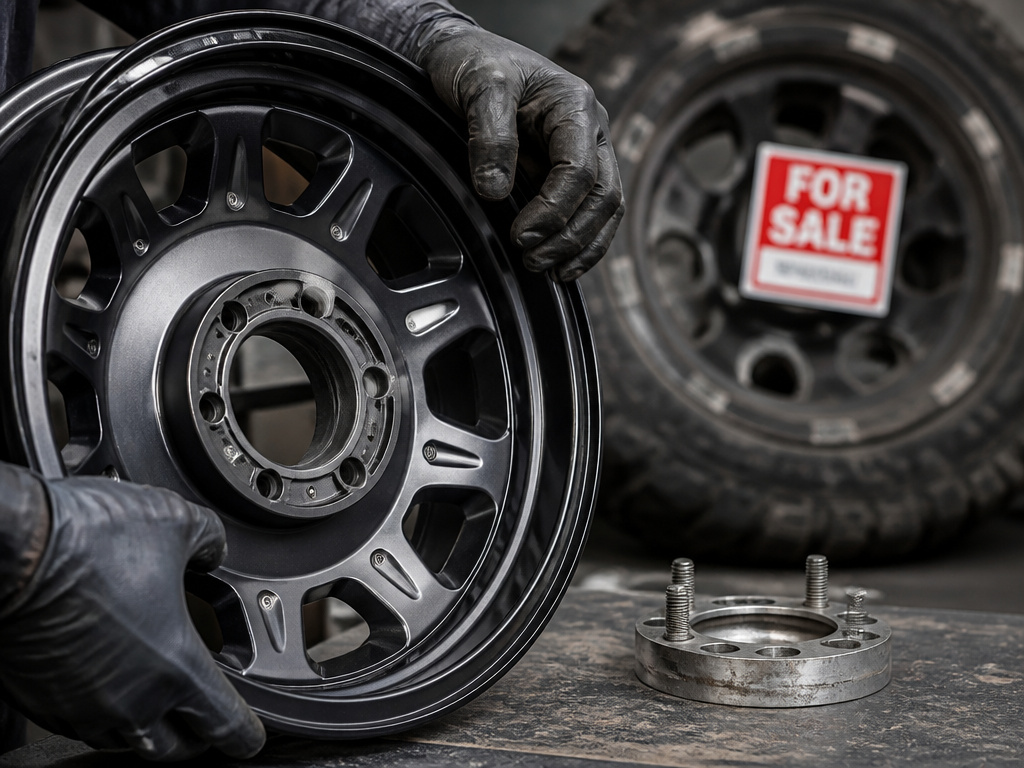
A 1/4 inch spacer is a tool for a specific job: fine-tuning fitment or providing minimal clearance for a larger brake caliper. It is not a solution for a fundamentally wrong wheel. If you need more than an inch of spacing to make a wheel fit, you bought the wrong wheel. The smarter, safer, and often cheaper long-term solution is to sell that wheel and buy one with the correct offset.
Consider spacers a last resort, not a first step. This is especially true for trucks and SUVs. The increased leverage from wheel spacers for trucks accelerates wear on components already under heavy load. For a daily-driven pickup, the stress on bad wheel bearings is cumulative and expensive to fix.
Installation: Torque, Order, and the Forgotten Re-Torque
Assuming you’ve chosen a quality spacer and passed the thread test, installation is your final gatekeeper. There is zero room for “good enough.”
- Cleanliness: Wipe the hub face, the back of the spacer, and the wheel mounting surface with brake cleaner. Any grit, rust, or paint acts as a compressible layer, causing lug nuts to loosen as it crushes.
- Torque Sequence: Always use a crisscross star pattern, not a circle. This ensures even clamping force.
- Torque Value: Use the vehicle manufacturer’s specified torque for your lug nuts/bolts. Do not use the torque listed on the spacer packaging unless it explicitly matches your car’s manual.
- The Non-Negotiable Re-Torque: Drive 50-100 miles at moderate speeds. Then, with the wheels cold, remove each lug nut one at a time, apply a drop of medium-strength thread locker (like Loctite Blue 242), and re-torque to spec. This catches the initial settling of all components.
Skipping the re-torque is how a perfectly installed wheel develops a wobble two weeks later. The initial heat cycles and vibration settle the metal interfaces, requiring a final clamp-down.
What “Quality” Actually Means
A safe spacer is defined by its material and construction, not its price tag or shiny finish.
- Material: For aluminum spacers, you want 6082-T6 aluminum. This aerospace-grade alloy has a tensile strength of 310 MPa. Cheap spacers use cast aluminum, which can be porous and brittle, with half the strength. For steel spacers, look for magnetic steel that meets standards like SFI 44.1, which mandates specific yield and tensile strengths for racing applications.
- Construction: The spacer must be CNC-machined from a solid billet, not cast. Cast parts can have internal voids that become stress fractures.
- Fit: It must be vehicle-specific. The center bore must match your hub diameter perfectly (hub-centric). The bolt pattern must be exact, not slotted. True hub-centric wheel spacers from reputable brands are machined to tolerances of thousandths of an inch.
A set of high-quality wheel spacers from a brand like H&R or Eibach costs more upfront. That cost is the price of the material certification and precision machining that keeps your wheel attached. The $30 eBay special is a gamble where the stakes are your safety and the safety of everyone around you.
The Bottom Line
Are 1/4 inch wheel spacers safe? They can be, but the path to safety is narrow and specific. It requires rejecting cheap parts, passing a strict thread-engagement test, opting for a hub-centric bolt-on design, following a meticulous installation ritual, and accepting the legal and warranty risks. For the vast majority of drivers looking for a cosmetic “flush” look, buying wheels with the correct offset is the simpler, safer, and more legitimate choice. A spacer is a precision tuning tool, not a cosmetic accessory. Treat it with the respect its consequences demand, or don’t run it at all.
Frequently Asked Questions
Do I need longer studs for a 1/4 inch spacer?
It depends entirely on your factory stud length. Perform the thread-engagement test described above. If you get fewer than 8 full turns of the lug nut, you need either extended studs or you must switch to a hub-centric bolt-on spacer, which has its own integrated studs. For many modern cars with short hub bolts, a 6mm spacer is already too thick for safe use of the original hardware.
Are wheel spacers legal in the United States?
There is no single federal law banning wheel spacers in the U.S. Legality is determined by state vehicle codes, which often reference industry standards. However, a spacer that causes your tire to protrude beyond the fender, creates a hazardous vibration, or leads to a component failure can result in a vehicle defect notice. Furthermore, any accident investigation will scrutinize an aftermarket spacer, and your insurance may deny coverage if it’s deemed a causative factor.
How do spacers affect my wheel bearings?
Spacers increase the lever arm acting on the wheel bearing, accelerating wear. While a 1/4 inch spacer has a relatively minor effect compared to larger wheel spacers, the increased load is constant. This can shorten bearing life, particularly on heavier vehicles or those driven aggressively. If you hear a growing hum or roar from a wheel after spacer installation, it’s likely the bearing and will require a wheel bearing replacement.
What’s the difference between wheel spacers and wheel adapters?
Spacers maintain your vehicle’s original bolt pattern; they simply add distance. Adapters change the bolt pattern (e.g., from 5×114.3 to 5×120) and also add thickness. Adapters are inherently more complex and introduce more potential failure points. The safety rules for wheel adapters are even stricter, and they are generally riskier than spacers for street use.
Can I use a 1/4 inch spacer on all four wheels?
Yes, and in fact, you should. Changing the track width on only one axle (front or rear) can negatively alter the vehicle’s handling balance. If you’re spacing for a functional reason like brake clearance, it’s fine to do just that axle. For cosmetic spacing, keep the change consistent front and rear to maintain neutral handling.
