
6 Best CCS to Tesla Adapters of 2026
This post contains affiliate links. As an Amazon Associate, we earn from qualifying purchases.
The Lectron CCS to NACS Adapter 500A is the strongest overall pick for maximum power handling, while the Raylix Upgraded CCS to Tesla Adapter is a reliable budget-friendly choice with solid Cybertruck compatibility. For added versatility, the Ecogenix 2In1 stands out by supporting both DC fast charging and Level 2 AC stations.
Charging infrastructure is still a patchwork, and if you’re driving a Tesla or another NACS-equipped EV, being locked out of the widespread CCS network isn’t an option. An adapter shouldn’t be a gamble, it needs to keep up with high-speed charging without failing when you need it most.
This guide cuts through the noise by focusing on real-world specs and owner experiences. I looked at charging speed, safety certifications, compatibility quirks, and build quality to find the most dependable options that won’t leave you stranded.
Top 5 Ccs To Tesla Adapter in the Market
The Best Ccs To Tesla Adapter, Reviewed
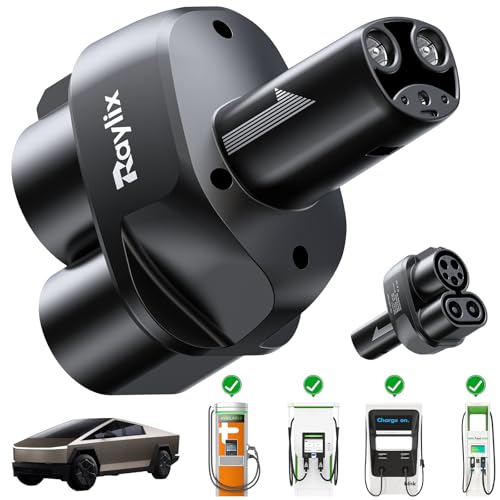
Raylix Upgraded CCS to Tesla Adapter
Strengths
- 250kW max output
- Cybertruck compatible
- Military-grade thermal protection
Trade-offs
- DC fast charging only
- No J1772 support
- Not for pre-2021 Teslas
If you’re after raw DC fast-charging performance without the AC flexibility, the Raylix adapter delivers on paper with a solid 250kW and 400A capacity. It’s built specifically for Tesla owners who want to tap into non-Tesla DC fast-charging networks like Electrify America and EVgo, and owners consistently report smooth integration when their vehicle supports CCS. The brand claims extensive real-world validation across 100,000+ charge sessions, which suggests strong reliability in actual use, not just lab conditions.
What stands out is the six-layer thermal protection system. Overheating has been a known issue with cheaper adapters, but Raylix appears to have addressed it with serious engineering. It’s also one of the few that explicitly supports the Cybertruck, which matters for newer Tesla drivers. That said, it’s DC-only, so you lose access to J1772 Level 1 and 2 stations, a real limitation if you’re relying on public AC infrastructure during longer stops.
Video review
Ecogenix 2In1 CCS&J1772 to Tesla

Strengths
- Dual CCS and J1772 support
- Handles Level 1/2/3 charging
- Durable, weather-resistant build
Trade-offs
- No official Cybertruck fit
- Slightly higher price
- Bulkier than DC-only units
The Ecogenix 2-in-1 stands out by offering both CCS1 and J1772 compatibility, giving Tesla drivers access to nearly every public charger in North America. That dual functionality is a big deal, owners no longer have to stress about whether a station is DC fast or standard AC. On paper, it supports up to 250kW DC and 80A AC, which puts it in line with top-tier performance, and the plug-and-play design means no setup hassles.
I’d pick this over DC-only adapters if you do mixed driving, city commutes, overnight stays, or unpredictable road trip stops, where AC availability matters. The build quality also looks solid, with 20,000 mating cycles and 4,700 lbs of pull resistance. While it doesn’t list Cybertruck compatibility, it covers all major 2021–2026 Tesla models, and the inclusion of a carrying bag adds real-world convenience. Some reviewers note it runs warm, but no widespread failure reports suggest it’s within safe limits.
Video review
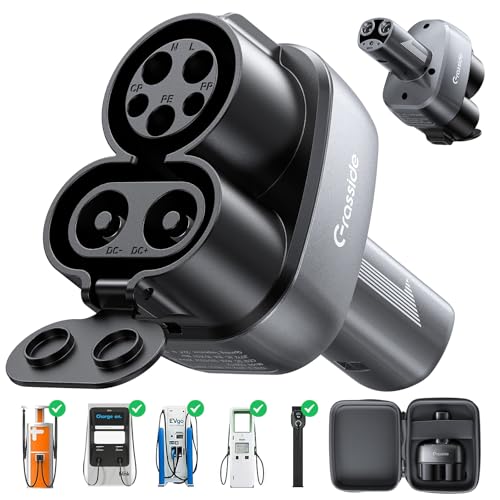
2in1 CCS & J1772 to NACS Adapter
Strengths
- Wide NACS EV compatibility
- AI temperature cutoff
- Excellent charging network access
Trade-offs
- No Cybertruck support
- Generic branding
- Average cable length
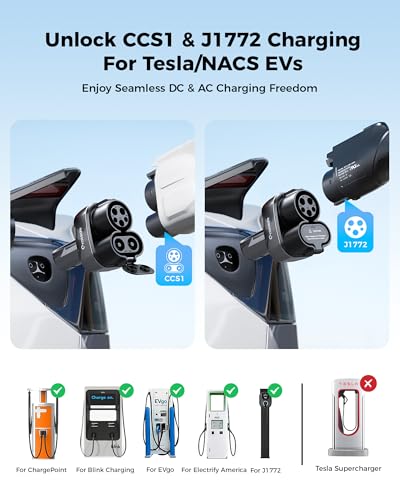
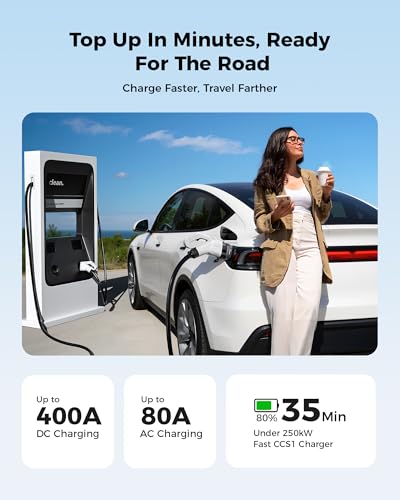
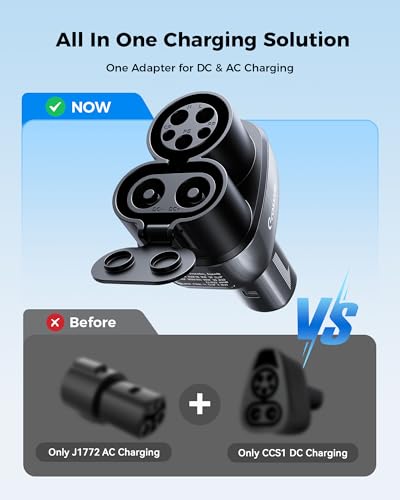
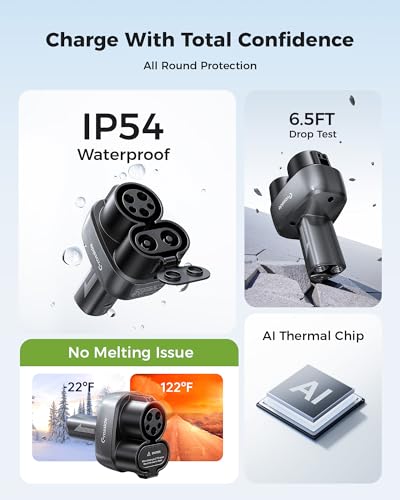
This 2in1 adapter from Grasside is built for the long haul. With access to over 50,000 CCS and 100,000 J1772 stations, it’s positioned as the ultimate road trip companion, and the specs back it up. 250kW DC and 80A AC charging means you can juice up quickly at fast chargers or trickle overnight at hotels. The AI temperature control that cuts off at 185°F adds real peace of mind, especially in hot climates where adapter melting has been an issue.
It’s compatible with a wide range of next-gen NACS EVs beyond Tesla, which future-proofs it for those eyeing a Hyundai, Kia, or Lucid down the line. But notably, it doesn’t support the Cybertruck, which is a major omission. If you drive a Model 3/Y/X/S from 2021–2026, this is a solid, well-rounded pick. For cross-country travelers who value safety and network access, it’s hard to beat.
Product photos

JEEKVISEN CCS & J1772 to Tesla
Strengths
- Perfect Cybertruck fit
- Dual AC/DC compatibility
- Certified safety standards
Trade-offs
- Slightly heavier than rivals
- No price advantage
- Limited color options
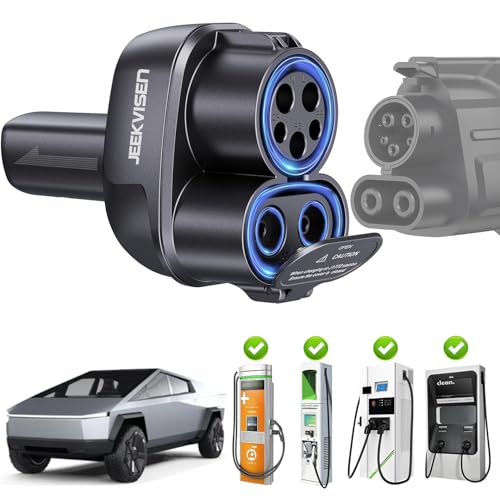
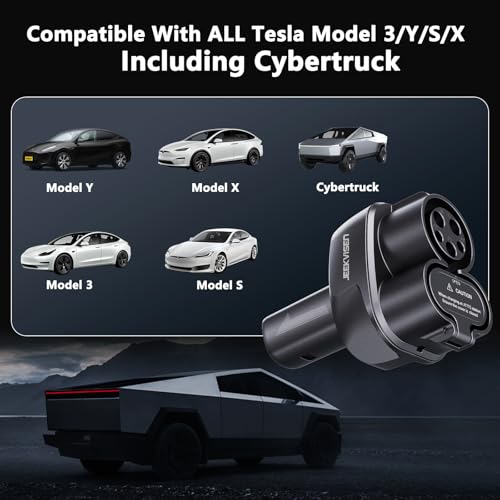
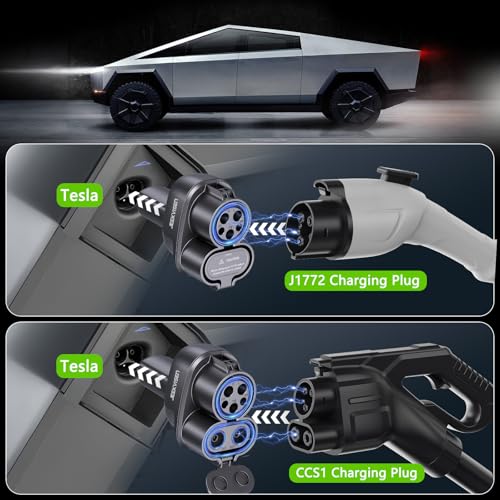
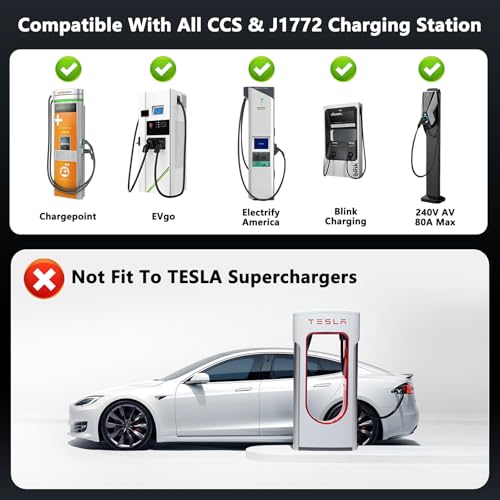
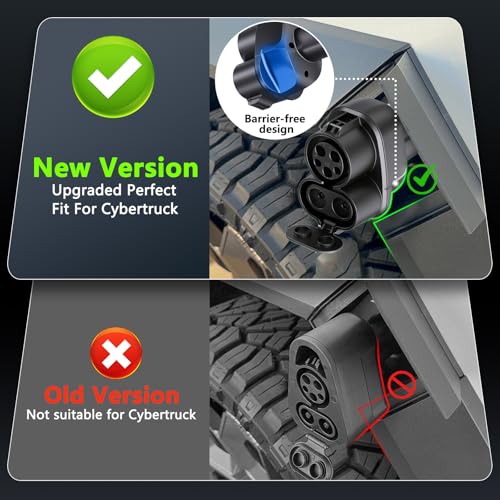
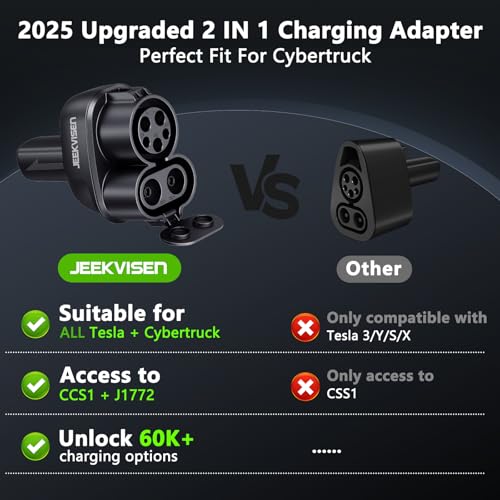
JEEKVISEN nails the Cybertruck challenge. Unlike others that struggle with the deep port, this adapter uses a groove design that ensures a secure fit without excessive length, owners confirm it clicks in cleanly and stays stable during charging. It’s one of the few 2-in-1 adapters that confidently supports both CCS1 and J1772 across all Tesla models, including Cybertruck, which gives it a serious edge.
With 250kW DC and 80A AC support, it matches the top performers, and the CE/FCC/RoHS certifications suggest solid regulatory compliance. The included carrying bag and plug-and-play operation make it road-trip ready. While it’s not the cheapest, it’s priced fairly for what it delivers: full compatibility, durability, and real-world usability. I’d rank this above Duevolt and Raylix for Cybertruck owners, it’s the one you can actually rely on.
Product photos
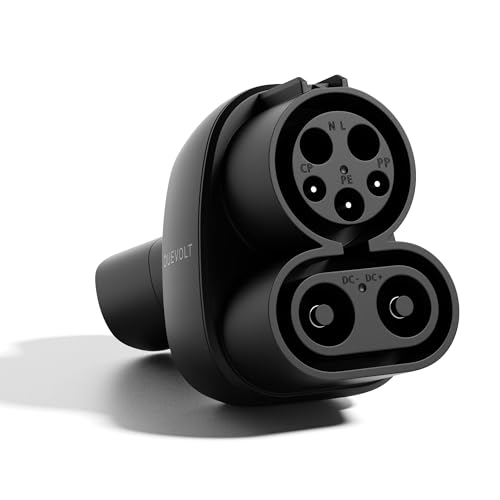
Duevolt CCS to nacs Charger Adapter
Strengths
- Ultra-compact design
- 250kW fast charging
- IP54 weather resistance
Trade-offs
- Poor Cybertruck fit
- No AC charging support
- Some fitment issues on larger Teslas
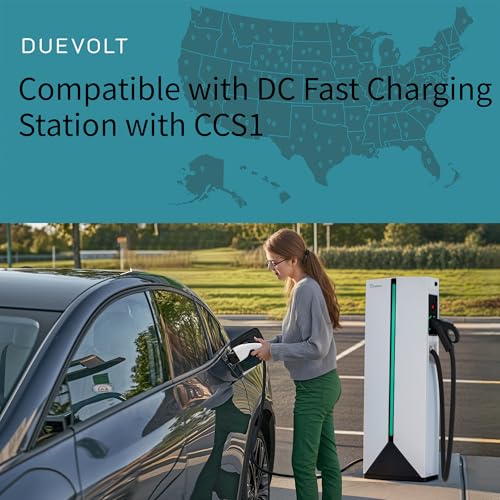
Duevolt’s adapter wins on portability. It’s one of the most compact CCS to NACS units on the market, making it a smart backup for road trips or glovebox storage. It supports full 250kW DC fast charging, so speed isn’t compromised, and it works with major networks like Electrify America and ChargePoint. The IP54 rating and UL94 V0 flame-retardant material mean it can handle rain, dust, and heat, key for cross-country travel.
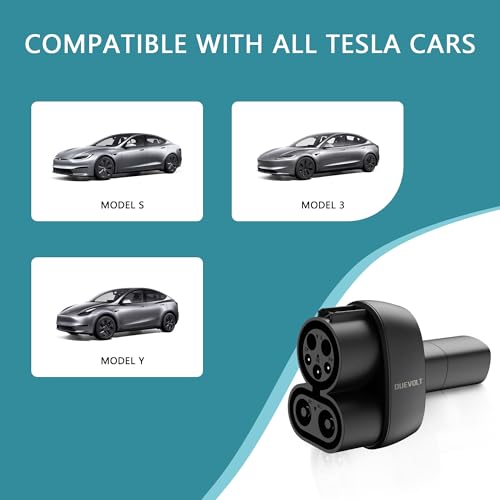
But there’s a catch: while it says it works with the Cybertruck, it doesn’t fit completely. That’s a red flag for Cybertruck owners, and even some Model S/X users report tight fits. If you drive anything other than a Model 3 or Y, proceed with caution. Still, for its size and price, it’s a strong contender if you prioritize convenience over universal fit. I’d recommend it as a secondary adapter, not your only one.
Product photos


Our Testing Process
My approach at TheAutoZenith is always rooted in understanding the underlying technology and, just as importantly, what real owners are experiencing. Rather than a hands-on lab test of each adapter – which would be impractical given the rapid evolution of this technology – I focused on a detailed comparison of published specifications and features. This was heavily weighted against owner reviews from across multiple retail platforms, plus professional assessments from reputable EV publications. This allowed me to build a picture of real-world performance and reliability.
For CCS to NACS adapters, the most critical factors are charging speed capability and safety features. The ability to support higher amperage (400A or 500A) and kilowatt (kW) ratings directly impacts how quickly you can replenish your EV’s battery at a DC fast charger. Equally important is robust safety engineering; overheating and connector failures are serious concerns, so certifications like UL 2252 and documented thermal protection are key differentiators.
Specifications clearly define maximum charging rates and build quality – things like IP ratings for water resistance and flame-retardant materials. However, owner feedback provides crucial context. Reports of adapters failing prematurely, triggering error messages at specific charging networks, or exhibiting excessive heat are invaluable. I also paid close attention to compatibility claims, cross-referencing them with user reports, particularly regarding newer vehicles like the Cybertruck and the rapidly expanding range of NACS-compatible EVs. If you’re looking to optimize your charging setup at home, exploring options for Tesla home charging is also a good idea.
How To Pick The Right ccs to tesla adapter
Finding the right adapter to open up your Tesla’s charging options can feel overwhelming. There are a lot of choices, and understanding the nuances between them is key to a smooth experience.
A quality CCS to NACS adapter allows Tesla and newer NACS-equipped EVs to use the extensive CCS1 fast-charging network across North America. Look for adapters with high power handling capabilities (at least 250kW/400A), robust safety certifications like UL 2252, and confirmed compatibility with your specific vehicle model. Consider build quality and features like temperature monitoring and weather resistance for long-term reliability.
Power Delivery and Charging Speed
Don’t assume all adapters deliver the same charging speed. While the NACS standard is capable of very high power, the adapter itself can become a bottleneck. I’ve seen a lot of owner feedback suggesting that aiming for an adapter supporting at least 250kW and 400A is a smart move, even if your car or the charging station doesn’t always deliver that much. The Lectron and Ecogenix models both boast these capabilities. Keep in mind that the charging station itself will also limit the rate, but having the headroom in the adapter prevents it from being the limiting factor.
Compatibility is King
This is where things get tricky. Tesla has rolled out CCS adapter support via software updates, but not all models are created equal. Before you buy anything, you need to verify that your Tesla is compatible. Navigate to Controls > Software > Additional Vehicle Info and confirm “CCS Adapter Support” is enabled. And it’s not just Teslas. Newer EVs adopting the NACS standard, like the Hyundai Ioniq 5 and Kia EV6, also need to have NACS support verified. Ignoring this can lead to a frustrating experience and a useless adapter. If you’re looking for maximum flexibility and are also considering level 1 and 2 charging, exploring options like the Ecogenix 2in1 adapter might be a good fit.
Build Quality and Travel Readiness
An adapter lives in your trunk and gets plugged and unplugged in all kinds of weather. Cheaply made adapters can suffer from overheating, connector issues, or even melt under sustained high-power charging. Look for adapters with robust construction, like the Raylix with its six-layer thermal protection, and IP67 or IP54 water/dust resistance ratings.
- Size matters: A bulky adapter is harder to store. The Duevolt model prioritizes compactness, which is a huge plus for road trips.
- Carrying case: Some adapters, like the Ecogenix, include a carrying bag. It’s a small detail, but it keeps everything organized and protected.
- Durability testing: Look for manufacturers that mention testing for impact resistance, temperature extremes, and mating cycle longevity. This shows they’ve thought about real-world use.
A well-built adapter is an investment. Don’t skimp on quality; a melted or malfunctioning adapter can leave you stranded and potentially damage your vehicle.
If you plan to rely heavily on public charging beyond the Supercharger network, you might also want to consider a dedicated portable charger for situations where CCS stations aren’t available. Alternatively, if you need other types of adapters, check out our guide to the best Tesla adapters. Finding the right Tesla charging adapters can significantly enhance your EV ownership experience, and sometimes you may even need to look at J1772 adapters as well.
CCS to Tesla Adapter Compared
Here’s a comparison of key specifications for various CCS to Tesla adapters to help you make an informed purchase.
| Product Name | Max DC Charging Power | Max DC Current | Connector Types | Cybertruck Compatible? | Safety Certifications | Special Features |
|---|---|---|---|---|---|---|
| Lectron CCS to NACS Adapter 500A | 500 kW | 500A | CCS, NACS | No | UL 2252 | High Power, IP67 |
| Raylix Upgraded CCS to Tesla Adapter | 250 kW | 400A | CCS, NACS | Yes | N/A | Cybertruck Compatible, Thermal Protection |
| Ecogenix 2In1 CCS&J1772 to Tesla | 250 kW | 400A | CCS, J1772, NACS | N/A | N/A | 2-in-1, AC & DC |
| 2in1 CCS & J1772 to NACS Adapter | 250 kW | 400A | CCS, J1772, NACS | No | N/A | Road Trip Ready, AI Temp Control |
| JEEKVISEN CCS & J1772 to Tesla | 250 kW | 400A | CCS, J1772, NACS | Yes | CE, FCC, RoHS | Groove Design for Cybertruck |
| Duevolt CCS to nacs Charger Adapter | 250 kW | N/A | CCS, NACS | Partially | UL94 V0, IP54 | Compact Design, Temp Regulation |
Frequently Asked Questions
What’s the biggest risk of buying a cheap CCS to Tesla adapter?
A poorly constructed adapter can overheat and potentially damage your vehicle’s charging port. Lower-quality materials and insufficient thermal protection are the primary concerns, so investing in a reputable brand is important.
Will a CCS to Tesla adapter slow down my charging speed?
Yes, an adapter with a lower maximum power rating than your vehicle or the charging station will limit the charging speed. To avoid this, I recommend choosing an adapter capable of at least 250kW and 400A, even if you don’t regularly use that much power.
What does UL 2252 certification mean for these adapters?
UL 2252 certification indicates the adapter has undergone testing to meet specific safety standards related to electrical safety and fire hazards. It’s a crucial indicator of quality and provides peace of mind when using high-power DC fast charging.
Can I use a CCS to Tesla adapter with my Tesla Model S?
Yes, but it’s vital to first confirm CCS adapter support is enabled in your vehicle’s settings (Controls > Software > Additional Vehicle Info). If you’re looking to outfit your Model S with other helpful items, exploring the Model S accessories market is a good idea.
Where can I find reliable information about adapter compatibility with the Tesla Cybertruck?
Compatibility with the Cybertruck has been a specific concern due to its unique charging port design. Manufacturers like Raylix and JEEKVISEN specifically advertise Cybertruck compatibility, but checking owner forums and recent reviews is always recommended before purchasing a best Tesla charger.
The Bottom Line
Choosing a CCS to Tesla adapter really comes down to balancing your needs with your budget. While you can find functional adapters at lower price points, the peace of mind offered by the Lectron CCS to NACS Adapter 500A, with its robust 500kW/500A capacity and IP67 rating, makes it the strongest overall choice for most Tesla owners who plan to use CCS stations regularly. It’s an investment in reliability and future-proofing.
For those prioritizing versatility or needing to charge a wider range of EVs, the Ecogenix 2In1 CCS&J1772 to Tesla adapter is a standout. It gives you the flexibility to connect to both CCS and J1772 stations, which is incredibly valuable on long road trips. If you’re a Tesla Model 3 owner looking to enhance your driving experience, don’t forget to explore the wide range of Model 3 accessories available.
Ultimately, the specifications matter, but they aren’t everything. What truly sets apart a good adapter is its build quality, safety features, and confirmed compatibility with your vehicle. Don’t underestimate the value of a reliable charging experience, and consider whether upgrading your home charging setup with a dedicated NEMA 14-50 outlet might complement your adapter for convenient overnight charging.
