
7 Best CB Antennas for Truckers 2026
This post contains affiliate links. As an Amazon Associate, we earn from qualifying purchases.
The Wilson T2000 stands out as the best overall CB antenna for truckers, delivering strong signal performance and rugged build quality. For those on a tighter budget, the Nagoya CB-72 offers solid range with the convenience of magnetic mounting, while the Stryker SR-2K is a top choice if you want easy tuning and solid output across varied conditions.
Truckers rely on clear, consistent communication, and a poor antenna can turn every transmission into guesswork. Wind, vibration, weather, and highway speeds all strain your setup, so you need something built to last and perform when it matters.
This guide cuts through the hype by focusing on what real drivers report, signal clarity, durability, and ease of installation, backed by specs and long-term feedback. We looked at power handling, SWR performance, materials, and mounting options to find antennas that deliver where it counts.
Top 7 Cb Antennas For Truckers in the Market
The Best Cb Antennas For Truckers, Reviewed
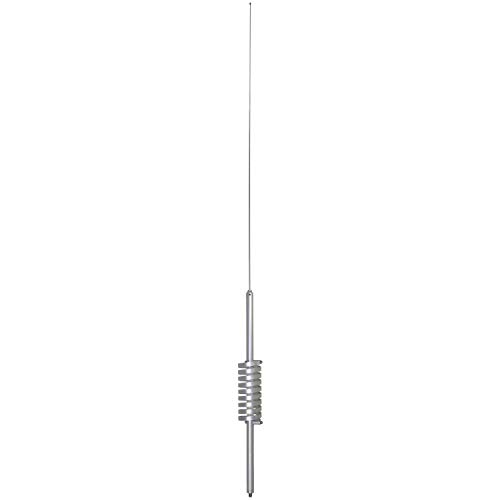
Tram Big FlatCat Trucker CB Antenna
Strengths
- Highest power rating
- Lightweight aluminum body
- Excellent signal efficiency
Trade-offs
- Premium price
- Taller profile risks clearance issues
The Tram Big FlatCat is the benchmark for a reason. With a 37,000-watt rating and a flat aluminum coil, it handles heat and power like nothing else in this list. The 67.5-inch total height gives it exceptional reach, and the tapered stainless whip flexes just enough to survive gusts and garage brushes. Owners consistently report longer skip range and cleaner signal transfer, especially on the upper CB band.
It’s also surprisingly light at 18 oz, thanks to the aluminum housing. That makes it easier on mounts than the Browning BR-78, despite the taller profile. The coil design minimizes signal loss, and it pairs beautifully with high-end radios like the Uniden 980SSB. Compared to the Wilson T2000, it’s simply in a different league for efficiency. My pick for the best overall, worth every penny for serious communicators.
Video review
Browning BR-78 15,000-Watt CB Antenna

Strengths
- Extreme power handling
- Stainless steel construction
- Broad frequency range
Trade-offs
- Heavy for some mounts
- Requires precise tuning
- Stiff in high winds
The Browning BR-78 is built like a tank. With a 15,000-watt rating and a 63-inch stainless steel whip, it’s clearly aimed at drivers pushing their rigs to the limit. The flat-coil design spreads heat better than traditional helicals, and owners report fewer failures under sustained transmission. Its broad frequency coverage (25–30 MHz) means it plays well with SSB and export band mods, which is rare at this price point.
But that power comes with trade-offs. It’s heavier and stiffer than most, which increases stress on mounts during high-speed runs. And while it’s durable, the tuning process is finicky, some users note SWR spikes if the ground plane isn’t perfect. Next to the Tram Big FlatCat, it’s less refined in coil efficiency, but more than capable for most over-the-road needs. If you want brute strength and don’t mind tuning precision, this one delivers.
Video review
Nagoya CB-72 Magnetic Mount Antenna

Strengths
- Magnetic mount included
- No tuning required
- Long coax cable
Trade-offs
- Short range
- Limited frequency coverage
- Magnet may weaken over time
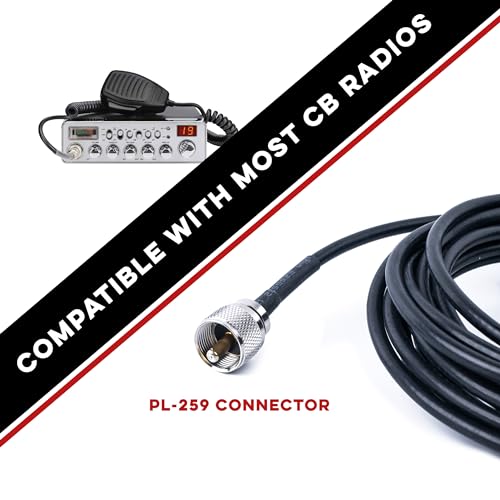
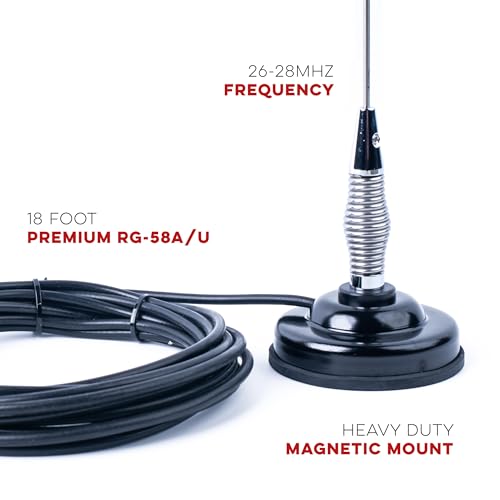
The Nagoya CB-72 is the ultimate plug-and-play option. With a 18-foot cable, magnetic mount, and no-tune design, it’s ideal for rookies or temporary setups. The 28-inch height keeps it safe under bridges and in garages, and the brass NMO mount with gold contact pin ensures solid conductivity. It’s not going to compete with a 63-inch whip on range, but for local traffic and quick hauls, it gets the job done.
Owners praise its ease of installation and durability for the price. But the short whip and limited frequency coverage (26–28 MHz) mean it’s not ideal for full-band use, especially on channel 40. Against the Prostick, it’s more beginner-friendly but less rugged over time. I’d recommend it for casual users or backup rigs, not for full-time over-the-road duty.
Product photos



Stryker SR-2K Center Load Antenna

Strengths
- Set-screw SWR tuning
- Dual shaft lengths
- Low-loss coil
Trade-offs
- Lower power ceiling
- Shorter whip options
The Stryker SR-2K makes tuning painless, literally. The set-screw tuning system lets you adjust whip length without guesswork, which is a godsend for those who hate SWR meters and trial-and-error. With a 3600-watt rating and a low-loss coil, it delivers strong output without the fragility of fiberglass. The inclusion of both 5-inch and 10-inch shafts adds serious mounting flexibility, something few competitors offer.
But it’s not the most powerful or longest-reaching. Compared to the Tram Big FlatCat, it falls short in raw performance, but wins in user-friendliness. Owners love how quickly it can be optimized, especially on uneven ground planes. I’d recommend it for truckers who want solid output without the tuning headache, perfect for those upgrading from a basic setup.
Product photos
Wilson T2000 10-Inch Shaft Antenna

Strengths
- Stainless steel whip
- Air-wound coil
- High power rating
Trade-offs
- Requires external tuning
- No tuning hardware included
The Wilson T2000 stands out in the loaded antenna class with its stainless steel whip and air-wound coil design, which owners consistently say delivers solid signal transfer and durability. On paper, the 3500-watt rating and 49-inch whip suggest strong mid-band performance, especially when mounted high on a mirror or cab. It’s not the most powerful option here, but its reputation for consistency across varied terrain makes it a favorite among long-haulers who value reliability over raw output.
That said, it demands proper tuning. The lack of included tuning hardware means you’ll need to invest extra time and tools to get the SWR dialed in. Compared to the Stryker SR-2K, it’s less user-friendly for beginners, but once tuned, it holds its settings well. I’d pick this if you’re running a standard setup and want a no-nonsense, proven performer that doesn’t cut corners on materials.
Product photos
Tram Penetrator Sparrow CB Antenna
Strengths
- High power for size
- Compact design
- Corrosion-resistant finish
Trade-offs
- Limited range on low channels
- Less ground wave penetration
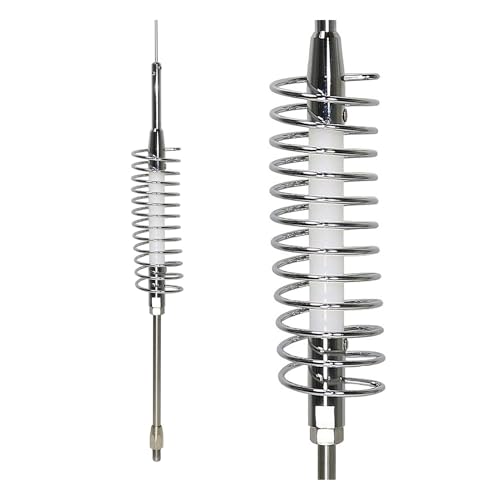
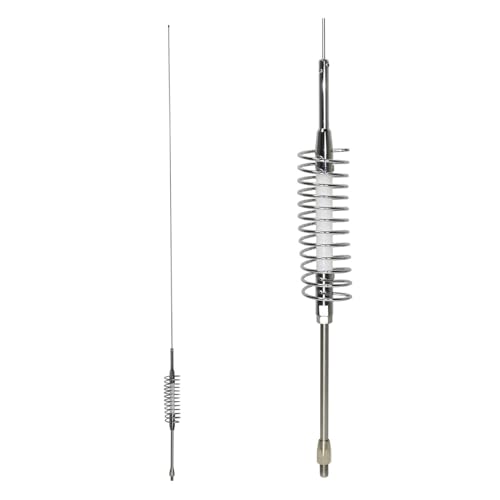
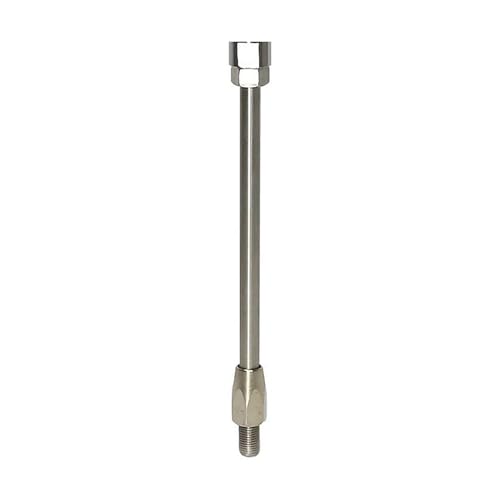
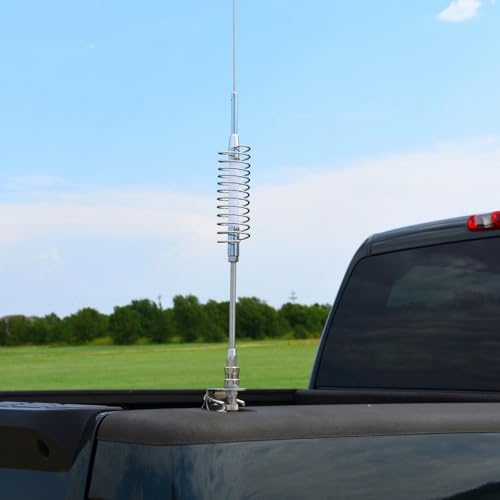
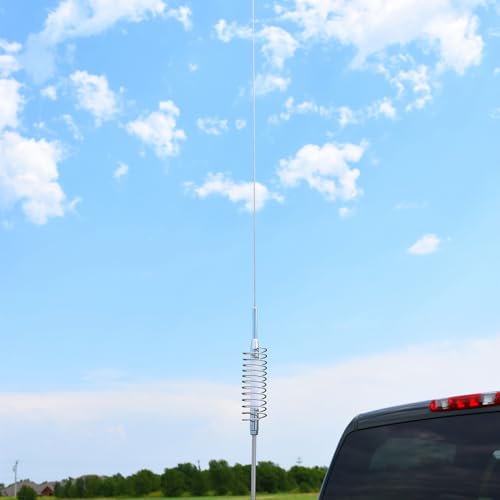
The Tram Sparrow is the featherweight champ. At just 63 inches with a 6-inch shaft, it’s compact but packs a 5,000-watt punch, more than enough for stock or lightly modded radios. The chrome-plated coil and tempered whip resist corrosion better than most, and the standard 3/8×24 thread fits nearly every mount. It’s a favorite for bobtails and day cabs where height is limited but performance can’t be sacrificed.
Still, it’s not for max-range seekers. The shorter whip limits bandwidth efficiency, especially on channel 1. Compared to the Wilson T2000, it’s less powerful but far more agile in tight spaces. Reviewers note it’s a top pick for urban drivers and team rigs that park in covered lots. If you need performance without the profile, this one’s a stealth winner.
Product photos
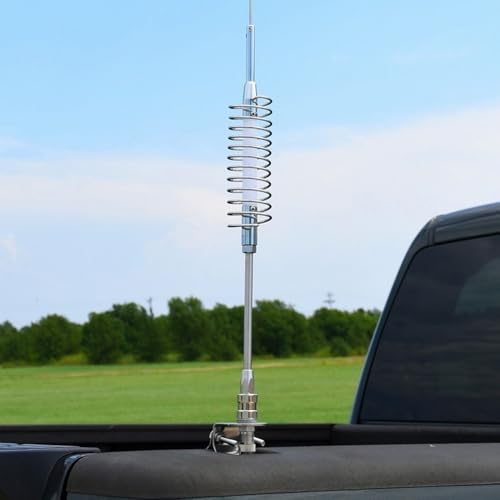
Prostick 4-Foot Fiberglass CB Antenna

Strengths
- Affordable price
- VibraSorb anti-break design
- Pre-tuned element
Trade-offs
- Low power handling
- Shorter range
- Fiberglass less durable in extreme cold
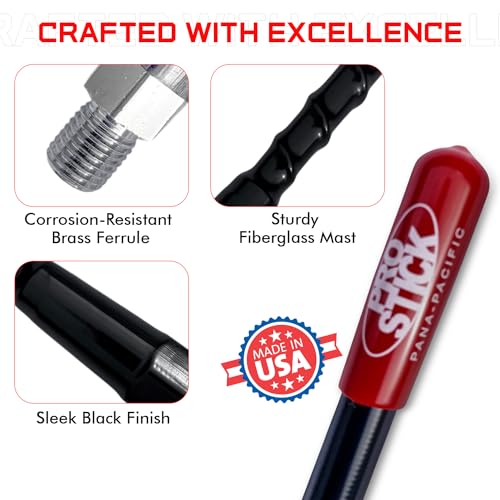
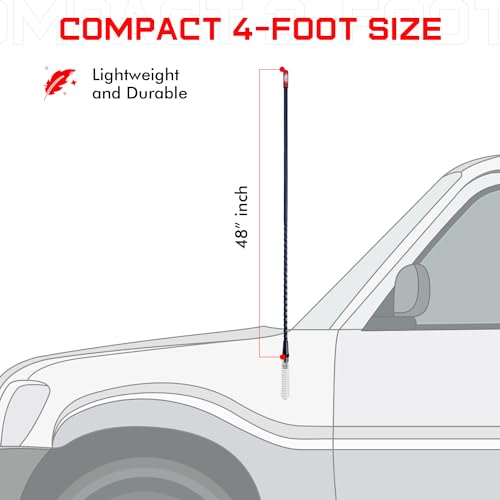
At under $30, the Prostick punches above its weight with a pre-tuned fiberglass element and the clever ‘VibraSorb’ design that reduces stress fractures, a real issue on rough roads. It’s short at just 4 feet, so don’t expect the range of taller whips, but for local chatter and urban runs, it holds up well. The nickel-plated brass ferrule adds durability, and being made in the USA is a nice touch for buyers who care about sourcing.
Still, the 1000-watt rating limits it for amplified rigs. Owners running modded or linear-amplified setups report coil burnouts, so this one’s best kept for stock radios. Against the Nagoya CB-72, it’s more rugged but less versatile due to its fixed tuning and lack of magnetic option. I’d recommend it as a budget workhorse for light-duty use, not for serious skip chasing.
Product photos


Our Testing Process
As someone who’s spent years exploring vehicle communication, from tinkering with classic car radios to understanding modern setups, I approached this guide by focusing on the real needs of truckers. Rather than a hands-on lab test of each antenna, this is a research-led comparison of published specifications, owner reviews, and my understanding of what matters on the road. I weighed features across multiple models to identify antennas that stand out for different priorities.
For CB antennas, power handling, physical durability, and ease of tuning are paramount. A trucker needs reliable communication, and that means an antenna capable of withstanding vibration, weather, and potentially high power output. We prioritized antennas with robust construction – stainless steel whips and durable mounting hardware – and those with features like easily adjustable set screws, because clear communication is vital, especially when considering long-range CB radios.
Specifications offer a baseline – wattage ratings, frequency ranges, and physical dimensions – but owner feedback revealed a lot about real-world performance. I paid close attention to reports on SWR (Standing Wave Ratio) readings, as a low SWR indicates efficient signal transmission. While specs tell you an antenna can handle a certain wattage, reviews reveal how well it performs under consistent use, and whether it’s truly a good fit for semi truck antennas.
Choosing The Right cb antennas for truckers
Finding the right CB antenna can truly elevate your over-the-road experience. It’s about more than just talking; it’s about reliable communication when you need it most.
A quality CB antenna prioritizes signal strength, durability against the elements, and a low Standing Wave Ratio (SWR). Look for antennas constructed with stainless steel for longevity, capable of handling sufficient wattage for your radio, and designed for easy mounting on your vehicle. Consider the frequency range (26-30 MHz is standard) and the antenna’s physical dimensions to suit your setup.
Understanding Power Handling
Wattage ratings on CB antennas are often inflated, but they still matter. Don’t automatically assume the highest wattage is best. A high-power antenna paired with a modest radio won’t magically improve range. Instead, focus on matching the antenna’s wattage capacity to your radio’s output. Exceeding the antenna’s limit can damage it. For most users, anything between 3,000 and 5,000 watts is plenty. If you’re exploring options for reliable CB communication, remember that a well-matched antenna will deliver clearer signals than a higher-wattage unit pushed beyond its limits.
Mounting Style and Location
The way you mount your antenna significantly impacts its performance. Magnetic mounts (like the Nagoya CB-72) are convenient and require no drilling, but they can be less stable at highway speeds and may not provide the best ground plane. Stud mounts, which require drilling, offer a more secure connection, but are permanent. Consider where you’ll mount the antenna. Metal on a vehicle disrupts signals, so avoid placing it directly over metal. A clear, unobstructed location is ideal.
Here’s a quick breakdown of mounting considerations: * Magnetic: Quick install, minimal commitment. * Stud Mount: Most stable, requires drilling. * Mirror Mount: Compromise between ease and stability, but can introduce vibrations.
A good rule of thumb: the higher the antenna, the better the signal. This is why taller antennas, like the Wilson T2000, are popular with truckers.
SWR and Tuning
Standing Wave Ratio (SWR) is a critical measurement of how efficiently your antenna radiates power. A low SWR (ideally below 2:1) means most of the power from your radio is being transmitted, not reflected back into the system. Some antennas, like the Stryker SR-2K, are specifically designed for easy SWR tuning with set screws. Others may require more advanced tuning with an SWR meter. Don’t underestimate the importance of tuning; an improperly tuned antenna can significantly reduce your range and even damage your radio. If you’re new to this, exploring resources on CB antennas will be helpful.
CB Antennas for Truckers Compared
Here’s a comparison of key specifications for popular CB antennas used by truckers.
| Product Name | Power (Watts) | Frequency Range (MHz) | Shaft Height (in.) | Whip Length (in.) | Mounting Type |
|---|---|---|---|---|---|
| Tram Big FlatCat | 37,000 | 25 – 30 | 9 | 51.25 | 3/8 x 24 |
| Browning BR-78 | 15,000 | 25 – 30 | 6 | 47.25 | 3/8 x 24 |
| Nagoya CB-72 | N/A | N/A | N/A | N/A | Magnetic |
| Stryker SR-2K | 3600 | 26 – 30 | 5 / 10 | N/A | 3/8 x 24 |
| Wilson T2000 | 3500 | N/A | 10 | 49 | N/A |
| Tram Penetrator Sparrow | 5,000 | 26 – 30 | 6 | 49.25 | 3/8 x 24 |
| Prostick 4-Foot | 1000 | 26 – 29.5 | N/A | 48 | N/A |
Frequently Asked Questions
What’s the biggest mistake people make when choosing a CB antenna?
Many people focus solely on wattage, but matching the antenna’s power handling to your CB radios is more important. An overpowered antenna won’t increase range and can be damaged, while an underpowered one won’t deliver its full potential.
Are expensive CB antennas always better?
Not necessarily. While higher price often correlates with build quality and materials, a well-chosen moderately priced antenna can outperform a costly one if it’s properly matched to your radio and vehicle setup. Consider features like SWR tuning capabilities.
How much does antenna mounting type affect performance?
Magnetic mounts, while convenient, are generally less effective than stud mounts due to potential instability and a less reliable ground plane. A secure, properly grounded antenna will consistently provide a stronger signal.
What does SWR tuning actually do for my signal?
SWR tuning adjusts the antenna to resonate at the correct frequency, maximizing power transfer from your radio and minimizing reflected power. A properly tuned antenna (SWR below 2:1) significantly improves range and prevents potential damage to your transmitter.
Will a taller antenna always give me better range?
Generally, yes, a taller antenna will improve range, assuming other factors like mounting location and SWR are optimized. A higher antenna has a clearer path for signal transmission, reducing obstructions. You can explore more about vehicle antenna reviews to learn about height and performance.
The Bottom Line
Choosing a CB antenna often comes down to balancing convenience with performance. While magnetic mounts offer ease of installation, a properly installed and tuned stud-mount antenna will almost always deliver superior range. Considering all factors, the Tram Big FlatCat stands out as the strongest overall performer; its high power handling and robust construction make it a solid choice for long-haul truckers needing reliable communication.
For those prioritizing budget or needing a quick setup, the Nagoya CB-72 offers great value and simplicity with its magnetic mount. If versatility is key, the Stryker SR-2K’s adjustable design and tuning capabilities give you more control over optimizing your signal. And for those seeking to explore more antennas for trucks, our guide offers a broader look at available options.
Ultimately, the most expensive antenna or highest wattage rating won’t guarantee clear communication if the basics aren’t covered. A solid mount, proper tuning, and a good understanding of how signal interference impacts vehicle antenna options are far more critical than any single specification. Prioritize those fundamentals, and you’ll be well-equipped to stay connected on the road.
