
Are Tire Valve Caps Universal? A Guide to Thread Standards
This post contains affiliate links. As an Amazon Associate, we earn from qualifying purchases.
Most passenger car tire valve caps use the universal 8V1 Schrader thread standard, a 7.7 mm outer diameter with 32 threads per inch. This global specification means a cap from a Ford will physically thread onto a Toyota or a Honda. The actual constraint isn’t the thread; it’s the valve stem material, local conditions, and whether your vehicle has Tire Pressure Monitoring System (TPMS) sensors.
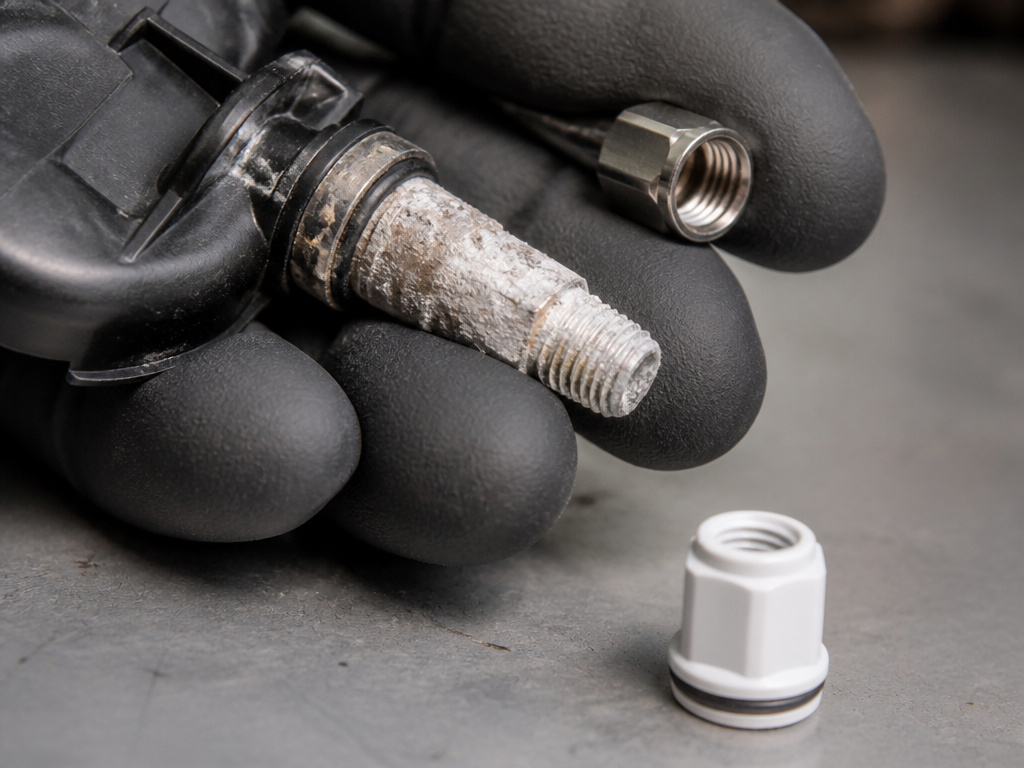
That universal thread is the baseline, but it’s the exception that ruins your day. A TPMS sensor has an aluminum valve stem. In climates where road salt mixes with moisture, a metal cap can chemically weld itself to that stem through galvanic corrosion. The Hyundai TSB from May 2019 for corroded aluminum caps is a documented real-world example of a universal thread that was universally seized.
The rest of this guide walks through the three things that truly decide compatibility: the thread standard you can bank on, the material choice that prevents a $200 sensor replacement, and the quick-fit checks that spot trouble before you buy. By the end, you’ll match a cap to your car’s exact conditions, not just its thread size.
Key Takeaways
- The Schrader 8V1 thread (7.7 mm OD, 32 TPI) is the true universal standard for passenger cars, but forcing the wrong material onto a TPMS stem can cause costly galvanic corrosion.
- For most drivers, a high-quality plastic cap with an internal rubber O-ring is the safest default choice; it eliminates corrosion risk and provides a secondary seal.
- Always hand-tighten valve caps. The ISO 7295 standard specifies a core insertion torque of only 0.17-0.54 N·m, the fine brass threads strip easily.
- If you have metal TPMS stems, avoid bare metal caps. Opt for coated metals or plastic to prevent the aluminum-brass reaction that seizes parts.
- Recessed stems, custom wheels, and vintage cars are the main exceptions to the 8V1 rule, often requiring extended caps or different thread searches.
The Single Universal Thread (Most of the Time)
Forget brand names. The physical compatibility between a valve cap and your car’s stem boils down to a single engineering code: the Schrader 8V1 thread. This isn’t a manufacturer suggestion; it’s a dimensional specification ratified in global standards like ISO 9413:2019. The numbers are precise: an outer diameter of 7.7 mm (0.305 inches) and a thread pitch of 32 threads per inch (TPI).
Because this standard has been locked in for decades, the ecosystem is built around it. A pack of standard tire valve caps from any auto parts store, branded or generic, is engineered for the 8V1. This is why the question “are they universal?” gets a qualified yes for probably 90% of the cars on the road.
Technical Specification: The Schrader-type valve stem for passenger car tubeless tires uses the 8V1 thread per global standards (ISO 9413, ETRTO). The nominal outer diameter is 7.7 mm with a 32 TPI pitch. This enables physical interchangeability of caps across makes and models where this stem is fitted.
That universality, however, hits a hard wall the moment you look past the thread. The stem material and its operating environment introduce the first major split. Your car likely has one of two stem types: a simple rubber snap-in stem, or a rigid metal clamp-in stem that’s part of a TPMS sensor.
Rubber stems are forgiving. Metal stems, specifically aluminum alloy ones used in most TPMS units, are where the “universal” claim cracks. A brass or steel cap threads onto aluminum just fine, at first. Add road salt and water, and you’ve built a tiny battery. This electrochemical reaction, galvanic corrosion, doesn’t care about thread compatibility. It bonds the metals.
The consequence is a seized cap that cannot be removed by hand, often requiring the entire TPMS sensor to be replaced when the stem twists or breaks. This is a practical reality.It’s the reason for specific Technical Service Bulletins, like Hyundai’s TSB 19-01-017H issued in May 2019 for corroded aluminum valve caps on Tucson models.
Where “Universal” Doesn’t Apply: The Edge Cases
The 8V1 thread is the rule, but three common situations are the exceptions. These are where grabbing any generic cap from a bin will leave you with a part that doesn’t fit or function.
Recessed Valve Stems. Some alloy wheel designs tuck the valve stem deep into a narrow well. A standard-length cap might not have enough thread to engage, or your fingers can’t reach it to screw it on. The fix isn’t a different thread; it’s a valve stem extension or an extra-long cap. For trucks with dual rear wheels, this is especially common, which is why dedicated dually valve stem extensions exist.
Custom Wheels and Vintage Vehicles. The aftermarket world isn’t bound by ISO standards. Some custom or aftermarket wheels might use a different thread entirely for their valve stems, or they might integrate the valve into a proprietary design. Similarly, cars from the 1960s or earlier might still use a different valve standard. If the stem doesn’t look like the standard rubber or metal Schrader stem you’re used to, assume the 8V1 rule is off the table.
Presta and Dunlop Valves. This is the most common point of confusion for multi-sport households. Bicycles, especially performance road and mountain bikes, use slender Presta valves. They are threaded, but the diameter is much smaller than 7.7 mm. A Presta cap will not thread onto a car’s Schrader stem, and forcing it will damage the delicate car stem threads. Keep the bike tools and car tools separate.
| Valve Type | Common Use | Thread Standard | Cap Compatibility |
|---|---|---|---|
| Schrader (8V1) | Passenger Cars, Motorcycles, UTVs | 8V1 (7.7mm, 32 TPI) | Universal within type |
| Presta | Bicycles, Performance Wheels | Various fine threads | Not interchangeable with Schrader |
| Dunlop/Woods | Some Bicycles, Vintage Mopeds | Often non-threaded | Push-on or clamp-on only |
| High-Pressure Industrial | Trucks, Agricultural, Aviation | Larger diameter (e.g., 5V1) | Requires specific heavy-duty caps |
Plastic vs. Metal: The Corrosion Trade-Off
 Now that you know the thread fits, the real decision is material. This is about chemistry and consequence.
Plastic Caps are the default recommendation for a reason. They are inert. A plastic cap cannot corrode onto an aluminum TPMS stem. A good one includes a rubber O-ring seated inside. This O-ring is critical. While the main seal holding air is the valve core, this O-ring acts as a secondary seal. If the core gets a speck of dirt or loosens slightly over time, the O-ring can prevent a slow tire leak for long enough that you notice the pressure drop on your dash, not on the side of the road.
The downside of basic plastic is ultraviolet (UV) degradation. Cheap plastic gets brittle, cracks, and the O-ring dries out. You’ll be replacing them every year or two. But that’s a $5 problem, not a $150 TPMS sensor problem.
Metal Caps, aluminum, brass, stainless steel, feel substantial and look premium. The risk is straightforward galvanic corrosion when used on aluminum TPMS stems. Not all metals are equally risky. Stainless steel is less reactive than brass, but the safest metal caps have a non-conductive coating or a plastic insert that isolates the metal from the stem.
Where this goes sideways: Using a bare metal cap on an aluminum TPMS stem in a snowy region. The cap seizes within two seasons. Removal attempts often twist the soft aluminum stem, breaking the sensor. The repair bill replaces the sensor, the cap, and includes labor for remounting and rebalancing the tire.
If you prefer metal, buy a quality set designed for TPMS. Look for “non-corrosive” or “with plastic liner” in the description. Skip the shiny, uncoated aluminum ones from the bargain bin.
The 4-Step Fitment and Safety Check
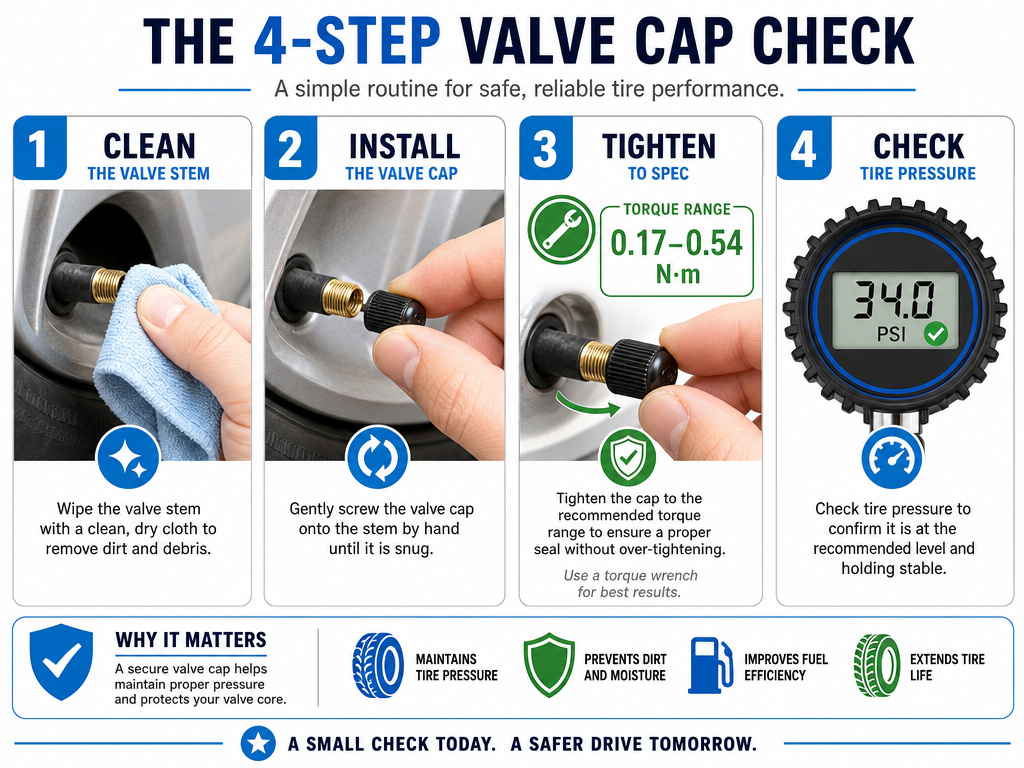 Before you install any new cap, run through this quick check. It takes two minutes and can prevent cross-threading or installing a mismatched part.
- Clean the Threads. Wipe the valve stem threads with a dry cloth. If there’s heavy corrosion or dirt, a drop of penetrating oil (like WD-40) on the threads can help, but wipe it off thoroughly afterward. You don’t want lubricant attracting more grime.
- Hand-Thread First. Never use pliers to start a cap. Gently screw the new cap onto the stem by hand. It should spin on smoothly with minimal resistance. If it feels gritty, binds immediately, or won’t start straight, stop. You likely have damaged stem threads or a mismatched cap.
- Snug, Don’t Torque. Once hand-threaded, tighten the cap just until it’s snug. You’re sealing with the O-ring, not the threads. The ISO 7295:1988 standard for valve core insertion torque gives a sense of the delicacy involved: it ranges from 0.17 to 0.54 N·m. That’s fingertip tight, not wrist tight.
- Verify the Seal. After driving a day or two, check your tire pressure. If you see a drop you didn’t see before, remove the cap and inspect the valve core. The new cap’s O-ring might be pressing on a slightly loose core. Tightening the core a fraction of a turn with a core tool might be needed.
How Valve Caps Actually Work (The Why Layer)
A valve cap seems like a simple dust cover. Its primary job is exactly that: to keep dirt, moisture, and road debris out of the valve core. The core is a spring-loaded plunger with a tiny rubber seal. Grit can hold that plunger slightly open, causing a leak. Road salt and water accelerate corrosion on the core’s brass and steel parts.
But the internal O-ring in a quality cap adds a second, often misunderstood function. Think of it as a backup system. If the primary valve core seal fails, the cap’s O-ring can temporarily contain the air, slowing the leak from a rapid deflation to a gradual one. This might give you the 20 miles needed to get to a service station instead of being stranded. This is a key part of the function of valve caps that goes beyond basic dirt protection.
This also explains why driving a short distance with missing valve caps is generally low-risk, but making it a habit is asking for trouble. The core is exposed to every contaminant on the road. Eventually, it will stick or corrode, leading to a persistent leak that could be mistaken for a tire puncture.
Frequently Asked Questions
Do I need special caps for TPMS?
You need appropriate caps for TPMS, not necessarily “special” ones. The safest, most recommended option for TPMS is a high-quality plastic cap with an O-ring. Avoid bare metal caps that can corrode onto the aluminum TPMS stem. Some metal caps are marketed as TPMS-safe because they include a plastic liner; these are acceptable but plastic is simpler.
Can a missing valve cap cause a flat tire?
Missing cap alone won’t cause an immediate, dramatic flat. It can, however, lead to a slow leak over weeks or months. Dirt and moisture compromise the valve core seal. This slow loss of pressure increases rolling resistance, causes uneven tread wear, and can eventually lead to sidewall damage if driven on severely underinflated.
How tight should valve caps be?
Hand-tight only. Screw the cap on until it is snug. Overtightening is a common mistake that strips the soft brass threads of the valve stem or cracks plastic caps. If you find yourself needing pliers to remove a cap, it was either overtightened or has corroded in place.
Are chrome or metal valve caps bad for my car?
Chrome or metal caps are not inherently “bad.” They become a problem specifically when threaded onto aluminum TPMS stems in environments with moisture and road salt, where they can galvanically corrode and seize. On standard rubber snap-in stems (which have a brass core thread), metal caps pose little corrosion risk.
Do valve caps affect tire pressure readings?
Properly installed valve cap should not affect the accuracy of a tire pressure gauge or a TPMS sensor reading. However, a severely corroded or cross-threaded cap can damage the valve stem, potentially causing a leak that results in low pressure. Always check pressure with the cap removed to get an accurate reading, as part of a regular tire pressure check routine.
The Bottom Line
For the vast majority of passenger cars, tire valve caps are universal at the thread level thanks to the Schrader 8V1 standard. The real decision point isn’t thread fit; it’s material compatibility with your valve stems and local climate.
If you want one answer that avoids the most common and costly pitfall: buy plastic caps with rubber O-rings. They eliminate corrosion risk, provide a functional secondary seal, and are cheap to replace. For a more premium look on a car with rubber stems or coated TPMS-safe metal caps, brands like Dorman or OEM-style caps from a dealership parts counter are reliable bets.
Skip the bulk-pack shiny metal caps unless you know your stems are rubber. That universal thread will fit, but the long-term consequence won’t be worth the initial sparkle. Your valve stems, and your wallet, will thank you for matching the cap to the conditions, not just the car.
