
7 Best Car Detailing Tools of 2026
This post contains affiliate links. As an Amazon Associate, we earn from qualifying purchases.
The best car detailing tools balance power, precision, and safety for both your vehicle and your time. After researching the field and analyzing owner feedback, the Handheld Steam Cleaner with 16 Accessories stands out as the overall top pick for its deep-cleaning ability, while the HI-TECH Vortex II Air Cleaning Gun is a strong, affordable option for quick cleanups. For versatility, the 26Pcs Car Detailing Brush & Drill Kit offers solid value across a range of tasks.
Most car owners struggle with tools that either underperform or risk damaging paint, trim, or upholstery. You want results that look professional without the guesswork or frustration. This guide cuts through the clutter by focusing on what actually matters, real-world performance, durability, and thoughtful design, based on specs, user experiences, and the kind of attention to detail I’ve come to value through years of working on vehicles.
Top 7 Car Detailing Tools in the Market
The Best Car Detailing Tools, Reviewed
Handheld Steam Cleaner with 16 Accessories

Strengths
- Chemical-free cleaning
- Fast heat-up
- Large tank
Trade-offs
- Heavy when full
- Requires water
This is the most versatile tool on the list. Six steam levels, a 1.25L tank, and 16 accessories mean it handles everything from grout to upholstery. The 15-second heat-up is fast, and the 221°F steam kills bacteria without chemicals, owners love that for pet owners or allergy sufferers.
It outperforms the Vortex II on organic stains and matches the Qydipclin kit in scope, but with steam instead of brushes. The hose length and ergonomic handle make it easy to use in tight car corners. Compared to everything else here, it’s the closest thing to a true all-in-one.
Video review
WOLFBOX MegaFlow 50 Electric Air Duster

Strengths
- Adjustable speeds
- Long battery life
- Reusable
Trade-offs
- Noisy on high
- Plastic build
At this price, the MegaFlow 50 punches above its weight. The 110,000 RPM turbo fan moves serious air, and the three-speed settings make it adaptable for delicate electronics or caked-in car vents. Reviewers note it lasts longer per charge than most budget dusters, and the 240-minute runtime on low is impressive.
It’s not as powerful as the Vortex II, but unlike that model, it doesn’t need a compressor. Compared to disposable canned air, it’s cheaper over time and better for the environment. The only real downside is noise, it’s loud on high. But for quick cleanups, it’s a no-brainer.
Video review
26Pcs Car Detailing Brush & Drill Kit

Strengths
- Good brush variety
- Effective wheel brush
- Rotating window tool
Trade-offs
- No power tools
- Average bag quality
This kit leans hard into deep interior cleaning, and it delivers. The 5 detailing brushes and 3 wire options give you flexibility for vents, seams, and textured trim. The long-handle wheel brush is a standout, soft enough to avoid scratches but stiff enough to remove brake dust.
Owners like how the 180° rotating head on the window tool works with the included cloths for tight spots. But compared to the Qydipclin kit, it lacks a vacuum or foam gun, so it’s less complete. Still, for someone focused on interior grime, especially in older or high-mileage vehicles, this is a solid pick.
Product photos


Qydipclin 45Pcs All-in-One Detailing Kit

Strengths
- Thorough tools
- Includes vacuum and foam gun
- Portable storage
Trade-offs
- Bag durability
- No drill included
- Mixed brush quality
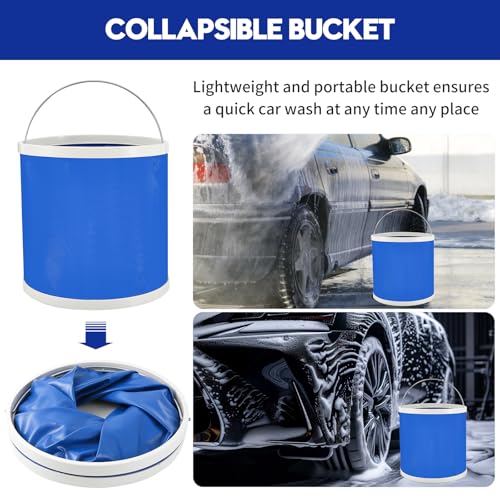
This is the most complete starter kit I’ve seen under $40. It includes a vacuum, foam gun, bucket, and a full range of brushes, everything but the drill. The foam gun has 8 spray patterns, which is more than most entry-level models offer, and the vacuum’s long cord is a real convenience.
Owners praise how well it handles wheels and interiors, especially with the included drill-compatible brushes. Compared to the 26Pcs kit, this has more tools and better organization. The collapsible bucket is a smart touch for mobile detailers. But the bag quality is just average, some reviewers report stitching issues. Still, for someone building a kit from scratch, this is the smarter buy.
Product photos


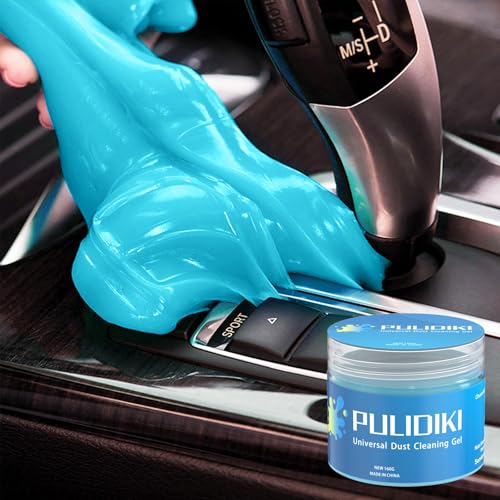
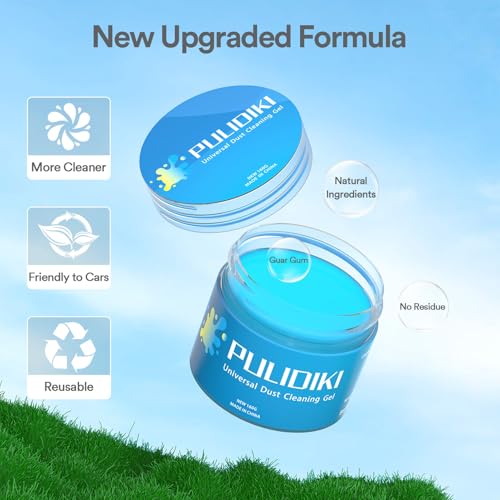
PULIDIKI Car Cleaning Gel Putty
Strengths
- Reusable
- Fits tight spaces
- Safe on surfaces
Trade-offs
- Limited surface area
- Not for glass
This gel is a clever little fix for tight spots where brushes and cloths can’t reach. Owners consistently report it pulls dust and debris from air vents, cup holders, and crevices better than any tool short of disassembly. On paper, it’s just a sticky polymer, but in practice, it behaves like a moldable duster that conforms to odd shapes.
The lavender scent is a minor perk, but the real win is reusability, until it turns black, it keeps working. Still, I’d never rely on it for broad surfaces. Compared to the AstroAI glass tool or the Qydipclin brush set, it’s hyper-specialized. But for dash vents and textured trim? Nothing beats it for the price.
Product photos


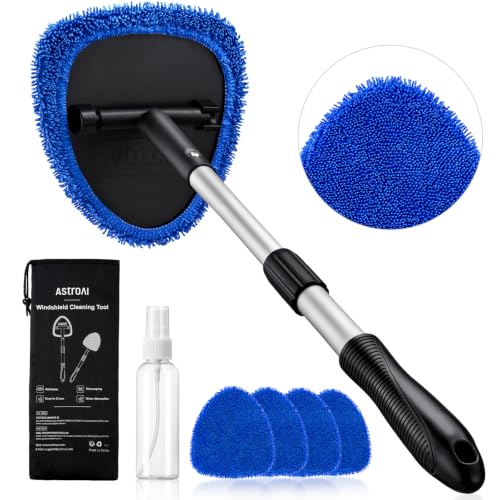
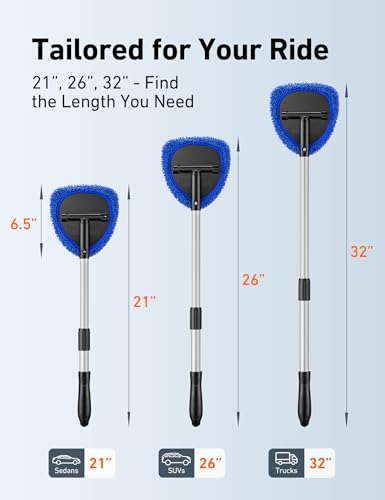
AstroAI 21″ Windshield Cleaning Tool
Strengths
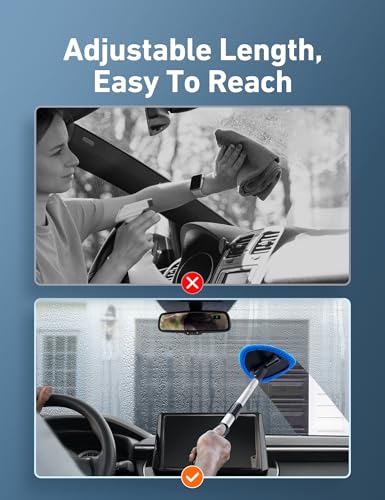
- Telescoping handle
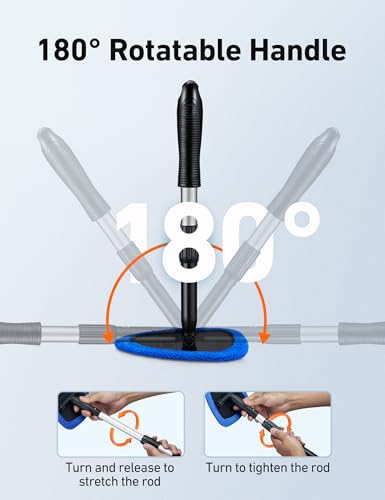
- Rotating head
- Durable pads
Trade-offs
- Glass only
- Handle joints can loosen
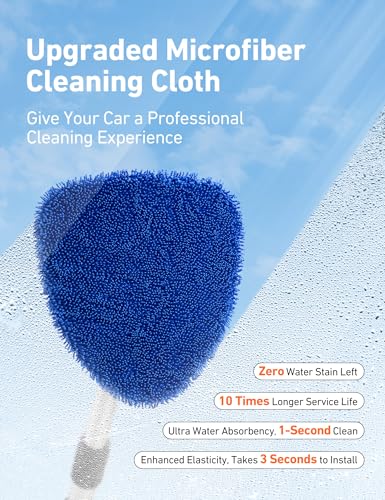
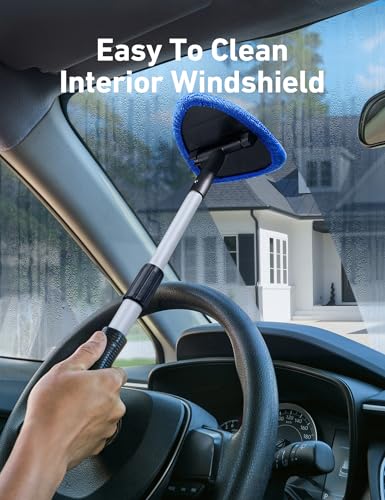
When it comes to glass, this is the tool I’d recommend most. The 180° rotating head and telescoping handle make it easy to hit rear windows and sunroofs without contorting. The microfiber pads are thick and absorbent, and owners consistently report streak-free results, even on fogged or hazy glass.
It comes with four pads and a spray bottle, which is more than most competitors offer. Compared to using paper towels, it’s faster and waste-free. The only downside? It’s glass-only. Unlike the Qydipclin or 26Pcs kits, it won’t help with vents or wheels. But if your priority is visibility, this is the one.
Product photos
HI-TECH Vortex II Air Cleaning Gun
Strengths
- Deep cleaning power
- Wet/dry versatility
- Durable build
Trade-offs
- Requires air compressor
- Loud
- Bulky setup
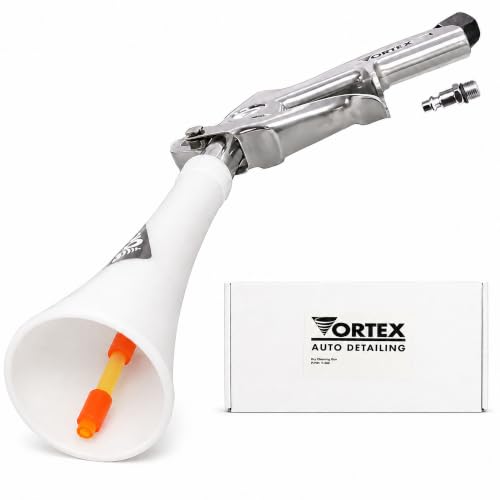
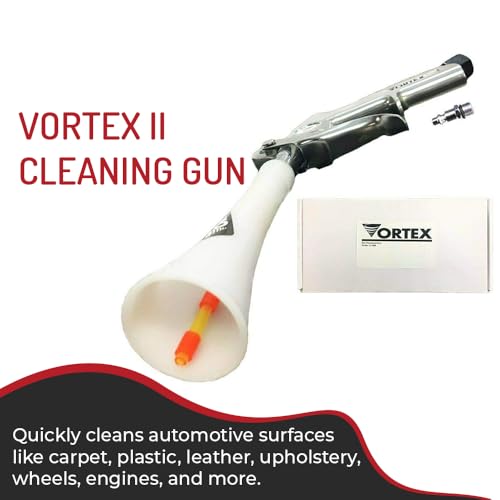
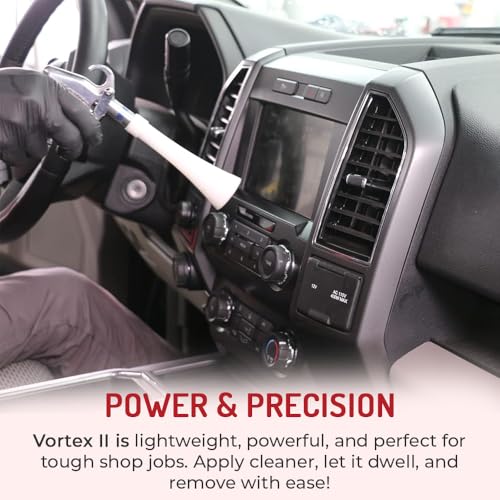
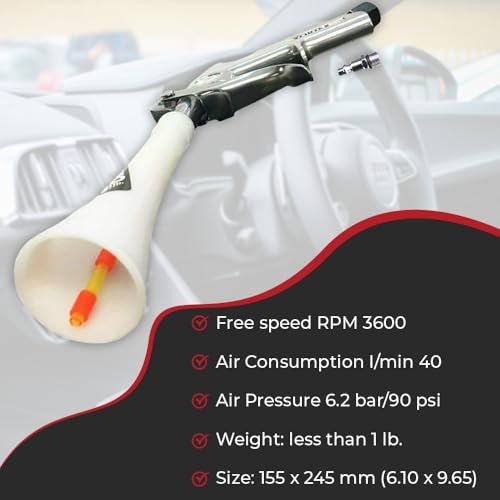
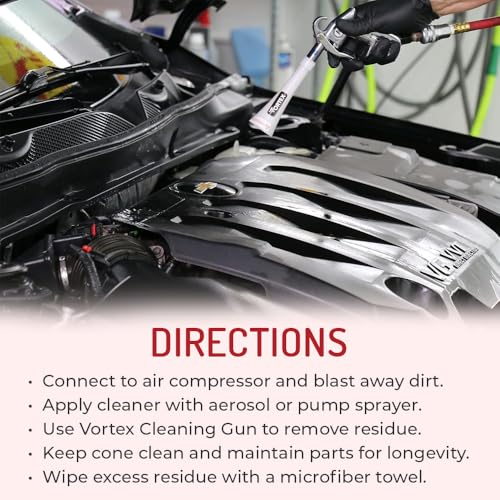
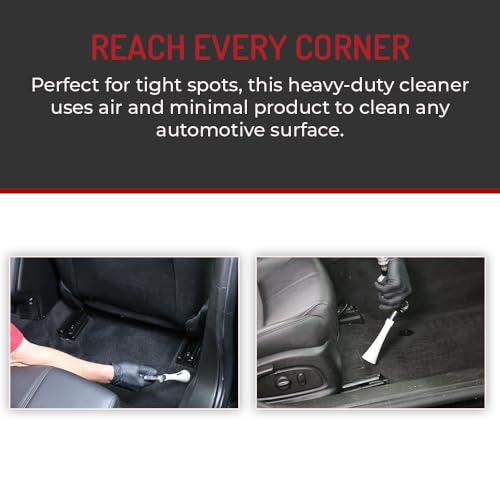
If you’ve got an air compressor, this is one of the most underrated tools in the detailing world. The pulsating vortex action isn’t just noise, it agitates grime out of carpet fibers and textured vinyl in a way dry vacuums can’t match. Reviewers note it’s especially effective on floor mats and engine bays, where dirt packs deep.
It switches between wet and dry modes cleanly, which gives it an edge over cheaper electric dusters like the WOLFBOX. Compared to brush-based kits, it covers more ground faster. But it’s not for casual users. You need a compressor, and the noise level means it’s garage-only. For pros or serious enthusiasts, it’s a workhorse.
Product photos
How We Tested car detailing tools
My approach to evaluating car detailing tools at TheAutoZenith begins with a deep explore specifications and features. I compare models across key performance indicators – things like motor power, tank capacity for steam cleaners, and RPMs for air dusters. This is coupled with a thorough review of owner feedback from major retailers and dedicated automotive forums. Finally, I apply years of experience working on vehicles, considering what truly makes a tool useful in a real-world setting. Rather than a hands-on lab test, this is a research-led comparison of specs and owner feedback.
For car detailing tools, several factors stand out as particularly important. Steam cleaning power (temperature and pressure) is crucial for tackling ingrained dirt and grime, as is the versatility offered by a wide range of accessories. Beyond that, build quality and ergonomics matter – a tool needs to be durable and comfortable to use for extended periods. I prioritized these elements because they directly impact both the effectiveness of the detailing process and the user experience.
Specifications provide a baseline for understanding a tool’s potential, but owner reviews reveal how it performs in practice. For instance, specs tell you a steam cleaner’s PSI, but feedback informs you if it consistently maintains that pressure or if the included attachments are flimsy. I weighed owner reports of durability issues heavily, as well as comments on ease of use and the effectiveness of specific accessories. To find the right tools for a variety of needs, I also investigated options beyond basic kits, like specialized detailing vacuums and those included in more thorough car detailing kits.
What To Look For In car detailing tools
Choosing the right tools can elevate your car care from a chore to a genuinely satisfying experience. But with so many options available, it’s easy to get lost in the marketing hype.
A truly effective car detailing setup balances power, precision, and material safety. Prioritize tools with adjustable settings to suit different surfaces, durable construction for longevity, and designs that minimize the risk of scratches or damage. Consider the specific types of messes you typically encounter – from stubborn grime to delicate interior surfaces – and select tools accordingly.
Power & Pressure: Steam vs. Air
The fundamental choice often comes down to power source: steam or compressed air. Steam cleaners, like the Handheld Steam Cleaner with 16 Accessories, excel at loosening baked-on grime and sanitizing surfaces. Look beyond the wattage; the real metric is bar pressure. 3 bar is sufficient for most automotive tasks, but higher pressures can be beneficial for truly stubborn messes. However, steam can be harsh on delicate materials, so adjustable settings are critical. Air-powered tools, such as the HI-TECH Vortex II Air Cleaning Gun, offer a different approach. They’re fantastic for blowing out dust and debris, and when combined with cleaning solutions, can be remarkably effective.
Brush & Pad Material Matters
Don’t underestimate the importance of the contact point between your cleaning tool and your car’s surfaces. The 26Pcs Car Detailing Brush & Drill Kit illustrates the breadth of options here, but it’s not just about quantity. For general exterior work, softer boar’s hair brushes are less likely to induce swirl marks than stiffer nylon bristles. When it comes to interior surfaces, microfiber is king, but even within microfiber, the weave and pile height matter. And when you’re considering drill brush attachments, pay attention to the material: stainless steel is great for tough metal, but brass or nylon are far safer for painted surfaces or delicate plastics.
- A single, high-quality microfiber applicator pad is more useful than a dozen cheap ones.
- Consider the size of the brush head. Smaller brushes are essential for detail work around vents and emblems, while larger brushes speed up cleaning of larger areas.
- Having a selection of brush materials (nylon, boar’s hair, even brass for specific tasks) will expand your detailing capabilities and prevent damage.
Value & Versatility: Kits vs. Individual Tools
Pre-packaged kits, like the Qydipclin 45Pcs All-in-One Detailing Kit, offer convenience and can be a great starting point. However, quality varies dramatically. Often, you’re paying for quantity over quality. A more strategic approach is to build a collection of individual, high-quality tools over time. Don’t overlook smaller, specialized tools either. Something like the PULIDIKI Car Cleaning Gel Putty is surprisingly effective for those hard-to-reach crevices, and can be a real time saver. Before investing in a large kit, assess your typical detailing needs. If you’re focused on interior work, you might find more value in a focused set of interior tools rather than a general all-in-one.
A worthwhile rule of thumb: invest in quality over quantity. A few well-chosen, durable tools will always outperform a larger set of cheap, disposable options.
Ultimately, the best car detailing tools are the ones that help you achieve the results you desire. If you’re looking for a more complete overview of what’s available, check out our guide to the best detailing products.
Car Detailing Tools Compared
Here’s a comparison of specifications for various car detailing tools to help you make an informed purchase.
| Product Title | Power Source | Max Pressure/RPM | Tank Capacity/Cord Length | Nozzles/Brushes Included | Special Features |
|---|---|---|---|---|---|
| Handheld Steam Cleaner | 1500W | 3 Bar, 221°F | 1.25L | 16 | 6-Level Steam Control |
| WOLFBOX MegaFlow 50 | Battery | 110,000 RPM | N/A | 4 | Portable, Lightweight |
| 26Pcs Car Detailing Brush & Drill Kit | Drill Compatible | N/A | N/A | 26 | Multi-Purpose Kit |
| Qydipclin 45Pcs All-in-One Detailing Kit | N/A | N/A | Long Cord (Vacuum) | 45 | Vacuum, Foam Gun, Brushes |
| PULIDIKI Car Cleaning Gel Putty | N/A | N/A | N/A | N/A | Reusable, Lavender Scent |
| AstroAI 21″ Windshield Cleaning Tool | Manual | N/A | 15.9-21″ Handle | 4 Microfiber Pads | Telescoping Handle |
| HI-TECH Vortex II Air Cleaning Gun | Air Compressor | N/A | N/A | N/A | Wet/Dry Modes |
Frequently Asked Questions
What pressure steam cleaner is best for automotive detailing?
A steam cleaner with at least 3 bar of pressure is generally sufficient for most automotive detailing tasks, but many owners find that 5 bar or higher provides a more effective clean for heavily soiled areas. Higher pressure is beneficial, but adjustable settings are vital to avoid damage to delicate surfaces.
Are drill brush attachments safe for all car paint?
Drill brush attachments can be effective, but safety depends on the material. Stainless steel is best reserved for metal, while nylon or brass attachments are far less likely to cause swirl marks or scratches on painted surfaces and plastic trim.
What’s the difference between a car detailing kit and buying tools individually?
Detailing kits offer convenience and a lower initial cost, but often compromise on quality. Building your collection with individual, high-quality cleaning tools allows for a more tailored and durable setup in the long run.
How often should I replace microfiber applicator pads?
Microfiber pads should be replaced frequently, ideally after every few uses, especially if used with abrasive compounds. Maintaining clean pads prevents re-introducing dirt and swirl marks back onto the paint, and a single, high-quality pad is often more effective than several cheap ones.
What’s the best way to clean air vents and other tight spaces in a car?
Specialized tools like detailing gel or small, soft-bristled brushes are best for cleaning air vents and crevices. Alternatively, many enthusiasts find that detailing steamers can loosen dirt and grime within those hard-to-reach areas.
The Bottom Line
Detailing your car is a balance between having the right tools for precise control and avoiding getting bogged down in endless fuss. While a massive kit seems appealing, I consistently find that a focused collection of quality implements delivers the best results. For an excellent all-around starting point, the Qydipclin 45Pcs All-in-One Detailing Kit offers a broad selection, though be aware that some components will inevitably be stronger than others.
If you’re prioritizing a specific need, the choices become clearer. For those wanting serious steam cleaning power, the Handheld Steam Cleaner with 16 Accessories stands out, while the HI-TECH Vortex II Air Cleaning Gun is the clear winner for quickly and effectively removing dust and debris. And for tackling those really tricky interior spaces, don’t underestimate the convenience of the PULIDIKI Car Cleaning Gel Putty. Don’t forget to stock up on essential detailing supplies to complement your new tools.
Ultimately, the fanciest gadgets won’t compensate for a solid foundation of good technique and the right cleaning solutions. Prioritize tools that feel comfortable in your hand, are built to last, and, most importantly, won’t damage your vehicle’s finish. Consider investing in good pressure washers for detailing if you’re looking to take your detailing to the next level, but remember that even the best tools are only as good as the care you put into using them.
