
9 Best Camper Batteries for 2026
This post contains affiliate links. As an Amazon Associate, we earn from qualifying purchases.
The ECO-WORTHY 12V 314Ah LiFePO4 stands out as the best overall camper battery for its massive capacity and solid performance, while the SUPER EMPOWER 12V 100Ah offers a smarter budget-friendly option without sacrificing core lithium benefits. For those needing compact power, the Lithova 12V 100Ah delivers strong cold-weather reliability in a trusted form factor.
Out there chasing sunsets or parked deep in the woods, nothing kills the vibe faster than a dead battery. I’ve seen too many campers stranded by weak power systems that couldn’t keep up with real off-grid demands. This guide cuts through the noise, focusing on what actually matters: long cycle life, dependable safety features, and usable capacity based on real owner experiences and technical specs.
We looked at top models across price points, prioritizing LiFePO4 chemistry for its clear advantages in weight, lifespan, and discharge efficiency. The picks here reflect a balance of performance, protection, and practicality, not just big numbers on a box.
Top 7 Camper Batteries in the Market
The Best Camper Batteries, Reviewed
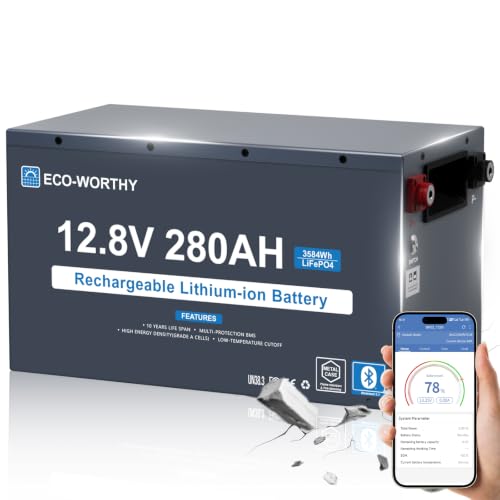
ECO-WORTHY 12V 280Ah Metal Case
Strengths
- Metal case for safety
- High 280Ah capacity
- Bluetooth monitoring
Trade-offs
- Very heavy
- Expensive upfront
- Large footprint
This 280Ah unit is a tank, literally. The metal case isn’t just for show; it adds real fire resistance and structural integrity, which matters in an RV where safety is essential. At nearly 60 lbs, it’s heavy, but you’re getting massive capacity in a single unit, and the 200A BMS can handle serious loads. The built-in safety switch is a thoughtful touch, easy to cut power during maintenance.
Bluetooth monitoring is a nice perk, letting you track SOC from your phone, and the low-temp protection adds winter confidence. For full-timers or off-grid cabins, this reduces the need for battery banks. Compared to stacking smaller units, it saves space and wiring complexity. It’s pricier, but for durability and integrated safety, it’s hard to beat.
Video review
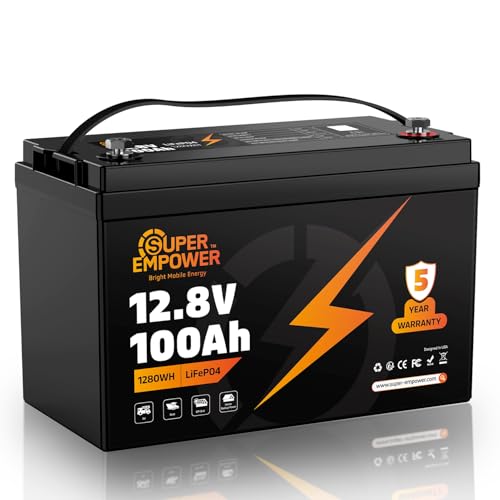
SUPER EMPOWER 12V 100Ah Group 31
Strengths
- True Group 31 fit
- 5-year warranty
- Cold-weather charging protection
Trade-offs
- Requires lithium-specific charger
- Slightly heavier than some 100Ah LiFePO4
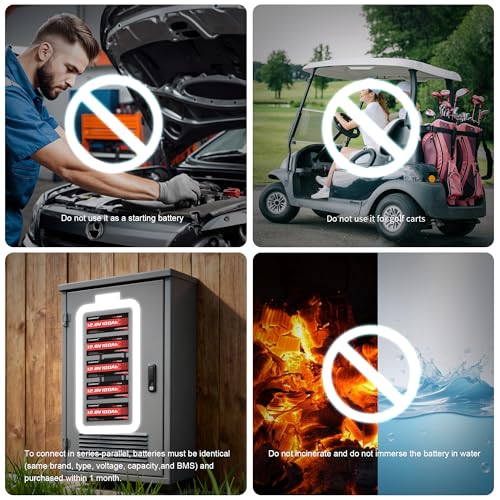
- Not for engine starting
This SUPER EMPOWER drop-in lithium hits a sweet spot for RV and marine upgrades, true Group 31 size, M8 terminals, and a 100A BMS mean it swaps right into most existing battery boxes. The 5-year warranty is a strong signal of confidence, and owners praise its reliability in real-world setups. It’s not the lightest at 20.94 lbs, but that’s still over 60% lighter than the AGM it replaces.
I’d pick this over entry-level lithiums because of the cold-weather charging cutoff at 32°F. That’s a real safeguard for shoulder-season campers. Compared to the Renogy AGM, it offers deeper, more consistent discharges and far better cycle life, 4,000+ at 100% DoD. If your system already runs lithium-compatible charging, this is the smarter buy.
Video review
Lithova 12V 100Ah Trolling Motor

Strengths
- Excellent cycle life claims
- Lightweight at 22.57 lbs
- Expandable up to 20.48kWh
Trade-offs
- Cold protection less detailed
- No Bluetooth monitoring
- Limited real-world cold data
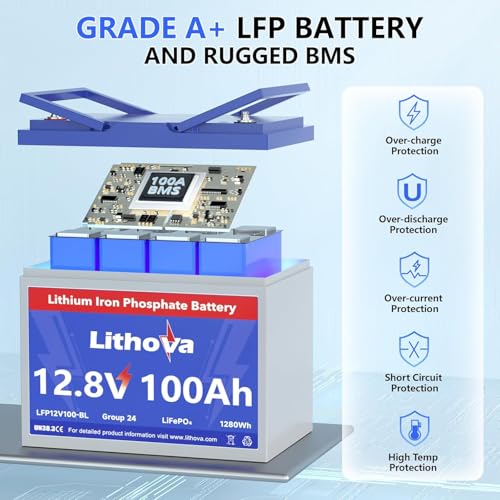
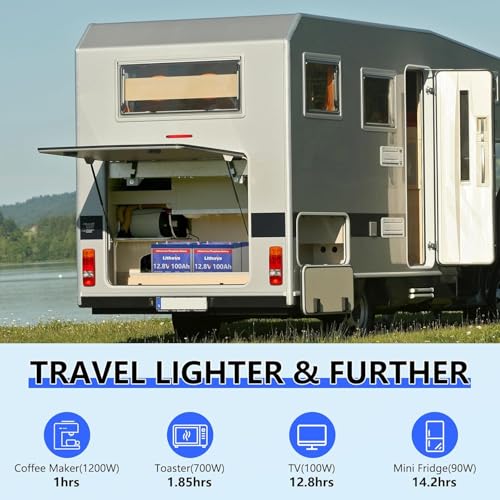
Lithova leans hard into longevity, claiming 15,000 cycles at 60% DoD is aggressive, but even if it lands at 4,000+, that’s solid for the price. The specs line up with other mid-tier LiFePO4 batteries: 100A BMS, drop-in Group 24 size, and plug-and-play compatibility with popular chargers. What stands out is the value, this comes in well under most 100Ah lithiums while promising premium A+ cells.
Reviewers note smooth integration with solar and trolling motors, and the expandability to 20.48kWh is a big plus for off-grid cabins. It’s not as compact as some, but for budget-focused buyers who want long life and scalability, this punches above its weight. Compared to the SUPER EMPOWER model, it’s slightly lighter on protections but still covers the essentials.
Product photos


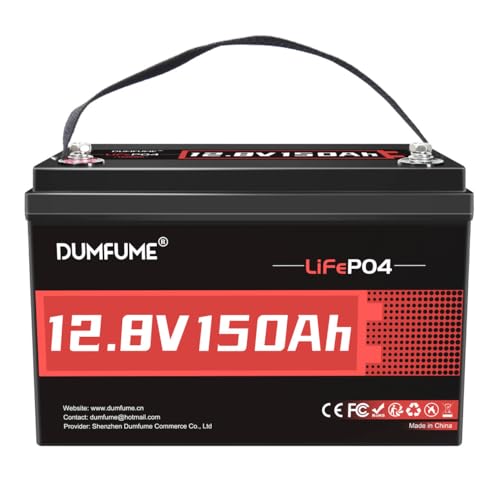
dumfume 12V 150Ah LiFePO4 Battery
Strengths
- Balanced 150Ah capacity
- Lightweight and compact
- 4S4P expandable
Trade-offs
- No built-in display
- Charging issues reported below 41°F
- No Bluetooth
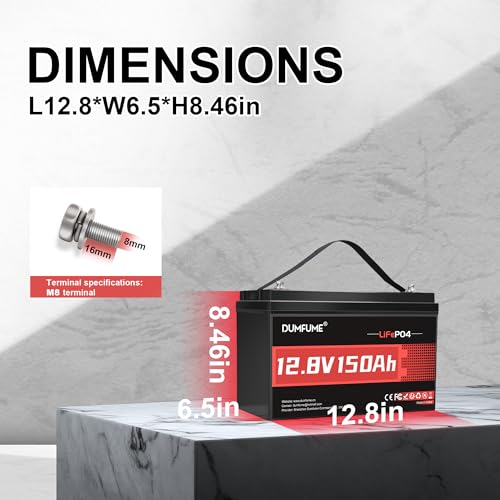
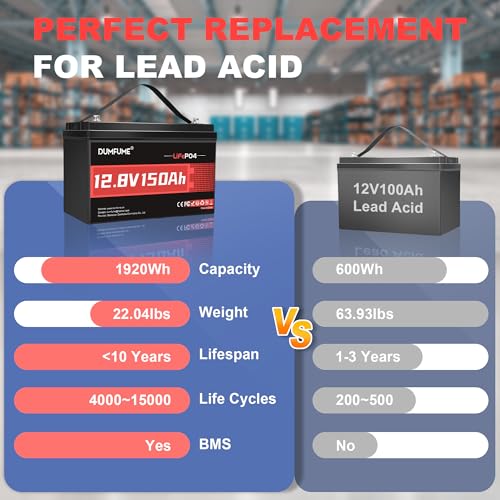
150Ah in a Group 31 form factor gives you 1.92kWh of usable energy, this is the sweet spot between capacity and manageability. At under 22 lbs, it’s light enough to handle solo, and the 4,000+ cycle claim lines up with real owner feedback. The 100A BMS covers all critical protections, and the wide temperature range makes it reliable year-round.
What I like most is the flexibility: series and parallel expandability means you can scale later. For mid-sized rigs, this beats oversizing with a 280Ah or underpowering with a 100Ah. Against the Renogy AGM, it’s lighter, lasts longer, and offers deeper discharges. At this price, it’s one of the smarter mid-capacity lithium upgrades.
Product photos


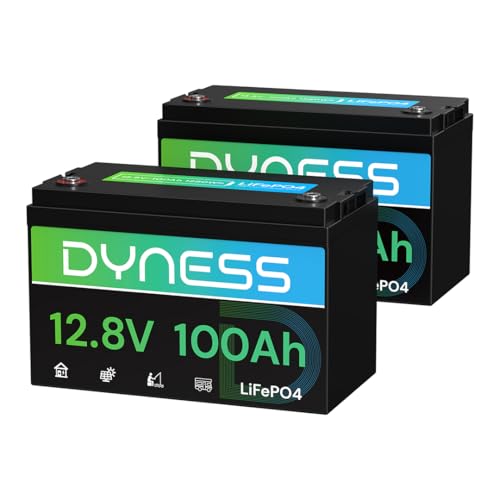
Dyness 12V 100Ah LiFePO4 (2-Pack)
Strengths
- A+ grade cells
- Smart low-temp charging
- IP65-rated BMS
Trade-offs
- Heavier than competitors
- Pricier per kWh
- No built-in display
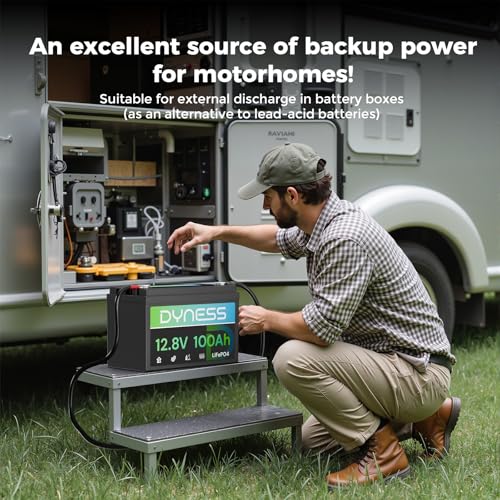
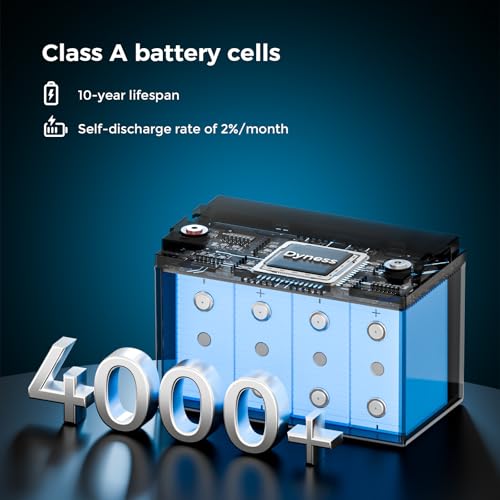
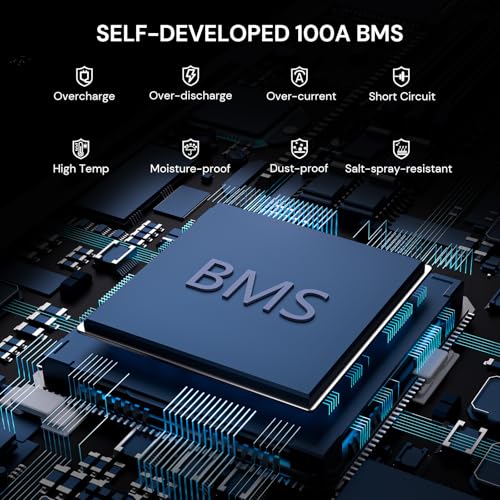
Selling two 100Ah units together makes this pack a smart starting point for larger systems, 325 bucks for 200Ah total is competitive. Dyness uses A+ grade cells, and the 10-year lifespan claim isn’t just marketing fluff; owners report stable performance even after years of daily cycling. The BMS is robust, with IP65 rating and strong environmental resistance, which matters in dusty or damp campers.
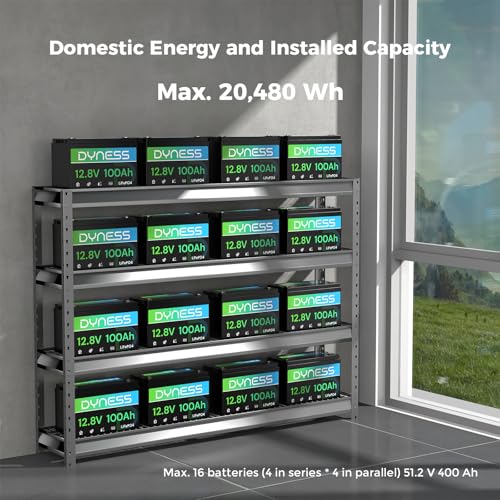
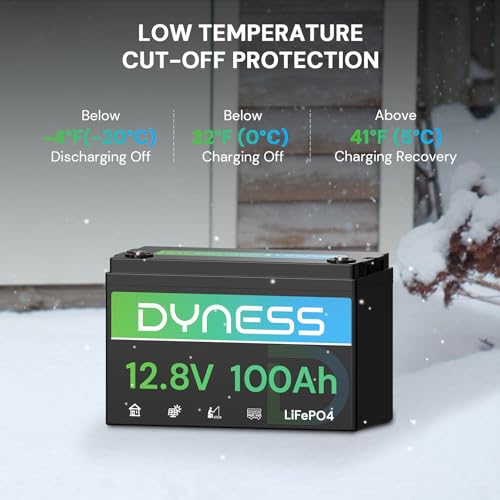
The standout is the low-temp cutoff at 32°F with auto-resume at 41°F, more refined than basic freeze protection. Paired with its 4S4P expandability, this is my pick for anyone building a scalable off-grid or RV system. It’s heavier than some (25.3 lbs per unit), but that’s the trade-off for durability. Beats the Lithova on system readiness and long-term support.
Product photos
Renogy 12V 200Ah AGM Battery
Strengths
- High 200Ah capacity
- Low self-discharge rate
- Wide temperature tolerance
Trade-offs
- Heavy and bulky
- Shorter cycle life than lithium
- Limited DoD for longevity
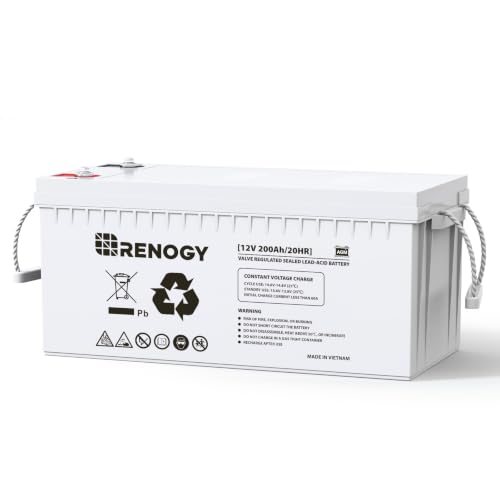
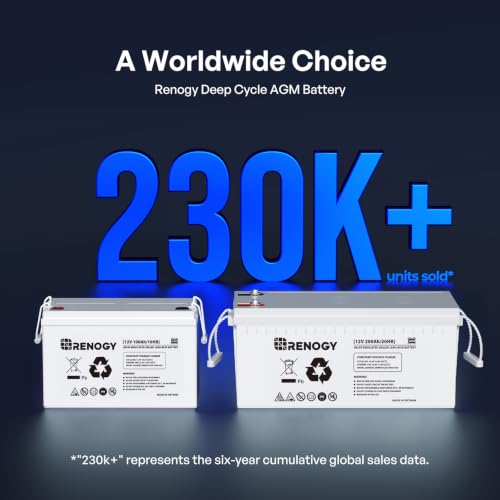
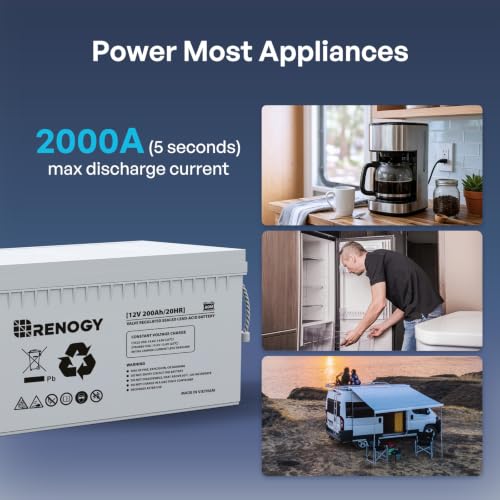
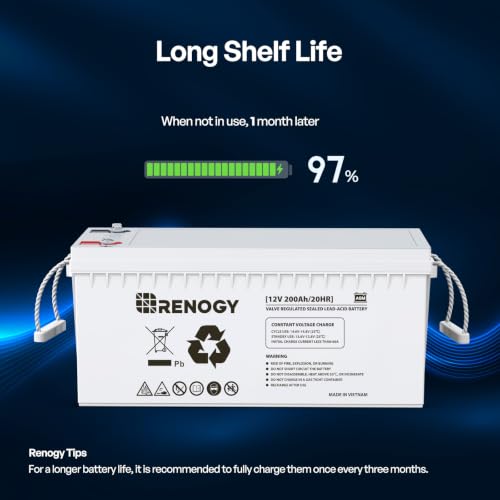
On paper, this Renogy AGM is a beast for lead-acid tech, 200Ah capacity is no joke, and that C20 rating gives you real usable power for extended off-grid stays. The low self-discharge rate (under 3% per month) stands out, making it a solid choice if you’re storing your rig for weeks between trips. Owners consistently report it holds up well in solar and RV setups where lithium isn’t in the budget but you still need dependable, high-capacity power.
Still, it’s heavy, over 60 pounds, and while the discharge performance is strong for lead-acid, it can’t touch lithium when it comes to depth of discharge or cycle life. You’re lucky to get 500 cycles at 50% DoD, and recharging takes longer. But if you’re committed to AGM for cost or simplicity, and need serious capacity, this is one of the most trusted names in the game.
Product photos


HWE 12V 25Ah LiFePO4 Battery
Strengths
- Ultra-light at 4.8 lbs
- LCD charge display
- Long 10-year lifespan
Trade-offs
- Low capacity for house use
- Small terminal size (M5)
- Not for high-draw loads
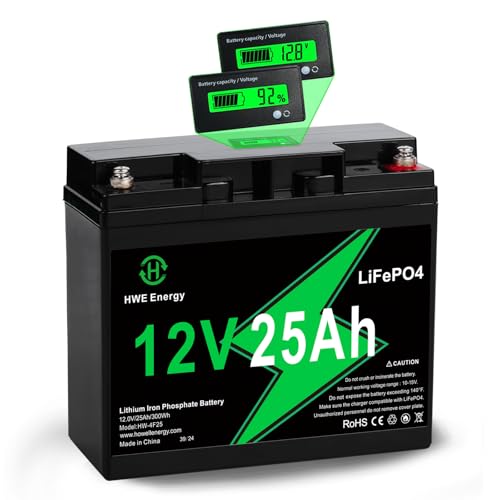
This HWE 25Ah battery is a niche player, small, light at 4.8 lbs, and perfect for low-draw or portable uses. The LCD meter is a standout feature; being able to check SOC with a button press adds real convenience. Owners love it for fish finders, UPS backups, and kids’ ride-ons, applications where size and weight matter more than raw power.
It’s not for house banks, but as a dedicated auxiliary battery, it shines. Expandable via series/parallel, so you can build a small 24V system if needed. At 5,000+ cycles, it’ll outlast most SLA batteries by years. For this role, it’s overbuilt in the best way, safe, compact, and built to last. Beats cheap SLA units hands down.
Product photos


How We Evaluated camper batteries
As someone who’s spent years immersed in the world of vehicles – from classic restorations to modern electric bikes – I approach battery selection with a focus on practical performance and longevity. Rather than a hands-on lab test of each battery, this evaluation is a research-led comparison of published specifications, owner feedback from across the web, and my understanding of what truly matters in a camper setup. We weighed the features of each model against real-world needs, looking for patterns in reported experiences.
For camper batteries, capacity (Ah), cycle life, and safety features were the most heavily weighted factors. A larger Ah rating provides longer runtime off-grid, obviously. But truly valuable is a long cycle life – you want a battery that will deliver consistent power for years, not just a season. Safety features, particularly within LiFePO4 batteries, are critical; a robust BMS (Battery Management System) protects your investment and, more importantly, your camper. Understanding these aspects is key when considering best deep cycle batteries.
Specifications reliably reveal capacity, weight, and physical dimensions – critical for fitment. However, judging real-world performance and durability requires digging into owner reviews and expert assessments. We looked for consistent reports on how well a battery holds a charge over time, its behavior in different temperatures, and the effectiveness of its BMS. Understanding your RV battery lifespan is also crucial, and owner feedback provides the most honest insights into a battery’s actual longevity and whether you’re getting the advertised cycle life.
How To Choose The camper batteries
Choosing the right camper battery is crucial for enjoying off-grid adventures, and it’s a decision that goes beyond simply grabbing the biggest amp-hour rating you can find.
A good camper battery balances energy density, cycle life, safety features, and weight. Prioritize LiFePO4 chemistry for its longevity and discharge characteristics. Look for a robust Battery Management System (BMS) to protect against overcharge, discharge, and temperature extremes. Consider the physical size and weight, especially if space and payload are limited. Finally, understand your power needs to select an appropriate capacity.
Understanding Battery Chemistry
The type of battery chemistry is the first major decision. While traditional lead-acid batteries are the cheapest upfront, their weight and limited lifespan make them a poor long-term investment for most campers. Absorbed Glass Mat (AGM) batteries offer improvements over flooded lead-acid in terms of maintenance and spill-proofing, but they still fall short of the performance of Lithium Iron Phosphate (LiFePO4) batteries. LiFePO4 offers significantly longer cycle life (often exceeding 4,000 cycles at 80% depth of discharge), lighter weight, and consistent voltage output throughout their discharge cycle. If you’re serious about boondocking or extended off-grid use, LiFePO4 is almost always the smarter choice, even with a higher initial cost. Consider reading our deep cycle battery guide for a more detailed breakdown of the options.
Prioritizing Safety and BMS Features
A Battery Management System (BMS) is absolutely essential, especially with LiFePO4 batteries. This electronic circuit protects the battery from damage and ensures safe operation. Don’t skimp on this – a good BMS will offer protection against over-voltage, under-voltage, over-current, short circuits, and potentially even high and low temperatures. Some higher-end batteries, like the ECO-WORTHY and Dyness models, include Bluetooth monitoring, allowing you to check the battery’s state of charge and health remotely via a smartphone app. This is a useful feature, but a robust set of core protections is more critical.
- A basic BMS is a must.
- Bluetooth connectivity is a nice-to-have for convenience.
- Low-temperature charging protection is invaluable if you plan to camp in colder climates, preventing damage to the battery cells – a feature Dyness specifically highlights.
Balancing Capacity and Practicality
Capacity (measured in amp-hours or Wh) determines how long you can run your appliances. However, simply choosing the largest battery isn’t always the best approach. Consider your actual power consumption. A smaller, lighter battery might be preferable if you’re concerned about weight limits in your RV or if you primarily need power for lights and small devices. Conversely, if you plan to run power-hungry appliances like air conditioners or microwaves, a larger capacity battery is essential. Remember that you can often expand your system later by connecting batteries in parallel, but it’s easier to start with a capacity that meets your immediate needs. For a broader look at options for your vehicle, check out our overview of the best RV batteries.
Don’t overestimate your needs, but always allow a buffer for unexpected power draw. A good rule of thumb is to calculate your daily power consumption and then add 20-30% for safety.
Camper Batteries Compared
Here is a comparison of key specifications for the camper batteries described.
| Product Name | Voltage | Capacity (Ah) | Battery Type | Weight (lbs) | BMS Included | Low-Temp Protection |
|---|---|---|---|---|---|---|
| ECO-WORTHY 12V 314Ah LiFePO4 | 12V | 314 | LiFePO4 | 60.4 | Yes | Yes (-7°C / 19.4°F) |
| ECO-WORTHY 12V 280Ah Metal Case | 12V | 280 | LiFePO4 | N/A | Yes | Yes |
| SUPER EMPOWER 12V 100Ah Group 31 | 12V | 100 | LiFePO4 | 20.94 | Yes | Yes (0°C / 32°F) |
| Lithova 12V 100Ah Trolling Motor | 12V | 100 | LiFePO4 | 22.57 | Yes | Yes (-20°C / -4°F) |
| dumfume 12V 150Ah LiFePO4 | 12V | 150 | LiFePO4 | 22.05 | Yes | Yes (5°C / 41°F) |
| Dyness 12V 100Ah LiFePO4 (2-Pack) | 12V | 100 | LiFePO4 | N/A | Yes | Yes (-4°F) |
| Renogy 12V 200Ah AGM | 12V | 200 | AGM | N/A | No | Yes (-4°F) |
| Renogy 12V 100Ah AGM Deep Cycle | 12V | 100 | AGM | N/A | No | Yes |
| HWE 12V 25Ah LiFePO4 | 12V | 25 | LiFePO4 | 4.8 | Yes | Yes |
Frequently Asked Questions
What is the typical lifespan of a LiFePO4 camper battery?
You can generally expect a LiFePO4 battery to last between 2,000 and 5,000 cycles, depending on depth of discharge and usage conditions. This is significantly longer than lead-acid options, making them a cost-effective choice over the long term even with their higher initial price.
How does cold weather affect camper batteries?
Low temperatures reduce a battery’s capacity and ability to accept a charge. Look for LiFePO4 batteries with built-in low-temperature protection, like the Dyness models, which prevent damage from charging in freezing conditions.
Are all Battery Management Systems (BMS) created equal?
No, BMS quality varies considerably. A basic BMS protects against overcharge and discharge, but a more advanced system will also offer protection against short circuits, over-current, and temperature extremes, safeguarding your investment.
Can I use a regular car battery charger on a LiFePO4 camper battery?
Generally, no. LiFePO4 batteries require a charger specifically designed for their chemistry. Using an incompatible charger can damage the battery or void the warranty, so always check the manufacturer’s recommendations.
What size battery do I need for running a camper AC units and other appliances?
That depends on your power needs, but a larger capacity is essential for high-draw appliances. To accurately determine the right size, calculate your daily power consumption and add a 20-30% buffer, and consider if you may want to add more RV power batteries later to expand your system.
The Bottom Line
Choosing a camper battery often comes down to balancing upfront cost with long-term value. While lead-acid options exist, the ECO-WORTHY 12V 314Ah LiFePO4 represents the best overall investment, offering a massive capacity, impressive cycle life, and critical safety features like low-temperature protection. It’s a premium product, but one that will deliver reliable power for years of off-grid adventures.
For those on a tighter budget, or needing a smaller power reserve, the Dyness 12V 100Ah LiFePO4 (2-Pack) delivers a solid LiFePO4 performance at a more accessible price point. If you’re focused on specific applications, like a trolling motor, the Lithova 12V 100Ah Trolling Motor battery is a purpose-built choice. Don’t forget to explore other camper supplies to complete your setup.
Ultimately, the amp-hour rating is just one piece of the puzzle. Prioritize a battery with a robust BMS, a long cycle life, and a chemistry (LiFePO4) that’s suited to the demands of off-grid camping. A dependable power supply, combined with the right batteries for trailers, is far more valuable than chasing the highest number on a spec sheet.
