
7 Best BMX Bikes for Kids of 2026
This post contains affiliate links. As an Amazon Associate, we earn from qualifying purchases.
The WEIZE 20 Inch Freestyle BMX stands out as the best overall pick for kids, combining solid build quality with beginner-friendly features. For those watching the budget, the Yventix 20 Inch Freestyle BMX delivers strong value without major compromises. If your child is ready for bigger wheels and more room to grow, the JOYSTAR 24 Inch BMX Bike offers excellent versatility.
Picking a BMX bike for a kid isn’t just about grabbing the flashiest frame at the store. Too often, parents end up with a bike that’s the wrong size, falls apart after a few weeks, or overwhelms a beginner with unnecessary complexity.
As someone who’s spent years immersed in two-wheeled culture at TheAutoZenith, I know what separates a bike that inspires confidence from one that ends up in the garage. This guide cuts through the noise, focusing on real-world durability, proper fit, and smart design, based on specs, owner feedback, and what actually matters when a kid is learning to ride.
Top 7 Bmx Bikes For Kids in the Market
The Best Bmx Bikes For Kids, Reviewed
WEIZE 20 Inch Freestyle BMX Bike

Strengths
- 360-degree rotor
- Four axle pegs
- Wide 2.40-inch tires
Trade-offs
- No front brake
- Heavier than race builds
- V-brake may need tuning
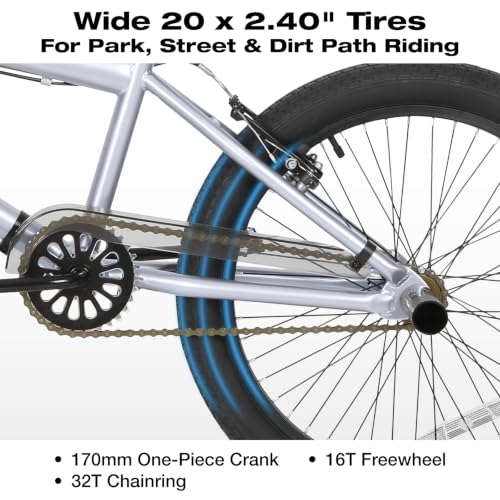
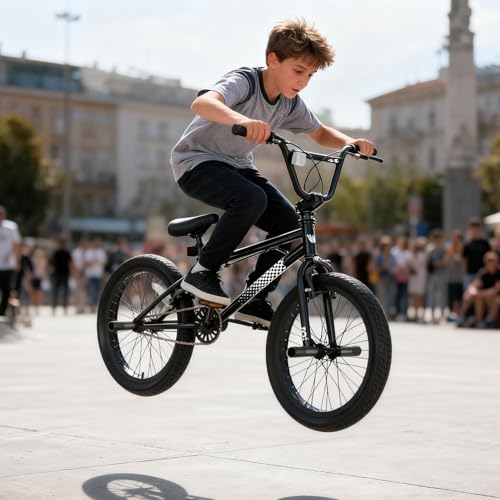
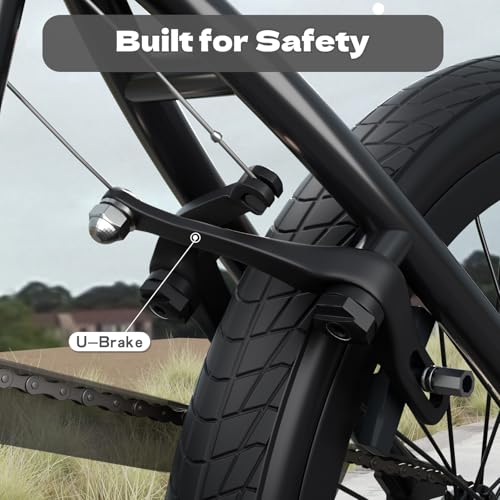
If you’re looking for the most complete freestyle package under $150, the WEIZE 20-inch BMX bike is tough to ignore. It includes a 360-degree rotor and four BMX pegs, a combo that lets kids practice bar spins and foot peg tricks right out the gate. The 2.40-inch wide tires offer excellent grip and cushioning on rough pavement, and the rear V-brake delivers sharper stopping power than the U-brakes on many budget models.
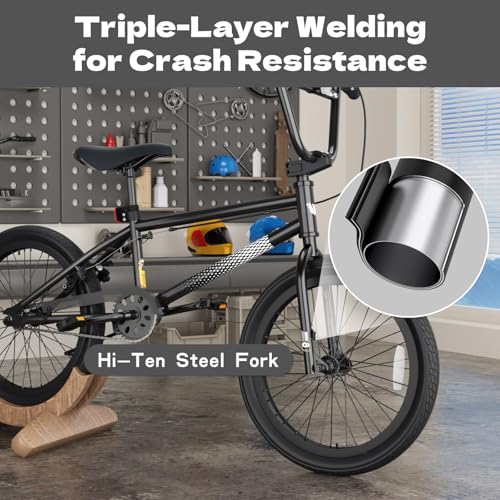
Owners consistently praise its balance of performance and price. The hi-ten steel frame is durable without being too heavy, and the adjustable seat helps it last through growth spurts. Compared to the Yventix trick model, it offers better braking and more pegs. It’s not the lightest, but for a do-it-all youth BMX bike, it hits more marks than most.
Video review
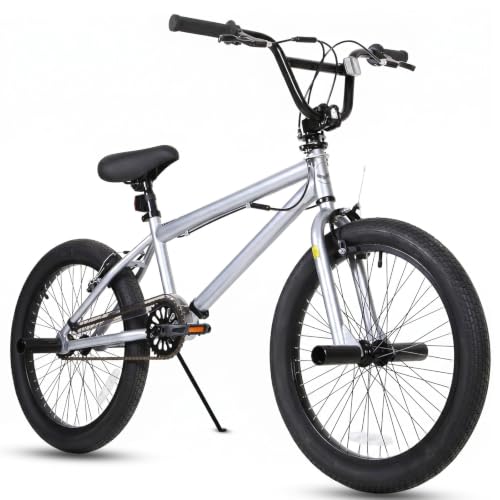
Yventix 20 Inch Freestyle BMX Bike
Strengths
- 360-degree rotor
- Four axle pegs
- Affordable freestyle build
Trade-offs
- Heavier steel frame
- Basic cable routing
- No front brake
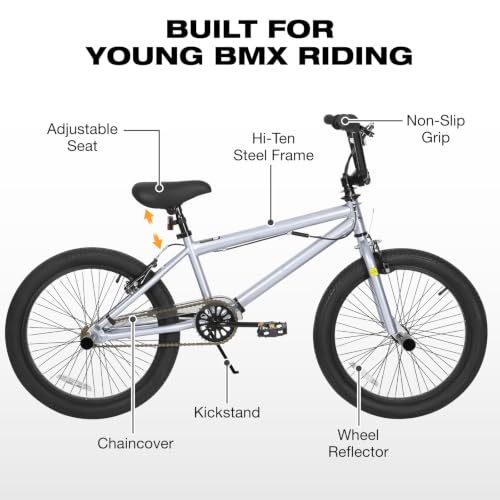
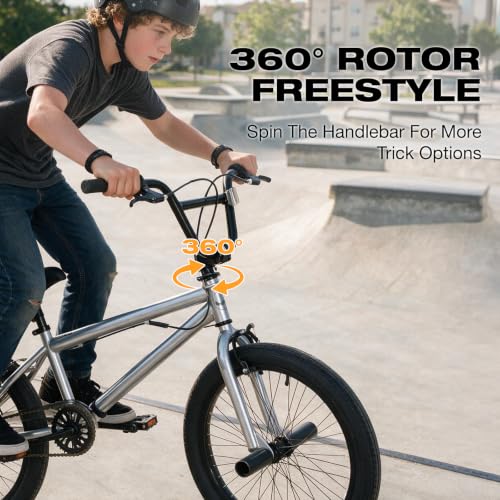
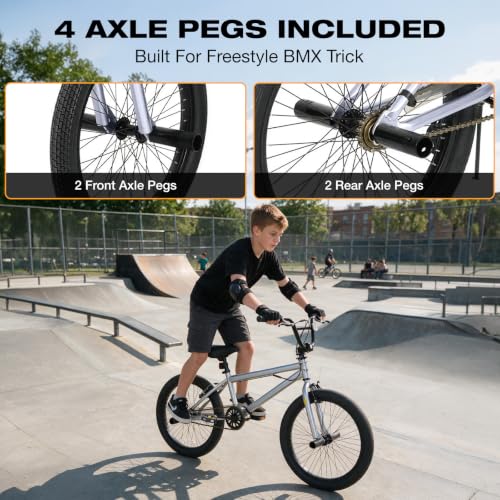
This Yventix 20-inch trick bike is nearly identical to the WEIZE but priced slightly lower, making it a strong contender for the best value in freestyle-ready builds. It includes the same 360-degree rotor, four pegs, and 2.40-inch tires, giving kids full range to practice spins and grinds. The single-speed drivetrain is straightforward, and the rear V-brake offers decent modulation for beginners.
Where it falls short is in refinement, some owners note the brake cable routing isn’t as clean, and the steel frame, while durable, adds weight. But for the price, it delivers everything a new trick rider needs. If you’re comparing it to the WEIZE, the choice comes down to minor build quality differences. I’d lean toward WEIZE for longevity, but this one gets you 90% there for less.
Product photos
Yventix 20 Inch BMX Style Bike
Strengths
- Dual braking system
- Full chain guard
- Front and rear fenders
Trade-offs
- Heavier frame
- Not freestyle ready
- No pegs or rotor
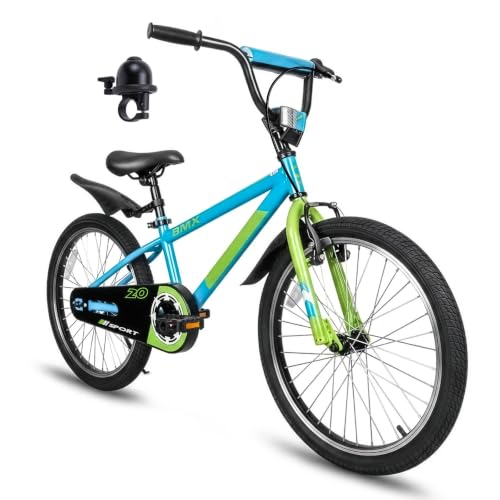
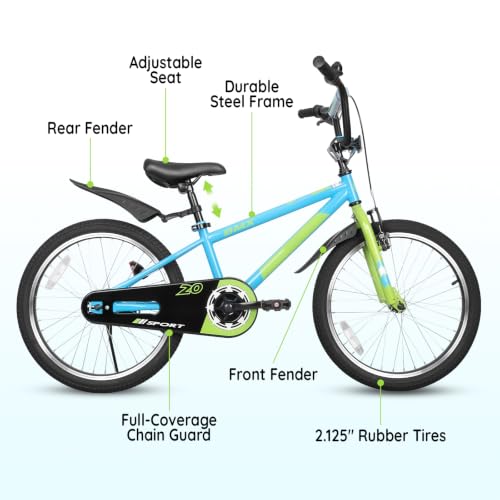
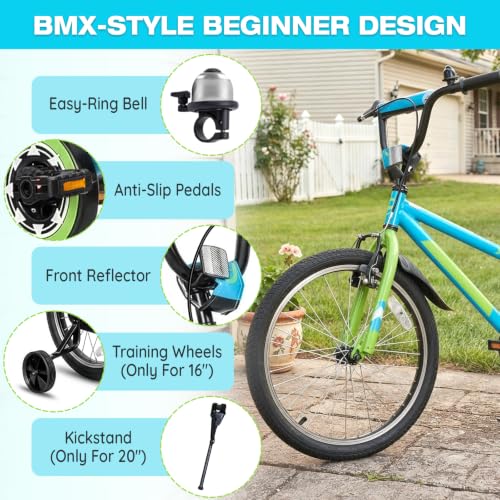
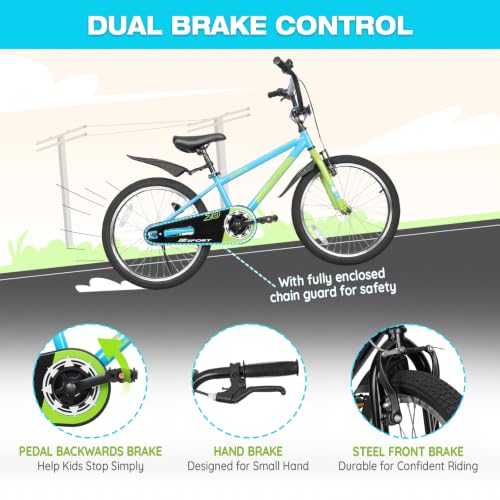
This Yventix 20-inch model stands out as a solid entry-level pick for younger riders just getting comfortable on two wheels. It mixes basic BMX styling with practical touches like a full chain guard, front and rear fenders, and both hand and foot brakes, something not every kids’ bike offers. That dual braking setup can help ease new riders into stopping with their hands while still having the foot brake as a backup, which parents seem to appreciate in reviews.
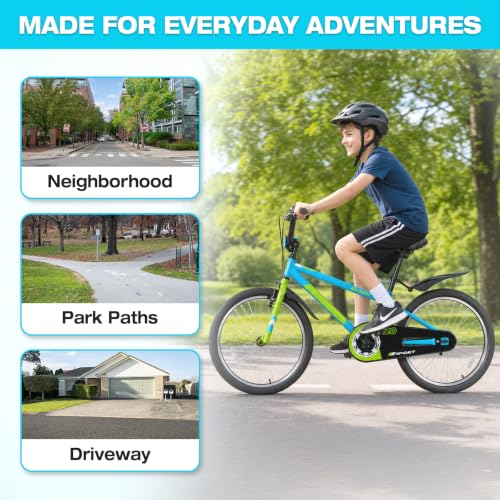
On paper, it’s not built for serious stunts, and owners confirm it’s better suited for casual neighborhood rides than park sessions. The hi-carbon steel frame holds up fine for light use, but it’s heavier than some competitors, which can make it harder for smaller kids to maneuver. Still, for the price, it covers the essentials and grows with the child thanks to the adjustable seat and kickstand inclusion.
Product photos

vollsch 20 Inch Kids Freestyle BMX
Strengths
- Reinforced 48H rims
- Wide 2.35-inch tires
- Sturdy high-carbon steel frame
Trade-offs
- Slightly heavier
- No 360 rotor
- Brake lever could be improved
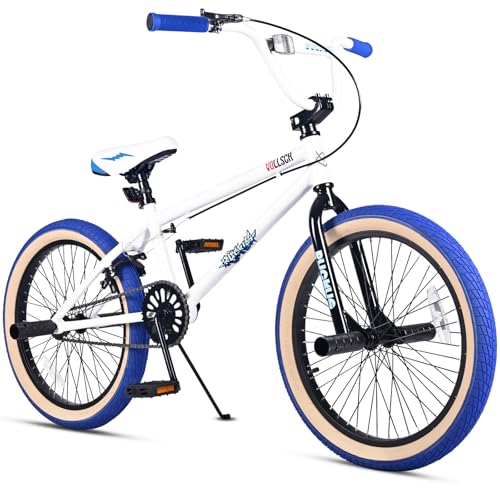
The vollsch RUCKUS 20-inch BMX bike is one of the more durable builds in this lineup, thanks to its 19.1-inch high-carbon steel frame and 48H rims, those extra spoke holes mean better wheel integrity under stress. This is a bike that owners say can handle jumps, curbs, and repeated park use without bending out of shape. It’s not the lightest, but the trade-off is resilience, which matters when kids are pushing limits.
It comes with a 36T chainring and rear U-brake, offering smooth power transfer and solid stopping. The 2.35-inch tires are wider than average, adding stability on rough surfaces. Some riders note the brake lever could be more ergonomic for small hands, but overall, it’s a well-rounded freestyle-ready machine. Compared to similarly priced models, it edges ahead in build quality.
Video review
JOYSTAR 24 Inch BMX Bike

Strengths
- Larger 24-inch fit for older kids
- Durable hi-ten steel frame
- Lifetime warranty
Trade-offs
- No 360 rotor
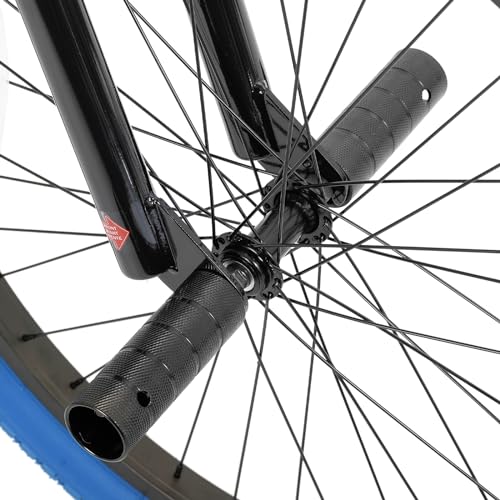
- Only two pegs
- Heavier than lighter freestyle builds
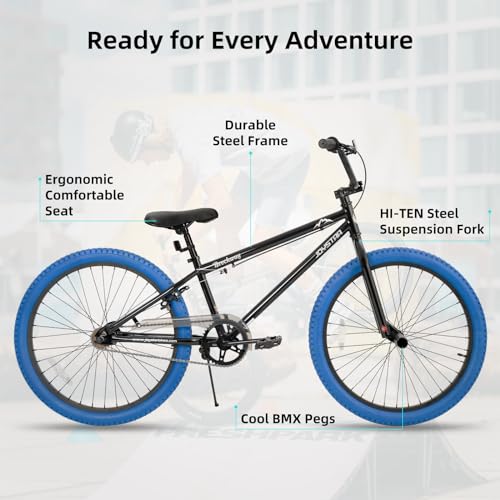
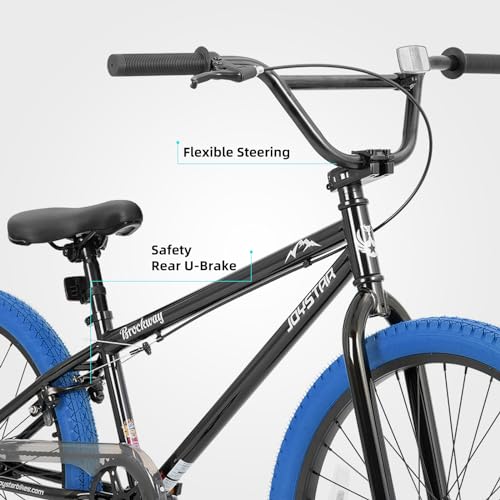
The JOYSTAR 24-inch bike is built for older, taller kids who are ready to move beyond training wheels and into real BMX territory. With a 22-inch top tube and suggested rider height starting at 4’6″, it fills a gap many brands miss, older tweens who’ve outgrown 20-inch models but aren’t ready for adult bikes. The hi-ten steel frame is rugged enough for daily street and park use, and the 20 x 2.125-inch tires offer solid grip without being overly bulky.
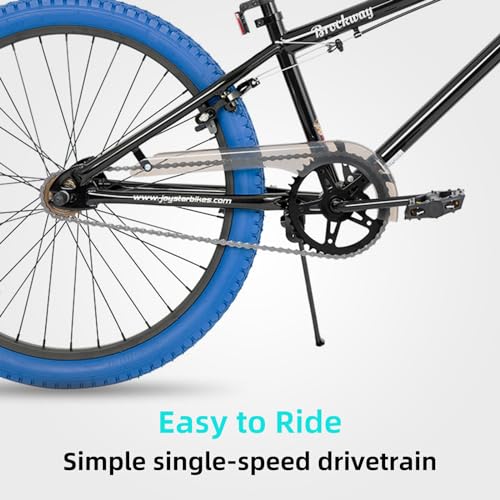
Owners consistently report it holds up well to regular use, and the lifetime warranty adds real value. It only includes two pegs and lacks a 360-degree rotor, so it’s not ideal for serious freestyle, but for a first real BMX bike, the simplicity works in its favor. The single-speed drivetrain is reliable, and the U-brake setup gives clean, predictable control.
Product photos
KORIMEFA 18 Inch Freestyle BMX
Strengths
- Perfect beginner geometry
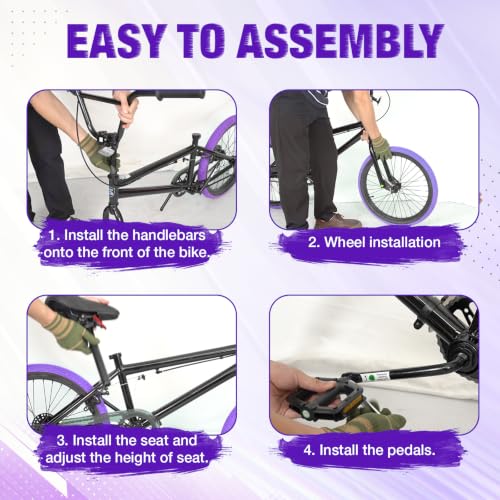
- 90% pre-assembled
- Upgradeable for skills
Trade-offs
- No pegs or rotor
- Basic brake setup
- Not for advanced tricks
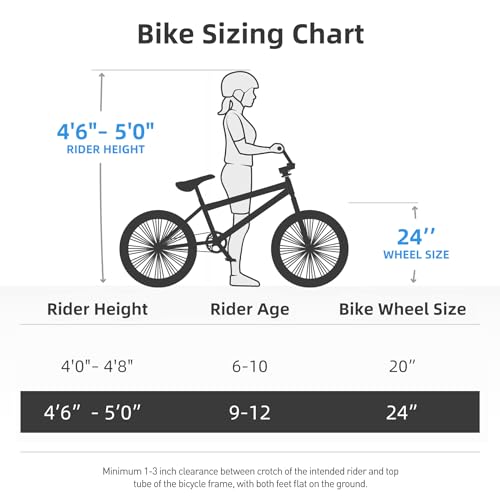
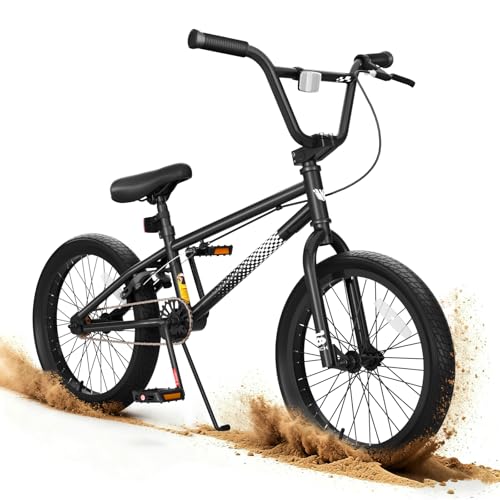
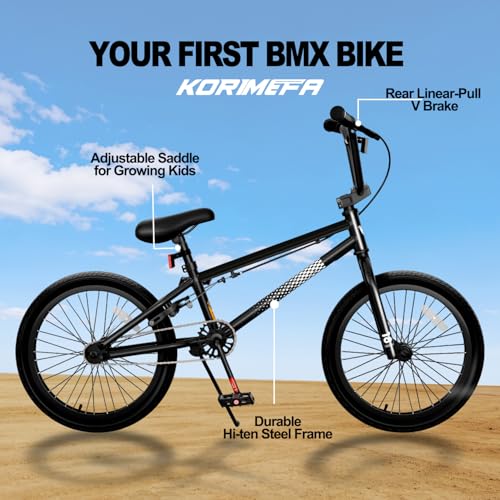
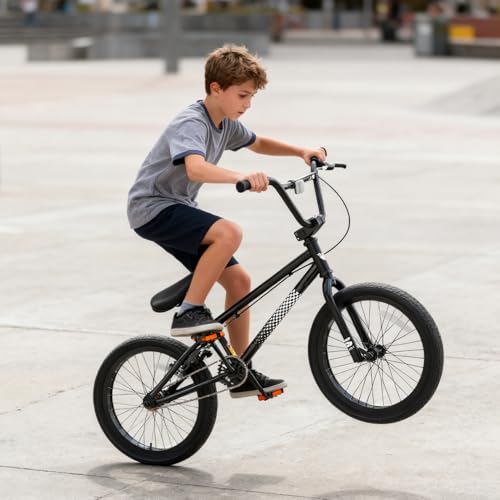
The KORIMEFA 18-inch BMX bike is a smart pick for true beginners who are just dipping into freestyle. It skips the flashy extras, no pegs, no rotor, no mudguards, and focuses on a clean, simple platform that’s easy to learn on. The 152mm cranks are sized right for little legs, and the 32T chainring keeps pedaling efficient without overcomplicating the drivetrain. Reviewers note it’s one of the smoother entry-level rides for kids under 5 feet.
What I like most is that it’s upgradeable. Once a rider gains confidence, you can add pegs or a gyro later. That makes it more future-proof than bikes that come loaded with parts a 6-year-old won’t use. It’s not built for heavy stunts, but for mastering balance, braking, and basic maneuvers, it’s hard to beat. The 90% pre-assembly also means less frustration out of the box.
Product photos
StarterRide 20 Inch BMX Bike
Strengths
- Lightweight steel frame
- High-rise handlebar
- Includes two pegs
Trade-offs
- No 360 rotor
- Narrower tires
- Only two pegs
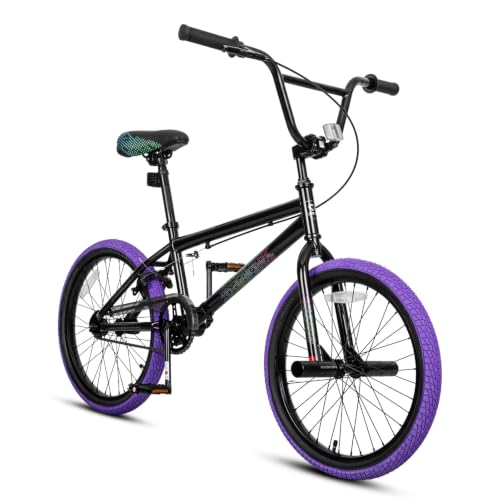
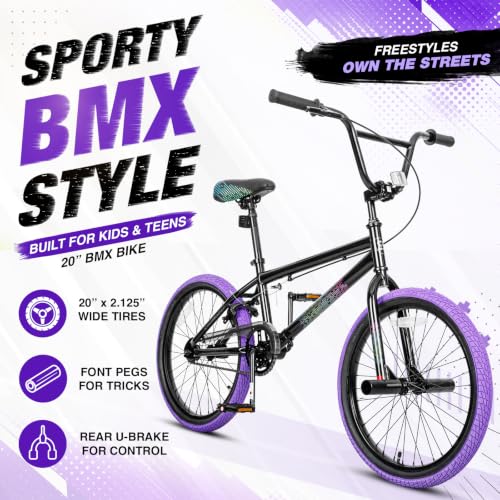
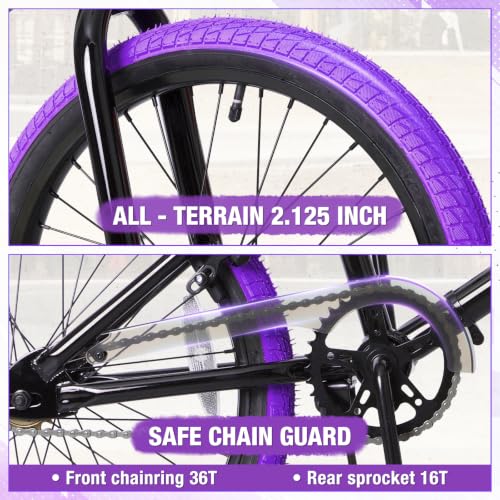
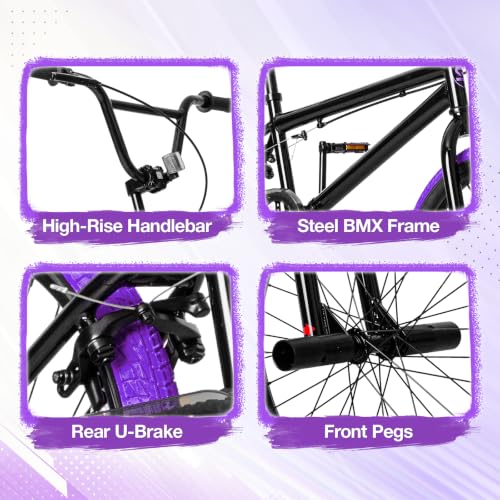
The StarterRide 20-inch BMX bike stands out for being one of the lighter builds in this category, which makes it easier for younger or less strong riders to handle. The high-rise handlebar improves control and gives that classic BMX look, while the rear U-brake is simple and effective for learning speed management. It includes two front pegs, so kids can start experimenting with basic grinds, though the lack of a 360 rotor limits bar spin tricks.
At 2.125-inch, the tires are narrower than some, which reduces grip on loose surfaces but improves acceleration. Owners say it’s a smooth, low-maintenance ride straight out of the box, and the 85% pre-assembly helps. It’s not built for heavy park use, but for casual freestyle and street fun, it’s a solid middle ground.
Product photos
How We Evaluated bmx bikes for kids
Rather than a hands-on lab test, my research for these recommendations centered on a detailed comparison of published specifications and features across numerous models. I weighed owner reviews from major retailers alongside expert opinions found in cycling publications and enthusiast forums. As someone who’s spent years observing and appreciating two-wheeled machines at TheAutoZenith, I applied my understanding of BMX geometry, component quality, and the demands placed on these bikes by young riders to establish a clear ranking.
For kids’ BMX bikes, durability, simplicity, and appropriate sizing were the most heavily weighted factors. A robust frame is essential to withstand the inevitable bumps and scrapes, while a simple single-speed drivetrain reduces maintenance and allows kids to focus on learning skills. Proper fit, matching bike size to rider height, is paramount for both control and preventing injury. You can find more general guidance on choosing the right fit in our guide to the best BMX for youth.
Specifications reliably indicate frame material, component quality (brakes, cranks), and tire size. However, owner feedback proved crucial for assessing real-world durability and ease of assembly. Reputation – brands consistently praised for quality control and customer service – also factored heavily into my evaluations. We also considered whether a bike offered features appealing to beginners, and the availability of 20-inch BMX models that are crucial for younger riders.
How To Pick The Right bmx bikes for kids
Finding the right BMX bike for a young rider requires a bit more thought than just picking a cool color. It’s about matching the bike to their skill level, size, and intended use.
A good BMX bike for a child prioritizes durability, a properly sized frame, and a simple, reliable component set. Look for a Hi-Ten steel frame, responsive brakes (V-brakes are common and effective), and a single-speed drivetrain to keep maintenance straightforward. Wheel size and top tube length are crucial for fit, impacting control and confidence.
Frame Material & Durability
The frame is where you want to start. Hi-Ten steel is the standard for entry-level and mid-range BMX bikes because it strikes a good balance between affordability and strength. Don’t be fooled into thinking a heavier frame is always better; a well-designed Hi-Ten steel frame is perfectly capable of handling the demands of park riding or street tricks for developing riders. Carbon fiber frames exist, but those are firmly in the enthusiast price range and are overkill for most kids just starting out. Look for frames with welded gussets at key stress points (where the top tube meets the head tube, for example) as these reinforce the frame and improve longevity.
Gearing & Brakes
Keep it simple. Single-speed drivetrains are the way to go for kids’ BMX bikes. Gears add complexity and maintenance that aren’t needed when learning the fundamentals. A 32T chainring paired with a 16T rear sprocket is a very common and effective ratio, providing enough use for learning tricks without being overly difficult to pedal. When it comes to brakes, rear V-brakes are generally sufficient. While some more advanced riders may eventually move to a gyro (allowing the handlebars to spin freely), a simple, responsive rear brake is more than adequate for beginners. Ensuring your child also has one of the best helmets for BMX is, of course, paramount.
Sizing & Fit
Getting the right size bike is absolutely crucial. A bike that’s too large or too small will be difficult to control and can hinder a child’s progress.
- Too Big: Makes it hard to mount and dismount, reduces control, and can lead to crashes.
- Just Right: Allows the rider to comfortably reach the handlebars and pedals without overextending.
- Too Small: Limits growth potential and forces an awkward riding position, ultimately hindering their ability to progress.
Generally, manufacturers provide height ranges for their bikes, but it’s always a good idea to have your child try the bike if possible. Remember that standover height (the distance between the top tube and the ground) is key – they should have at least an inch or two of clearance. If you’re looking for a broader overview, checking out a guide to kids BMX bikes can be a great starting point.
A properly fitted BMX bike is more about confidence than anything else. A child who feels comfortable and in control will learn faster and enjoy the experience more.
BMX Bikes for Kids Compared
Here’s a comparison of key specifications for popular BMX bikes designed for children.
| Product Name | Wheel Size (in) | Rider Height (approx) | Frame Material | Brakes | Pegs Included |
|---|---|---|---|---|---|
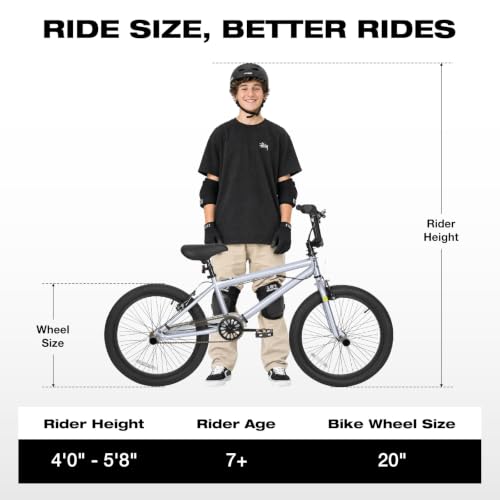
| WEIZE 20 Inch Freestyle BMX | 20 | 4’0″ – 5’8″ | Hi-Ten Steel | Rear V | 4 |
| Yventix 20 Inch Freestyle BMX | 20 | 4’0″ – 5’8″ | Hi-Ten Steel | Rear V | 4 |
| Yventix 20 Inch BMX Style Bike | 16/20 | 43-49/46-56 in | Carbon Steel | Hand/Foot | N/A |
| vollsch 20 Inch Kids Freestyle BMX | 20 | 4’3″ – 5’4″ | High-Carbon Steel | U-Brake | N/A |
| JOYSTAR 24 Inch BMX Bike | 24 | 4’6″ – 5’0″ | Hi-Ten Steel | U-Brake | N/A |
| KORIMEFA 18 Inch Freestyle BMX | 18/20 | 6-9/8-12 years | Carbon Steel | Caliper | N/A |
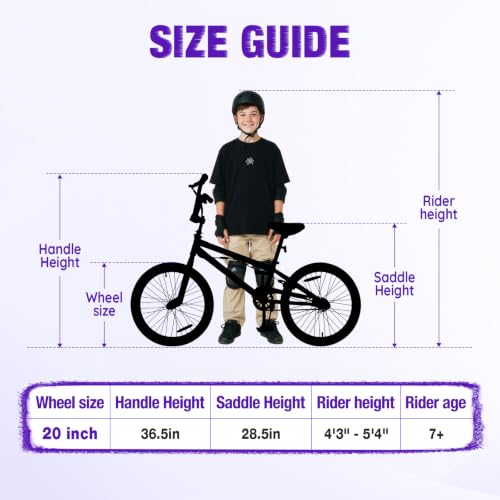
| StarterRide 20 Inch BMX Bike | 20 | 51-64 in | Steel | Rear U | 2 |
Frequently Asked Questions
What wheel size is best for a beginner?
A 20-inch wheel is generally the best starting point for most kids learning BMX, offering a good balance of maneuverability and stability. While some younger or smaller riders may begin with a 16-inch bike, the 20-inch size provides more room for growth and skill development.
Are more expensive BMX bikes significantly better?
Not always. While higher price points often mean lighter materials and more refined components, a well-built Hi-Ten steel frame can be perfectly adequate for a beginner. Focus on fit and build quality over chasing the most expensive model, especially when considering beginner BMX bikes.
What’s the difference between U-brakes and V-brakes?
Both are effective braking systems, but V-brakes generally offer a bit more stopping power and are easier to adjust. U-brakes are common on some freestyle bikes but can require more precise setup to function optimally, making V-brakes a more user-friendly option for kids.
Can a BMX bike be used for dirt jumping?
BMX bikes can be used for light dirt jumping, but dedicated dirt bikes for kids are better suited for more aggressive riding. BMX bikes prioritize maneuverability and street/park features, whereas dirt jump bikes have geometry optimized for absorbing larger impacts.
How long will a BMX bike last my child?
With proper care and a good quality build, a BMX bike can last for several years. Frame size is the biggest factor; a child will likely outgrow a bike before wearing it out, but choosing a frame with reinforced welds and a solid construction will maximize its lifespan.
The Bottom Line
Choosing a BMX bike for a child often comes down to balancing cost with capability. While a higher price doesn’t automatically equate to a better experience, the WEIZE 20 Inch Freestyle BMX consistently appears to offer the best overall package – a durable Hi-Ten steel frame, reliable components, and included pegs for a reasonable price, making it a strong starting point for most young riders. It’s a bike built to withstand the learning process and the inevitable falls.
For those on a tighter budget, the Yventix 20 Inch Freestyle BMX provides a solid entry point. If versatility is key, and you’re looking for something that might suit a slightly wider age range, the KORIMEFA 18 Inch Freestyle BMX is worth considering, particularly if you’re also browsing for the best kids bikes overall. Parents seeking a bike for a slightly older child should examine the JOYSTAR 24 Inch BMX Bike.
Ultimately, the best BMX bike is the one that fits your child properly and inspires confidence. Don’t get too caught up in chasing the latest specifications or highest-end components. Focus on a durable frame, reliable brakes, and a comfortable fit, and you’ll find a bike that will provide hours of fun and help foster a lifelong love of cycling, perhaps even leading them to explore options like a BMX for 10-year-olds.
