
8 Best Bicycle Front Racks of 2026
This post contains affiliate links. As an Amazon Associate, we earn from qualifying purchases.
The Blackburn Outpost Front Touring Rack stands out as the overall best front rack for its rugged design and excellent load support, especially for bikepacking and touring. For a solid budget-friendly option, the ACRUNU Aluminum Front Bike Rack delivers reliable performance without breaking the bank, while the Origin8 Rush Messenger Front Flat Rack offers great versatility for commuters and casual riders.
Most riders struggle to find a front rack that actually stays put, doesn’t rattle, and fits their specific bike, especially if it lacks eyelets or has an unusual fork. Poorly designed racks can throw off your bike’s handling or fail under real-world loads.
This guide cuts through the noise by focusing on what matters: secure mounting, real-world capacity, and build quality. I compared specs and owner feedback across top models, prioritizing racks that offer dependable performance across different bike types and riding styles.
Top 8 Bicycle Front Racks in the Market
The Best Bicycle Front Racks, Reviewed
Blackburn Outpost Front Touring Rack

Strengths
- Universal fit
- Height adjustable
- Lightweight aluminum
- Removable top shelf
- Strong build
Trade-offs
- Higher price
- Sold as front only in this listing
If you’re building a serious touring or bikepacking setup, the Blackburn Outpost stands out as a well-engineered solution that balances strength, adjustability, and compatibility. Its universal fit system means it plays nicely with a wide variety of frame and fork designs, which is a major win for riders with non-standard builds or older frames lacking eyelets. The height-adjustable design is not just a gimmick, it actually lets you clear fat tires or suspension forks without forcing you to bend or tweak the rack, a common headache with less flexible models.
Owners consistently report confidence in its durability, especially when paired with loaded panniers over rough roads. While it’s priced at the upper end, the T6061 aluminum construction keeps it light without sacrificing rigidity. It’s clearly designed by people who’ve actually loaded bikes down and ridden them far. Compared to budget racks, this one doesn’t just survive the miles, it supports them.
Video review
Origin8 Rush Messenger Front Flat Rack
Strengths
- High load capacity
- Robust alloy build
- Integrated rear guard
- Stable mounting
- Wide tire fit
Trade-offs
- Heavier than others
- Limited to bikes with caliper hole
- Fewer fit adjustments
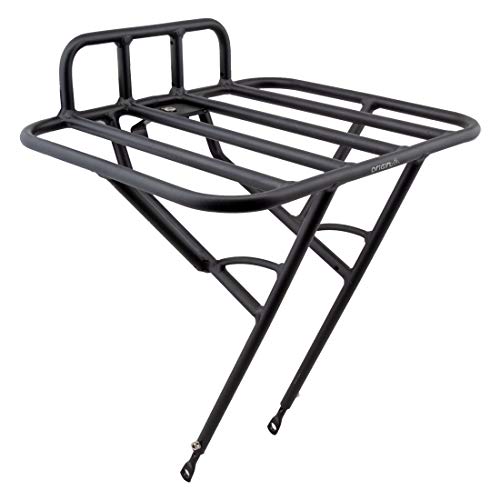
The Origin8 Rush Messenger rack is built like a cargo flatbed truck, brutally simple and strong. With a 55-pound capacity, it’s in a different weight class than most aluminum racks, and that shows in its AL6061-T6 alloy construction, which feels overbuilt in the best way. This is the kind of rack that thrives when you’re hauling heavy loads on a commuter or urban delivery bike, and the integrated rear guard is a thoughtful touch that keeps cables and head tubes safe from bag snags.
It mounts via the caliper hole and front axle, which limits compatibility a bit compared to clamp-on models, but if your bike has those anchor points, this rack delivers unmatched stability. Reviewers on longer urban commutes praise its no-nonsense rigidity, zero wobble, even with heavy panniers. That said, it’s overkill for light touring or casual use, and the weight reflects its heavy-duty intent.
Video review
Bike Front Rack with Support Struts

Strengths
- Very affordable
- Solid aluminum build
- No rattle design
- Universal fit
- Easy installation
Trade-offs
- Lower weight limit
- Basic finish
- Straps not as robust
At this price, this rack punches above its weight. For under thirty bucks, you get a 6061-T6 aluminum frame, fully adjustable struts, and a design that owners say stays firm and rattle-free even on gravel roads. The universal fit with clamps for fork crowns, eyelets or not, makes it a solid choice for riders with older or custom frames. It’s clearly inspired by the classic pizza rack look, but functions well beyond aesthetics.
The 22-pound max load keeps it in commuter and light touring territory, and while it won’t match the Blackburn for long-haul refinement, it’s a smart pick if you’re outfitting a bike on a budget. Reviewers note the included adjustable straps help secure odd-shaped loads, and the installation is straightforward with the included tools. It’s not flashy, but it’s honest work.
Product photos

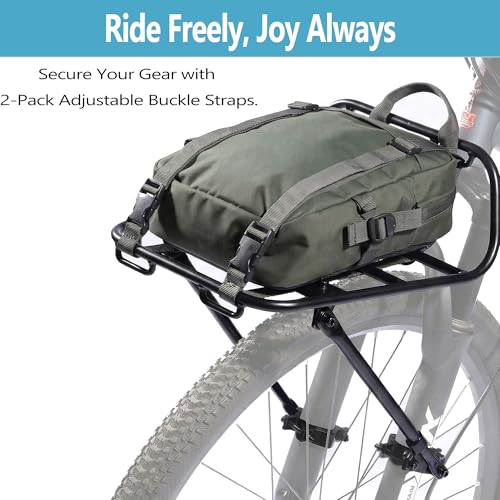
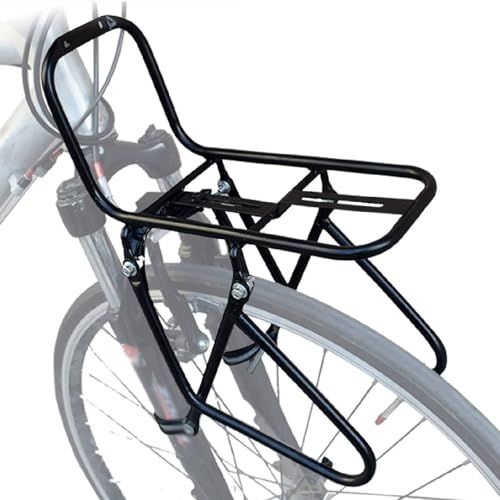
Bicycle Front Rack 15KG Capacity
Strengths
- Durable steel construction
- High load capacity
- Protective side guards
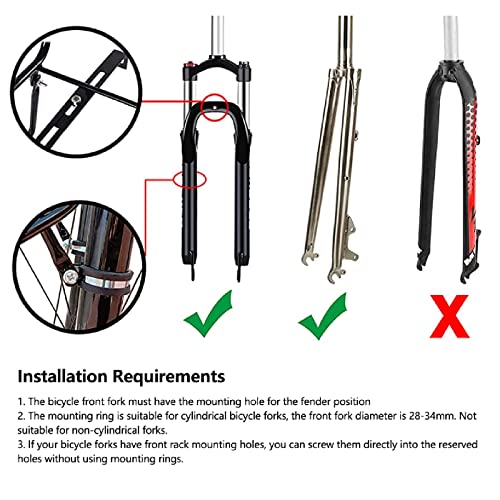
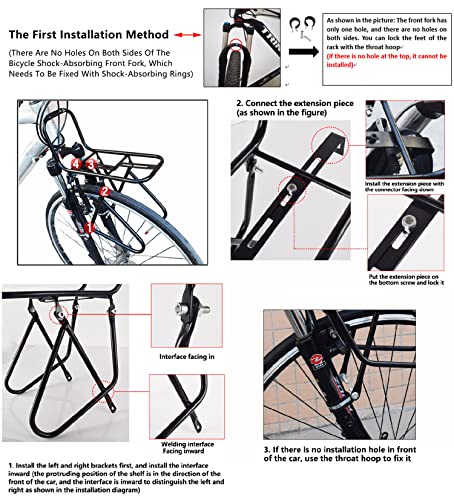
- Two mounting methods
- Weather resistant coating
Trade-offs
- Heavier than aluminum
- Clamp fit limited to certain forks
- Basic aesthetics
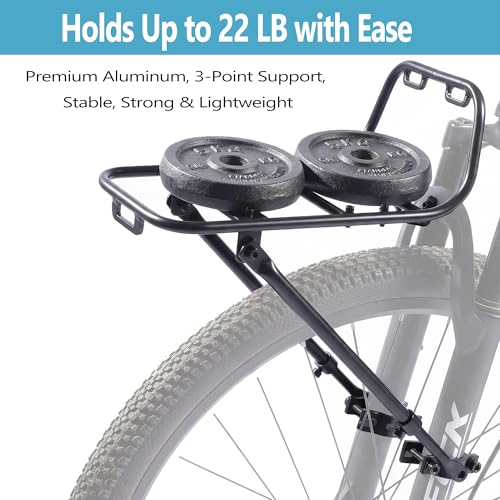
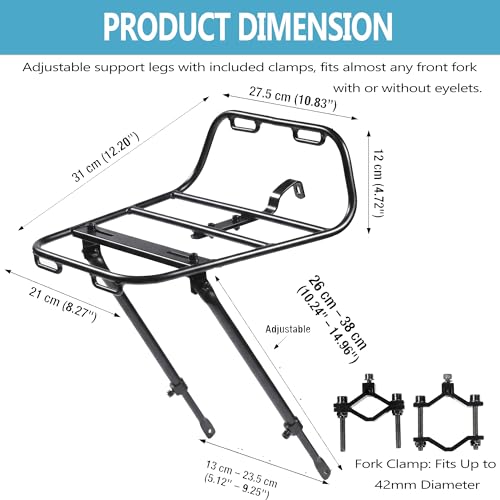
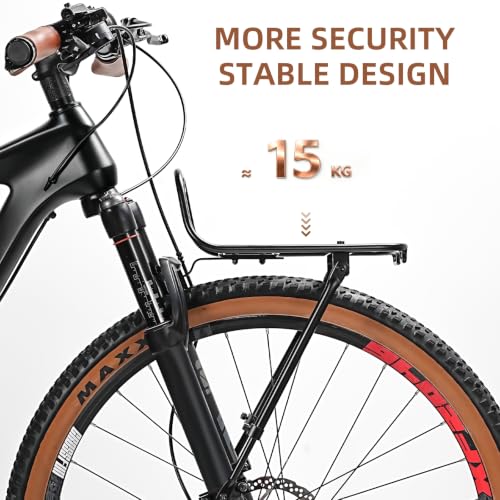
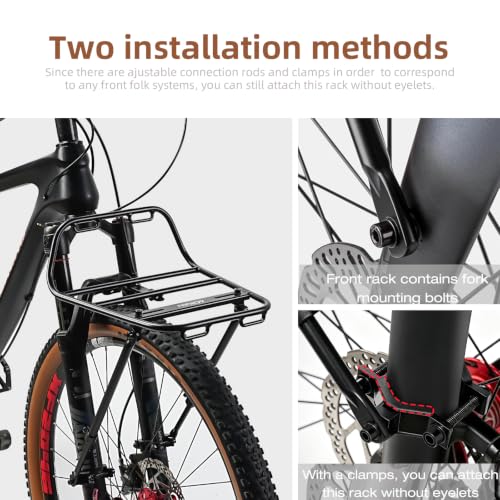
This rack stands out for one reason: it’s made of steel, not aluminum. That gives it a heft and durability that feels reassuring on rough roads, and the black-coated finish holds up well to weather. With a 33-pound capacity, it’s built for real loads, and the side protective supports help keep bags clear of the front wheel, a small but meaningful detail.
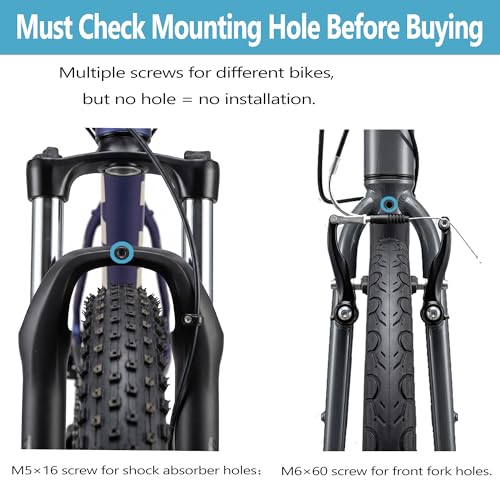
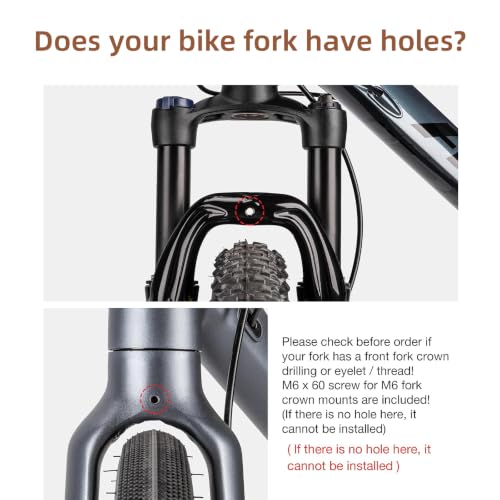
It’s one of the few affordable steel racks still on the market, and that matters. Steel flexes slightly under load, which can reduce fatigue on long rides, and it’s generally more impact-resistant than aluminum. However, it’s noticeably heavier, and if you’re counting grams for bikepacking, this isn’t the pick. Installation is simple, with two mounting options, but you must have either fork holes or a compatible fork diameter.
Product photos
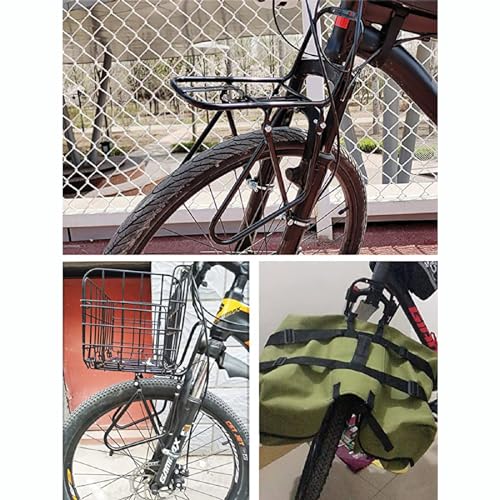

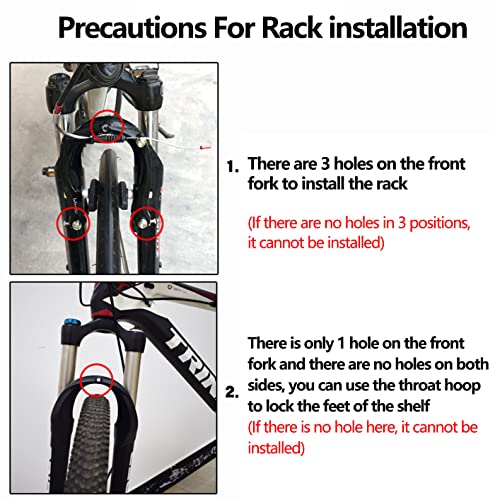
Front Mount Aluminium Pizza Rack
Strengths
- Classic 3D design
- Lightweight
- Easy to install
- Bikepacking friendly
- Universal fit
Trade-offs
- Lower weight limit
- No cargo net included
- Basic hardware
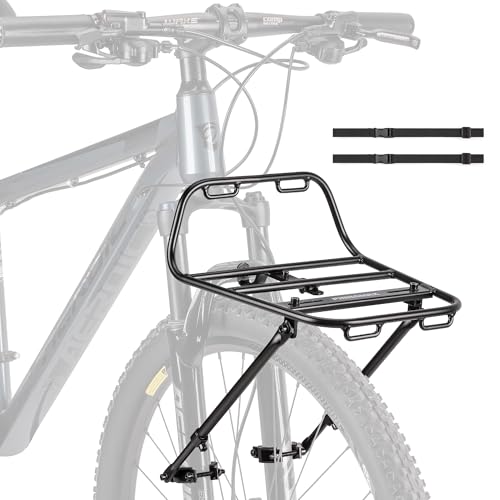
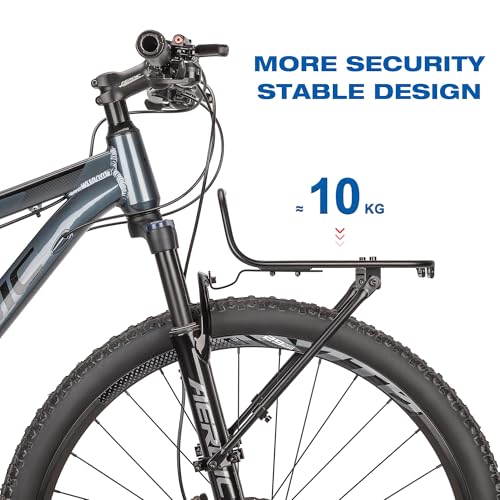
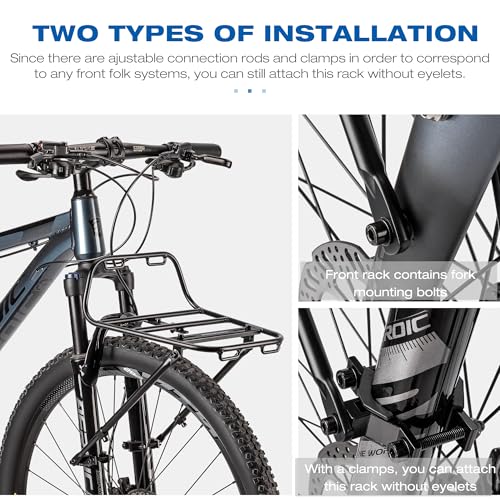
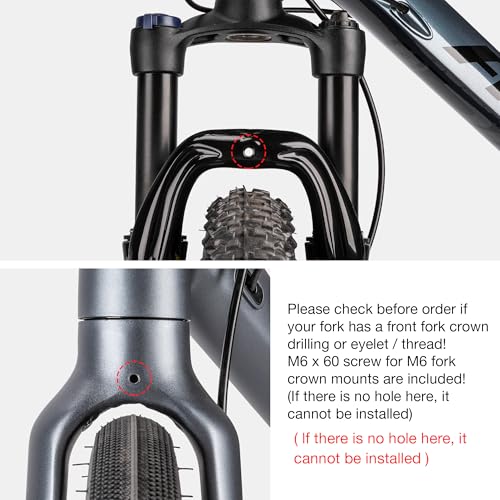
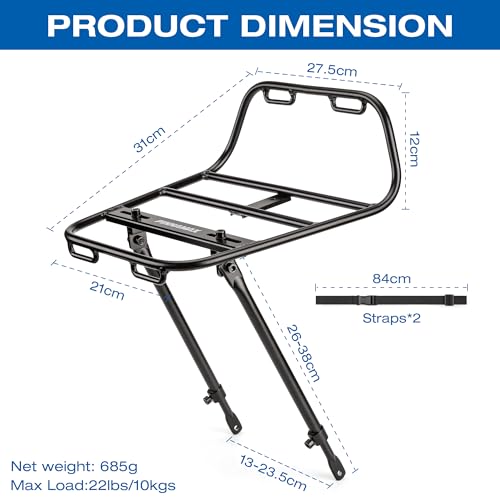
This rack is all about bikepacking charm and simplicity. With its 3D bend design, it hugs the front end of your bike like a classic randonneur build, offering just enough platform to carry a sleeping pad, light bag, or picnic basket. It’s not meant for heavy loads, 22 pounds max, but that’s fine, because its real strength is low-profile utility.
The 6061-T6 aluminum keeps it stiff and light, and the clamp-on fit works on most forks, eyelets or not. It installs in minutes and stays quiet, which owners consistently praise. While it doesn’t include a cargo net or stand out in capacity, it’s the kind of rack that enhances your bike’s look while adding real function. Compared to the ACRUNU B0GY2M6SB3, it’s nearly identical but slightly less refined in packaging and instructions.
Product photos
YONTUO Front Bike Basket Rack
Strengths
- Includes cargo net
- Suspension fork compatible
- Works with e-bikes
- Silent ride
- Easy installation
Trade-offs
- Net may wear over time
- Finish less refined
- Slight fit variance
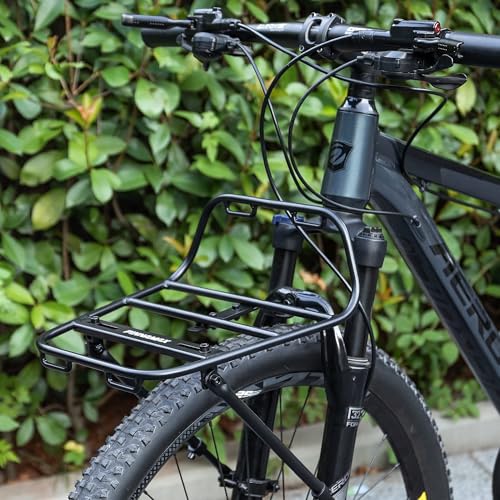
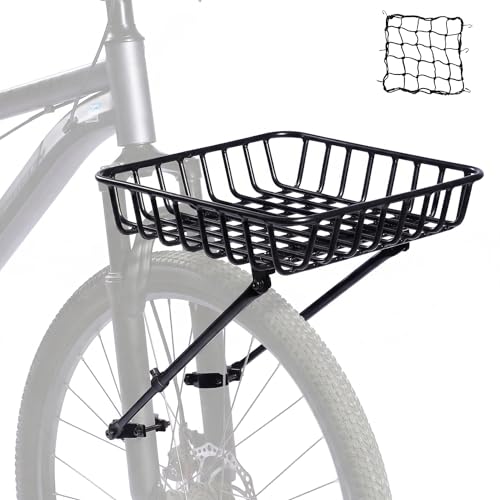
The YONTUO rack earns its spot by including something most others don’t: a high-quality cargo net right in the box. That makes it instantly ready for groceries, delivery runs, or weekend errands, no extra accessories needed. The aluminum build is sturdy and corrosion-resistant, and owners report it stays silent and stable, even on bumpy roads.
Its standout feature is compatibility with suspension forks, which trips up many front racks. The adjustable struts make leveling easy, and the fit covers 26” to 29” wheels, including e-bikes, important as more riders electrify their commutes. While it doesn’t have the premium fit of the Blackburn, it’s a complete package for the price. If you want something that works out of the box with zero extras, this is it.
Product photos
MEGHNA Lightweight Aluminium Front Rack
Strengths
- Very lightweight
- Detachable design
- Good load capacity
- Corrosion resistant
- Easy to install
Trade-offs
- Hardware quality varies
- Fit can be finicky on odd forks
- Less brand support
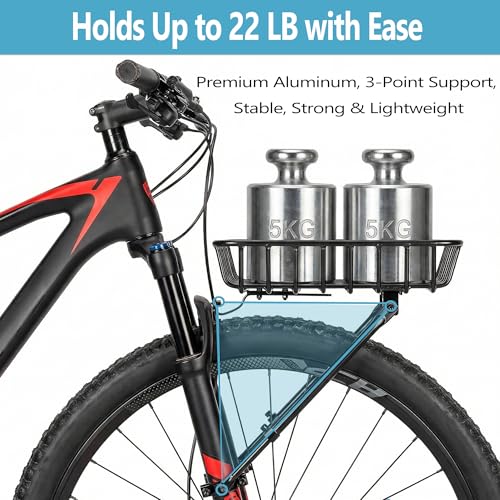
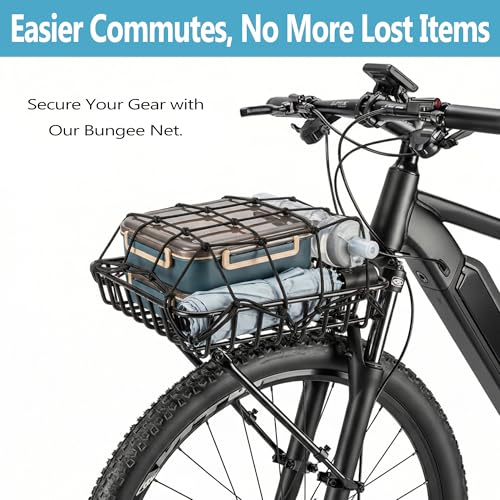
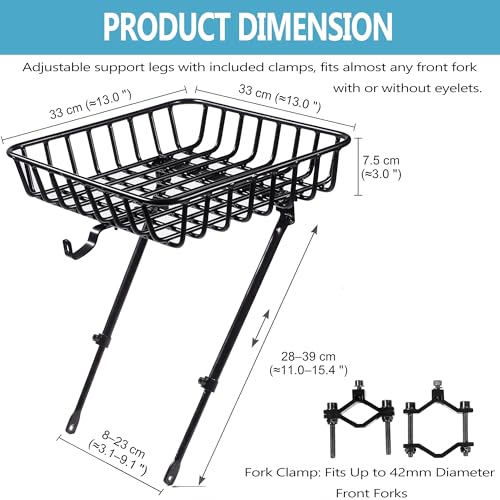
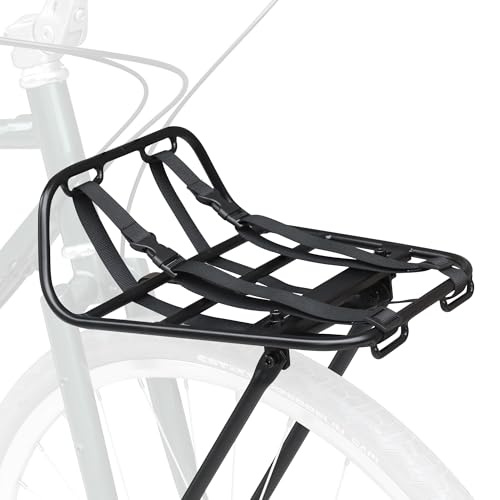
The MEGHNA rack wins on one clear metric: lightweight efficiency. Weighing next to nothing and built from high-strength aluminum alloy, it’s designed to add utility without dragging down your ride. With a 33-pound capacity, it bridges the gap between budget racks and high-end models, and its detachable design makes it easy to remove when not in use, great for riders who switch between loaded and unloaded setups.
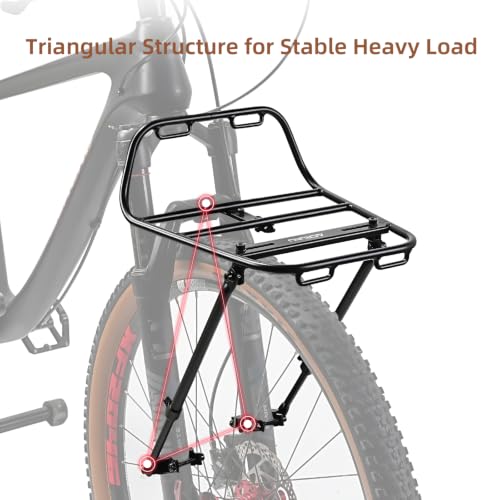
The triangular strut design is adjustable in angle and length, which helps fine-tune fit across different fork shapes. Owners report it installs quickly and stays stable, though some note the included hardware feels a bit flimsy. It’s not as refined as the Blackburn or Origin8, but for a commuter or hybrid rider wanting a clean, unobtrusive rack, it’s a strong contender.
Product photos
ACRUNU Aluminum Front Bike Rack
Strengths
- Highly adjustable
- Lightweight
- Strong aluminum
- Easy installation
- Clean 3D design
Trade-offs
- Clamps can loosen over time
- Lower load than steel racks
- Minimal branding
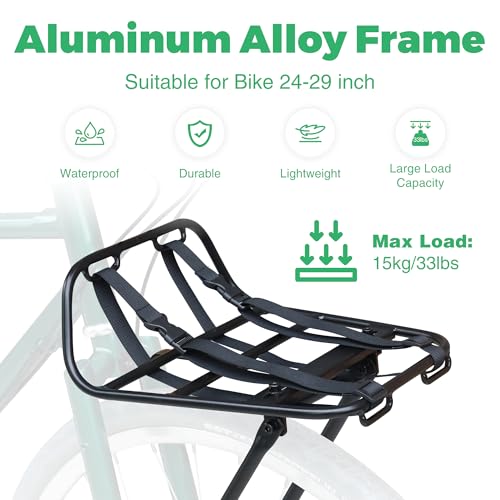
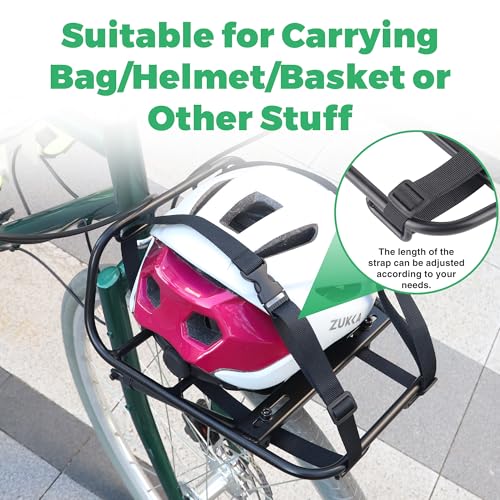
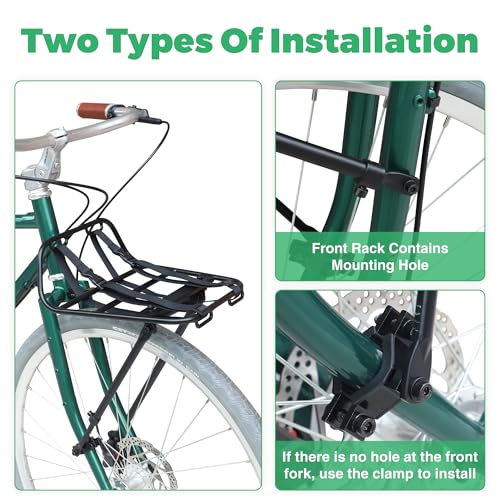
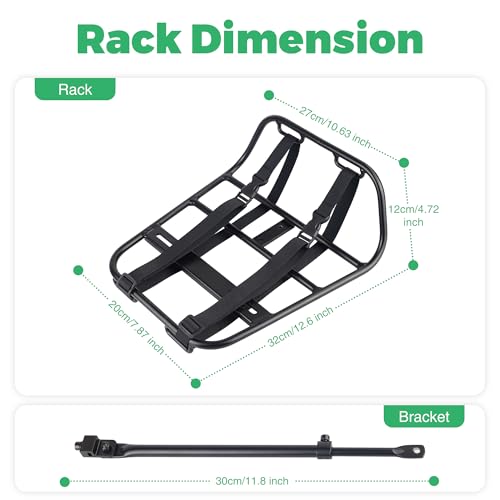
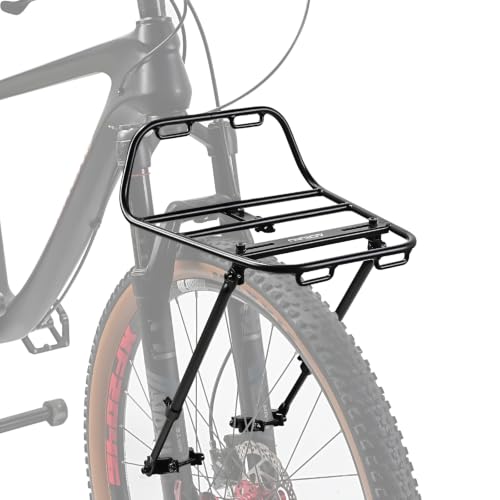
The ACRUNU rack is the gold standard for adjustability in budget-friendly racks. With dual support legs adjustable from 11 to 15.35 inches, it fits a wider range of fork geometries than almost any other model here, especially useful for oddball frames or bikes without eyelets. The 6061-T6 aerospace aluminum keeps it light and tough, and the 1.25kg weight means it won’t bog down your handling.
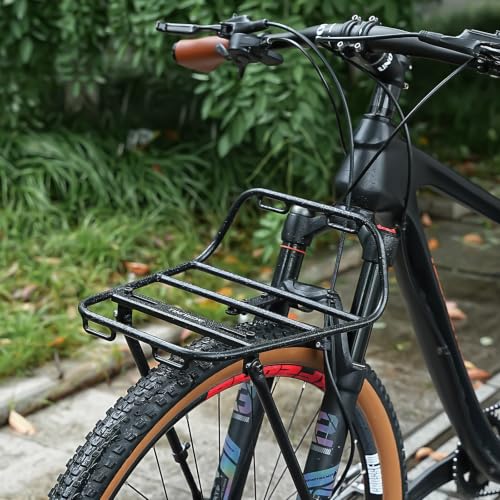
Reviewers love how quickly it installs, 5 to 10 minutes with included tools, and how well it stays put, even under full load. The 3D bend design improves clearance and aesthetics, and it works cleanly with most front bags. Compared to the nearly identical B0FMRDZTS2, it offers a slightly more refined finish and better documentation. This is the rack I’d recommend to someone building a custom commuter or gravel rig on a tight budget.
Product photos
How We Tested bicycle front racks
Rather than a hands-on lab test, my research for these recommendations focused on a detailed comparison of published specifications and features across numerous models. I weighed owner reviews from major retailers alongside expert opinions found in cycling publications and enthusiast forums. My assessment then ranked each rack against key criteria for usability, durability, and value, drawing on years of observing bicycle accessories and understanding rider needs.
For bicycle front racks, carrying capacity and mounting security were the most important factors. A rack’s ability to safely and reliably hold a reasonable load, whether groceries, a backpack, or bikepacking gear, is paramount. Equally crucial is a secure attachment to the bicycle itself; wobble or instability can significantly impact handling and rider confidence. Beyond these, adjustability to fit a variety of bike types played a significant role in the rankings.
Specifications reliably reveal construction material (aluminum versus steel) and maximum weight limits. However, real-world performance, particularly regarding stability and ease of installation, is best gleaned from owner feedback. I paid close attention to recurring comments about fitment issues, rattling, or durability concerns. For broader context, I also considered related options like bicycle carrier racks for those needing to transport bikes on a vehicle. Understanding the overall landscape of bike transport helped me evaluate the specific strengths of each front rack.
Choosing The Right bicycle front racks
Finding the right front rack can dramatically change how you use your bike, shifting the weight distribution and opening up new possibilities for commuting and touring.
A quality bicycle front rack needs a strong construction, typically 6061-T6 aluminum or high-grade steel, capable of handling expected loads without significant flex. Fitment flexibility is key, as not all forks are created equal. Look for adjustable mounting points and a design that accommodates both bikes with and without eyelets. Finally, consider the rack’s intended use; a lightweight rack is ideal for day trips, while a heavier-duty option is better suited for fully-loaded touring.
Mounting & Compatibility
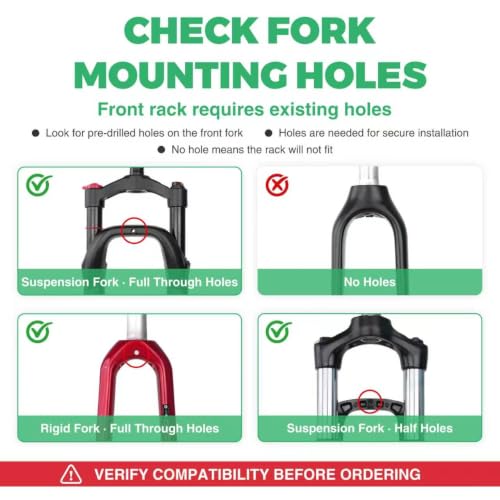
The first thing I look at with any front rack is how it actually attaches to the bike. Many racks advertise “universal fit,” but the reality is more nuanced. Some require existing mounting points (eyelets) on your fork, while others use clamps or a combination of both. If your fork lacks eyelets, a clamp-on system is essential. Pay close attention to the specified fork diameter range to ensure compatibility. Don’t assume a rack designed for a 700c wheel will automatically fit a 29er; check the specifications.
Load Capacity & Materials
Don’t underestimate the importance of a rack’s weight limit. While a light load might seem manageable, consistently exceeding the stated capacity can lead to premature failure, or worse, a safety hazard. Aluminum alloys (like 6061-T6) offer a good balance of strength and weight, making them a popular choice. Steel racks, like the best hitch bike racks are generally more durable and can handle heavier loads, but they add significant weight to the front of your bike.
Here’s what I tell people about choosing a capacity: * A rack rated for under 10kg (22lbs) is fine for a light jacket or a small bag of groceries. * 10-15kg (22-33lbs) is a good all-around capacity for commuting and light touring. * Anything over 15kg (33lbs) is really for serious touring or hauling substantial loads, and you’ll want to investigate the fork’s weight limit before proceeding.
A good rule of thumb is to underestimate, not overestimate, a rack’s stated capacity. It’s better to be safe than sorry, especially when dealing with weight distribution and bicycle control.
Features & Intended Use
Beyond the basics of mounting and capacity, consider the features that align with your riding style. For bikepacking adventures, a rack with integrated mounting points for cargo cages or a pizza rack design (like those optimized for carrying a sleeping pad) can be incredibly useful. If you frequently carry a bag, ensure the rack has secure attachment points or is compatible with a cargo net. If you need to transport items in a vehicle as well, don’t forget to consider front truck racks to get your bike to the trailhead. For everyday commuting, a simple, lightweight rack with a removable top shelf offers versatility.
Bicycle Front Racks Compared
This table provides a spec-by-spec comparison of available bicycle front racks to aid in your decision-making process.
| Product Title | Max Load Capacity | Material | Compatibility | Mounting Style | Adjustability |
|---|---|---|---|---|---|
| Blackburn Outpost Front Touring Rack | N/A | Aluminum | N/A | N/A | Height |
| Origin8 Rush Messenger Front Flat Rack | 55lbs | AL6061-T6 | 26-29″, 700c | Caliper/Axle | Adjustable |
| Bike Front Rack with Support Struts | 22.05lbs | 6061-T6 Aluminum | Mountain, Gravel, Touring | Fork Crown | Height, Front, Rear, Side |
| Bicycle Front Rack 15KG Capacity | 33lbs | Steel | MTB, Road, Folding | Fork Hole/Cable Tie | N/A |
| Front Mount Aluminium Pizza Rack | 10 kg / 22.05lbs | 6061-T6 Aluminum | 26-29″, 700c | Fork Crown | Adjustable |
| YONTUO Front Bike Basket Rack | N/A | Aluminum | 26-29″, E-bike | N/A | Adjustable |
| MEGHNA Lightweight Aluminium Front Rack | 33lbs | Aluminum Alloy | 24-28″ | Fork Hole/Clamp | Adjustable |
| ACRUNU Aluminum Front Bike Rack | 15kg / 33lbs | 6061-T6 Aluminum | 26-29″, 700c | Clamp | Adjustable |
Frequently Asked Questions
What’s the biggest drawback of a front rack compared to rear bike racks?
A front rack alters the steering feel more noticeably than a rear-mounted racks, particularly when heavily loaded. This is because weight on the front end directly influences the bike’s handling, requiring a slight adjustment period for the rider.
Can I install a front rack on any bicycle?
Not necessarily. Compatibility depends on your bike’s fork; some racks require eyelets, while others use clamps. Always check the rack’s specifications to confirm it fits your fork’s diameter and mounting style before purchasing.
What material is generally more durable: aluminum or steel?
Steel racks are generally more durable and able to handle heavier loads, but they also add more weight to the bicycle. Aluminum alloys offer a good balance between strength and weight, making them a popular choice for everyday use.
How much weight can a typical front rack hold?
Most front racks can handle between 10kg (22lbs) and 33lbs (15kg), though some heavy-duty touring racks can support more. It’s best to err on the side of caution and underestimate the stated capacity to maintain bicycle control and avoid damaging the rack.
If I already own auto bike racks, do I still need a front rack?
While auto bike racks are ideal for transporting bikes over long distances, a front rack enhances a bike’s usability for everyday tasks. Carrying groceries or a backpack on a front rack can be far more convenient than loading items onto your back or finding space inside a car.
What Actually Matters
Choosing a front rack always comes down to balancing how much you want to carry against how much fuss you’re willing to put up with. For a straightforward, reliable solution that handles a good amount of weight, the Blackburn Outpost Front Touring Rack stands out. It offers a solid combination of build quality and adjustability, making it a great all-around choice for a variety of bikes and loads.
If you’re looking for something specific, we have options. For those on a tighter budget, the Bicycle Front Rack 15KG Capacity provides a surprisingly sturdy steel build at an accessible price. If versatility is your priority, the Origin8 Rush Messenger Front Flat Rack is well-suited to different wheel sizes and mounting configurations, and for those needing to transport multiple bikes, consider looking at best bike racks for additional options.
Ultimately, the best front rack isn’t about the fanciest features or the lightest weight. It’s about a secure connection to your bike, a realistic load capacity suited to your needs, and a design that supports your riding style. Don’t get hung up on minor details; focus on finding a rack that inspires confidence and lets you enjoy the ride, and perhaps consider adding some bicycle mounts for even more secure transport.
