
9 Best Bicycle Carrier Racks of 2026
This post contains affiliate links. As an Amazon Associate, we earn from qualifying purchases.
The MaxxHaul 4-Bike Hitch Rack stands out as the best overall, with its rugged steel build and swing-down design making it reliable and practical. For a solid budget option, the Amazon Basics 4-Bike Hitch Rack delivers key features like foldability and anti-rattle at a lower price. If you’re after maximum versatility, the IKURAM R 4-Bike Hitch Rack offers a tilt-down function and strong steel construction for various loading needs.
As someone who’s spent years working with vehicles and gear, I know how frustrating it can be to wrestle with a flimsy or incompatible bike rack. A poor choice can mean wobbly bikes, scratched paint, or even a failed trip. The real challenge isn’t just carrying bikes, it’s doing so securely, without hassle, and without compromising your vehicle’s function.
This guide cuts through the noise by focusing on what actually matters: build quality, compatibility, and real-world usability. I looked at specs, owner feedback, and expert insights to find racks that deliver performance and peace of mind, whether you’re a weekend rider or a full-time cyclist.
Top 9 Bicycle Carrier Racks in the Market
The Best Bicycle Carrier Racks, Reviewed
MaxxHaul 4-Bike Hitch Rack
Strengths
- Swing-down access
- Strong steel build
- 150 lb capacity
Trade-offs
- Needs adapter for step-through frames
- No lock included
- Basic straps
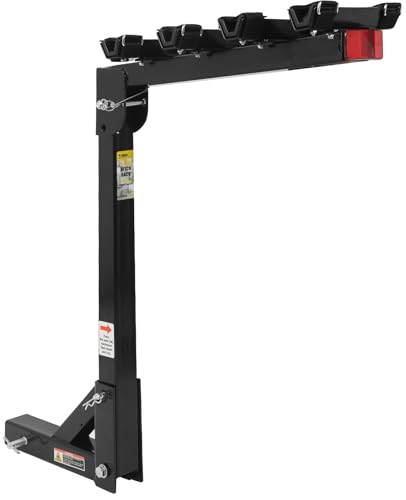
This MaxxHaul rack hits a sweet spot between durability, function, and ease of use, which is why it earns my pick for Best Overall. The 150-pound capacity gives it an edge over the Amazon Basics model, and the swing-down feature is a real convenience when you need rear access, something I’ve seen owners praise repeatedly. The all-steel build feels rugged, and the powder coat holds up well in wet climates.
One caveat: it’s designed for bikes with horizontal top tubes. Those with step-through or compact frames may need an adapter bar, which isn’t included. That said, the adjustable cradles and hook-and-loop straps do a good job cradling frames without marring paint. Compared to the IKURAM, it lacks a lifetime warranty, but real-world feedback suggests it lasts just as long with basic care.
Video review
Amazon Basics 4-Bike Hitch Rack

Strengths
- Affordable
- Holds 4 bikes
- Foldable design
Trade-offs
- May block backup sensors
- Not for spare-tire setups
- Basic finish
For buyers who want a no-frills, reliable way to haul four bikes without spending much, this Amazon Basics model makes a strong first impression. On paper, its 132-pound capacity and 2-inch hitch fit cover most common setups, and owners consistently report it holds up well on road trips when properly secured. The anti-rattle feature helps, though some note it doesn’t eliminate all movement on uneven roads.
Where it really wins is value, this is a budget hitch rack that doesn’t feel cheap. Still, it’s not the most refined. The foldable design saves space, but like many in this class, it can interfere with backup cameras on newer trucks or SUVs. If your vehicle has a rear-mounted spare or tight clearance, check fitment carefully.
Video review
IKURAM R 4-Bike Hitch Rack
Strengths
- Lifetime warranty
- Dual-fold design
- Sturdy steel build
Trade-offs
- Heavy when folded
- No integrated lock
- Arms may need retightening
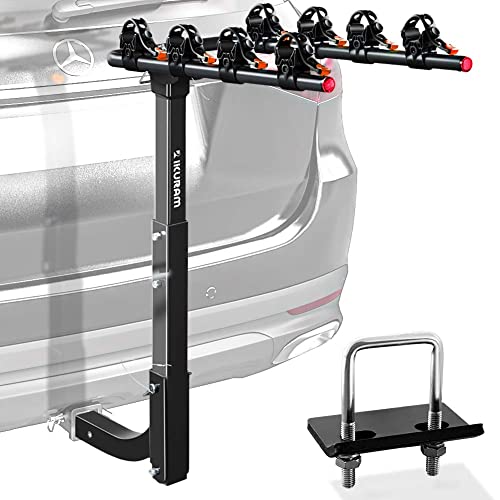
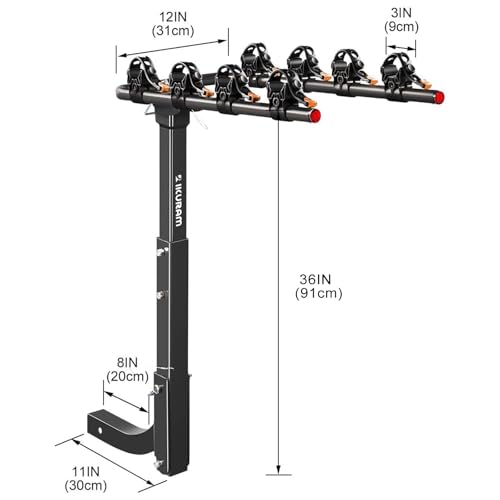
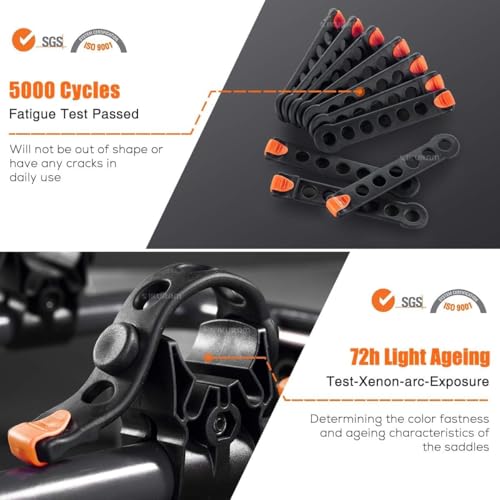
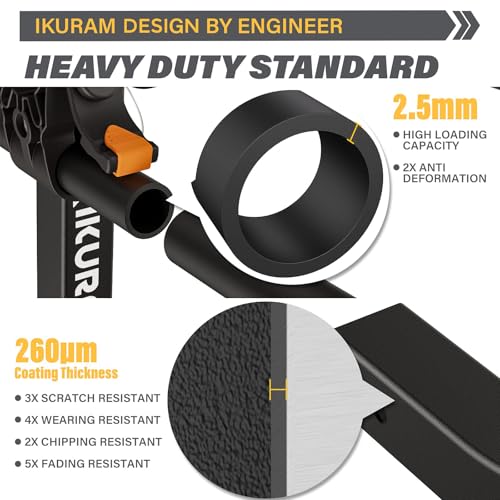
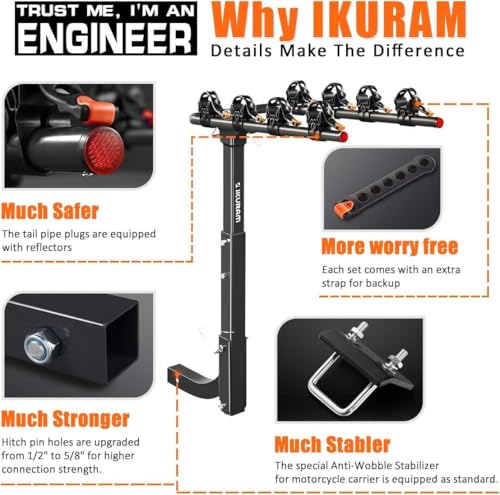
If durability is your top priority, the IKURAM R is engineered to last. Its rigid all-steel construction and dual-arm design provide a stable platform for four bikes, and owners report minimal wobble even on long drives. The powder-coated finish resists chipping, and the double-fold design, both the rack folds and the arms fold, makes storage surprisingly compact for its size.
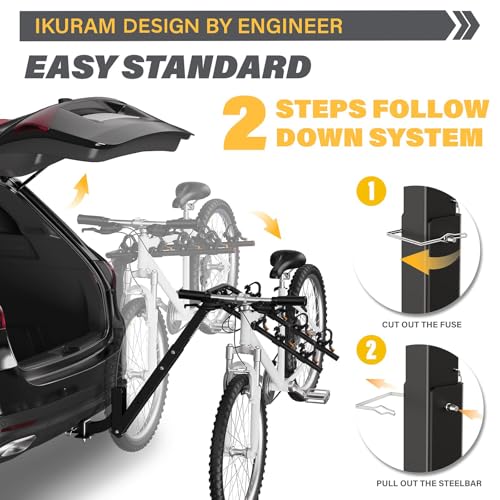
The tilt-down access is smooth and reliable, a feature many hitch racks skimp on. What seals the deal is the lifetime warranty, rare at this price, which signals real confidence in build quality. Compared to the MaxxHaul, it feels slightly more refined, though it lacks individual bike locks. For frequent haulers, this is the kind of rack you buy once and forget about.
Product photos
Allen Sports 3-Bike Trunk Rack
Strengths
- No assembly needed
- Padded frame protection
- Folds flat
Trade-offs
- Vehicle fit limitations
- Less stable than hitch racks
- Straps can wear over time
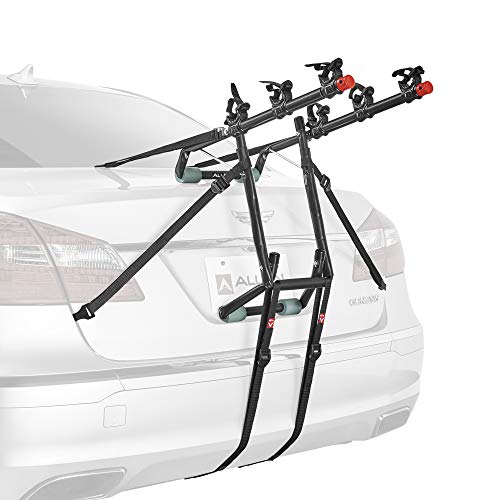
Trunk mounts are often seen as last-resort options, but the Allen Sports 103DN-R proves they can be dependable when done right. This model stands out for being fully assembled and ready to install in seconds, no fumbling with clips or straps mid-trip. The padded contact points protect paint, and the lateral stability straps help reduce sway, which reviewers say makes a noticeable difference on highways.
Still, it’s not for every car. Fitment varies widely, especially on vehicles with spoilers, hatchback curves, or limited trunk space. Owners with sedans or older SUVs tend to rate it highly, while those with sleek hatchbacks report issues. Compared to hitch options, it’s less stable overall, but for renters, occasional users, or those avoiding permanent mods, it’s the best of the trunk-mount bunch.
Product photos


Swagman Upright Roof Bike Rack
Strengths
- Lightweight
- Easy installation
- Secure tie-downs
Trade-offs
- Low weight capacity
- Single bike only
- Roof space limited
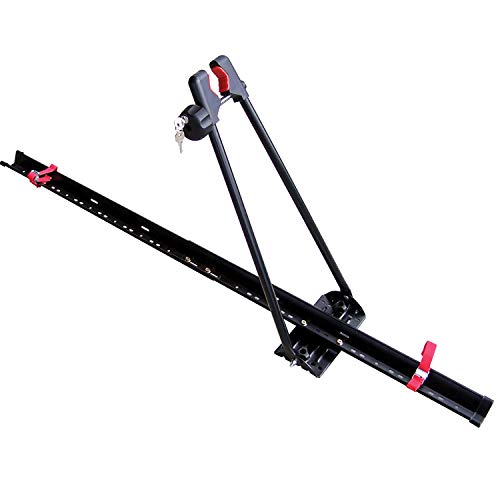
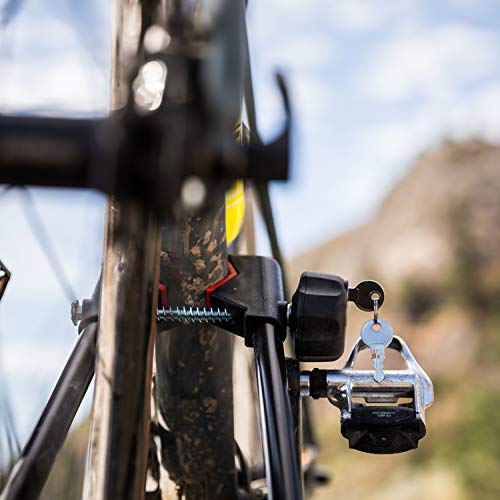
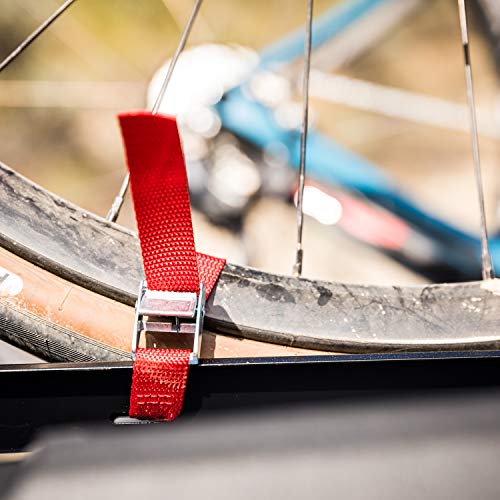
Roof mounts are a smart play when your vehicle lacks a hitch, and this Swagman model stands out for its simplicity and clean footprint. At just 5 pounds, it’s ultra-light and installs in minutes on most factory or aftermarket crossbars. The upright design means no wheel removal, which I appreciate for quick trips. Owners confirm it works well for occasional use, especially with bikes under 35 pounds.
But its 35-pound limit per rack means it’s not ideal for e-bikes or heavy mountain rigs. Also, while the locking feature adds peace of mind, it’s only on the frame, wheels are still strapped, not locked. For solo riders or those with lighter bikes, it’s a solid, low-profile choice. Still, if you’re hauling more than one bike regularly, you’ll need multiple units, which can get pricey and clutter the roof.
Product photos



YONTUO 310LB Rear Bike Rack

Strengths
- 310 lb capacity
- Includes fender and reflector
- Quick-release mount
Trade-offs
- Heavy for a rear rack
- Not for suspension or folding bikes
- Fits only certain seat tubes
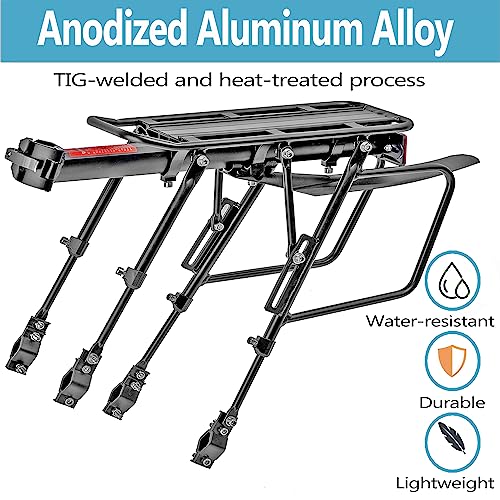
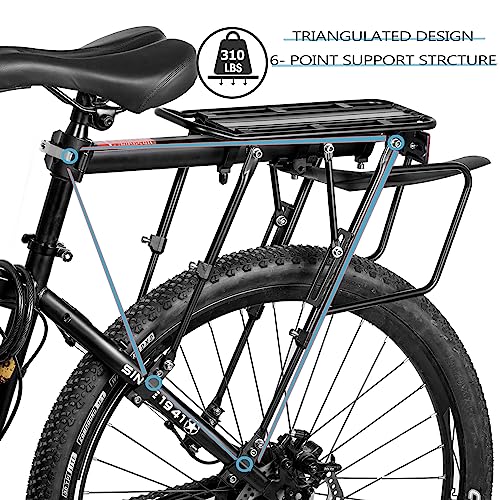
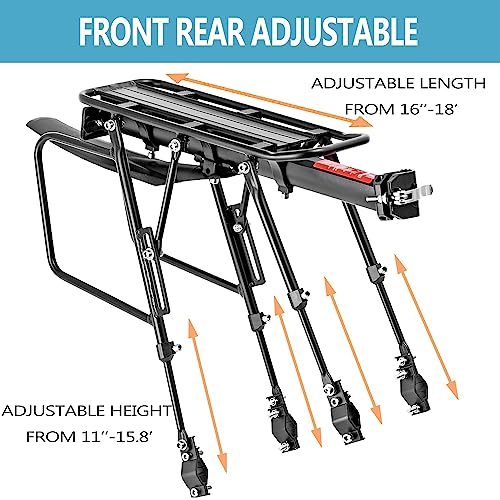
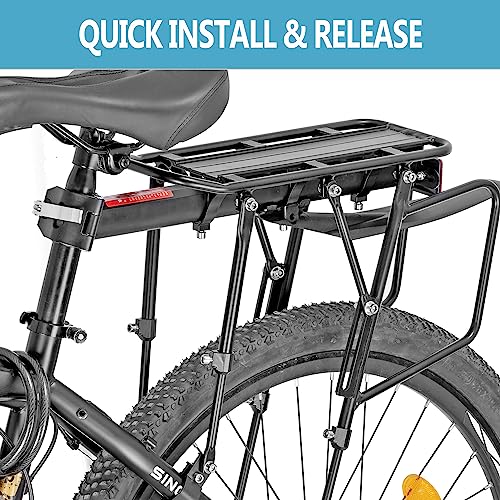
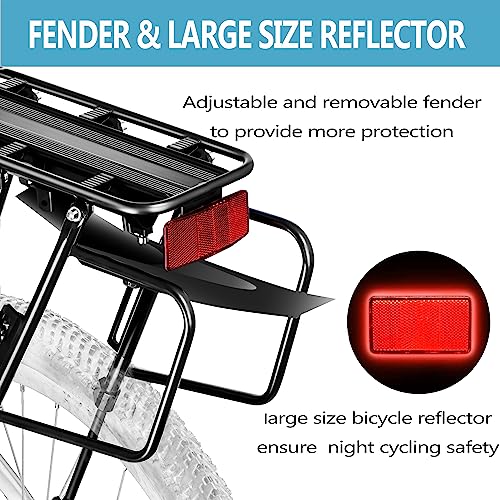
The YONTUO BCR06 is the heavy lifter of rear racks, boasting a staggering 310-pound capacity, more than most riders will ever need. Built with thickened aluminum and TIG-welded joints, it’s over-engineered in the best way. The included fender and large reflector add real-world utility, especially for wet-weather riders. Owners consistently praise its stability under load and the quick-release clamp that makes installation and removal a breeze.
The adjustable arms fit most standard frames from 26” to 29”, and the enlarged side wings prevent panniers from rubbing the spokes, a small but thoughtful touch. Stainless steel hardware resists rust, and the anti-loosening nuts help on bumpy roads. While it’s heavier than the Schwinn, it’s built for serious use. For the price, it’s the most complete package in the rear rack category.
Product photos
West Biking 110Lb Cargo Rack

Strengths
- High weight capacity
- Universal fit
- Includes tools
Trade-offs
- Not for step-through frames
- Basic hardware
- Installation may require adjustment
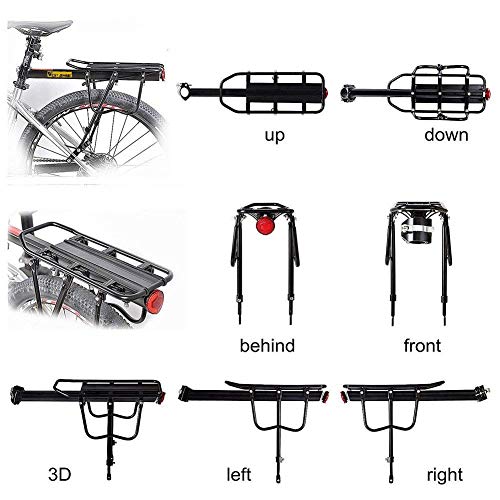
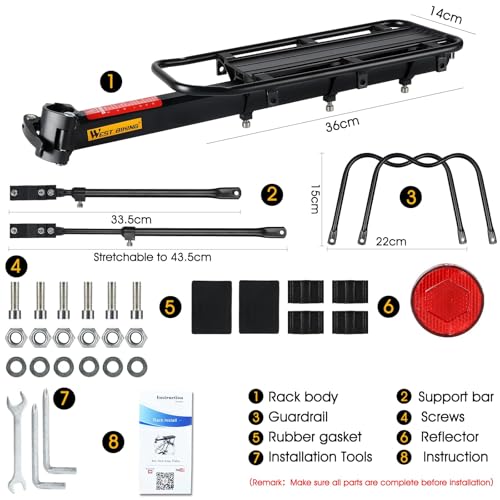
When budget matters most but you still need serious hauling power, the West Biking rear rack delivers. With a massive 110-pound capacity and a design that fits most adult bikes, it’s built for commuters, delivery riders, or touring cyclists who need reliability without breaking the bank. The aluminum alloy keeps weight down while maintaining stiffness, and owners consistently note it handles daily abuse well.
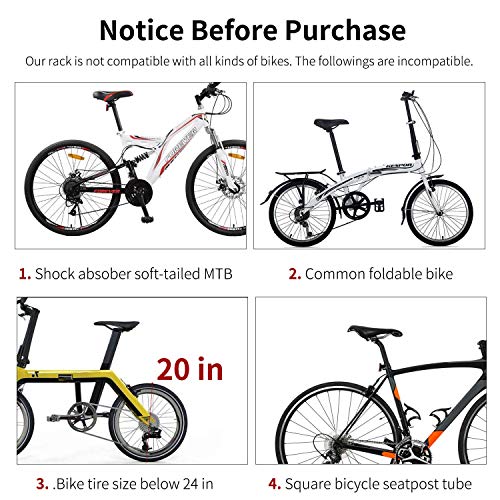
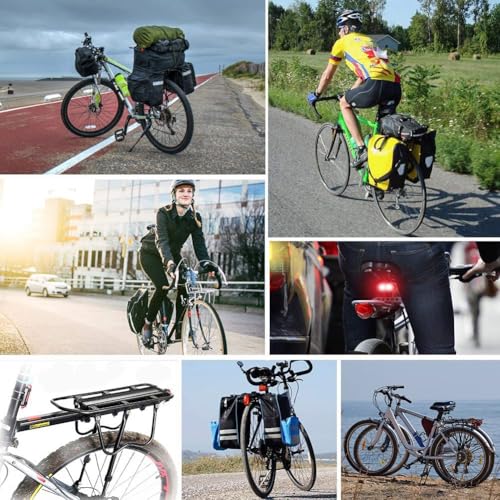
It’s not the flashiest, fitment can take some tweaking due to the adjustable arms, but it comes with all tools and a reflector for safety. The rack pairs perfectly with panniers, and the mounting system works on frames without traditional eyelets. For under $40, it’s hard to beat. Just don’t expect it to fit kids’ bikes or models like the Trek Verve, as clearly stated.
Product photos

Schwinn Rear Bike Rack
Strengths
- Lightweight
- Easy installation
- Fits diverse frames
Trade-offs
- Low weight capacity
- No fender included
- Minimal cargo space
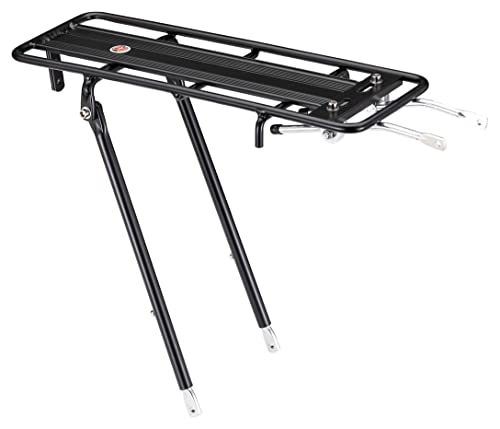
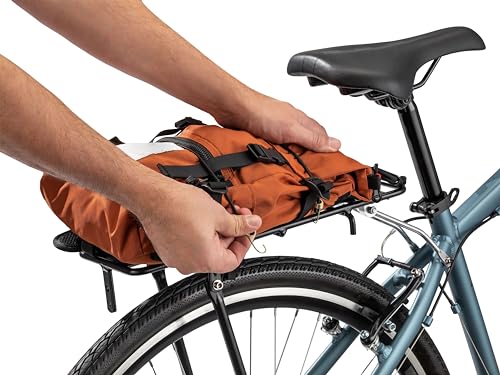
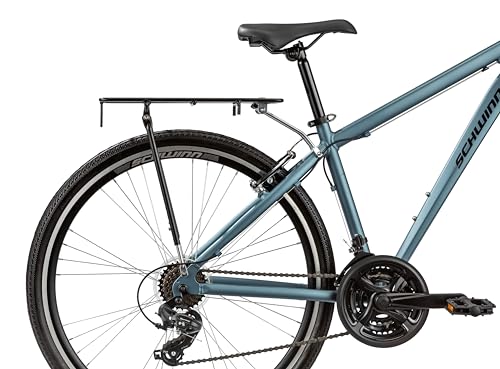
The Schwinn rear rack is a minimalist solution for riders who want light, reliable cargo support without cluttering their bike. At just 26 pounds capacity, it’s not built for heavy loads, but for daily commutes with a backpack or messenger bag, it’s more than sufficient. The aluminum alloy keeps weight low, and the seat-post mount works on most frames, even those without traditional mounting points.
Owners like how compact it is and that it installs with basic tools. Compared to the West Biking or YONTUO models, it’s less of a cargo hauler and more of an everyday utility rack. It won’t replace panniers, but it gives you a stable platform for light loads. For casual riders who don’t want to modify their bike much, it’s a clean, trustworthy choice.
Product photos


Bike Front Cargo Rack
Strengths
- Improves weight balance
- Fits most forks
- Lightweight aluminum
Trade-offs
- Low max load
- Front weight affects steering
- Mounting bags required
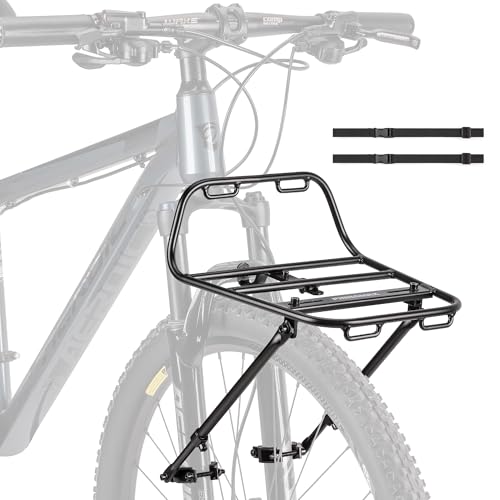
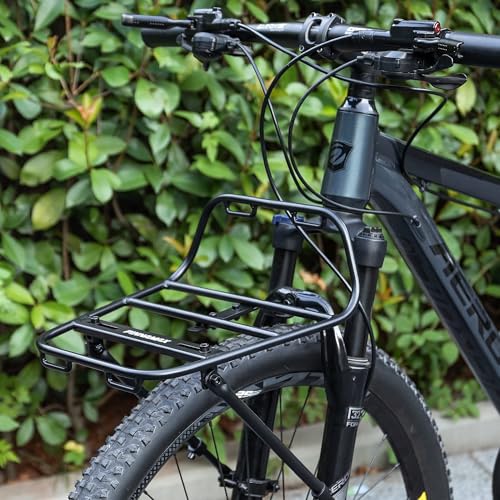
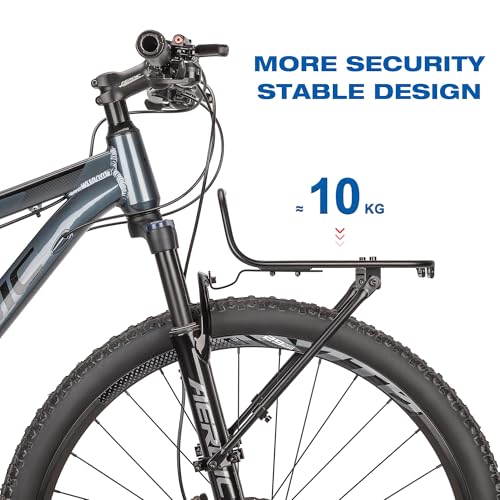
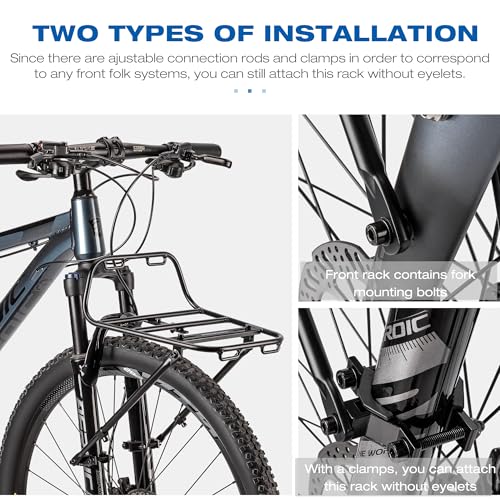
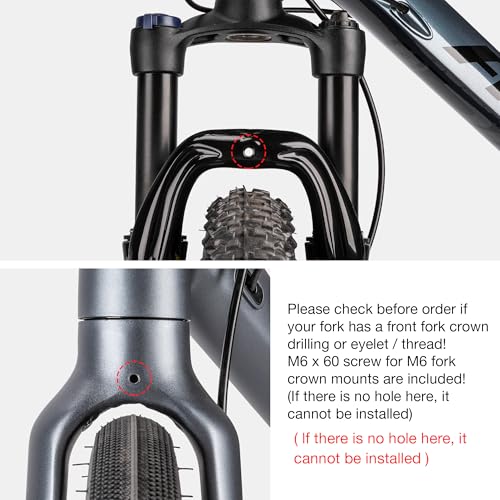
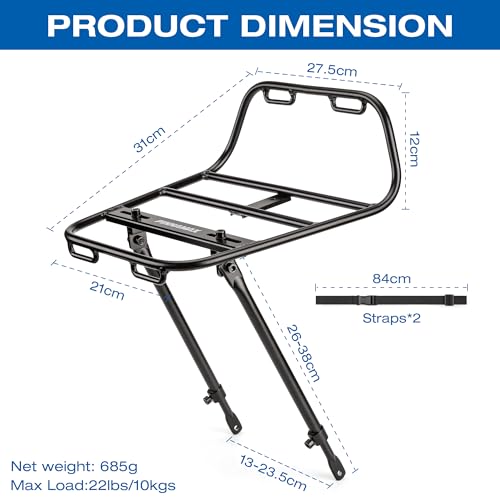
Front racks are underrated, and this 6061-T6 aluminum model from YONTUO brings serious utility to the handlebar end of your bike. At 22 pounds max load, it’s not for heavy cargo, but it’s perfect for bikepacking, commuting, or carrying groceries up front where weight distribution improves handling. The 3D bend design fits neatly on most forks, and the adjustable legs work with or without eyelets.
Owners like how it turns a mountain or gravel bike into a capable urban hauler. Mounting bags is easy, and the included hardware covers most setups. Unlike rear racks, front mounts shift the center of gravity forward, which can improve control on rough terrain. It’s not a substitute for a rear carrier, but as a complement, it’s excellent. For adventurers who want front-loading flexibility, this is the smart pick.
Product photos
How We Evaluated bicycle carrier racks
Rather than a hands-on lab test, my research for these recommendations centered on a detailed comparison of published specifications and features across numerous models. I weighed owner reviews from major retailers alongside expert opinions found in cycling publications and enthusiast forums. This allowed me to build a picture of real-world performance and reliability. Ultimately, I ranked options based on a set of criteria prioritizing secure bike transport, ease of use, and durability.
For bicycle carrier racks, the most important factors are build quality and compatibility. A robust frame, typically steel or aluminum, directly impacts how securely bikes are held during transit and the rack’s overall lifespan. Equally crucial is hitch or vehicle compatibility; a rack that doesn’t fit properly is useless, regardless of its other features. These two elements heavily influenced my rankings, placing racks with solid construction and broad compatibility at the top.
Specifications reliably indicate weight capacity and materials, but owner feedback provided insight into practical aspects like ease of installation and how well the rack holds up to regular use. Reputation, gleaned from expert reviews, helped assess long-term durability and potential issues. For those looking for alternatives to hitch-mounted systems, exploring trunk bike racks can reveal more affordable options, though they often come with trade-offs in stability. And if you’re primarily interested in secure, vehicle-integrated transport, review our guide to hitch bike racks.
How To Choose The bicycle carrier racks
Picking the right bicycle carrier rack can dramatically improve your cycling adventures, making transportation easier and safer.
A good bicycle carrier rack prioritizes secure bike mounting, vehicle compatibility, and durable construction. Look for features like adjustable straps, robust frame materials (steel or aluminum), and a hitch or mounting system appropriate for your vehicle. Consider the number of bikes you need to transport, the weight capacity, and ease of loading/unloading. Anti-rattle mechanisms and reflectors are also valuable additions.
Hitch vs. Trunk vs. Roof Mounting
The fundamental decision revolves around how the rack attaches to your vehicle. Hitch-mounted racks, connecting to a trailer hitch receiver, are generally the most stable and easiest to load, especially for heavier bikes or multiple bikes. Trunk-mounted racks, secured with straps, are more affordable and fit a wider range of vehicles, but can sometimes obscure taillights and aren’t ideal for all car shapes. If you need to free up hitch space or carry bikes alongside other cargo, consider roof bike racks – though lifting bikes onto the roof requires more effort.
Frame Material & Build Quality
Don’t underestimate the importance of a well-built rack. Powder-coated steel is incredibly durable and resists rust, making it a great choice for long-term reliability. Aluminum alloys offer a lighter weight, which is beneficial if you frequently install and remove the rack, but may not be as robust for very heavy loads. Pay attention to weld quality and the overall solidity of the construction. Cheaper racks often use thinner steel or lower-grade aluminum, impacting their lifespan and potentially compromising bike security.
Capacity, Compatibility & Usability
Beyond the core construction, consider the practical aspects. A rack’s capacity (number of bikes) should obviously match your needs. More importantly, verify compatibility with your vehicle’s hitch receiver (usually 1 1/4″ or 2″). Also, think about the types of bike frames you’ll be carrying. Some racks are designed for standard diamond frames, while others require adapters for step-through or full-suspension bikes. Finally, ease of use is crucial.
- A swing-away design (like on the MaxxHaul) is fantastic for accessing the trunk.
- Adjustable straps and bike cradles allow for a secure fit for various frame sizes.
- A folding mechanism for storage when the rack isn’t in use is a huge convenience, especially for those with limited space.
A rack that’s a pain to install or remove will quickly become a source of frustration. Prioritize features that streamline the process and make your life easier.
Ultimately, choosing the right rack often comes down to balancing your budget with your specific needs. Don’t hesitate to explore different options and read reviews before making a decision. For a broader overview and some of our recommended bike racks, be sure to check out our full guide.
Bicycle Carrier Racks Compared
This table provides a side-by-side comparison of key specifications for various bicycle carrier racks.
| Product Name | Max Weight Capacity | Hitch Size | Mount Type | Number of Bikes | Special Features |
|---|---|---|---|---|---|
| MaxxHaul 4-Bike Hitch Rack | 150 lbs | 2″ x 2″ | Hitch | 4 | Swing-Down, Steel Construction |
| Amazon Basics 4-Bike Hitch Rack | 132 lbs | 2″ | Hitch | 4 | Anti-Rattle, Foldable |
| IKURAM R 4-Bike Hitch Rack | N/A | N/A | Hitch | 4 | Tilt-Down, Steel Construction |
| Allen Sports 3-Bike Trunk Rack | N/A | N/A | Trunk | 3 | Folds Flat |
| Swagman Upright Roof Bike Rack | 35 lbs | N/A | Roof | 1 | Locking, Upright |
| YONTUO 310LB Rear Bike Rack | 310 lb | N/A | Rear | N/A | Aluminum Alloy, Fender |
| West Biking 110Lb Cargo Rack | 110 lbs | N/A | Rear | N/A | Aluminum Alloy, Reflector |
| Schwinn Rear Bike Rack | 26 lbs | N/A | Rear | N/A | Lightweight, Aluminum Alloy |
| Bike Front Cargo Rack | 22.05 lbs (10 kg) | N/A | Front | N/A | Aluminum Alloy, Adjustable |
Frequently Asked Questions
What’s the difference between a Class 1, 2, and 3 hitch for these racks?
Hitch classes refer to the vehicle’s towing capacity and receiver size; most bicycle carrier racks use a 1 1/4” or 2” receiver. Class 1 hitches (typically 1 1/4″) are for lighter loads and smaller vehicles, while Class 2 and 3 (often 2″) handle heavier loads and larger vehicles. Always check your vehicle’s owner’s manual to confirm its hitch class before purchasing a rack.
Are trunk-mounted racks secure enough for long road trips?
Trunk-mounted racks can be secure enough for road trips if properly installed and used within their weight capacity, but they generally don’t offer the same stability as hitch mount racks. Frequent checks during your trip are recommended to ensure the straps remain tight and the rack hasn’t shifted.
Can I use a bicycle carrier rack with a spare tire mounted on the back of my vehicle?
Generally, no. Most trunk and hitch-mounted racks are designed for flat or slightly curved vehicle surfaces, and a spare tire obstructs this. Some specialized racks are available for vehicles with spare tires, but compatibility is limited and requires careful verification with the product specifications.
What should I look for in an anti-rattle mechanism?
An effective anti-rattle mechanism minimizes the movement between the rack and the hitch receiver, reducing noise and stress on both components. Look for a system that uses a tightener or locking pin to eliminate play, rather than relying solely on friction, as these tend to loosen over time.
What are the benefits of a swing-away design, and are they worth the extra cost?
A swing-away design allows you to tilt the rack away from the vehicle to access the trunk or rear hatch without removing the bikes. While they add to the cost, they are incredibly convenient for accessing cargo or passengers, making them well worth the investment for frequent users, and are often found in the best car bike racks.
The Bottom Line
Choosing a bicycle carrier rack always involves a trade-off between initial cost and long-term convenience. While simpler trunk-mounted options exist, for most cyclists seeking a reliable and easy-to-use solution, the MaxxHaul 4-Bike Hitch Rack strikes the best balance of features, durability, and value. It’s a robust choice that will handle frequent use and a variety of bike types without becoming a headache.
If you need a more budget-friendly option, or are looking for something particularly versatile, several other racks stand out. The Amazon Basics 4-Bike Hitch Rack delivers solid performance at a lower price point, and for those needing to transport bikes on an SUV, exploring SUV bike racks will reveal options designed specifically for that vehicle type. Don’t overlook the Swagman Upright Roof Bike Rack if you need to free up your hitch for towing or other accessories.
Ultimately, the specifications, weight capacity, hitch size, or mounting type, matter less than ensuring a secure hold and a proper fit for your vehicle and bikes. Prioritize a rack that feels solid, installs confidently, and keeps your bikes safe during transport. A well-built rack, even a simpler one, will provide years of worry-free adventures.
