
3 Best Ball Joints for Jeep JK (2026 Guide)
This post contains affiliate links. As an Amazon Associate, we earn from qualifying purchases.
The Stichler 10626 stands out as the best overall ball joint for the Jeep JK, delivering top-tier chromoly construction and greasability for serious off-road use, while the Rough Country Heavy Duty offers solid durability at a more affordable price, making it the best value pick.
Every Jeep JK owner eventually faces the reality of worn suspension components, and ball joints are no exception. They take a constant beating from rough trails, potholes, and the added strain of lift kits and bigger tires, leading to sloppy steering and safety concerns if ignored.
In this guide, I’ve selected the top options based on real-world owner feedback, material quality, and long-term reliability, focusing on what matters most for JKs, strength, serviceability, and compatibility with common upgrades.
Top 3 Ball Joints For Jeep Jk in the Market
The Best Ball Joints For Jeep Jk, Reviewed
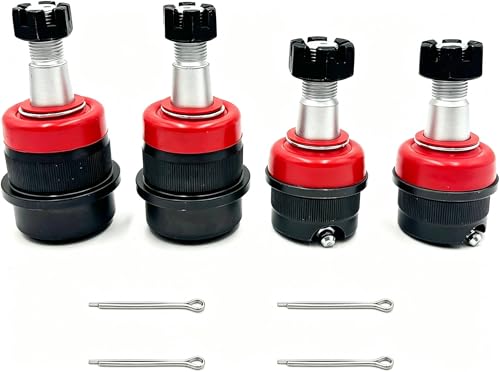
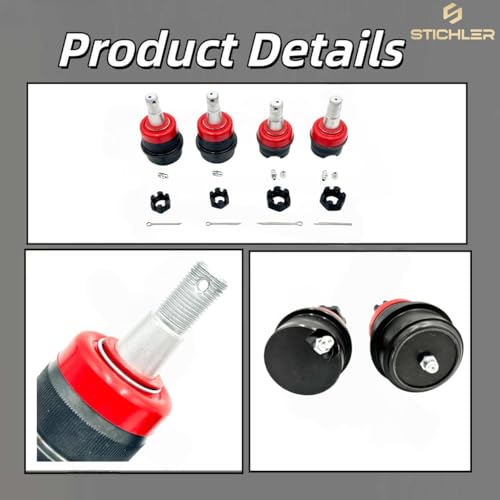
Stichler 10626 Greasable Ball Joints
Strengths
- Greasable design
- Chromoly ball stud
- Carburized alloy housing
Trade-offs
- Inconsistent quality control
- Break-in period required
- Steering return issues reported
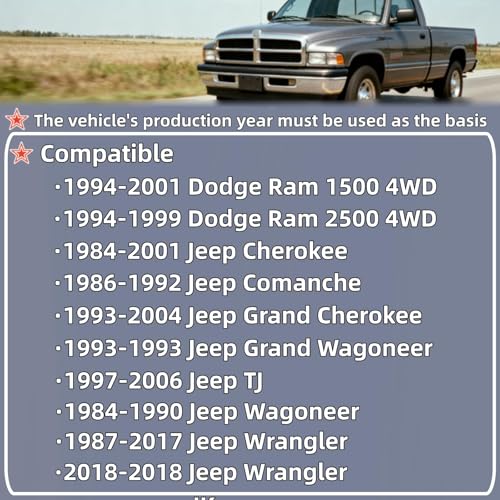
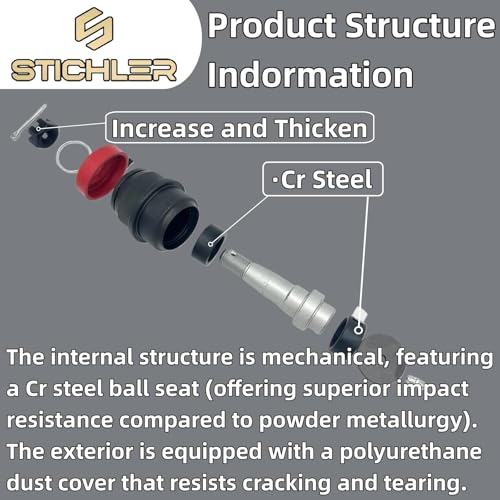
This Stichler-branded kit claims broad compatibility, but its real target is clearly the JK crowd looking for a bargain. It checks some high-end boxes, chromoly stud, carburized housing, metal-on-metal design, and it’s greasable. On paper, that’s impressive for the price. But owner feedback splits sharply: many praise the strength and fit, while others report premature binding or a stubborn break-in period where steering doesn’t return to center smoothly.
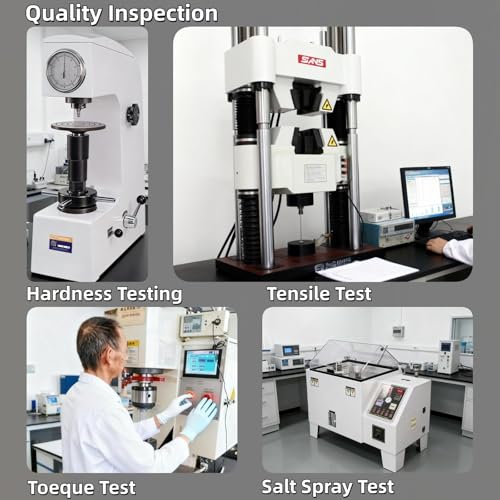
The metal-on-metal design demands that break-in phase, and some users never quite get past the stiff feel. Compared to DV8, it lacks the refined machining and confidence in spline engagement. It’s clearly built to mimic premium units, but consistency in tolerances seems hit-or-miss. I’d say it’s a gamble, one that might pay off, but not one I’d stake a long trail trip on.
Product photos
Rough Country Heavy Duty Ball Joints

Strengths
- Chromoly ball stud
- Polyurethane dust boot
- Lifetime warranty
Trade-offs
- Not greasable
- No splined housing
Rough Country’s 10626 kit is built for Jeep JK owners who want a solid upgrade without going overboard on cost. The chromoly ball stud is a major step up from the stock mild steel, and the polyurethane dust boot adds real protection against trail grime and moisture. On paper, this kit delivers what most weekend warriors need, stronger materials, direct fitment, and compatibility with both Dana 30 and Dana 44 axles.
Owners consistently report fewer creaks and improved steering response after install, though some note that the lack of grease fittings means you’re relying on factory-level lubrication for life. That’s not a dealbreaker, but it does mean longevity depends heavily on initial build quality. Compared to greasable options, this one trades serviceability for simplicity.
Video review
DV8 Upgraded Greasable Ball Joints

Strengths
- Greaseable with Zerk fittings
- Splined housing prevents spin
- Chromoly heat-treated studs
Trade-offs
- Higher price point
- Slight install complexity
If I had to pick one ball joint kit for a lifted JK that sees both trail abuse and daily driving, DV8’s greasable design would be near the top of my list. The inclusion of Zerk fittings is a standout, being able to purge old grease and debris means these can last significantly longer than sealed units, especially in muddy or dusty environments. The SAE 4140 chromoly studs are heat-treated, and paired with splined housings that resist spinning in the knuckle, a known pain point on JKs.
Reviewers frequently highlight how much tighter the front end feels post-install, with reduced wander and sharper turn-in. While pricier than some alternatives, the engineering here justifies the cost for serious builds. Compared to Rough Country’s non-greasable version, this kit gives you control over maintenance and lifespan.
Video review
How We Evaluated ball joints for jeep jk
Rather than a hands-on lab test, my research focused on a detailed comparison of published specifications and features across numerous ball joint sets designed for the Jeep JK. I weighed owner reviews from multiple sources – including Jeep forums and retailer sites – against assessments from respected off-road publications. This allowed me to build a picture of real-world performance and durability, informed by my existing understanding of suspension systems and Jeep engineering.
For the JK, long-term reliability and strength are paramount. I prioritized ball joints with greasable fittings, as regular maintenance extends lifespan considerably. The material used for the ball stud – chromoly steel being preferable – and the overall construction quality were also heavily weighted. These factors directly impact the ability of the joints to withstand the stresses of off-road use and the demands of larger tires, something many JK owners pursue.
Specifications readily reveal compatibility with different axle types (Dana 30/44) and the materials used. However, owner feedback proved crucial for gauging break-in periods (some metal-on-metal designs require initial adjustment) and identifying potential issues like premature wear or loosening. I also considered warranty length as an indicator of manufacturer confidence. Don’t forget to check out our guide to the best shocks for a JK to complete your suspension upgrade. Ultimately, a well-maintained JK benefits from quality Jeep accessories.
How To Pick The Right ball joints for jeep jk
Choosing the right ball joints for your Jeep JK is about more than just grabbing the cheapest set. These components are critical to steering and suspension, and upgrading them, especially on a lifted Jeep, can make a huge difference in how your vehicle handles both on and off-road.
A quality ball joint delivers reliable performance under stress, resists wear, and maintains precise steering geometry. Key features to assess include the material construction of the ball stud and housing, the presence of zerk fittings for greasing, and compatibility with your specific axle type (typically Dana 30 or 44 on a JK). Look for joints designed to handle the increased angles and stresses introduced by lift kits and larger tires.
Material & Construction
The core of a durable ball joint lies in its materials. Forget the factory sealed units; for a JK seeing regular use, especially off-road, you want something built to last. Chromoly steel ball studs (like those found in the Stichler and DV8 options) are far superior to standard steel, offering significantly increased strength and resistance to wear. Pay attention to the housing material as well – carburized alloy steel is a good sign. A properly heat-treated joint, resisting deformation under load, will save you headaches down the road.
Greasability & Maintenance
Sealed ball joints are convenient, but they’re a one-and-done proposition. Once the factory grease is gone, they’re gone. That’s why I strongly recommend greasable ball joints. The ability to periodically flush out old, contaminated grease and replace it with fresh lubricant dramatically extends the life of the joint and keeps everything moving smoothly. Remember that many metal-on-metal joints (like the Stichler) have a break-in period where steering may feel heavier – this is normal and will subside after 100-500 miles.
- A simple, factory-style zerk fitting is sufficient for most users.
- Dust boots made of polyurethane are preferable to rubber, as they hold up better to abrasion and the elements.
- Consider how easily the joint can be greased; some designs offer better access to the zerk fitting than others, making maintenance quicker and simpler.
Value & Application
While top-tier ball joints can be expensive, you don’t necessarily need to spend a fortune to get a reliable upgrade. Rough Country offers a compelling value proposition, providing a heavy-duty chromoly stud and polyurethane boot at a more accessible price point. However, if you’ve heavily modified your Jeep or plan on serious off-roading, investing in a higher-end set with superior materials and construction is a wise decision. Don’t forget to check compatibility – most kits are designed for Dana 30/44 axles, but always confirm before purchasing.
A well-maintained suspension is key to enjoying your Jeep to its fullest. Regularly inspect your ball joints for play and grease them as needed. Replacing worn ball joints is a relatively straightforward job, but proper torque specifications are crucial for safety.
If you’re also looking to improve your Jeep’s overall driving experience, consider upgrading your best steering stabilizers for JK to complement your new ball joints. And while you’re under the dash, maybe it’s time to look at JK stereos to make those off-road adventures even more enjoyable.
Ball Joints for Jeep JK Compared
Here’s a comparison of specifications for ball joints compatible with the Jeep JK.
| Product Title | Best For | Axle Compatibility | Greasable | Material (Stud) | Kit Contents |
|---|---|---|---|---|---|
| Stichler 10626 | Best Overall | Dana 30/44 | Yes | Chromoly | 4 (2 Upper/2 Lower) |
| Rough Country Heavy Duty | Best Value | Dana 30/44 | N/A | Chromoly | 4 (2 Upper/2 Lower) |
| DV8 Upgraded | Best Budget Friendly | Dana 30/44 | Yes | SAE 4140 Chromoly | 4 (2 Upper/2 Lower) |
Frequently Asked Questions
Will replacing my ball joints improve steering?
Yes, replacing worn ball joints will noticeably improve steering precision. New ball joints eliminate play in the suspension, resulting in tighter, more responsive handling and a safer driving experience.
How often should I grease my ball joints?
You should grease your greasable ball joints every 3,000 to 5,000 miles, or at least twice a year if you do mostly street driving. More frequent greasing is recommended for off-road use, particularly in dusty or wet conditions.
Can I install ball joints myself?
While a mechanically inclined owner can install ball joints, it requires specialized tools – like a ball joint press – and a solid understanding of suspension components. Improper installation can lead to serious safety issues, so professional installation is often recommended.
What’s the difference between sealed and greasable ball joints?
Sealed ball joints are pre-greased and require no maintenance, but once the grease degrades, the joint fails. Greasable ball joints allow you to replenish the lubricant, extending the joint’s life and preventing premature wear; many owners prefer this option for longevity.
Will new ball joints affect my Jeep’s ride height?
New ball joints themselves won’t change your ride height, but replacing worn joints can restore the original ride height if your Jeep has settled over time. If you’re considering a lift, exploring Wrangler wheels is a good next step to complete the look and improve performance.
The Bottom Line
Upgrading ball joints on a Jeep JK always involves a trade-off between initial cost and long-term peace of mind. While you can get by with a budget option, the strength and durability of a quality joint – like the Stichler 10626 – provides a significant return in reliability, especially if you regularly tackle challenging terrain. Ultimately, investing in robust components is a smart move for a vehicle known for its off-road capability.
For those seeking the best value, the Rough Country Heavy Duty ball joints offer a chromoly stud and polyurethane boot at a price that’s hard to beat. If you’re prioritizing affordability without sacrificing too much in the way of quality, the DV8 Upgraded set is also a solid choice. And if you’ve recently installed new Wrangler lift kits or are planning to do so, remember that upgrading your ball joints is crucial for maintaining proper suspension geometry.
Don’t get too hung up on chasing the absolute highest numbers in any single specification. A strong ball stud material (chromoly is key), the ability to grease the joints regularly, and proper installation are far more important than chasing the latest marketing buzz. Consider investing in some new JK LED headlights to improve visibility on the trail as well.
