
Electric SUV Automobiles: Essential Models & Recall Alerts
This post contains affiliate links. As an Amazon Associate, we earn from qualifying purchases.
Electric SUV automobiles are family vehicles that replace a gas engine with a high-voltage battery pack, delivering instant torque, zero tailpipe emissions, and a quiet, spacious cabin. The critical difference from their internal combustion counterparts isn’t under the hood, it’s in the service manual, where high-voltage safety protocols and specific State of Charge (SoC) limits dictate every repair.
That shift from mechanical intuition to electrical procedure is where most owner-accessible maintenance stops. You can check tire pressure and top up washer fluid, but opening the high-voltage loop requires certified tools, insulated gloves, and following a High Voltage Shut-Off Procedure to the letter. Skip that step, and the 400-volt system stays live.
What follows is a breakdown of what defines this category, the specs that matter beyond range, and a model-by-model look at the high-voltage failures that have triggered national recalls. You’ll leave knowing which electric SUV fits a daily commute versus a road trip, and exactly what to ask a dealer about before they touch the battery.
Key Takeaways
- State of Charge is a safety spec. For certain battery replacements, like the Chevrolet Bolt, the pack must be below 80% SoC before service begins to mitigate fire risk.
- High-voltage work is not DIY. Disconnecting the battery requires a documented shut-off procedure, Class 0 electrical gloves, and often a factory scan tool, this is not a weekend project.
- Recalls are often electrical. Common failure points include high-resistance safety plugs (Kia), improperly torqued connector bolts (GM), and manufacturing debris in drive motors (BMW).
- Service accessibility varies wildly. Tesla’s structural battery pack is a module-replacement-only item; a Hyundai Ioniq 5‘s pack is serviceable in sections. This changes repair cost and time.
- The best electric SUV for you depends on charging logistics. A 300-mile rated range means 230 miles in winter with the heater on. If you can’t charge at home, prioritize models with the fastest DC charging curves.
What Actually Defines an Electric SUV Automobile?
Forget marketing. An electric SUV is a vehicle with a raised ride height and a two-box shape (hood plus cabin) that uses a traction battery pack as its sole energy source for driving the wheels. The pack voltage typically runs between 350 and 800 volts. That high voltage is what enables rapid DC charging but also mandates the stringent safety protocols you’ll find in every OEM manual.
The physical battery pack dominates the vehicle’s architecture. It’s a massive slab of lithium-ion cells, usually flat-mounted beneath the floor. This placement creates a low center of gravity, which improves handling, but it also makes the pack vulnerable to road debris and a complex, costly unit to replace. The pack isn’t just a fuel tank; it’s a structural member in many new designs, like the Tesla Model Y with its structural battery pack.
Where this goes sideways: Assuming an electric SUV is just a tall electric car. The powertrain is similar, but the SUV body demands more energy to move. That means a larger, heavier battery pack for comparable range, which increases purchase price, charging time, and the stakes of any high-voltage system fault.
The Specs That Matter More Than 0-60 MPH
Horsepower and acceleration figures are easy marketing. These three numbers determine real-world usability.
| Specification | What It Measures | Why It Matters for an SUV |
|---|---|---|
| Peak DC Charging Rate (kW) | Maximum power the battery can accept from a fast charger. | An SUV’s large battery needs a high peak rate to replenish range quickly on road trips. A 150 kW limit adds 30+ minutes versus a 250 kW capable model. |
| Cargo Volume (seats up/down) | Usable storage space behind each row of seats. | This is the SUV’s core utility. A poor cubic-footage number defeats the purpose of choosing a bulky electric vehicle over a sleeker sedan. |
| Ground Clearance (inches) | Distance between the ground and the lowest point of the vehicle (often the battery shield). | Affects off-road capability and, crucially, protects the battery pack from scraping on steep driveways or rough roads. |
DC charging speed is the highway lifeline. A family SUV goes on trips. Sitting at a charger for 50 minutes every 200 miles turns a four-hour drive into a six-hour ordeal. Look for a peak rate above 200 kW if road trips are frequent.
Cargo space is non-negotiable. Measure your regular load, stroller, dog crate, luggage, and check the seats-up volume. Many electric SUVs lose space to sloping rooflines designed for aerodynamics.
The 80% Rule That Prevents a Battery Fire
The most critical number in an electric SUV service manual isn’t about torque. It’s the maximum State of Charge allowed before technicians can safely remove the high-voltage battery. For the Chevrolet Bolt EUV under recall N212345946, that number is 80%.
The NHTSA high-voltage battery recall notice for the Bolt is explicit: if the vehicle arrives with a charge above 80%, the dealer must follow a specific procedure to reduce the SoC before beginning the replacement. The vehicle must not be plug-in charged until the new pack is installed. This isn’t a suggestion. It’s a mitigation for a proven fire risk in certain battery modules when held at high voltage.
This 20-minute waiting period is not a suggestion. It’s required for the battery’s open-circuit voltage to settle, ensuring an accurate and safe measurement before any physical work begins.
The procedure highlights a fundamental shift. You don’t just “drain the tank.” You use the vehicle’s own systems in a controlled mode to bring the pack to a safe potential. This requires a factory scan tool and training. It’s a stark example of how electric SUV automobiles blend software controls with hardware safety in ways gasoline vehicles never did.
Why the 80% limit? Lithium-ion cells become thermally unstable when defective and held at their maximum voltage (100% SoC). Reducing the charge lowers the cell voltage, moving the pack away from that instability point. It’s a buffer that gives technicians a safer working window.
What Breaks First? A Model-by-Model Failure Map
Electric SUV reliability isn’t about the engine wearing out. It’s about high-voltage connections, battery management software, and electric motor contaminants. These failures are so specific they generate technical service bulletins (TSBs) with exacting repair procedures.
| Model | Common High-Voltage Issue | Documented Cause & Correction |
|---|---|---|
| Kia Niro EV (2022) | Safety plug melting, loss of motive power. | High electrical resistance in Female-Female terminal contacts. Correction: Replace HVB safety plug following strict High Voltage Shut-Off Procedure. |
| Chevrolet Bolt EV/EUV (2017-2023) | 1. Fire risk at high SoC. 2. Loose connector fasteners. | 1. Replace entire HV battery pack. 2. Inspect and torque high-voltage connector fasteners to spec. |
| BMW iX, i4 (Pre-Nov 2023) | Drivetrain malfunction warnings. | Metal chips or contamination in eDrive motor causing insulation faults. Correction: Clean rotor and brush module. |
| Tesla Model Y | Battery service complexity. | Structural battery pack design means full pack replacement for most internal faults—no module-level repair. |
The Kia Niro EV recall SC314 is a classic connection failure. The safety plug, a critical disconnect point, develops resistance. When current flows through a high-resistance connection, it generates heat, enough to melt plastic and cause a fire. The fix is a new plug, but the mandatory first step is the High Voltage Shut-Off Procedure from Kia’s shop manual. Skip it, and you’re working on a live 400V system.
The BMW issue is a manufacturing flaw. Debris left inside the eDrive motor can eventually cause a short circuit, triggering a fault code and a “Drivetrain Malfunction” message. The cleaning procedure is precise, requiring removal of the motor and careful cleaning of the rotor and brush module to avoid damaging the insulation.
The part nobody mentions: These repairs are exclusive. Only Chevrolet EV-certified dealers can perform the Bolt battery swap. Only BMW dealers with the ISTA diagnostic system should attempt the motor clean. This limits where you can get service and often voids warranty if an independent shop touches the high-voltage system.
These patterns show that electric SUV automobiles have failure modes tied directly to their new technology. Loose bolts, dirty motors, and resistive connectors are not wear-and-tear items. They are assembly or component quality issues that manifest as dramatic, safety-critical faults.
Electric SUV vs. Hybrid SUV: The Voltage Divide
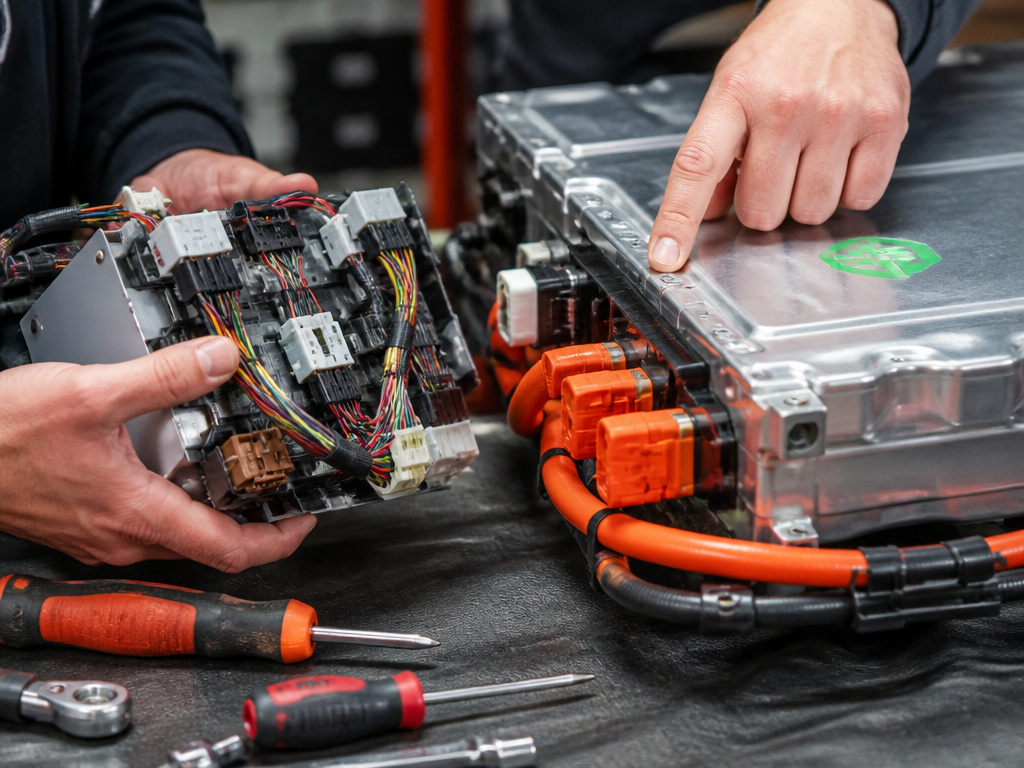 This is the fundamental choice: commit fully to the charging network or keep a gas engine for safety. A hybrid SUV uses a much smaller battery, often under 2 kWh, to assist a gasoline engine. It can’t drive on electricity alone for more than a few miles. The high-voltage system in a hybrid typically runs below 300 volts, and while still dangerous, it’s less complex than a full EV’s system.
An electric SUV removes the gas engine entirely. This simplifies the drivetrain, no transmission, exhaust, or fuel system, but places enormous demand on the battery and charging electronics. The trade-off is between energy security and mechanical simplicity.
Pick the electric SUV if: You have reliable home charging (a 240V outlet), your daily drives are under 200 miles, and you want the lowest per-mile running cost with zero tailpipe emissions. The Ford Mustang Mach-E and Tesla Model Y are benchmarks here.
Pick the hybrid SUV if: You regularly take trips beyond 300 miles, live in an area with sparse DC fast charging, or need the vehicle for emergency use without dependence on the electrical grid. It’s a transitional technology for a transitional infrastructure.
The maintenance story splits here, too. A hybrid has two complete powertrains to maintain. An electric SUV has far fewer moving parts but carries the latent risk of a high-voltage battery fault that can total the vehicle. There is no universally correct answer, only the right fit for your parking spot and travel map.
The 4 Tools That Replace a $200 Service Visit
 You can’t service the high-voltage system. But these four tools let you maintain everything around it, potentially avoiding a dealer visit for minor issues.
- A Quality Tire Inflator with Gauge. EV tires wear faster due to instant torque and weight. Keep them at the exact psi listed on the door jamb, usually higher than a gas SUV. Under-inflation by 5 psi can cut range by 3-5%.
- An OBD-II Scanner with EV-Specific Software. For codes related to the 12V system, thermal management, or charge port errors. A generic scanner won’t read most EV modules. Look for one that can talk to the battery control module.
- A Torque Wrench (in lb-ft and Nm). For securing lug nuts after tire rotation. Over-torquing aluminum wheel studs is a common mistake at quick-lube shops. Do it yourself to the spec in the manual.
- A Soft-Bristle Brush and Detail Spray. For cleaning the exterior sensors (cameras, radar). A blocked sensor can disable automatic emergency braking or adaptive cruise control. Don’t use a pressure washer directly on them.
Why a specialized OBD-II scanner? The network of control modules in an electric SUV is more extensive. Beyond the engine computer, you have the Battery Energy Control Module (BECM), the Charger Control Module, and the Powertrain Domain Controller. A basic scanner might see a fault light but give a “U-code: Network Communication Error” that’s useless. The right software can pinpoint a failing coolant pump for the battery loop.
Frequently Asked Questions
What is the most reliable electric SUV?
Reliability in this context means few high-voltage system faults. Based on recall data and service manual complexity, the Tesla Model Y and Ford Mustang Mach-E have shown fewer catastrophic battery or motor failures than early models from other manufacturers. However, Tesla’s structural pack design makes any battery repair a major event. Reliability is also tied to software update stability, where Tesla currently leads.
How long do electric SUV batteries last?
Most manufacturers warranty the high-voltage battery for 8 years or 100,000 miles, guaranteeing at least 70% of its original capacity. Real-world data suggests well-managed packs degrade about 2-3% per year. Avoiding consistent 100% charging and minimizing DC fast charging in extreme heat are the two biggest longevity levers.
Are electric SUVs good in snow?
Their heavy weight and low center of gravity provide excellent traction. Most offer sophisticated all-wheel-drive systems with instantaneous torque vectoring. The main winter drawback is reduced range, as the battery must power both the drive motors and a resistive heater. Expect a 25-35% range loss in freezing temperatures.
Can I tow with an electric SUV?
Yes, but it drastically cuts range. Towing a 2,000 lb trailer can halve your highway range. You must also verify the model’s factory tow rating and ensure you have the proper hitch receiver. Very few electric SUVs are rated for heavy towing (over 5,000 lbs).
What is the cheapest electric SUV to maintain?
The one with the longest, most comprehensive bumper-to-bumper warranty that includes high-voltage components. Out-of-warranty, maintenance costs are low until they’re catastrophically high, a single failed battery module can cost thousands. Models with simpler, non-structural battery packs, like the Hyundai Ioniq 5, may offer more affordable long-term repair options.
The Bottom Line
Choosing an electric SUV automobile is a commitment to a new kind of vehicle ownership. The joys are real: silent acceleration, low running costs, and a tech-forward cabin. The responsibilities are new: understanding State of Charge, planning around charging stops, and accepting that major repairs are dealer-only affairs.
Your decision hinges on a cold assessment of your driveway and your travel habits. If you can plug in at home, the convenience outweighs the road-trip hassles for most drivers. If you can’t, the math rarely works. Look past the range number on the window sticker. Dig into the charging curve, read the latest recall bulletins, and know what you’re buying into, a fantastic, flawed, and rapidly evolving piece of technology on wheels.
