
BMW M8 Competition Coupe Review – Balancing Power & Weight
This post contains affiliate links. As an Amazon Associate, we earn from qualifying purchases.
The BMW M8 Competition Coupé is a 616-horsepower, twin-turbo V8 luxury coupe that hits 60 mph in 3.0 seconds, but its near-two-ton weight creates a split personality: brutally competent on a straight line, surprisingly compliant on a back road, yet never feeling as agile as a lighter M car.
That weight is the central fact. It underpins every driving characteristic, from the way the M xDrive system manages traction to the slight softness you detect when pressing hard into a corner. This isn’t a car that hides its heft; it uses technology to master it.
What follows is a breakdown of where that technology succeeds, where the car’s luxury mission slightly dulls the M division’s edge, and who should buy one despite, or because of, its contradictions.
Key Takeaways
- The 4.4-liter twin-turbo V8 delivers relentless, tractable power, but its exhaust note lacks the theatrical drama of an AMG rival.
- M xDrive provides immense security and launch traction, but the 2WD mode is a gimmick best saved for controlled environments.
- The interior is a masterclass in digital luxury, though the rear seats are essentially unusable for adults.
- Its weight, nearly 4,400 lbs, is the defining trait, making it feel more like a high-speed GT than a nimble sports coupe.
- For the money, it exists in a narrow space between the more focused Porsche 911 Turbo and the more flamboyant Mercedes-AMG GT 4-Door.
Engine & Performance: The Physics-Defying V8
Under the carbon fiber engine cover lies the S63B44T4, a 4.4-liter M TwinPower Turbo V8. The numbers are staggering: 616 horsepower at 6,000 rpm and 553 lb-ft of torque from 1,800 to 5,800 rpm. The technical sheet mentions a 10.0:1 compression ratio, twin-scroll turbochargers mounted in the V of the engine, and a 350-bar direct injection system.
The M8 Competition Coupé’s claimed 0-60 mph time of 3.0 seconds (with the M Driver’s Package) feels conservative on the road. The surge is instant, linear, and doesn’t taper until you’re deep into felony territory. It’s the kind of acceleration that flattens hills and compresses time.
The eight-speed M Steptronic transmission is the perfect partner. In its most aggressive setting, shifts are brutal, jolting you back into the seat. Leave it in its default mode, and it’s imperceptibly smooth. You’ll never feel the need to use the paddles, which is good because they feel a bit light and plasticky for a car at this level.
Where this goes sideways: Engaging 2WD mode. The M xDrive system can send 100% of power to the rear wheels when you turn off stability control. On a dry, empty track, it’s a laugh. On a public road, with this much power and weight, it’s an instant invitation to oversteer that the car’s natural stability bias fights against. It feels less like a feature and more like a party trick you try once.
| Performance Metric | Specification | Real-World Feel |
|---|---|---|
| 0-60 mph | 3.0 seconds (M Driver’s Package) | Effortless, neck-straining; launch control is brutal. |
| Engine Character | 4.4L Twin-Turbo V8, 616 hp | Immensely powerful but sonically muted vs. AMG. |
| Transmission | 8-Speed M Steptronic | Flawless in auto; manual mode is unnecessary. |
| Drivetrain | M xDrive AWD (RWD mode) | Provides immense grip; RWD mode is a novelty. |
Handling & Drivetrain: Mastering the Mass
Here’s where the M8 Competition‘s engineering shines. The Adaptive M Suspension has to cope with nearly 4,400 lbs. In Comfort mode, it’s genuinely pliant, absorbing bumps with a luxury GT’s grace. Switch to Sport or Sport Plus, and the body control becomes remarkable, flattening corners with immense grip from the standard run-flat tires.
The steering is precise and well-weighted, but it’s not exactly chatty. You guide the car rather than feel every nuance of the road. The M Compound Brake system with its optional gold calipers has immense stopping power, though some testers note the pedal feel can be artificially stiff in its sportier setting.
The star is the M xDrive system. This isn’t a simple AWD setup. The rear-biased torque split and the Active M Differential mean the car rotates willingly on corner entry, taming its weight mid-corner. The system feels rear-driven until you need the front axle, which then engages seamlessly to pull you out of a bend with incredible traction.
Common mistake: Comparing its cornering agility directly to a lighter BMW M3. The M8 covers ground with massive, unflappable competence, while the M3 fizzes with feedback and adjustability. They’re solutions to different problems.
Interior & Technology: Digital Cocoon
Slide inside, and the message is clear: this is a luxury item first. The cabin is swathed in Merino leather, Alcantara, and real carbon fiber. The M Sport seats are supportive and comfortable for long journeys, offering a vast range of adjustment and active ventilation.
The rear seats, however, are a formality. Legroom is virtually nonexistent for anyone over five feet tall. This is a 2+2 in the truest sense, where the “+2” are best reserved for bags or small children. The trunk is reasonably sized, but the rear seats don’t fold, limiting its utility.
The technology suite is comprehensive. The Live Cockpit Professional combines a 12.3-inch digital instrument cluster with a 10.25-inch central touchscreen running iDrive 7.0. It’s sharp, responsive, and feature-packed, including BMW’s excellent Head-Up Display. Standard driver aids like Driving Assistant Professional add adaptive cruise and lane-keeping, making the car a relaxed cruiser.
Design & Presence: Subtle Aggression
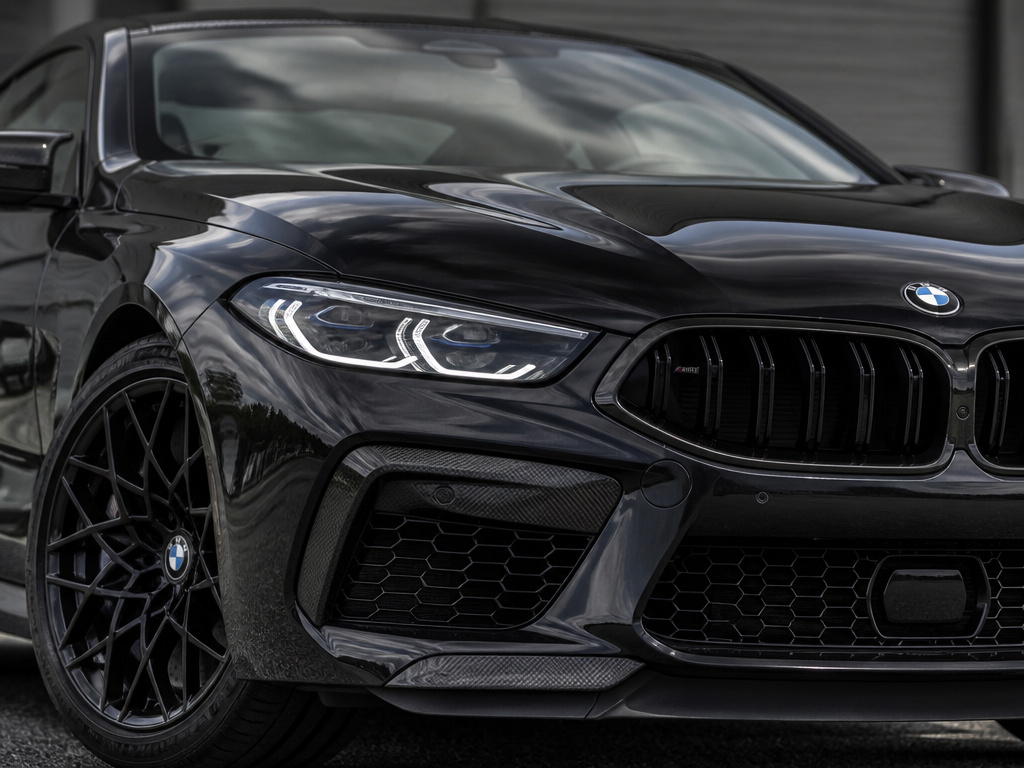
The BMW M8 Competition Coupé doesn’t shout. It’s a large, low-slung GT with a long hood and a fastback silhouette. The M-specific touches, the aggressive front bumper, carbon fiber roof, subtle rear spoiler, and quad exhausts, are there, but they’re integrated thoughtfully. It looks expensive and serious, not boy-racer.
The optional BMW Laserlights are a technical marvel, projecting light nearly half a kilometer down the road. In person, the car’s width and stance are its most imposing features, filling a parking space with quiet authority.
Ownership & Considerations
This is not a cheap car to own or run. Fuel economy is what you’d expect: low-to-mid teens in real-world driving if you use the performance. Servicing costs align with other super-GTs. The technology, while impressive, adds long-term complexity.
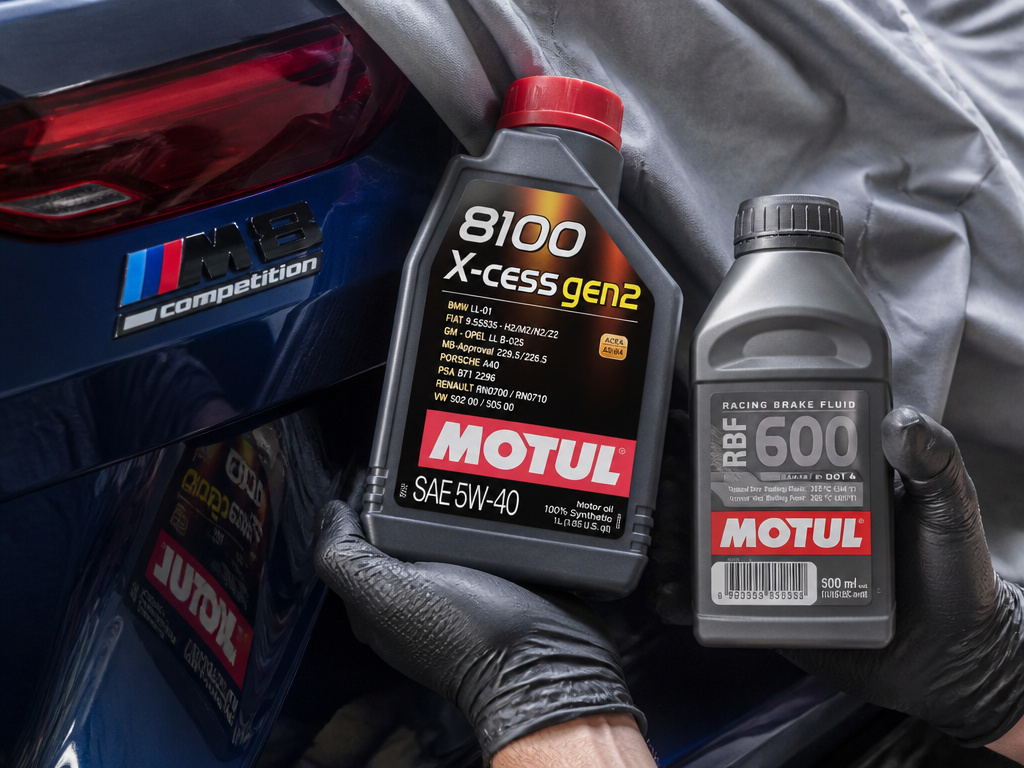
You’ll want to invest in a quality BMW car cover if it’s stored outside, and always use the correct engine oil and brake fluid specified by BMW to maintain performance and warranty. While the standard run-flat tires offer security, some owners switch to high-performance non-runflats for better ride comfort and ultimate grip, pairing them with a tire repair kit.
So, who is it for? The M8 Competition Coupé is for the buyer who wants crushing performance wrapped in daily-driver luxury, who values technology-aided competence over raw, unfiltered feedback. It’s a technological tour de force that makes staggering speed accessible and comfortable.
Bottom line: It’s a car that does almost everything brilliantly, yet leaves you wondering if “almost everything” is enough when the price tag soars into supercar territory. It’s more grand tourer than sports car, and that’s its greatest strength, and its most notable compromise.
Frequently Asked Questions
Is the BMW M8 Competition Coupé fast?
Yes, overwhelmingly so. Its 616-hp twin-turbo V8 and M xDrive all-wheel-drive system deliver a 0-60 mph time of 3.0 seconds. The power is accessible from low revs, making it feel fast in any gear, at any speed.
What is the difference between the M8 and M8 Competition?
The standard M8 (not sold in all markets) has 600 horsepower. The M8 Competition gains 16 more horsepower, a more aggressively tuned suspension, a sportier exhaust system, unique wheels, and various Competition badges inside and out.
Can the BMW M8 Competition Coupé drift?
Technically, yes. With the stability control fully disabled, the M xDrive system can be set to send 100% of power to the rear wheels (2WD mode). However, the car’s significant weight and long wheelbase make it a handful to drift controllably on public roads. It’s a feature best explored on a track.
Is the back seat usable in the M8 Coupé?
Barely. The rear seats are best considered an occasional-use space for children or for extra luggage. Legroom and headroom are severely limited for adults, cementing its role as a 2+2 grand tourer rather than a true four-seater.
How does it compare to a Mercedes-AMG GT 4-Door?
The AMG GT 4-Door, especially the 63 S model, is the M8’s direct rival. The AMG typically offers a more dramatic, crackling exhaust note and a slightly more playful rear-biased character. The M8 counters with a more sophisticated all-wheel-drive system, a more luxurious tech interface, and a subtler aesthetic. It’s a choice between theater (AMG) and technology (BMW).
The Bottom Line
The BMW M8 Competition Coupé is an engineering achievement that uses every bit of technology at the M division’s disposal to conquer its own mass. It is devastatingly quick, beautifully finished, and surprisingly comfortable. Yet, that very weight and the technological mediation required to manage it create a distance between driver and machine that purists might lament.
It’s not a replacement for the more visceral, lighter BMW M3. It occupies a different niche: the ultra-luxurious, ultra-capable GT that happens to possess supercar acceleration. For the right buyer, one who prioritizes cross-continent comfort alongside track-day credentials, it makes a compelling, if complex, argument. Just know what you’re signing up for: a master of physics, not a rebel against it.
